


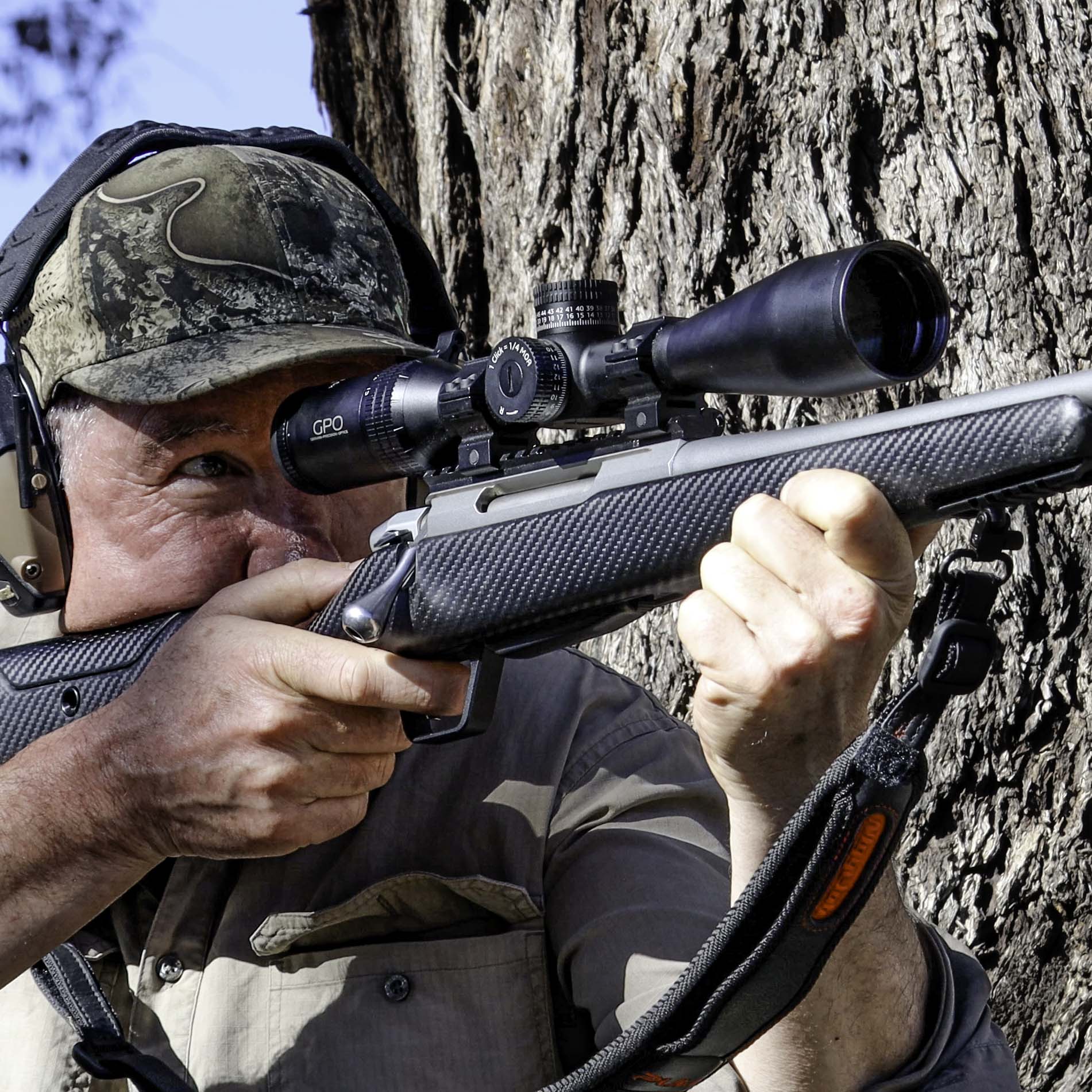


GPO is proving to be a bit of a disruptor in the optics world. The initials stand for German Precision Optics, a German company run by ex-employees of several of the big Euro companies. They design their own scopes in Germany. However, the scopes are made in Asia in factories where GPO has a large amount of control and, in some cases, degrees of ownership. Final quality control is done back in Germany.
It seems to work. Quality is good, the optics are excellent and the prices are attractive: between about $850 and $1085 as I did this review (late 2025).
The Centuri range covers the middle of GPO’s line-up, sitting in the sweet spot for price and features. They’re aimed at hunters and long-range shooters, with a hint of tactical design thrown in. And GPO seems to have nailed it, creating scopes that are practical, precise and with all the essential inclusions.
The design and operation of the basic functions are the same across the board.
The reticle adjustments in all these GPO scopes were bang on, and shooting the square produced exactly the result you want to see. All the turret types have resettable zero stops and they returned to zero perfectly. The GPOs were all utterly dependable when using the turrets to adjust point of impact for different ranges during a shoot.
The turret styles in all but the more modest 3-12×44 are designed for long-range shooting, with 90, 100 or 110 MOA of elevation available, depending on the model. That translates to between 2.6 and 3.1 metres at the 100m range, or a potential zero of more than 2km away with the right cartridge.
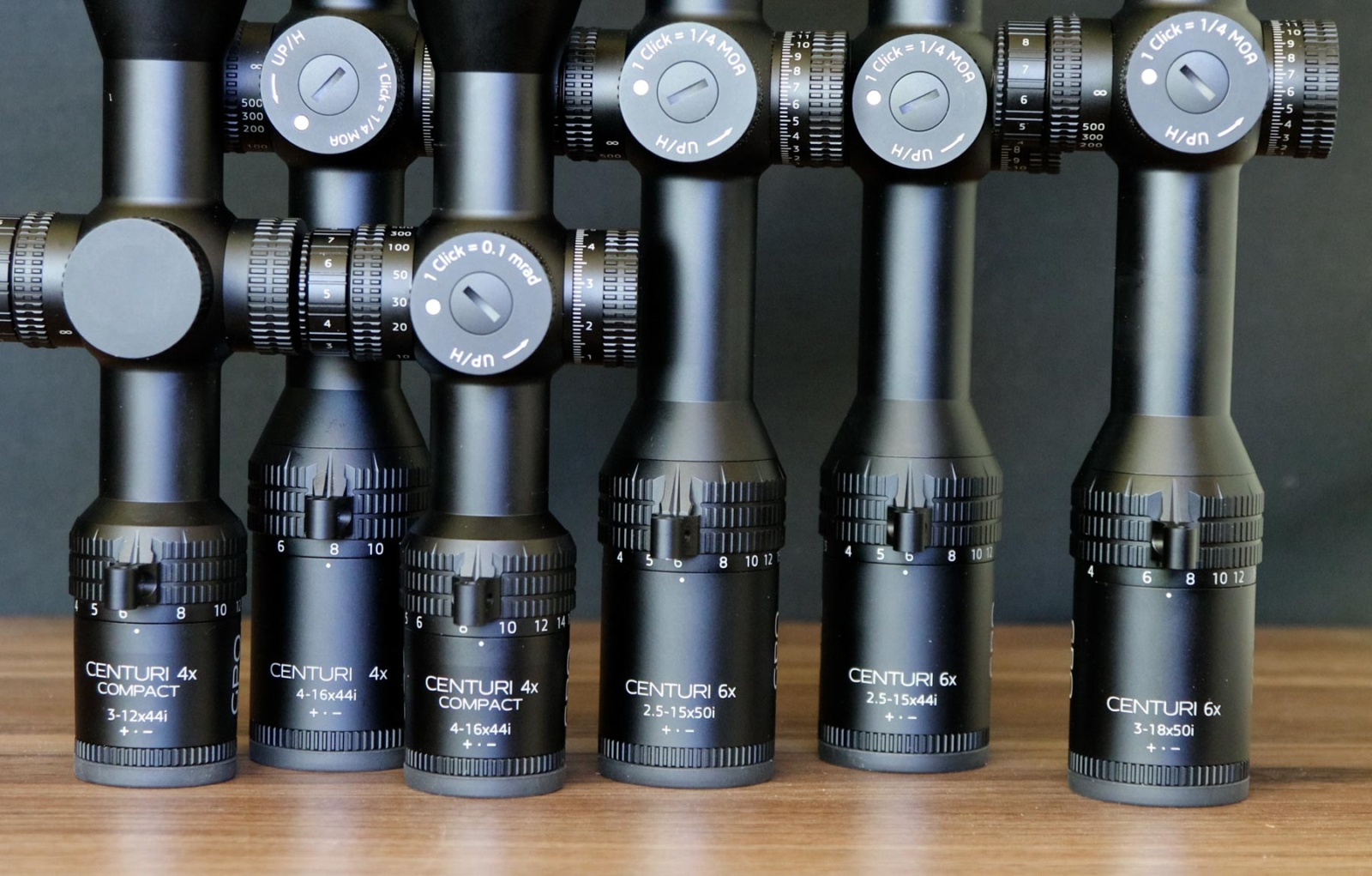
Those with exposed turrets turn two full revolutions from your zero and a pop-up indicator gives evidence of whether you’ve gone around more than once. The windage turrets have one rotation available.
For a price, you can order customised turrets to match your ballistics from an American company, Kenton Industries, but I haven’t looked into this.
So they’re great long-range sights, and remember that long-range is relative to your bullet’s trajectory, so it might be something with 2000m potential or it might just be a subsonic round lobbed high to reach only about 100m — the concept is the same.
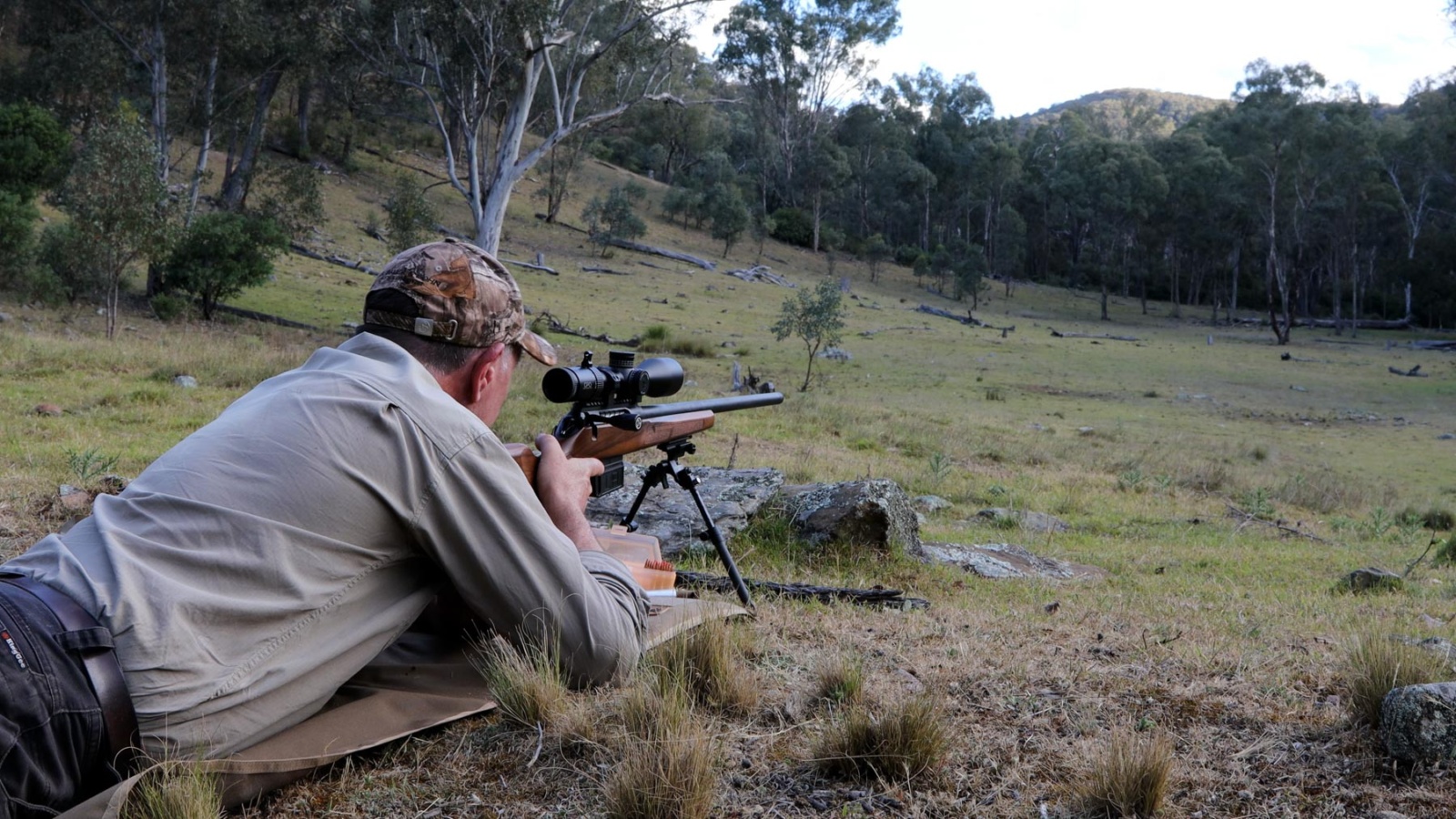
And at the same time, the parallax can be adjusted way down to less than 10m, absolutely perfect for shooting vermin at close ranges with rimfires and air rifles. The parallax focus is easy to dial quickly and the depth of field provided by the Centuris is impressively deep, meaning that if pinpoint accuracy isn’t crucial you don’t have to get the adjustment perfect; the view will still be very clear.
Which brings up the optical qualities of the Centuris. They have what’s called double HD lenses, which means laminated high-definition glass. GPO claims it is the equal of anything from the best of Europe’s optics companies. I can’t quantify that claim but I can verify that the view through all these scopes is very, very good.
The level of detail they can pick up in fading light or deep shadows is helpful, they resist glare and internal flaring to a very high degree when the sun is behind your target, and the picture is sharp almost to the edges, and absolutely pin-sharp elsewhere. I’ve looked through scopes that produce stronger colours but when light is challenging — especially strong light entering the objective — the GPOs don’t get exaggerated and false colours, nor coloured glare.
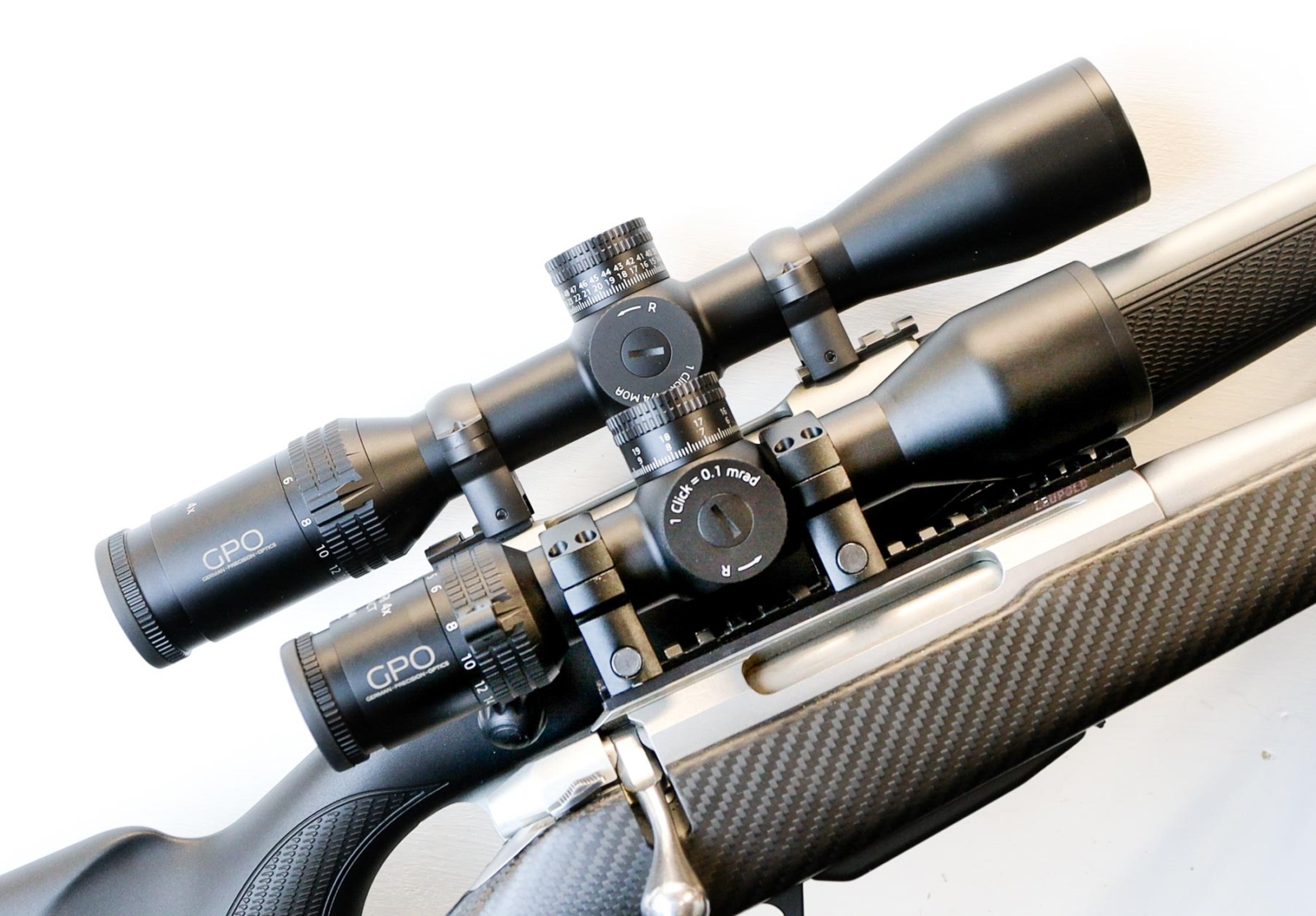
The Centuri scopes provide more proof that optics suffer from the law of diminishing returns and that anything more expensive won’t give you that much improvement in any practical sense. The optical quality here is not just really good, it’s really well priced.
Among the revisions to the Centuri range are new reticles. Most of the scopes I tested had the wonderfully open G4i reticle, a plain plex in which the outer section of the left, right and bottom wires grows thicker about a third of the way out from the middle. Simple, uncluttered and easy to aim with, especially if you add a subtle amount of illumination to the centre of the crosshairs to really focus your attention. It almost became boring how easy it was to quickly get on target, squeeze off the shot and see my quarry drop, hit exactly where I intended.
There’s also the MOA reticle, which has thicker sections on the outer ends of the top, left and right wires, and MOA-scaled hashmarks going 10 MOA wide for windage and more than 40 MOA down the bottom for elevation. Being a second-plane reticle the marks are accurate at full magnification. A great choice for being able to make quick on-the-fly aiming adjustments without having to divert your attention to the turrets.
The MRAD reticle in the Compact 4-16x is similar but obviously graduation in mils. This is the only one mounted in the first focal plane, so its measurements remain constant throughout magnification.
The illumination across the range is controlled by a rheostat for continually varying brightness rather than stepped increases. Its auto-off function will prolong battery life if you forget to switch it off.
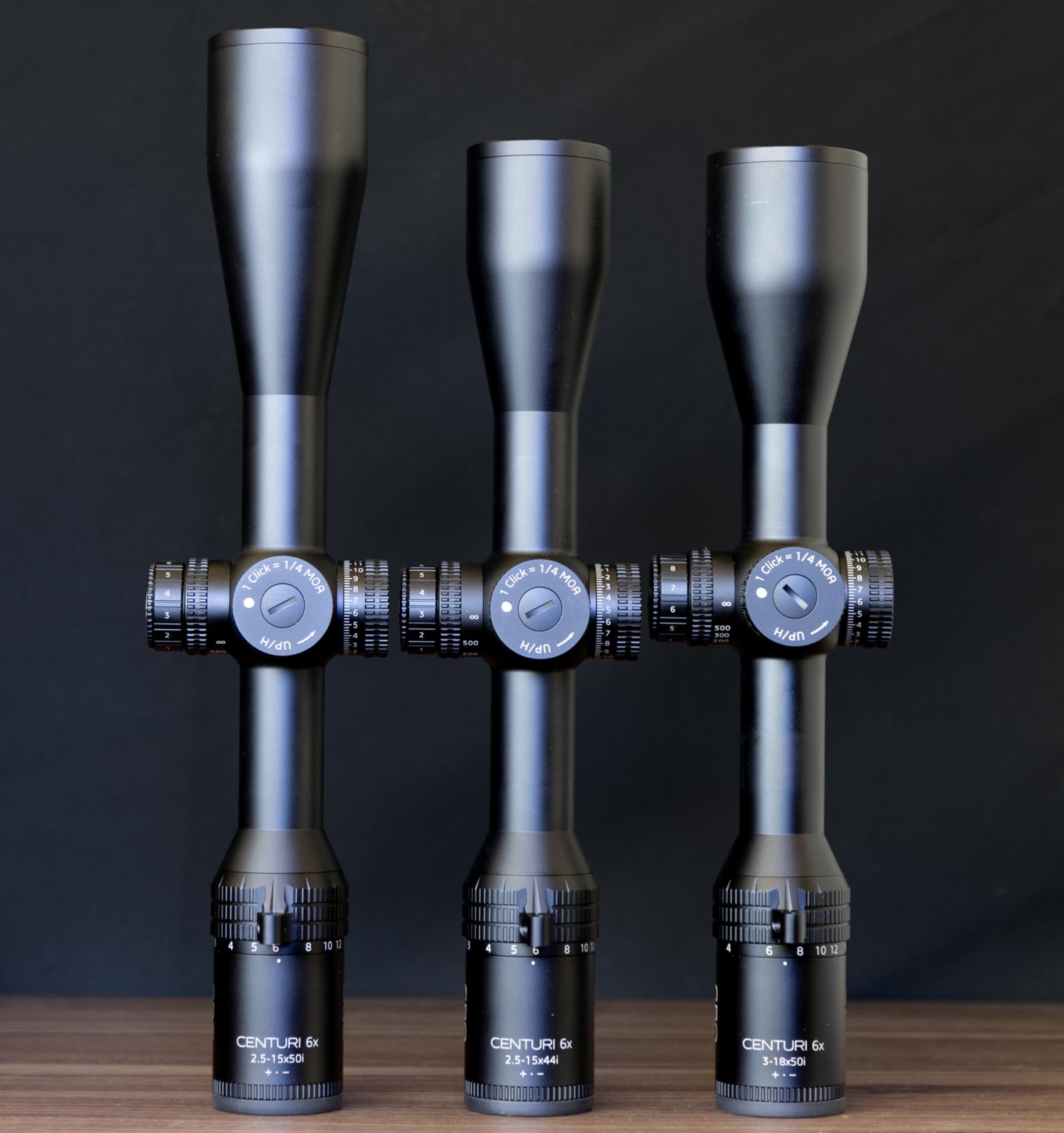
If you count all the sizes and reticle combinations in the Centuri range, there are 13 versions available. The easiest way to make sense of them is to start with the two different erector ratios: the Centuri 4x with a four-fold zoom ratio and the Century 6x with six-fold zoom.
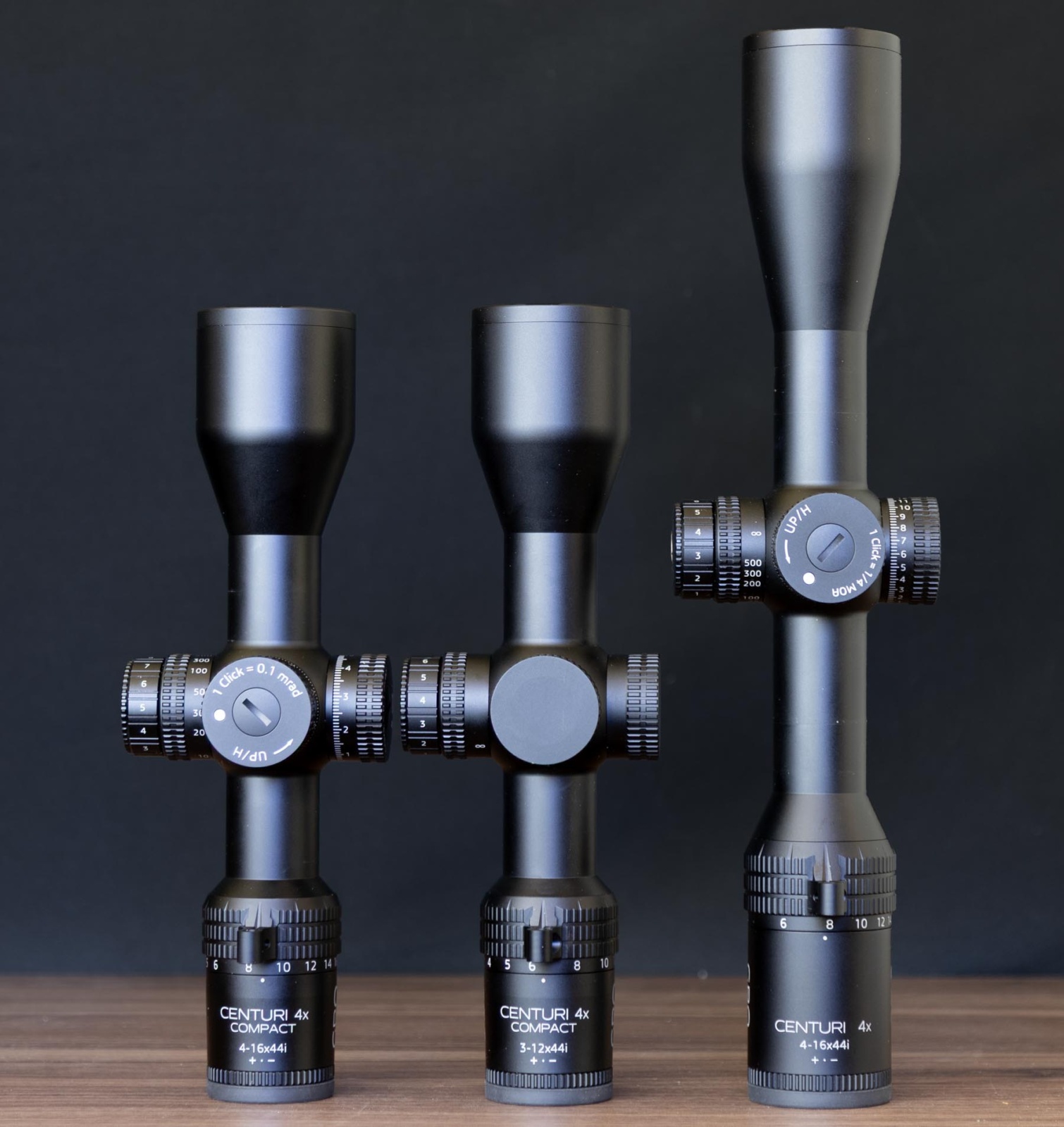
The 4x models come with magnification ranges of 3-12x and 4-16x, and with only 44mm objective lenses. You can get them in short Super Compact form or with a regular-length body.
The 6x models are 2.5-15x and 3-18x, with choices of 44 and 50mm objectives.
CENTURI 4x SUPER COMPACT 3-12×44
I have a fondness for this scope for two main reasons: it’s the most affordable of the Centuri series and its 3-12x magnification is what I consider the ideal range for a stalking rifle. It provides a short-range view that’s wide enough for almost any situation, and its full-zoom 12x magnification is ample for the vast majority of shots a typical Aussie hunter will take. In other words, this scope does almost everything a hunter needs without costing as much as the others.
Reflecting its role, it has turrets protected by caps and only one rotation of elevation, or 14 MOA, which should be heaps in this context.
It is also, as its name suggests, compact at about 25cm long and light enough at about 550 grams. It will be at home on just about any rifle, though its short body limits mounting options to a degree; it’s best suited to use on a rail with tall rings to get eye relief and objective clearance right.
As 3-12x scopes go, this one is rare in having parallax adjustment, and you do see the benefits of it, both right up close and about beyond 300m or so. Fixed parallax at 100m is fine up to a point, but in other 3-12s I’ve tested I’ve just accepted the fact that there will a small compromise in image clarity and, potentially, accuracy because of it. This Centuri makes me re-think my acceptance of that.
- Model: Centuri 4x 3-12x44i Compact
- Size: 3-12×44
- Erector ratio: 4x
- Adjustments: MOA
- Turrets: Capped
- Zero stop: Yes
- Reticle: G4i Fibre
- Adjustments: 1/4 MOA
- Adjustment range: 100 MOA
- Reticle plane: SFP
- Parallax: 10m-infinity
- Light transmission (%): 90
- Exit pupil (mm): 8-3.7
- Eye relief (mm): 65
- Field of view @ 100m (m): 15.0-3.7
- Main tube diam: 30mm
- Length (cm): 25
- Weight (g): 547
CENTURI 4x SUPER COMPACT 4-16×44
This one’s a bit different from the rest, with first-plane reticle and milli-radian adjustments. You get a choice of two reticles with holdover and windage marks along the crosshairs, one slightly more tactical in layout than the mil-dot type I had here. Neither reticle has a cascading tree of marks to wade through, keeping it simple.
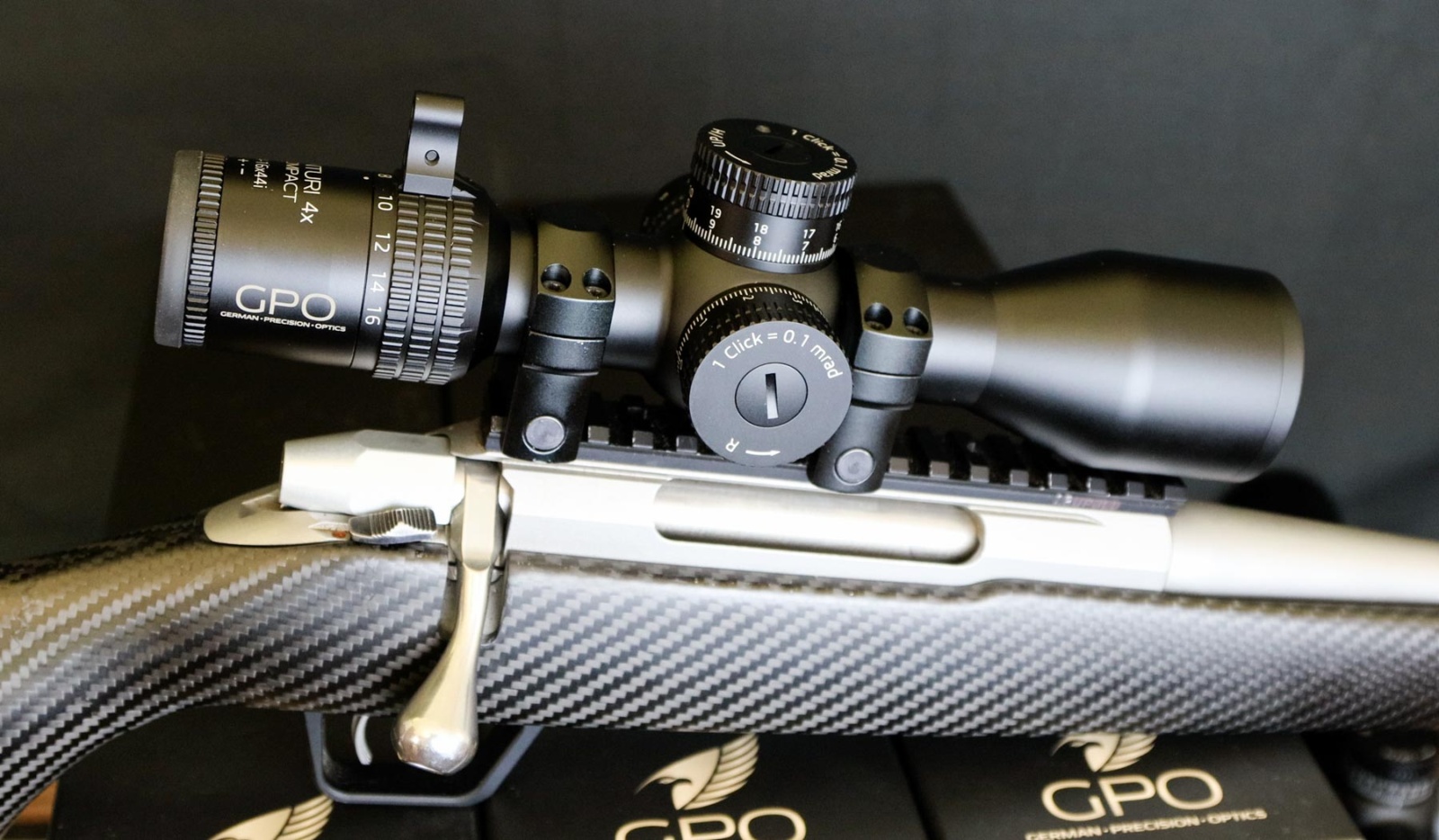
Its base 4x magnification makes it slightly less useful than the 3-12x Compact at close range but with this reticle setup it’s naturally more suitable for longer shots anyway, and the top-end of 16x means you really can reach a long way out to where your bullet is dropping fast, and still dial in to make a deadly or point-scoring hit.
- Model: Centuri 4x 4-16x44i Compact
- Size: 4-16×44
- Erector ratio: 4x
- Adjustments: MRAD
- Turrets: Exposed
- Zero stop: Yes
- Reticle: MRAD/CCW
- Adjustments: 0.1 MRAD
- Adjustment range: “22 MRAD election: 36 MRAD windage”
- Reticle plane: FFP
- Parallax: 10m-infinity
- Light transmission (%): 90
- Exit pupil (mm): 8-2.8
- Eye relief (mm): 65
- Field of view @ 100m (m): 11.3-3.0
- Main tube diam: 30mm
- Length (cm): 25
- Weight (g): 598
CENTURI 4X 4-16×44
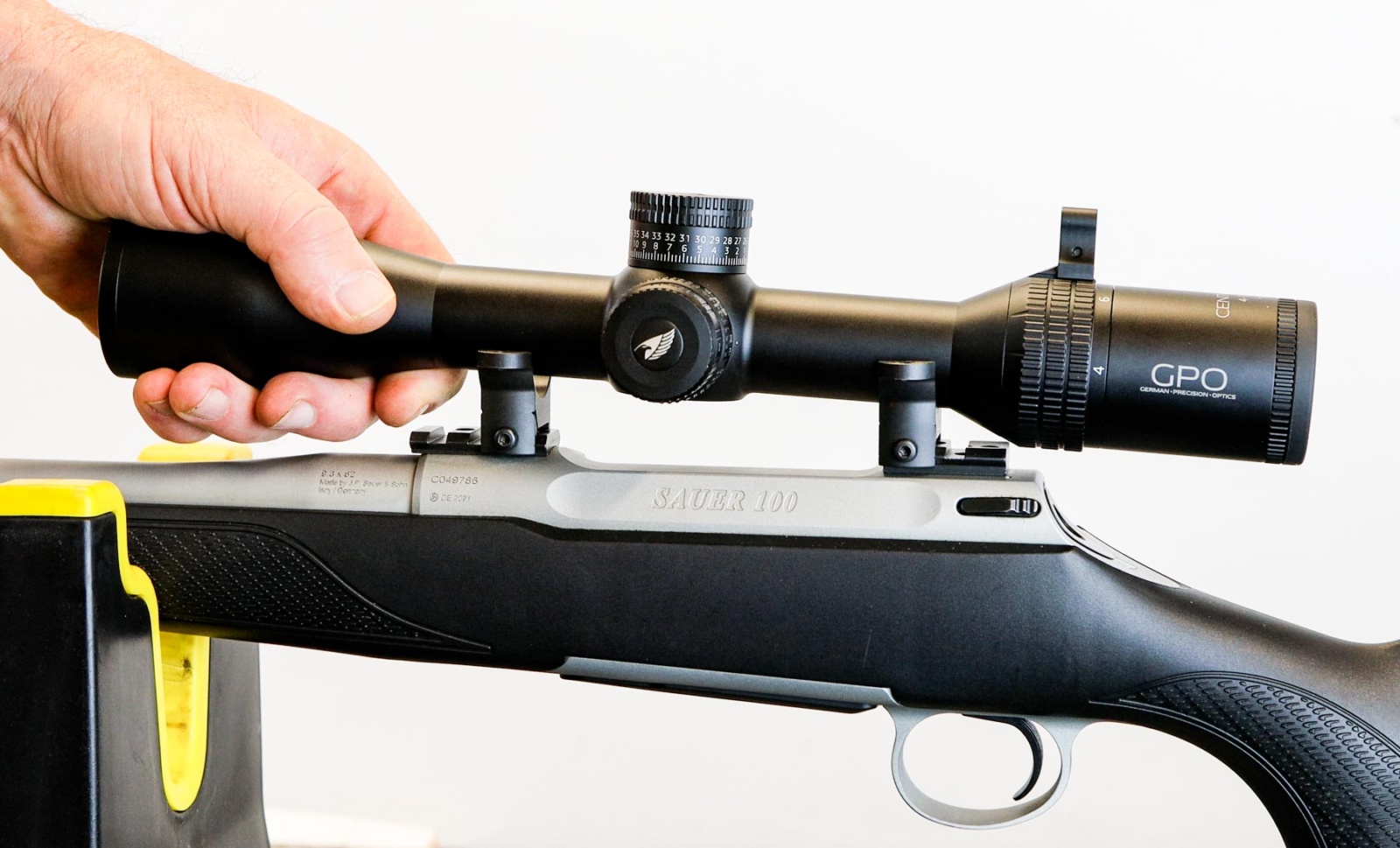
For roughly the same money as the 4-16x Compact, this Centuri is 9cm longer and 100 grams heavier … so why would you? Well! Bigger is better in measurable ways. The longer tube gives you more latitude in mounting this scope. Its objective will hang down below the front of a rail, something you can’t do with the shorty, which would have to be mounted higher. And the bigger scope has about 15mm more eye relief than either of the compacts, for a total of 80mm, another advantage in mounting as well as on heavy-kicking rifles.
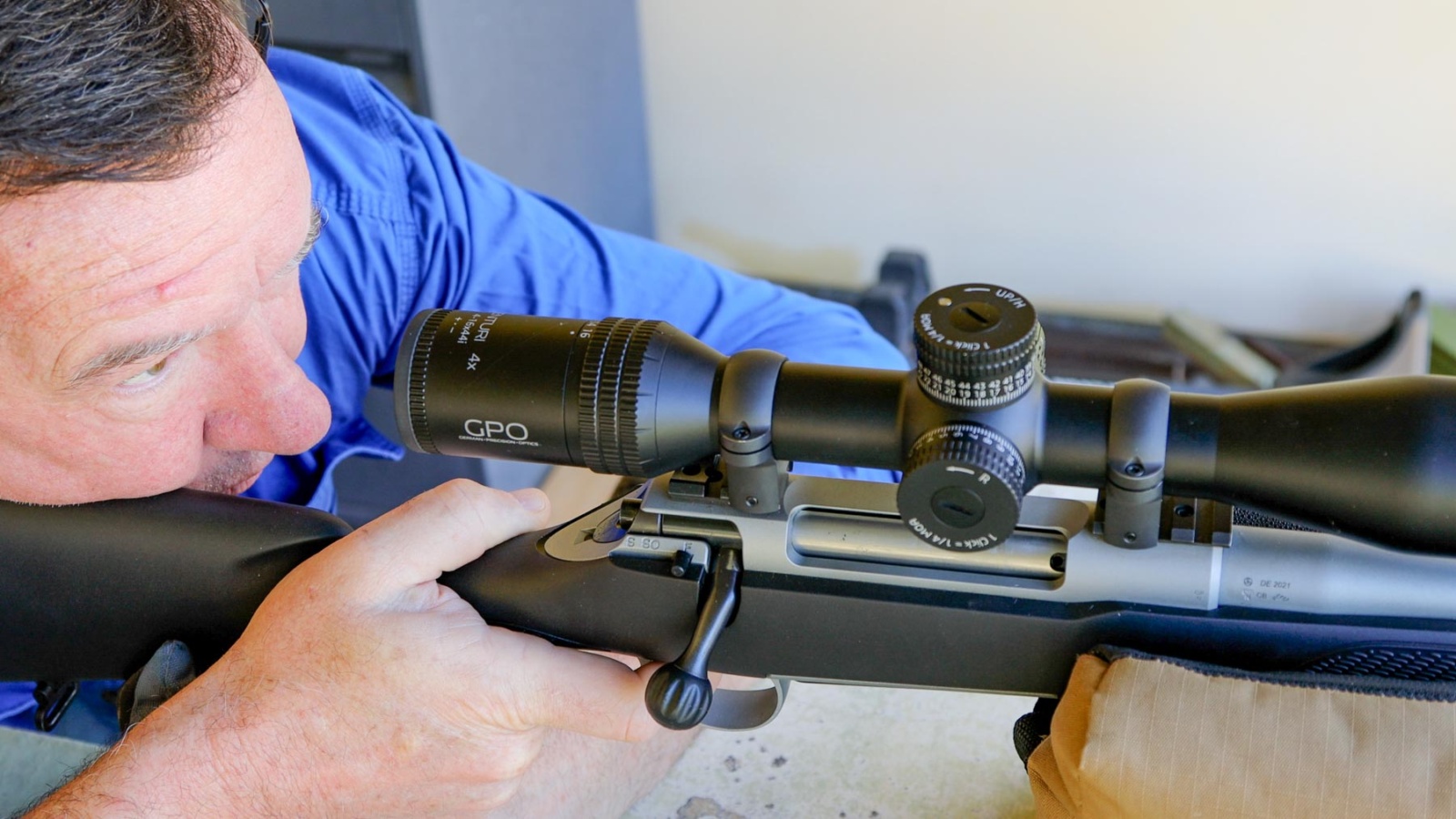
This scope is a far better fit on a long-action rifle like my Sauer in 9.3×62, partly because it’s much easier to mount low with the correct eye alignment. Having said that, for heavy calibres, you might want to look to the Centuri 6x models, which have longer eye relief again.
This scope is sometimes sold a bit more cheaply than the other large-bodied Centuris, which will clearly suit some people’s budgets that much better, the main compromise being that it has the same smaller 4x erector ratio as the compact scopes, that is, less zoom ratio.
Still, at 4-16x, this is a terrific hunting scope in open country where longer shots are the norm. Put this on any accurate rifle in a calibre that carries sufficient energy to distant targets and you’ll be all set for your typical 100-200m shots and also be well equipped to bag a stag 400 or 500 metres away if you’re up to it, maybe more.
- Model: Centuri 4x 4-16x44i
- Size: 4-16×44
- Erector ratio: 4x
- Adjustments: MOA
- Turrets: Exposed
- Zero stop: Yes
- Reticle: MOA/CCW
- Adjustments: 1/4 MOA
- Adjustment range: 90 MOA
- Reticle plane: SFP
- Parallax: 10m-infinity
- Light transmission (%): 90
- Exit pupil (mm): 11-2.8
- Eye relief (mm): 80
- Field of view @ 100m (m): 10.3-2.7
- Main tube diam: 30mm
- Length (cm): 34
- Weight (g): 706
CENTURI 6x 3-18×50
I reckon this scope is better value than the 4-16×44 because it’s only a few dollars more (if at all; some retailers price them the same) but you get better close-range potential from the 3x magnification and further reach with the 18x top end. It has a bigger objective lens, too, for better low-light performance.
It’s a lot of scope for about $1100, or less in some shops.
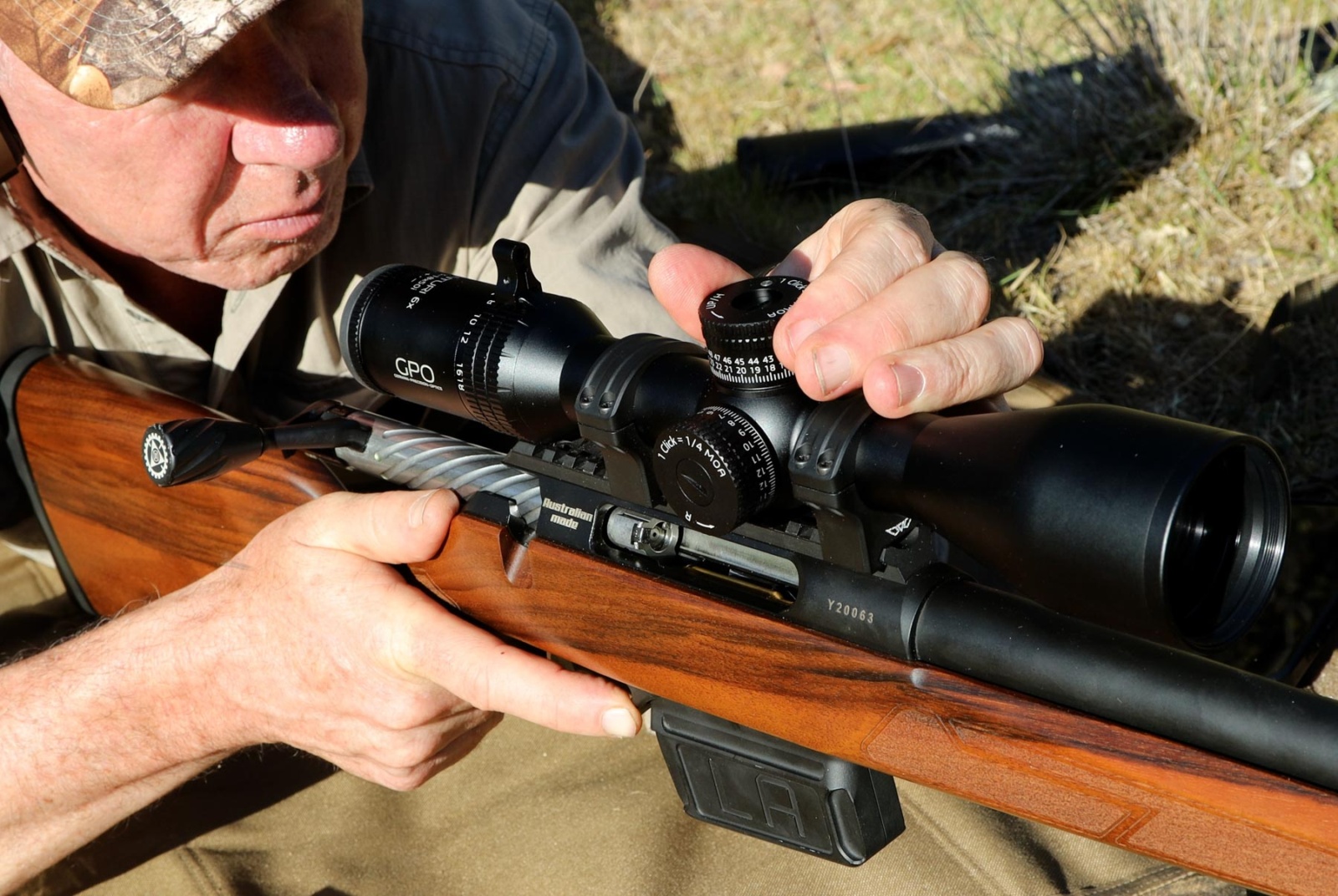
OK, there’s no free lunch. It is the heaviest Centuri, though not by much compared with the other full-size models. I could live with that, especially on a long-range or varmint rifle where weight isn’t the issue but pinpoint accuracy and long range is.
To me, the obvious testbed for this scope was my varmint rifle and the Centuri’s precision in adjustments and clear view was very well matched to the reach and accuracy of the rifle. You get a choice of G4i or MOAi reticle; The test scope had the G4i but in this varminting role I’d be inclined to go for the hash-marked MOA crosshairs.
- Model: Centuri 6x 3-18x50i
- Size: 3-18×50
- Erector ratio: 6x
- Adjustments: MOA
- Turrets: Exposed
- Zero stop: Yes
- Reticle: G4i Fibre
- Adjustments: 1/4 MOA
- Adjustment range: 90 MOA
- Reticle plane: SFP
- Parallax: 10m-infinity
- Light transmission (%): 90
- Exit pupil (mm): 12-2.8
- Eye relief (mm): 95
- Field of view @ 100m (m): 13.7-2.3
- Main tube diam: 30mm
- Length (cm): 33.5
- Weight (g): 748
CENTURI 6x 2.5-15×44 and 2.5-16×50
I’ve saved what I reckon are the best for last, the pair of 2.5-15x GPOs. One has a sleeker 44mm objective lens and the other has a brighter 50mm objective lens, with a small weight penalty to go with it. I’ll take the bigger one (almost) every time because I’ve so often taken shots in those few moments when the light is right at that critical point between being able to shoot safely and accurately or not. You might lean towards the slimmer scope, which is also 3½ cm shorter and about 45g lighter.
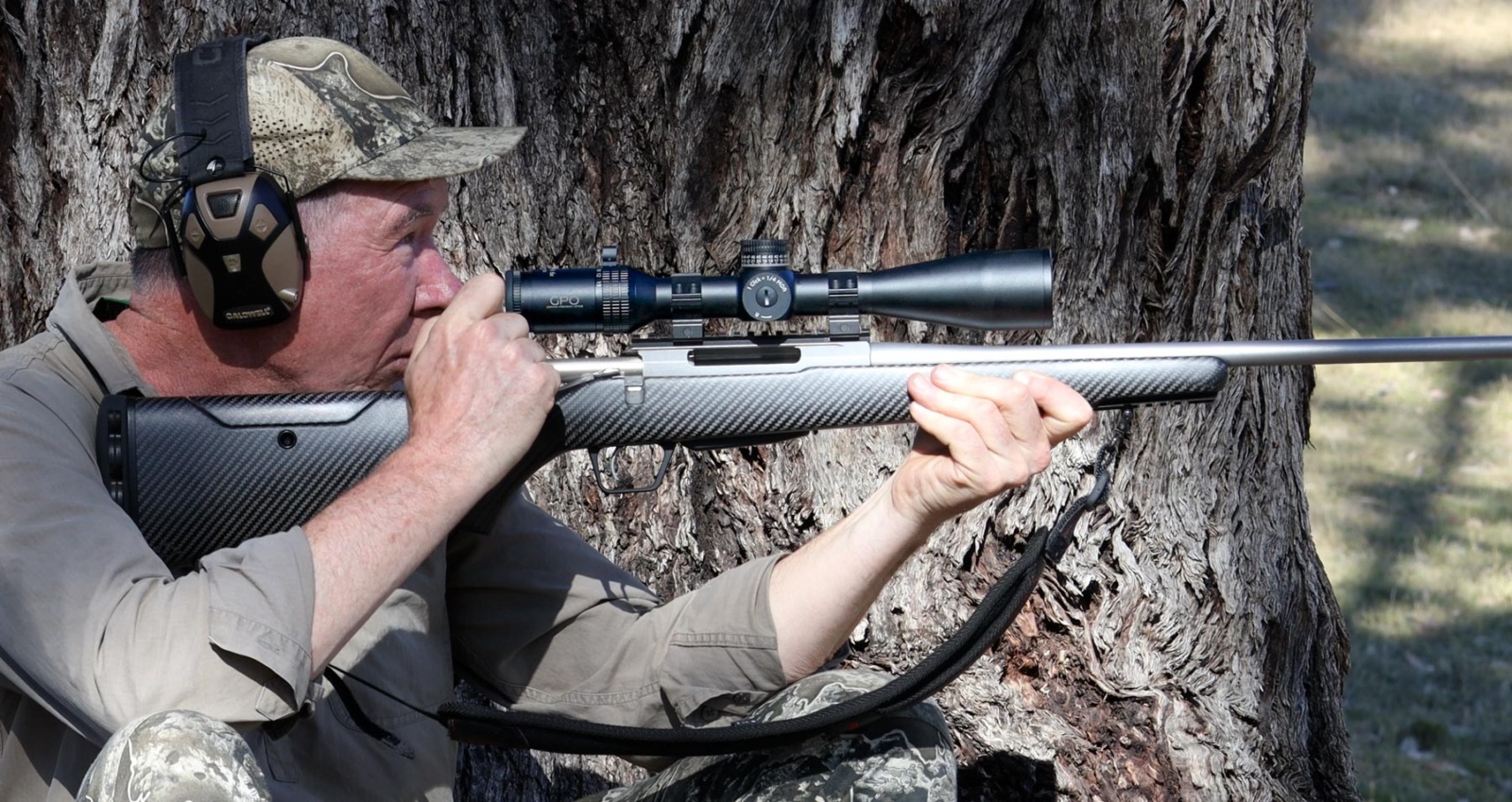
With the wide field of view and resultant quicker target acquisition at the minimum 2.5x magnification, these copes will serve you well in close country — say, sambar stalking in the thick stuff or flushing pigs from lignum. Yet it’ll also stretch out hundreds of metres up at 15x.
In my book, except with an even bigger erector ratio, you won’t find a much more versatile riflescope than this. Throw in the massive elevation adjustment, huge parallax variation, very generous eye relief and you can’t go wrong putting this on just about any hunting rifle.
Maybe that’s just me and you have a different opinion. Whatever the case, if you reckon the specs and style of one of these GPO Centuris is up your alley, I have no hesitation in recommending it to you. They are all not a lot of money, very well spent.
- Models: Centuri 6 2.5-15x44i / 2.5-15x50i
- Size: 2.5-15×44 / 2.5-15×50
- Erector ratio: 6x
- Adjustments: MOA
- Turrets: Exposed
- Zero stop: Yes
- Reticle: G4i Fibre
- Adjustments: 1/4 MOA
- Adjustment range: 110 MOA
- Reticle plane: SFP
- Parallax: 10m-infinity
- Light transmission (%): 90
- Exit pupil (mm): 15-3 / 17-3.3
- Eye relief (mm): 95
- Field of view @ 100m (m) 17.7-2.7 / 17.7-2.7
- Main tube diam: 30mm
- Length (cm): 34 / 37.5
- Weight (g): 690 / 733
GPO optics are distributed in Australia by Red Earth Distributions.


0 Comments