



The Tasmanian government has made it easier for hunters and landowners to shoot deer, especially outside traditional deer habitat regions, under changes to the state’s wild deer management strategy.
Under the changes announced by Tasmanian Environment Minister Gavin Pearce and the Department of Natural Resources and Environment earlier this week, landowners will now be able to obtain a five-year permit to cull feral deer year-round with no quotas, tags or restrictions on taking male deer in most of the identified zones, while hunters will enjoy year-round open seasons with no bag limits in Zones 2 and 3.
Restrictions on the commercial use of wild-shot deer will also be lifted.
Tasmania has experienced an explosion in deer numbers in recent years, with more than 71,000 wild deer now believed to be in the state.
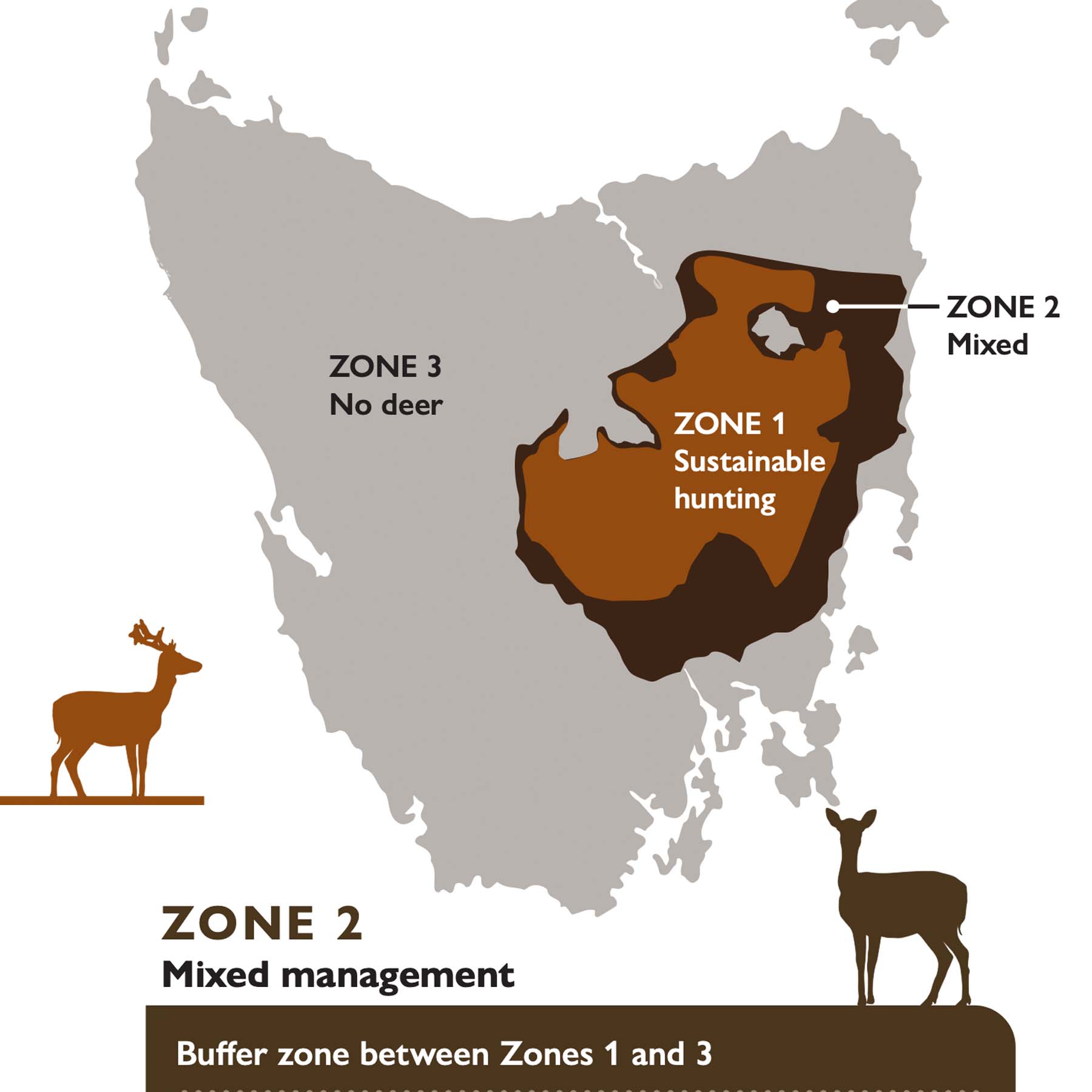
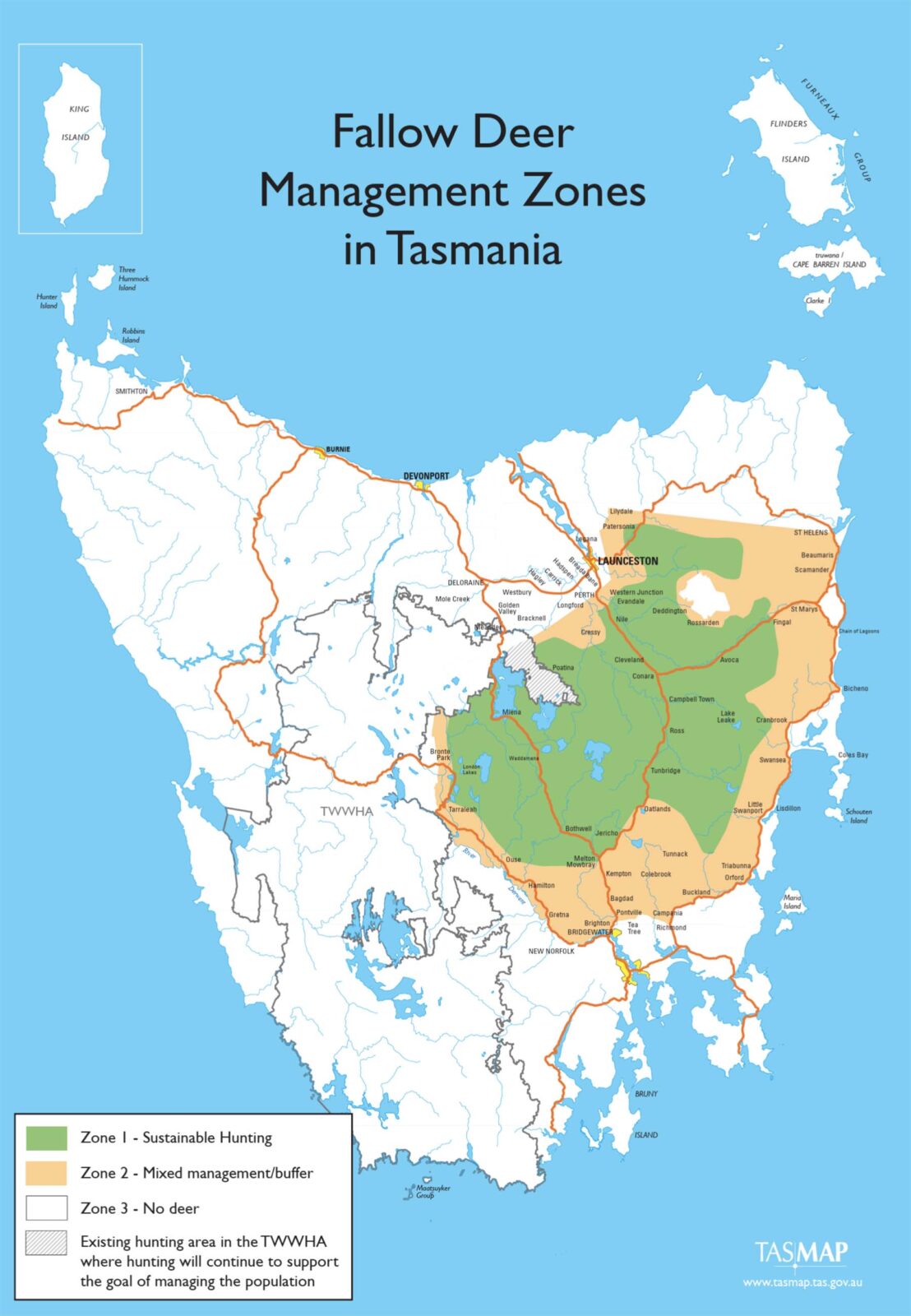
Under the Tasmanian Wild Fallow Deer Management Plan established in 2022, the state is divided into three zones regarding deer.
Zone 1 covers what many consider the the traditional deer range, largely in the state’s central-east region. The Management Plan notes: “Hunting in this zone is valued as a source of recreation for many individuals, families and hunting groups. Existing relationships between hunters, hunter groups and landholders will remain an integral component of deer management in this zone.”
Zone 2 is a buffer zone around Zone 1, and contains varying numbers of deer which have expanded into the region, with efforts being undertaken to stop this expansion.
Zone 3 is the rest of Tasmania, where deer are not found or have only recently occurred, and where their presence is not welcome. It includes “peri-urban areas, and areas with high natural and cultural values”.
Several shooting groups and representatives, including Shooters Union Tasmania, the Australian Deer Association, and Shooters Fishers Farmers MP for Lyon Carlo di Falco have welcomed many parts of the reforms, particularly those relating to red tape reduction for hunters and landowners.
The Australian Deer Association said the red-tape reductions were a win for hunters, but said access to hunting areas was a major issue still needing to be addressed.
“The ADA repeatedly argued that recreational hunters cannot be expected to achieve meaningful population reductions if they cannot access the areas where deer are most abundant,” the organisation said in a statement on its website.
“With the majority of Tasmania’s deer occurring on private land, improving cooperation between hunters, landholders and government remains critical to achieving long-term management objectives.
“The government has acknowledged the importance of recreational hunters in managing deer populations, but practical access remains the key challenge.
“Without access, even the best management strategy will struggle to deliver results.”
Shooters Union Tasmania president Phillip Bigg said it was particularly pleasing to see 10 new blocks of public land, reserves and crown land being unlocked for recreational deer hunting.
“This takes the total available deer hunting area on public land to 61,608 hectares — a significant expansion that finally opens up more of the state’s reserves and crown land where deer populations have been building up unchecked,” he said.
“For too long these areas have acted like protected sanctuaries while farmers copped the damage on private land.
“The new self-service booking system is also a welcome improvement that will make access simpler and more practical for licensed hunters.”
Controversially, however, the shift to 365-day hunting of does has raised some animal welfare concerns among shooters, who are worried about the impact it will have on young deer during fawning season.
Mr di Falco said deer population management must be balanced with animal welfare, and he was strongly opposed to allowing does to be harvested year-round.
“There are legitimate concerns about dependent young being left behind and those concerns should not be dismissed,” he said.
“We can control deer numbers without abandoning the ethical hunting standards that Tasmanian hunters pride themselves on.”
Mr Bigg, meanwhile, said the reforms were a missed opportunity to legislate for game meat donations — pointing out a draft Game Meat Donation Bill had been circulated to every MP in Tasmania in December last year but it appeared to have been disregarded.
“We now have the distressing situation of commercialising game meat for a select few profit-seeking, while healthy venison and wallaby meat continues to go to waste instead of feeding Tasmanians doing it tough — families struggling with food insecurity, food banks under pressure, and kids going hungry in one of the richest countries on earth.
“That’s not good enough. I’ve said it before and I’ll say it again: this is disgraceful.
“Hunters are ready and willing to be Solution Hunters. We can solve two problems at once — out-of-control deer numbers damaging farms and the environment, and putting real food on tables for those who need it.
“New Zealand is already doing it successfully. Why is Tasmania dragging its feet with red tape and hypocrisy?”


0 Comments