





Red Earth is a new Australian brand of American-made ammunition that has been introduced in keenly priced 500-round bulk packs of both polymer-tipped and soft-point .223. It is clearly aimed at budge-conscious Aussie shooters, yet my testing indicates it doesn’t take shortcuts on quality or performance.
The accuracy and lethality are both up with the best factory hunting ammo, consistently producing tight groups and fast kills.
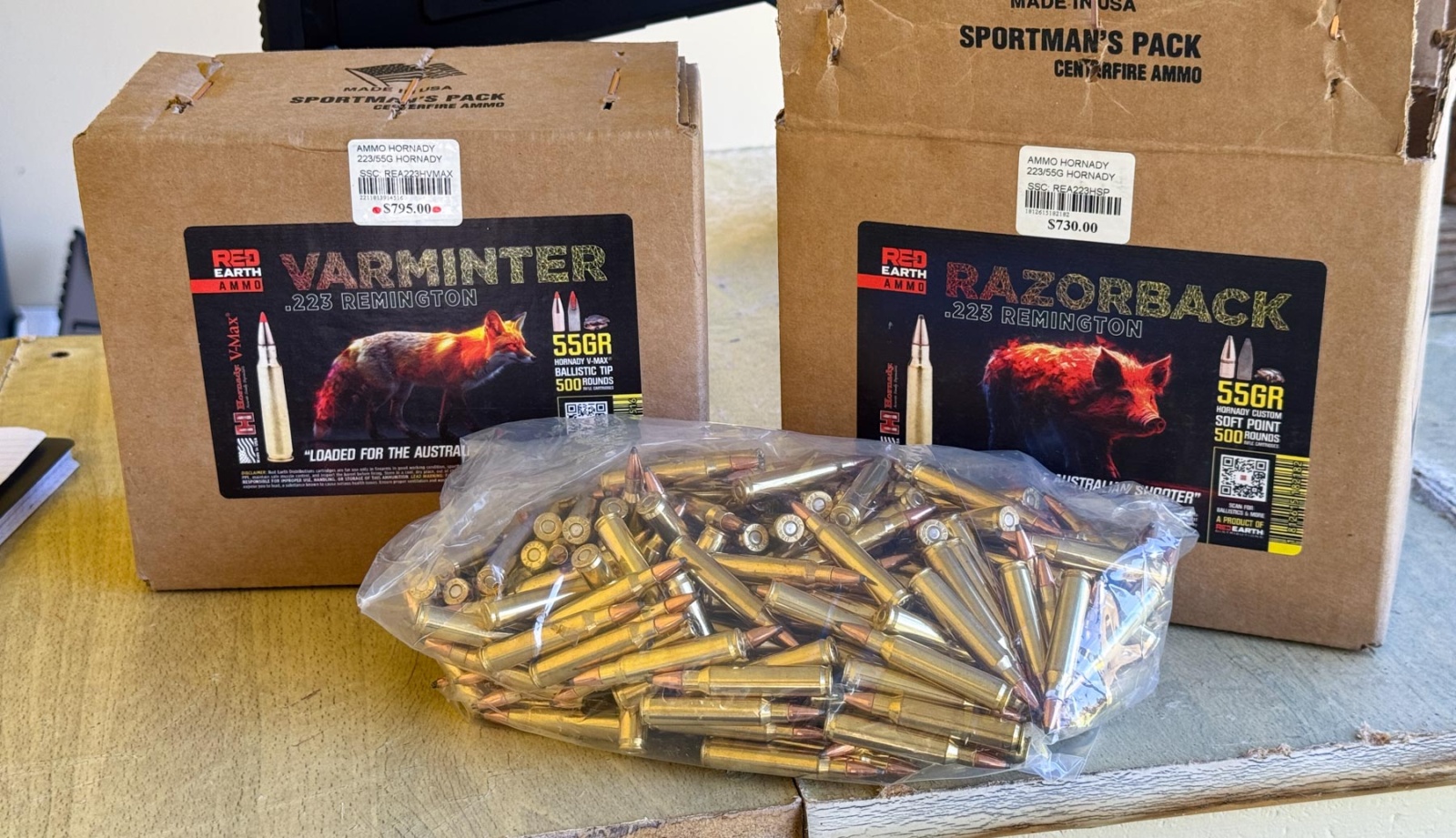
Red Earth Distributions, a new and growing company, went to the US to specify the loads it wanted for our market. The two 55-grain bullets it uses are both well-known Hornady projectiles: the frangible V-Max in the Varminter load for smaller game and the tougher soft-point in the Razorback ammunition for more stoutly built animals.
The brass is made by Armscor, according to the “A USA” head stamp, with CCI primers and an unspecified, fine-grained propellant powder. Armscor puts it all together in the USA.
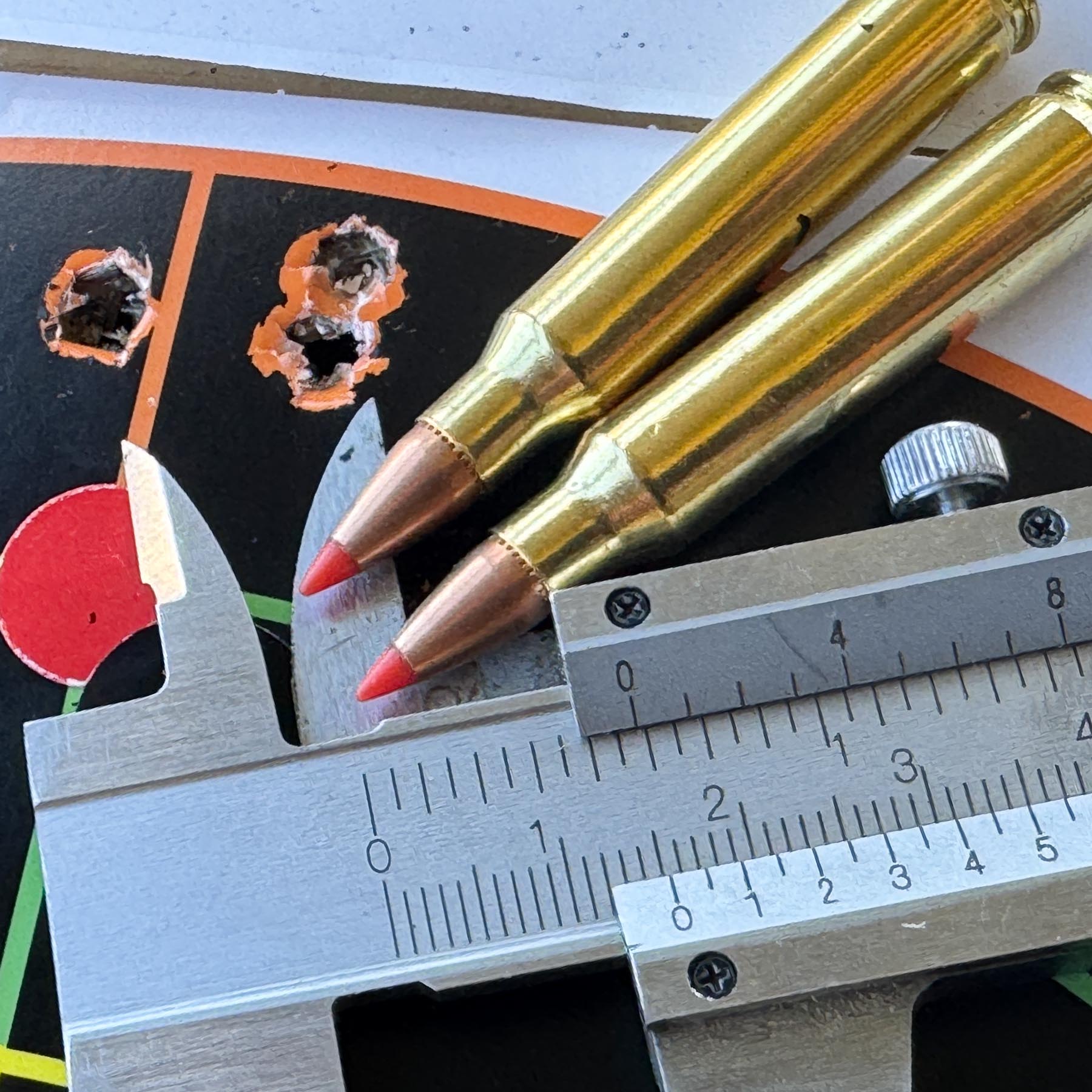
Both loads are built to admirably fine tolerances for factory ammo. Cartridge overall lengths, measured from 10 randomly selected rounds of each, varied only .2mm in the Varminter loads and .25mm in the Razorback.
Cartridge weight showed a maximum variation of just over 11 grains (.72 gram), and virtually all of that was in the brass. That much variation was rare, too: the standard deviation in weights was only 1.8gn in the Varminter and 3.3gn in the Razorback.
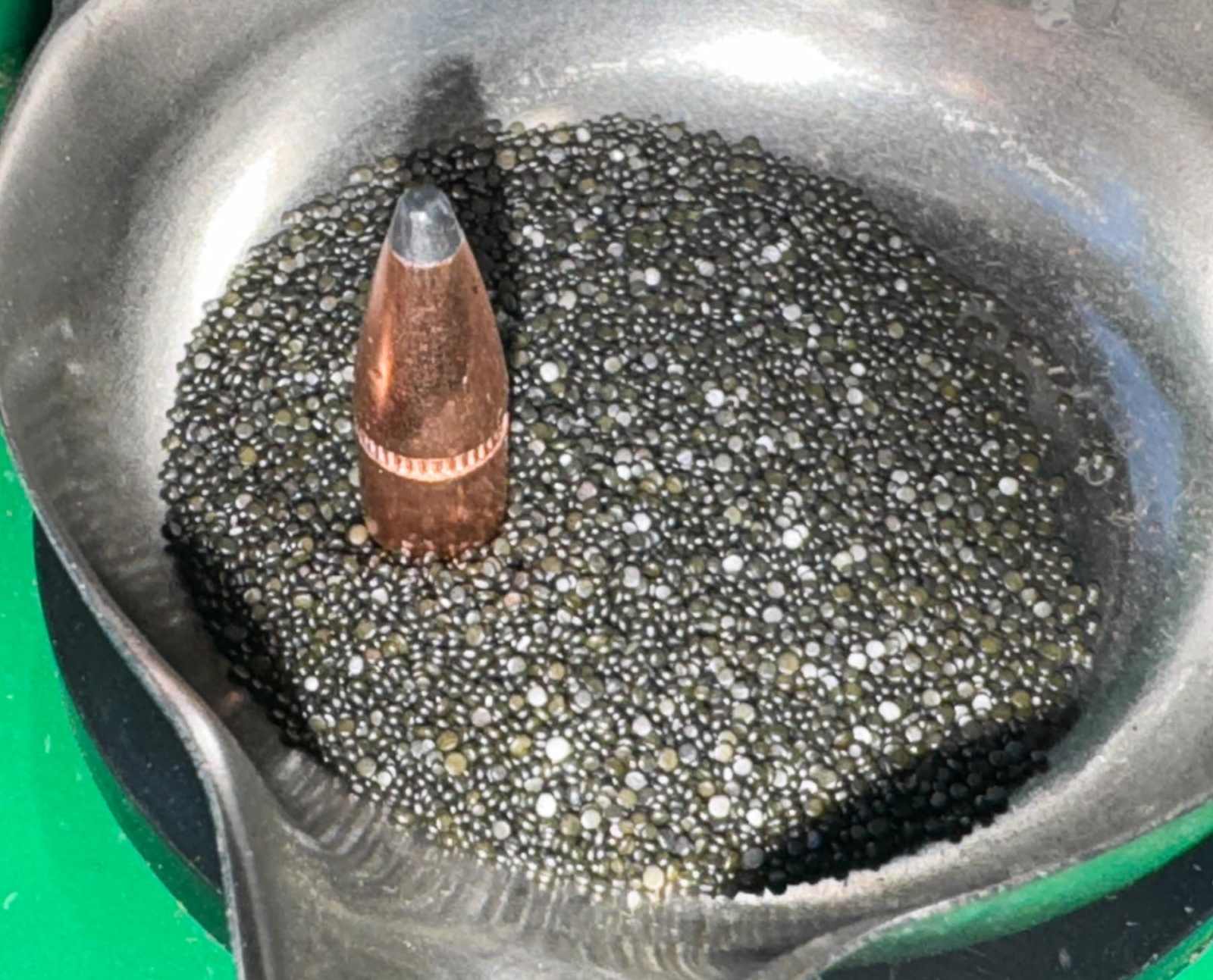
None of the projectiles or powder loads I weighed showed more than .2gn variation, and usually less.
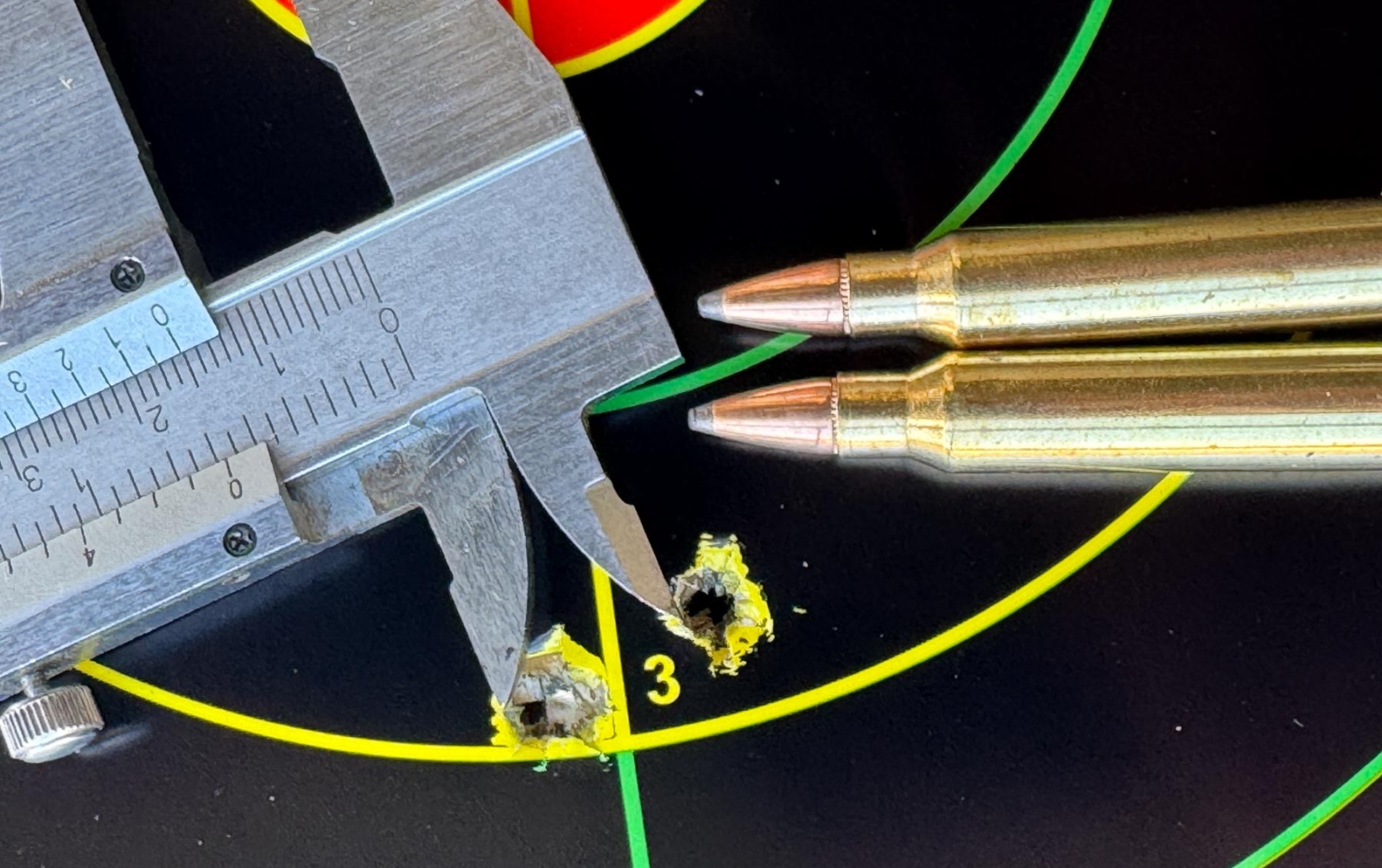
This attention to consistent loading showed up in the accuracy the Red Earth rounds achieved. I used my faithful old Tikka T3 Lite Stainless for the primary testing and achieved accuracy as good as I’ve ever got from it. Both loads shot a best of ½ MOA (15mm at 100m) for three shots, and both averaged less than 1 MOA overall, the Varminter edging out the Razorback at .87 MOA versus .98 MOA.
Meanwhile, average velocity of the Varminter was 961.0m/s (3153fps) with a standard deviation of 7.1m/s (23fps) and spread of 21.6m/s (71fps); the Razorback was almost identical.
The boat-tailed soft-point has a G1 ballistic coefficient of .235 and sectional density of .157, and the flat-based V-Max has a BC of .255 and the same SD of .157. Both are cup-and-core bullets with no bonding or other more complex design aspects, and both have a cannelure.
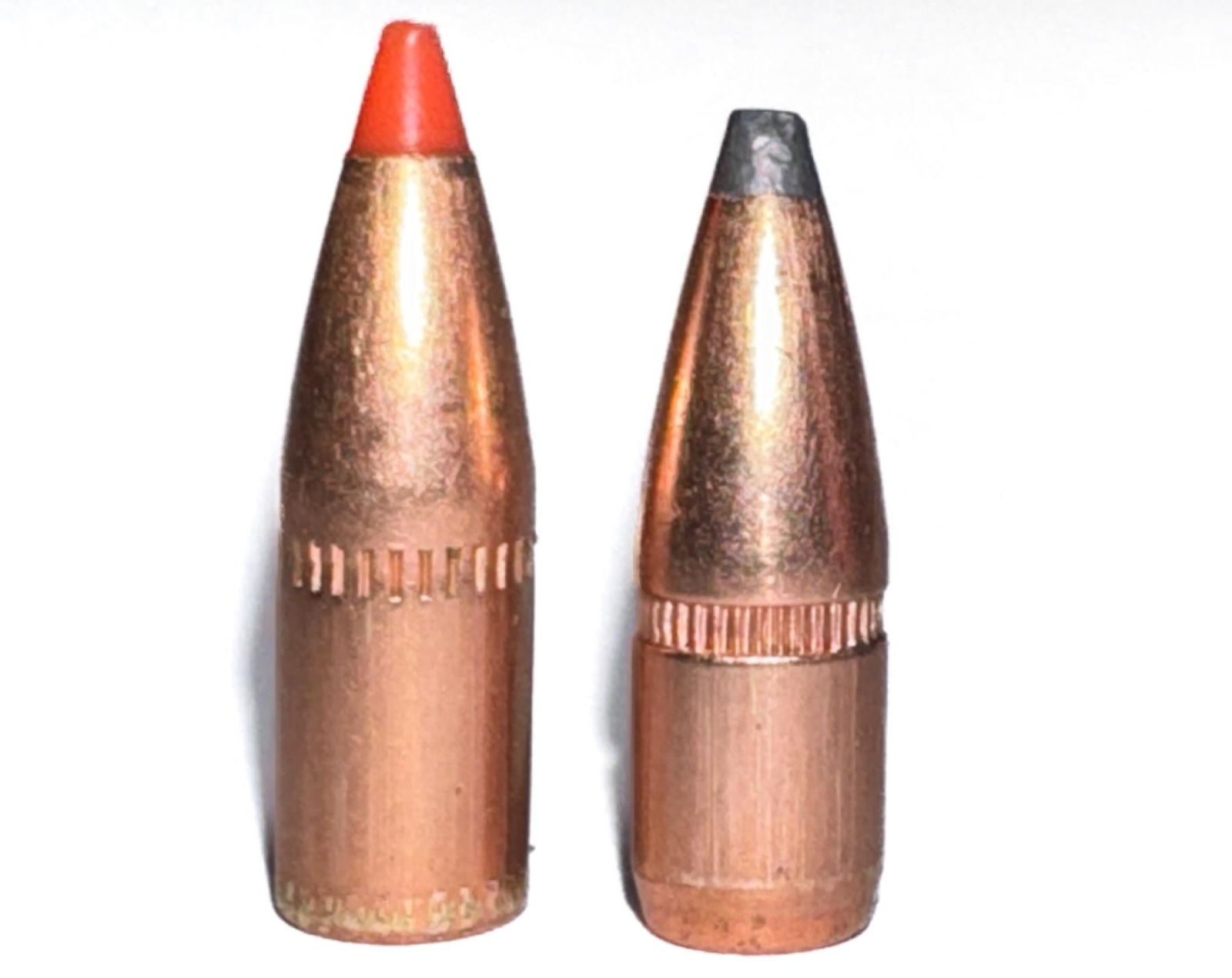
While Hornady labels the 55gn soft-point as a small-game projectile for smaller things up to about 23kg, Red Earth’s Razorback label shows they have higher expectations, and I’m inclined to agree. These bullets will penetrate fairly deeply and smash bone on the way.
Shooting ferals up to the size of medium-large billies, the soft-points did plenty of damage and penetrated reliably, often passing through unless they hit more than a rib. One bullet struck the upper fore-leg of a medium goat and pulverised the bone, going on to destroy vital organs and kill almost instantly. Another hit a rib on the way in and smashed the off-side fore-leg before what was left of it — just the base of the jacket, essentially — stopped under the skin.
However, you’d want to place a shot very well if you’re aiming at an above-average pig or mature fallow buck. That’s pushing the limit of any .223, in my opinion, and I’d prefer to shoot a larger calibre if that’s what I were pursuing.
The downside of using the soft points on lighter animals is that they sometimes pass right through the chest but leave a small internal wound, allowing the animal to go some distance before dropping.
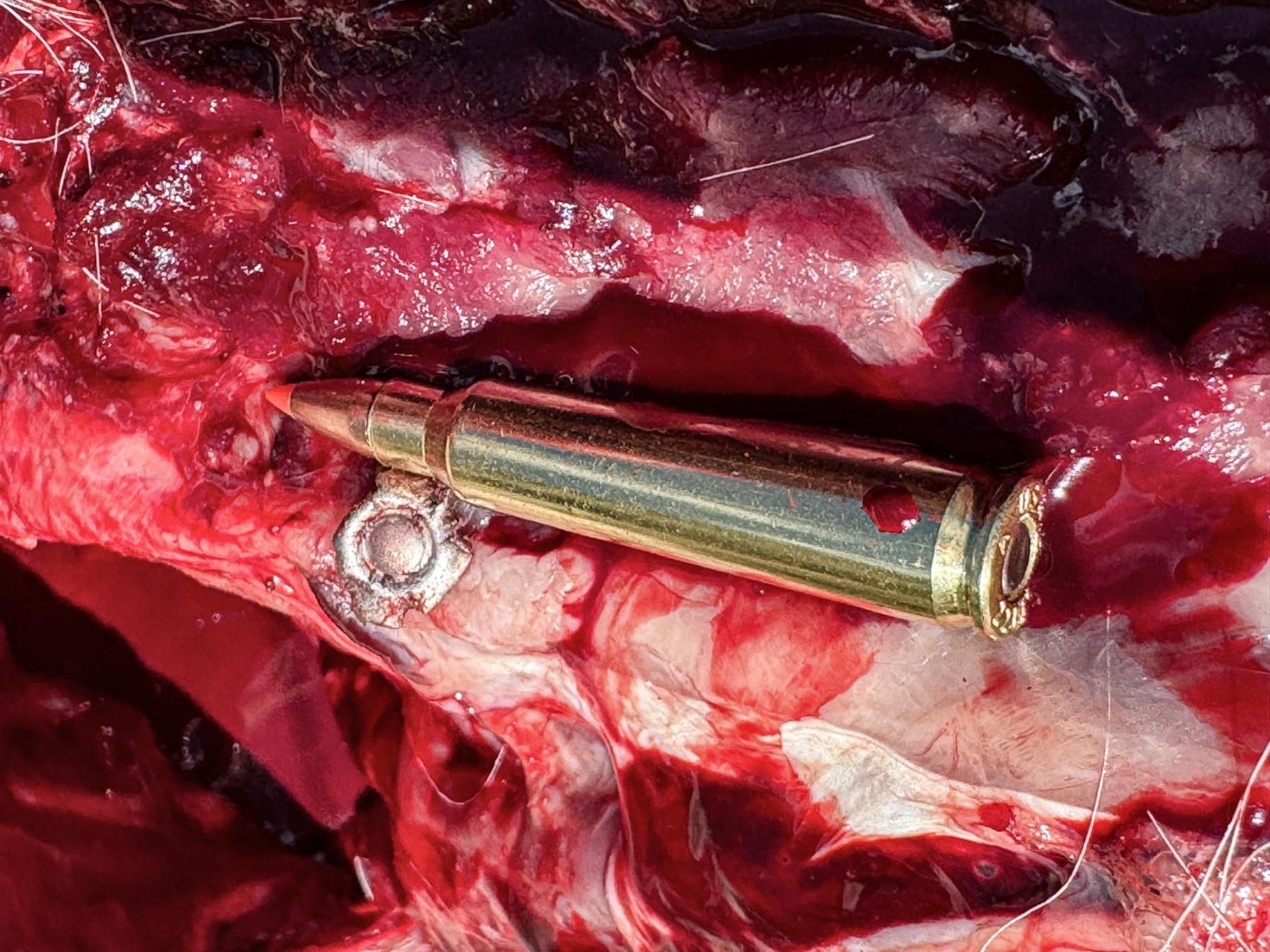
The V-Max bullets in the Varminter load, on the other hand, are sensational on lighter animals. They come apart rapidly on the way in and do massive damage to flesh and organs inside. My results were gruesome on rabbits, awesome on foxes and emphatic on small and medium goats. There was usually very little of the bullet to recover, if anything, but the path of devastation was impressive.
They are very much varmint bullets, but they’ll be effective on slightly larger thin-skinned creatures like wild dogs and macropods. V-Maxes are so frangible, though, that I’d be reluctant to use them on larger animals unless I knew I could follow up very quickly with a second shot if required.
Pricing of this Red Earth ammunition varies from shop to shop. When I did my testing, a 500-round box of Razorback was typically advertised for about $600-$650, and Varminter costing a bit more at $700-$750. However, as I upload this, the Middle East was in flames and prices of everything was ramping up. Comparatively, Red Earth should be very competitive.
And that’s impressive when you’re getting the very good, very consistent ballistic and terminal performance of the Red Earth, making it one of the best buys there is.
Find out more on the Red Earth Distributions website.


0 Comments