




To hunt fast, far, effortlessly and, most importantly, stealthily, take a good look at the Tracker 1 electric bike, a power-assisted offroad pushbike that could completely change the way you get around your hunting grounds.
It is smaller, lighter and in some ways more nimble than most electric vehicles, and it wafts along so quietly that animals often no have idea you’re there, much less any idea at all that you were coming in the first place.
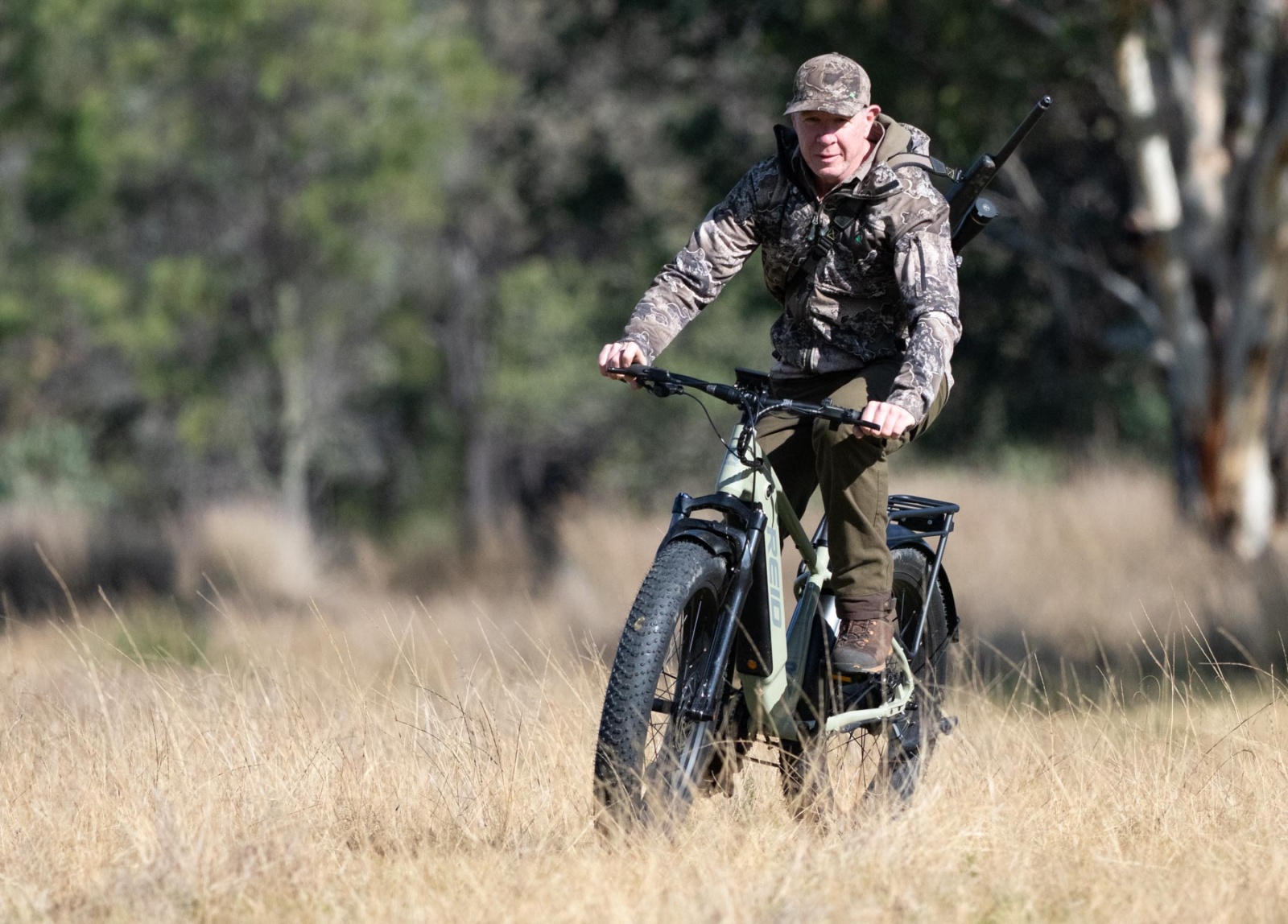
That’s the beauty of electric power — its silence. And while you could achieve the same effect on a regular pushbike, the Tracker’s electric motor does almost all the work if you want it to and increases your average speed on a longer ride, so you can cover more ground or just get there sooner.
The very first time I took the Tracker 1 hunting, I rode within 25m of two boars grazing in the pre-dawn gloom, and they were clueless about my sudden intrusion.
The Tracker 1 is a fat bike, an offroad style which particularly wide tyres that provide oodles of grip and can be inflated to lower pressures to absorb some of the hits of rough trails. Fat bikes tend not to have quite the agility of a mountain bike but play a better role in heavy-duty work such as bike-packing, where you might load up with camping gear and disappear deep into the bush. Or come out with a huge load of venison.
Fat bikes also tend be a little heavier but that point becomes moot when you add an electric motor, and the Tracker’s a huge 750W motor kills any discussion, at least until you drain the battery. Reid claims this is the most powerful bike in its class, and it’s certainly well above the output of the majority of similar bikes.
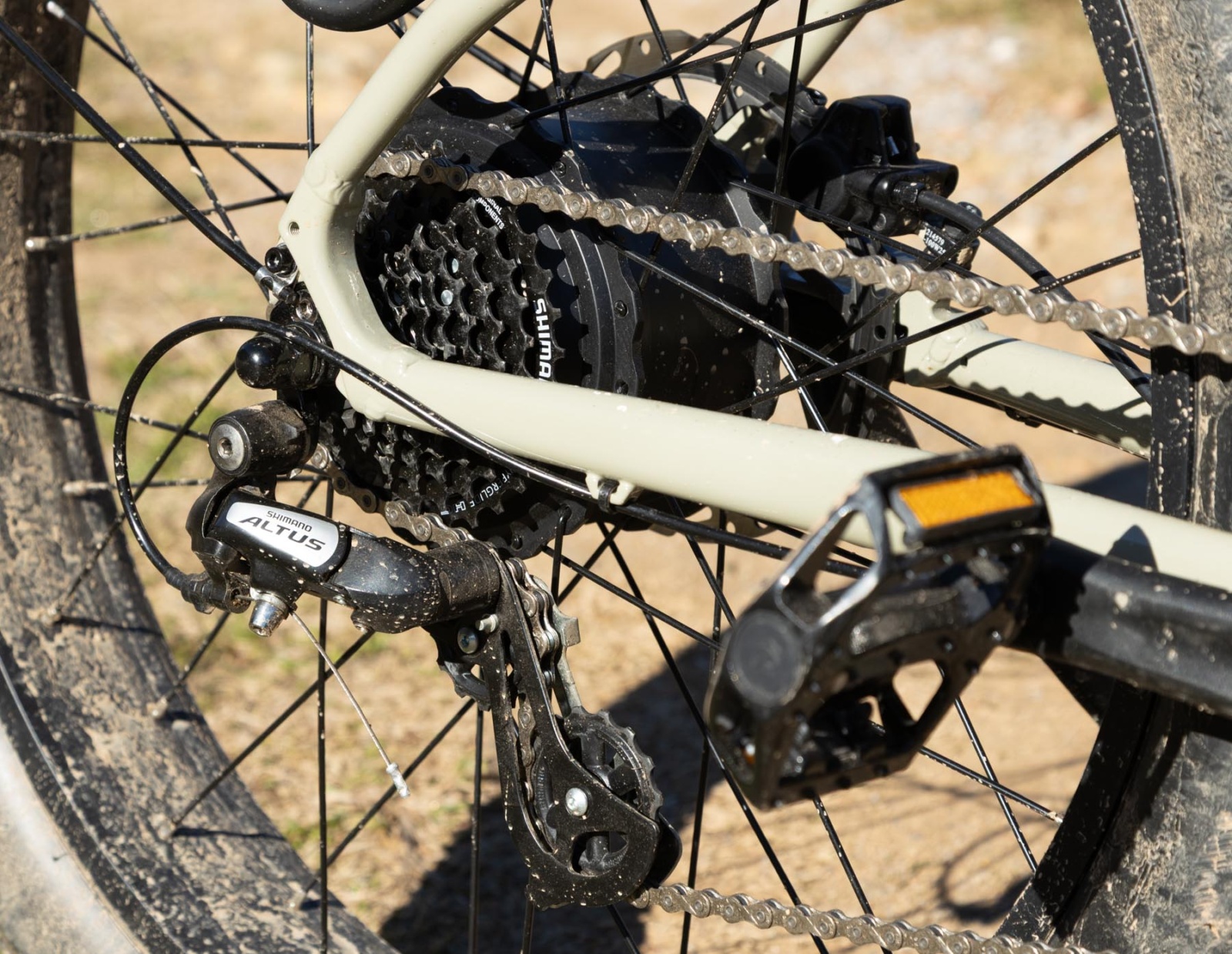
The Tracker also has 80Nm of torque — roughly three times as much as a typical 250cc motorcycle — which ensures it has the grunt to pull easily up long, steep hills even if you’re carrying a big load.
The only downside to all that power is legislative (naturally). The Tracker is not legal to use on public roads or public land, and cannot be registered (there may be one or two jurisdictions where conditional rego could be applied but I’m not aware of them).
For zooming around private land, it’s very quick, capable and convenient. I saw over 30km/h on the speedo and never felt like the bike was getting sketchy at that pace.
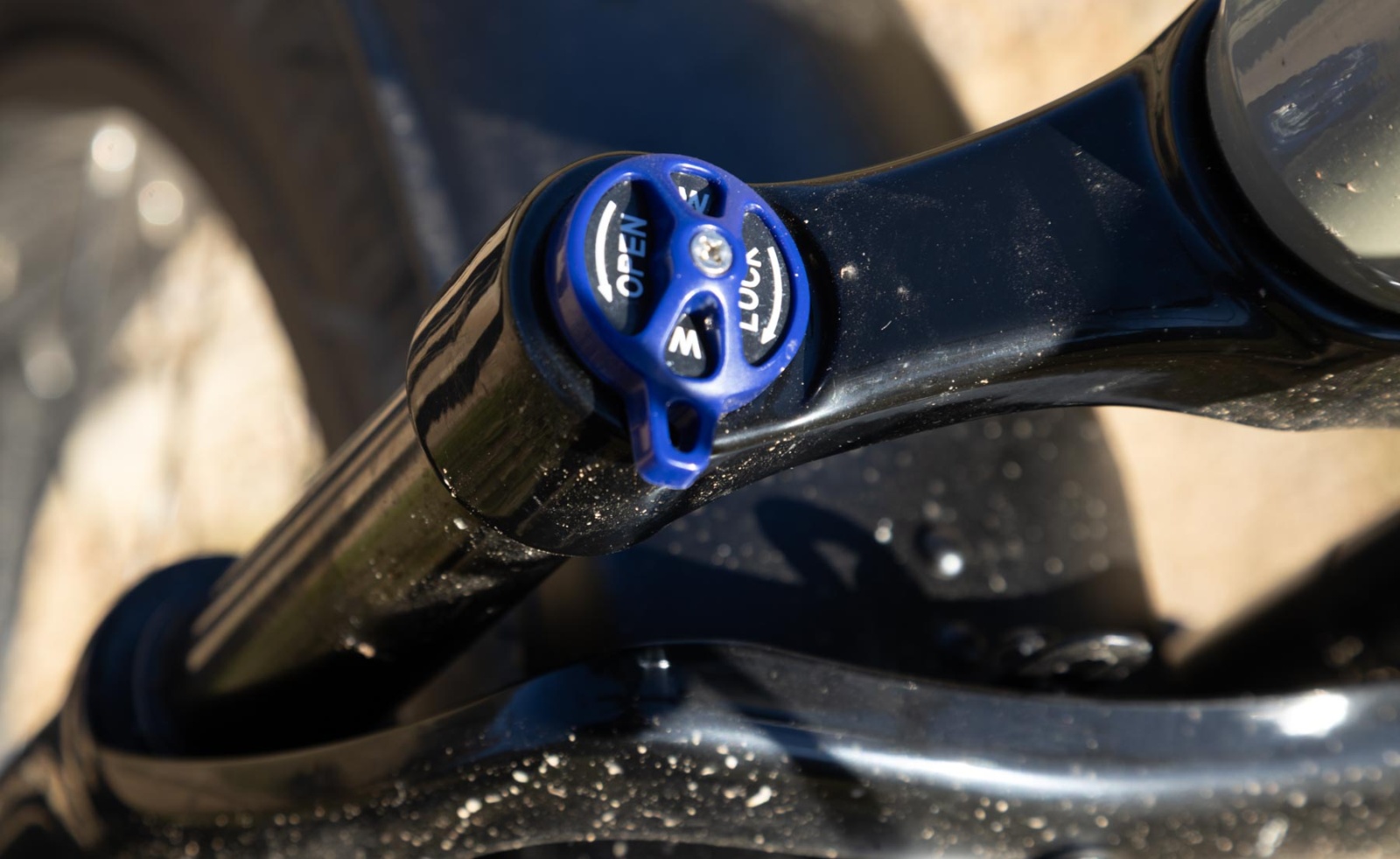
The rigid frame has no rear suspension of its own, but the front forks have 80mm of travel to cushion the blows, with a lockout if you prefer them rigid. The chassis dimensions create stability and the tyres certainly do give excellent traction in all conditions, including muddy ground.
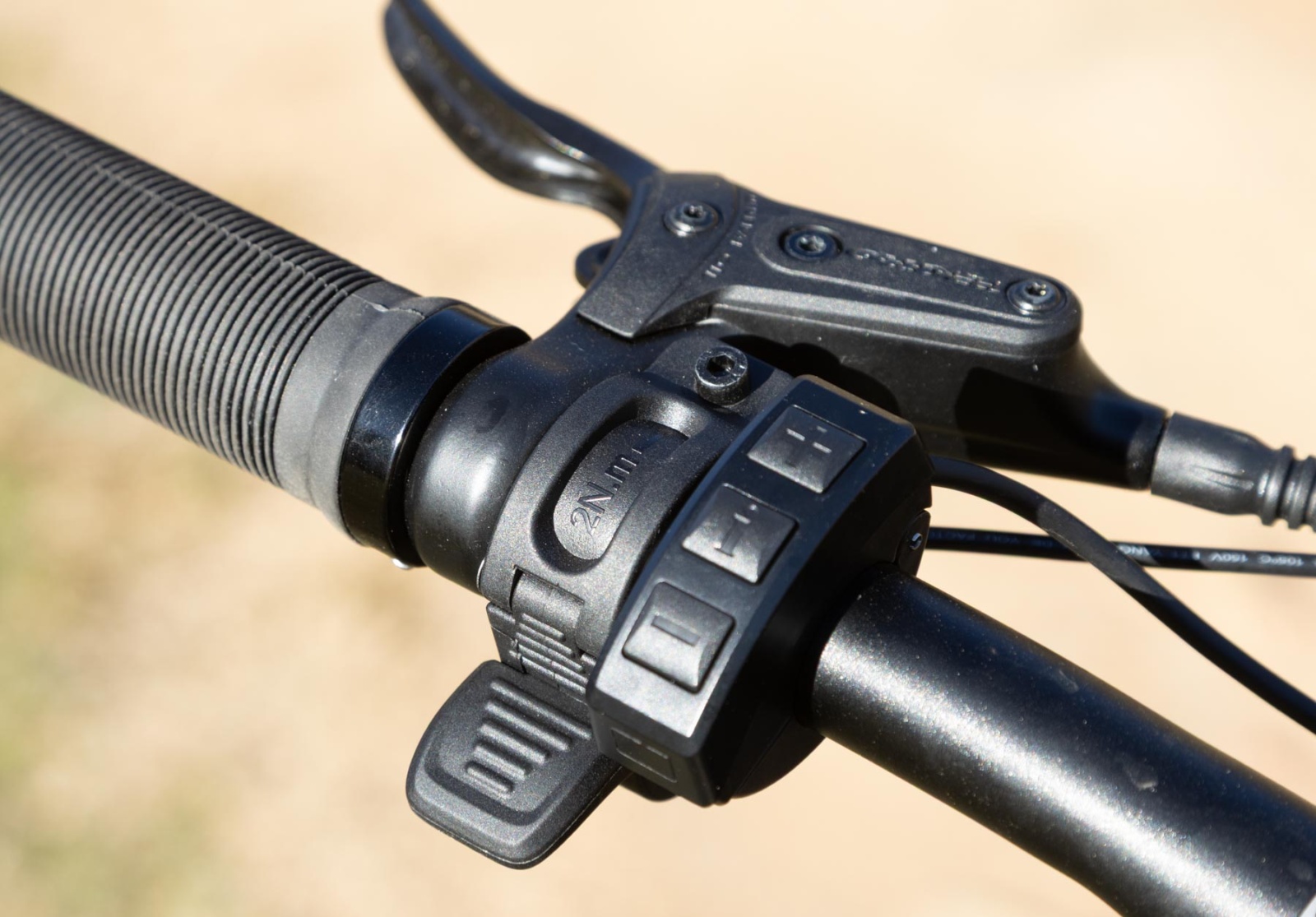
The hydraulic 180mm disc brakes are great, with plenty of feel for safe control and enough force in the two-piston calipers to adequately handle the heft.
The large 48V, 15Ah, 720Wh battery is mounted in the front down-tube and comes out for recharging. Reid claims a range of up 100km, and maybe more, from it. If you’re gently cruising floodplains you will likely get that much but in very hilly terrain I’d suggest you could get as little as 50km. However, generally it will be somewhere in between, which I reckon would be ample for the majority of situations. The battery level meter on the dash should keep you out of trouble.
Fact is, I never looked like draining the battery before getting back to recharge it. As a vehicle to get you into a hunting area before you set up and stalk, there’s plenty of range available. It’s just a matter of getting an idea of how it will go in your particular conditions.
You’ll get more range if you’re fit and your legs can do a lot of the work, of course. On the other hand, you can do no pedalling at all, using a thumb lever on the left bar to switch the motor into action.
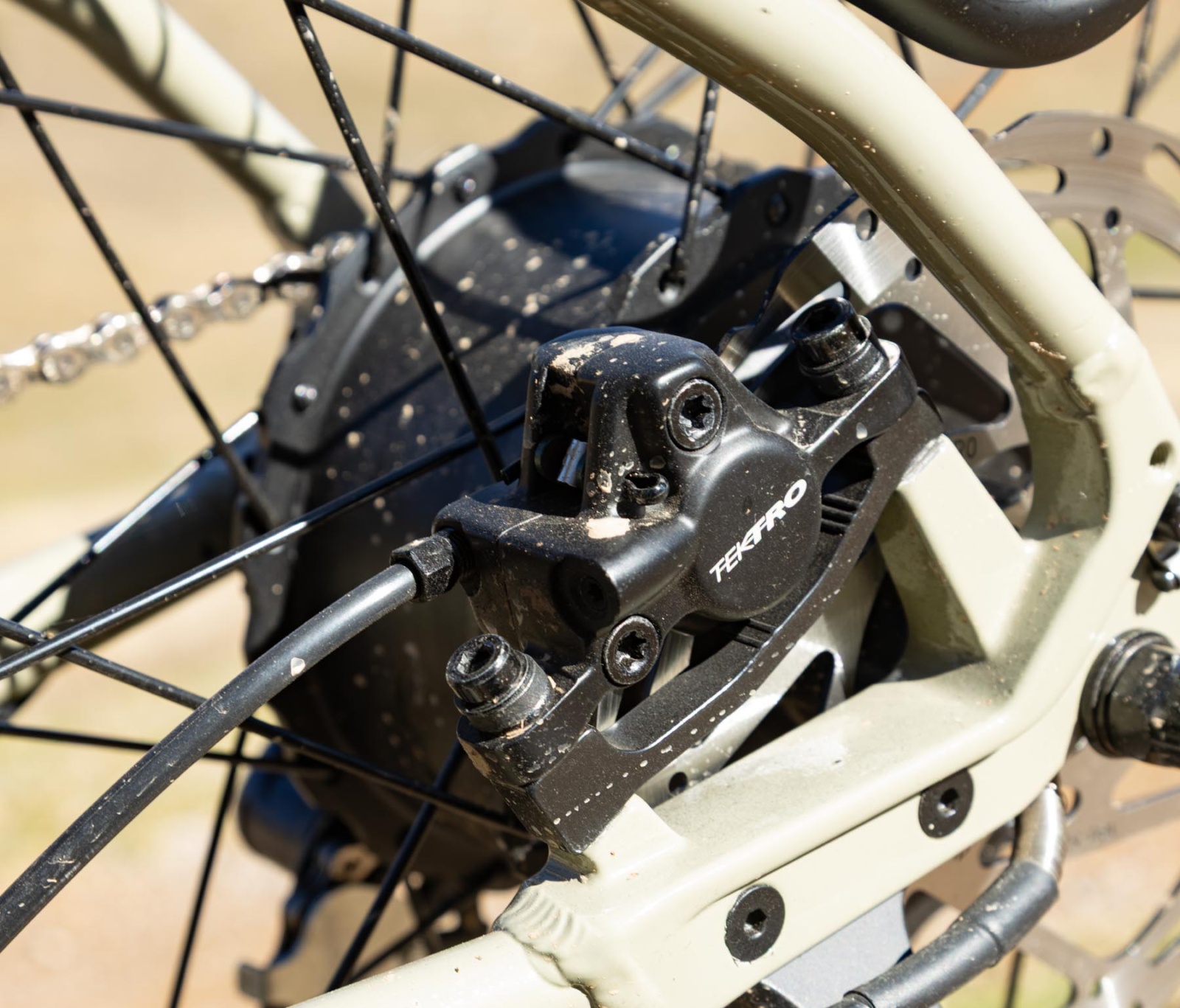
Combined pedal and electric power is the way to go, and for this you can dial in up to five levels of power assistance so that you can manage your own exertion.
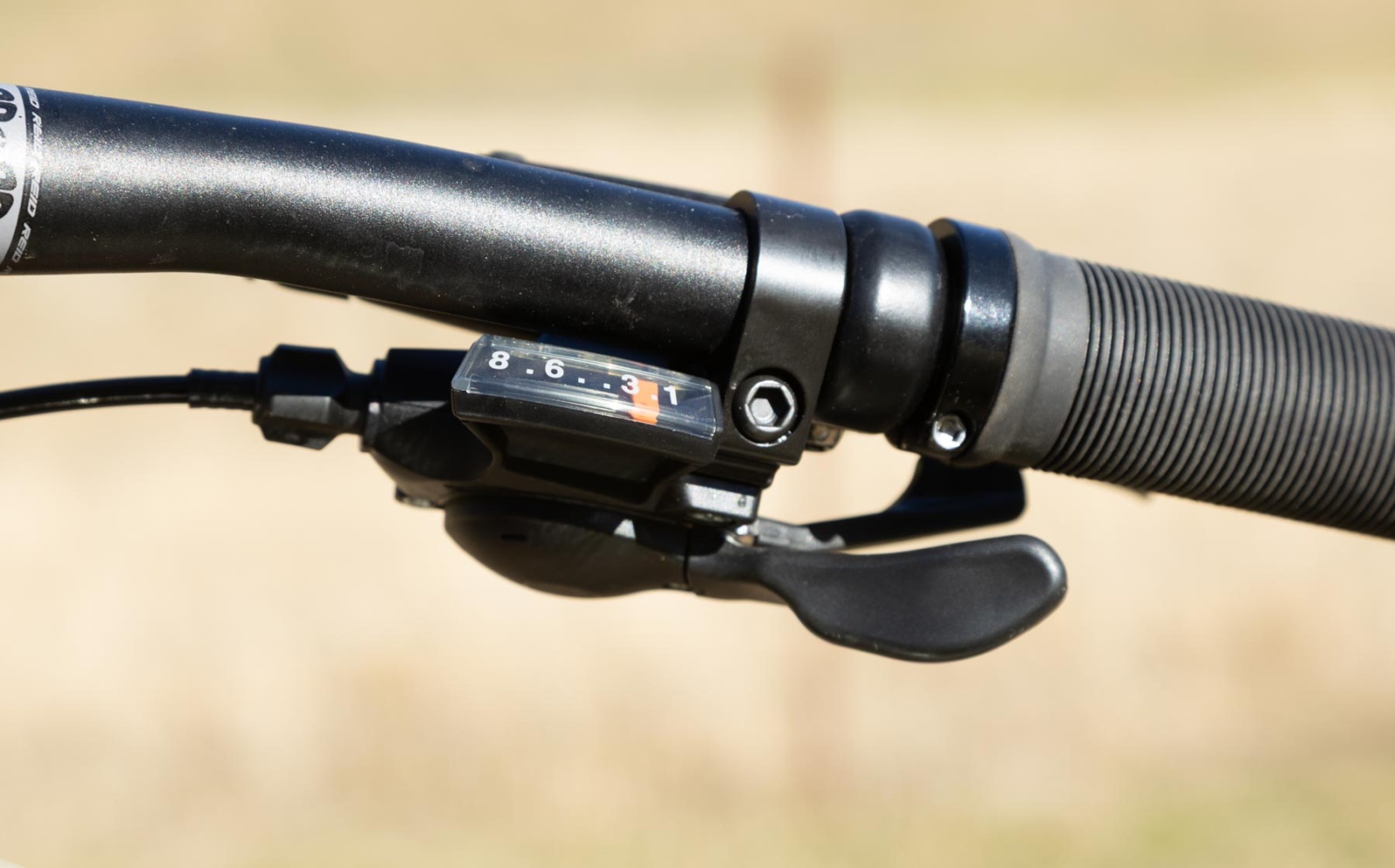
A smooth-shifting eight-speed Shimano gearset perfectly matches the motor’s performance, from getting going up a hill to flying along at top speed, with a standard finger-and-thumb paddle shift on the right handlebar.
It takes only a short time to work out how to juggle gears, assistance level and pedal power on any kind of terrain or slope.
If you do flatten the battery, you can still pedal home but suddenly you remember that this is a heavy pushbike at around 30kg with all the fittings you see here — it requires plenty of effort.
Battery charge level, speed and a host of other parameters are displayed in a little LCD dash. (Don’t do what I did and turn the bike upside down to remove the front wheel; I ruined the display!)
The Tracker’s mudguard keeps grit from flinging up at you and its rear rack is very handy for strapping a modest load to. All up, the bike is rated to carry 160kg, and the bike-packing world has an array of luggage options you can buy.
The spring-loaded side stand is handy but it clangs noisily when you’re cycling over rough ground, so you might want to remove it or firmly secure it.
Apart from me stupidly breaking the display unit, the Tracker proved itself tough and well built on the test.
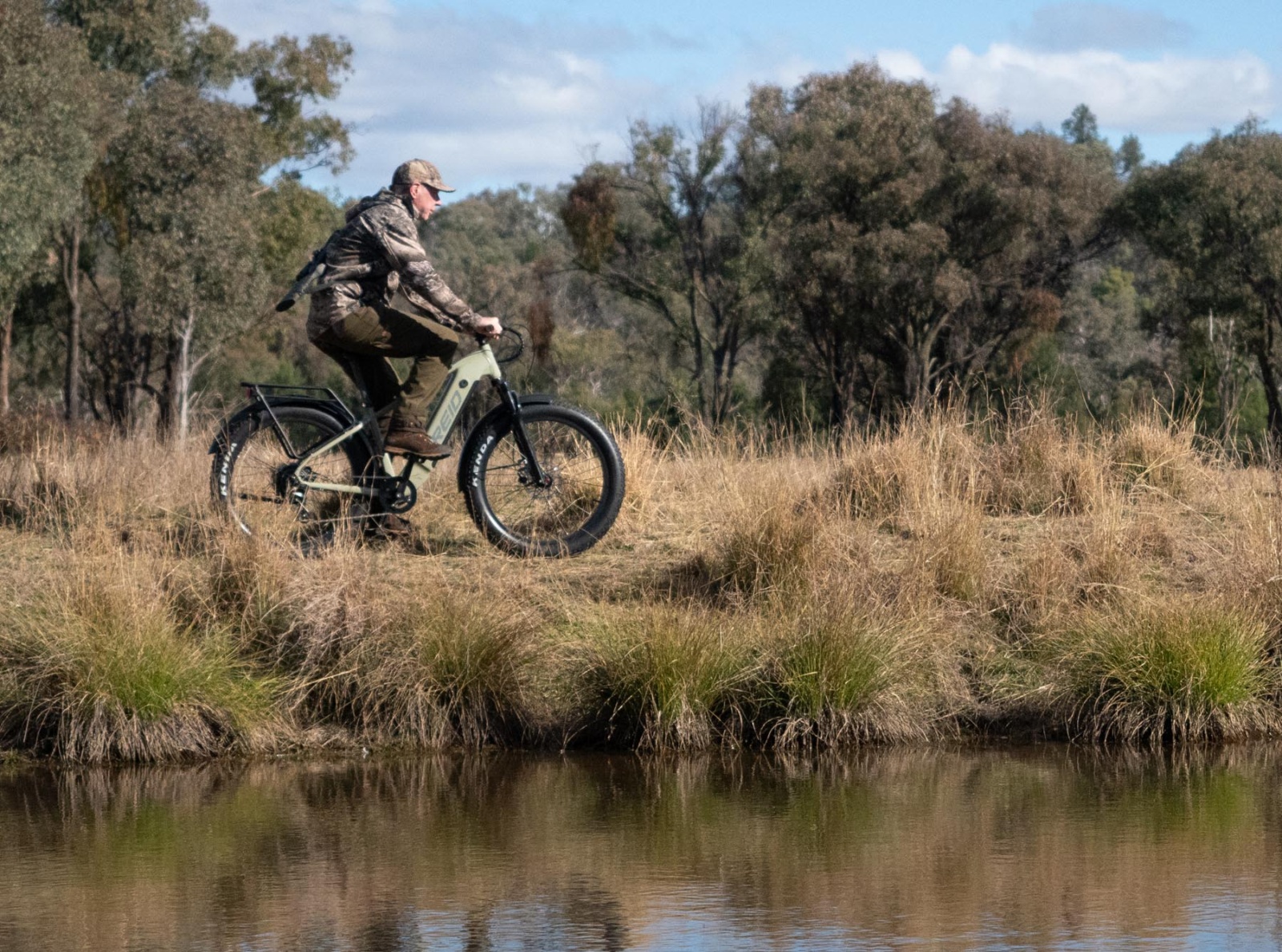
I am not a mountain biker by any means, yet I found it very easy to ride with confidence, and it served me very well while hunting.
Electric vehicles of all kinds are spot-on for hunters because of the silence, and this fat bike has a number of benefits over other e-vehicles.
The Tracker 1 electric fat bike is agile, it’s a lot smaller and lighter than four-wheelers, you don’t need a trailer to tow it, and it has plenty of power and speed.
The Reid Tracker 1 retails for about $3000 (but was on sale at $2699 as I uploaded this test).
For full specs and other information, see the Reid Cycles website.


0 Comments