




Shooters across Western Australia are absolutely furious that the report tabled by the state’s Standing Committee on Legislation on the new firearm legislation has recommended no major changes and appears to openly criticise shooters for objecting to the legislation in the first place.
The 264-page report was handed down on Thursday and contains 11 recommendations and 47 findings, many of which approve or excuse serious breaches of fundamental legislative principles as being “in the public interest” or otherwise “justified”.

Almost none of the findings and recommendations involve fixing the serious concerns raised by the lawful firearms using community.
In fact, the report spends a concerning amount of time essentially wagging its finger at shooters for objecting to the laws, noting that “despite many of the concerns raised by those submitters who are firearm owners and users, the Committee is satisfied that the majority of those concerns were unfounded or grounded in the general misinformation spread through social media and the internet”.
The committee received 2670 submissions — 2625 of which it labelled “unsolicited”, noting these were nearly all from shooters.
“The unsolicited submissions were almost universally critical of the new laws, complaining that they were unfair and too strict on law abiding gun owners,” the committee reported.

“In considering those submissions, the committee took into account the fact that those submitters represented a very small minority of the population of the state.”
The report went on to quote research from a flawed and widely criticised Australia Institute report which claimed, among other things, that 75% of Western Australians supported limits on how many firearms a person could own.
The report has been greeted with disbelief and deep unhappiness by the shooting community, many of whom understandably feel like they have once again been punched in the face by the WA Government.
Shooting Industry Foundation of Australia (SIFA) CEO James Walsh did not hold back in his criticism, describing the Western Australia Labor Government as “a total and complete undemocratic disgrace”.
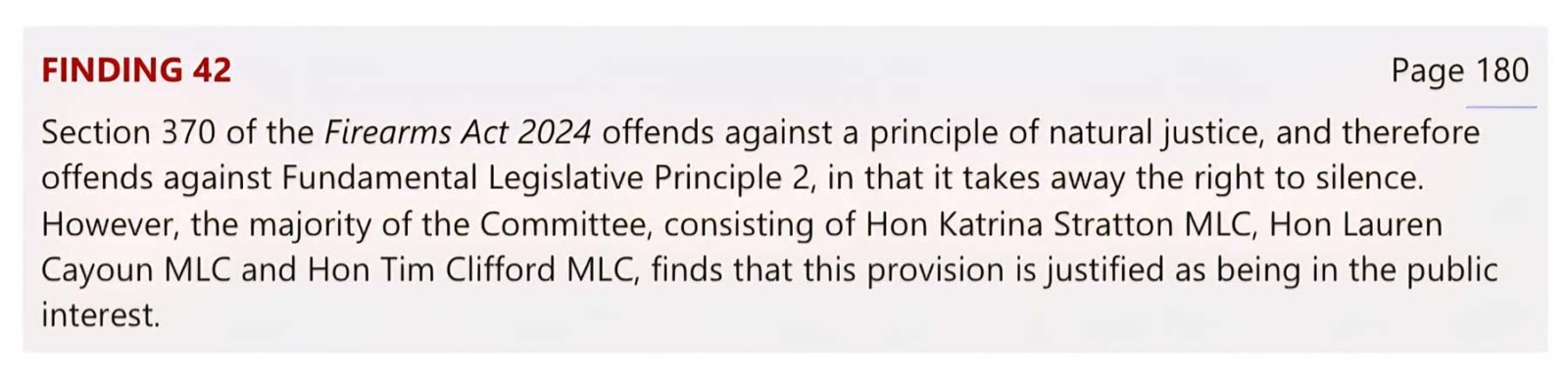
“The entire report rubber stamps the dictatorial actions of a lazy Police Minister and a power-hungry government,” he said.
Nationals WA leader Shane Love said the report was “a sanitised and partisan document that fails to reflect the depth of concern raised by thousands of Western Australians”.
“The Labor-Greens dominated committee has largely ignored the overwhelming evidence presented through nearly 3000 written submissions and two weeks of public hearings,” he said.
“This is yet another example of Labor’s contempt for the parliamentary process, for law-abiding firearms owners, and for the people of Western Australia.

“From the very beginning, the Cook Labor Government has treated the firearms community with disdain. Instead of holding the government to account for creating these problems, the committee has chosen to focus only on the superficial consequences that have emerged since the laws took effect in March.
“If Labor had delivered genuine consultation and followed proper parliamentary process, many of these issues could have been avoided altogether.
“It’s particularly concerning that the committee has downplayed serious matters raised during the hearings — including the lack of consultation with stakeholders, contradictory advice from WA Police, the mental health implications of mandatory checks, the online portal which isn’t fit-for-purpose, and the lack of licensing options for conservation shooters and volunteers who humanely euthanise injured animals.”
Shooters Union Western Australia state advocate Steve Harrison, who was among the few shooting representatives given the opportunity to provide evidence to the committee, said while he was not completely surprised the report did not recommend any significant changes to the legislation, he was absolutely gobsmacked by its disregard of the concerns of shooters.
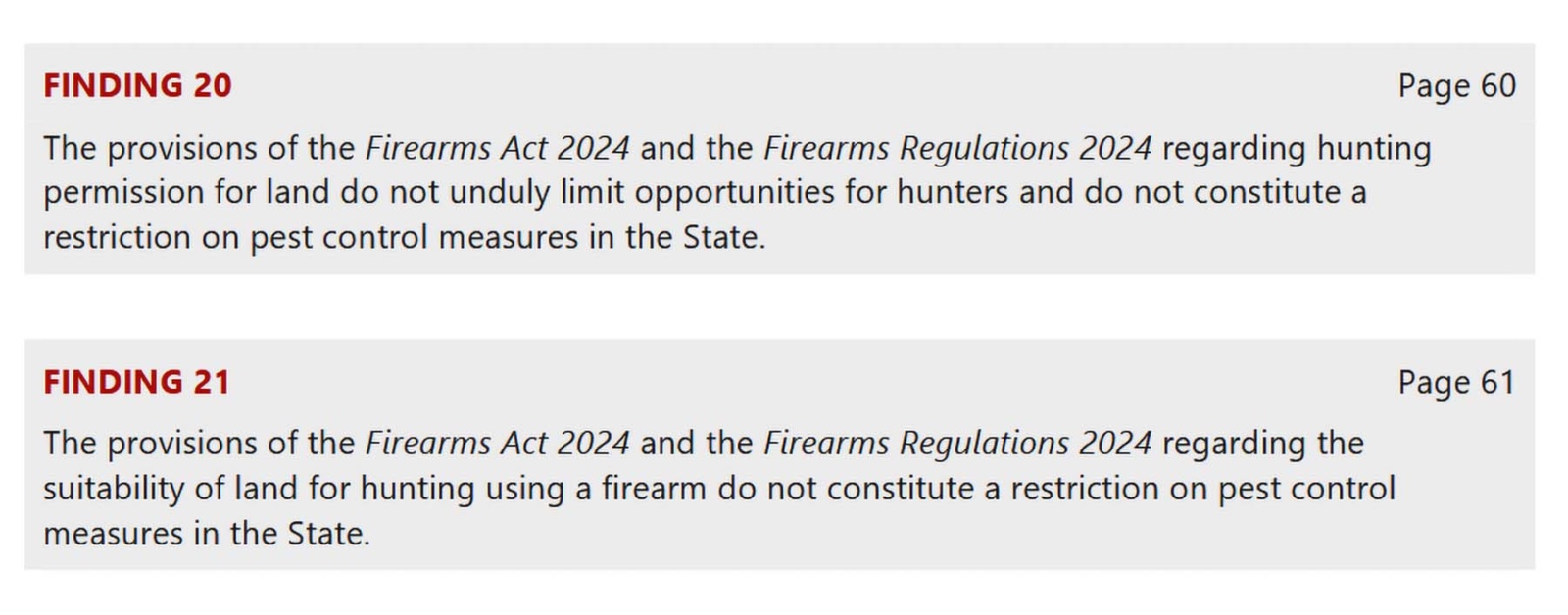
“How on Earth can you have nearly 3000 people send in submissions saying there are serious problems with these laws, and have literally 98% of the submissions you received saying there are problems with these laws, and then decide the appropriate response is to effectively say ‘no, you’re all wrong, everything is fine, and we’re not going to change things’?” he said.
“It is completely unacceptable and undermines the integrity of the democratic system in WA.
“To make matters worse, by my reading the report seems to imply that people who made ‘unsolicited’ submissions were nuisances, which is definitely not a message any democratic government is supposed to be sending to its citizens.
“Telling people they are part of a single-digit minority of the Western Australian community and that their views are therefore irrelevant and will be ignored may cause some awkward conversations on Harvest Terrace when someone stops for a minute and thinks about the implications of that, and which other groups they’ve essentially said are irrelevant and should be ignored, too.”
The report notes in several places that two of its members — Liberal MP Simon Ehrenfeld and One Nation MP Ron Caddies — disagreed with the Labor-Greens majority members on a number of important issues, so it is possible a minority report with some more sensible and reasonable conclusions will be forthcoming in the not too distant future.
“Simply labelling them [the dissenting MPs] as a minority doesn’t invalidate the concerns, but it can indicate political steering or groupthink, especially when consensus is manufactured,” Mr Harrison said.


The response of the WA Parliament is completely predictable given that:
a) The gun laws exist because of a perception that they are necessary to safely regulate society.
b) Politicians have been conditioned to believe that the ’96 gun laws are a pious thing that was only achieved by politicians on both sides maintaining an anti gun stance.
c) The perception of shooters as just being self interested individuals.
If we want to overcome this type of firearms law we need to do so by funding and producing quality peer reviewed scientific research to substantiate our position.
s89(2) makes reference to a ‘Henry V111 effect’- I assume most readers would not have a clue what that means. It is a reference to a ‘primitive clause’ that is to say a clause that limits or seeks to prevent Judicial Review. If someone is interested in reading something about Privitive Clauses, a good place to start is the Australian Law Reform Commission’s report on Traditional Rights and Freedoms- Encroachments by Commonwealth laws (ALRC Interim Report 127). While dealing with Commonwealth law, this is an easily understood starting point for someone wanting to understand the rationale and limits of such laws. Simon Munslow