


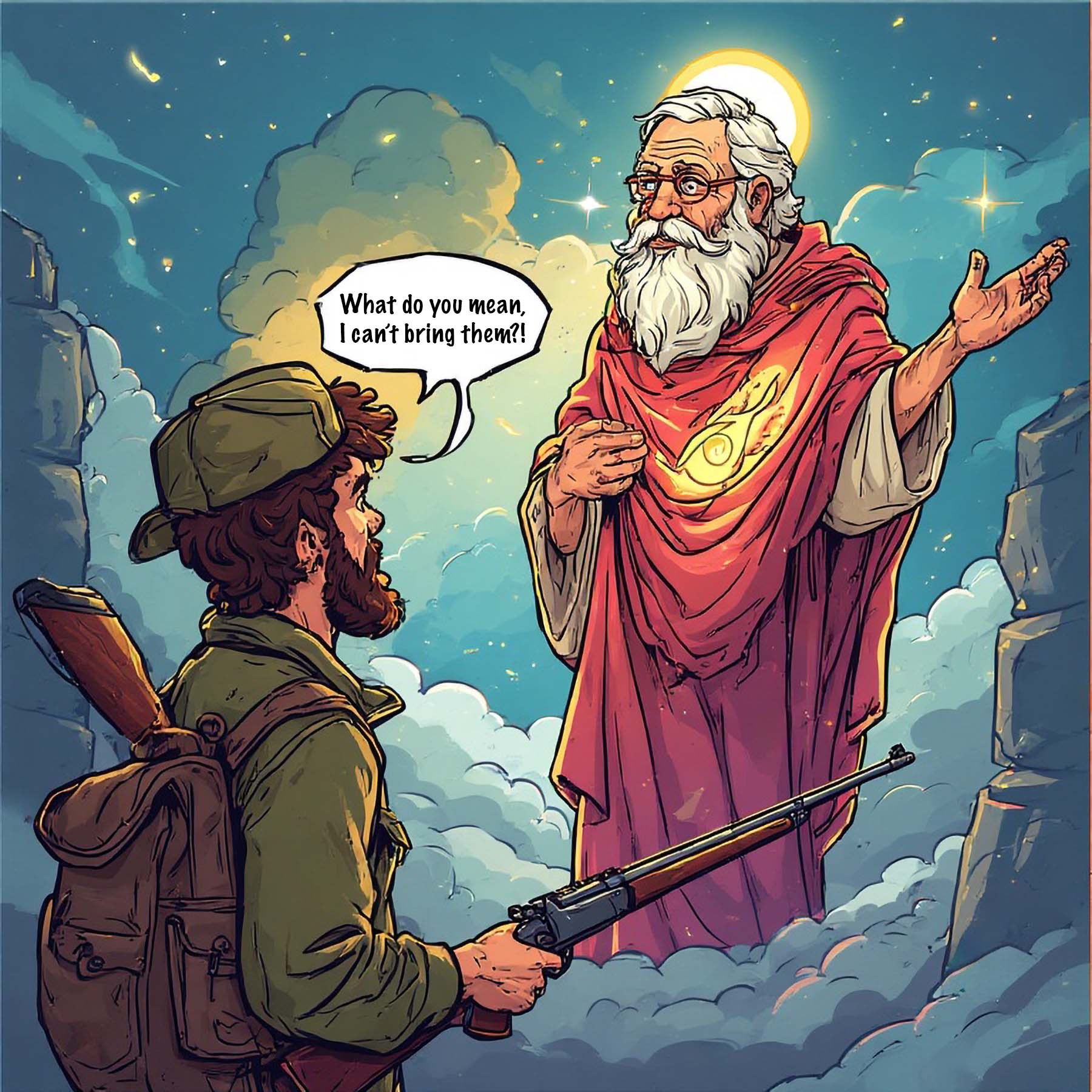


Who will inherit your hunting rifle when you die? It might sound like a confronting question, but it’s an important one which Queensland Police Service is asking firearms owners to think about – and something that’s applicable to every shooter in Australia, regardless of where they live.
As part of its ongoing firearms-related Operation Whiskey Firestorm, Queensland Police Service is calling for firearms owners to think about what will happen to their guns when they inevitably pass on, and ensure they have a proper plan in place to ensure their firearms can be bequeathed to someone legally able to own them, or otherwise properly accounted for.
Queensland Police Service Detective Superintendent George Marchesini said there had been a number of reported cases in Queensland this year where firearms from deceased estates were not properly stored.
He noted bereaved family members frequently did not have a firearms licence themselves, and in some instances the guns belonging to the late shooter had been stolen following their death.
In one incident, the property containing the firearms had been left unoccupied since the licensee’s death, and the guns were stolen from there.
“Losing a loved one is an already emotional and stressful period to navigate, which is why ensuring future plans are put in place should be a priority for licensed firearms owners,’’ Detective Superintendent Marchesini said.
“We know when firearms are not considered in estate planning, they are susceptible to becoming lost or even stolen, severely compromising community safety as family members navigate unfamiliar storage and disposal procedures.”
Part of that estate planning involves identifying who will inherit the firearms and ensuring they have a gun licence for the same categories of firearm, or if no-one will be inheriting them, arranging for the firearms to be properly and legally taken to a licensed firearms dealer.
The initiative is supported by Shooters Union Australia, with national president Graham Park saying the time for shooters to have conversations about who would inherit their firearms was sooner rather than later.
“Definitely do not wait until you are terminally ill or infirm before having these discussions – it takes several months at a minimum to obtain a firearms licence, assuming the applicant meets all the criteria and passes the police checks, and that is not something you want your loved ones to be dealing with on top of bereavement or imminent loss,” he said.
“Anyone who has lost a family member or close friend knows how stressful and difficult that time is, and the last thing you want to be doing then is worrying about what’s going to happen to grandad’s hunting rifles or shotguns.”
As well as firearm owners being proactive in estate planning, Mr Park said family members could also start the process by discussing the topic with firearm-owning relatives.
“It’s not an easy conversation, but it is an important one, and can be easily worked into general estate planning conversations.
“It’s not morbid or opportunistic, it’s an unfortunate reality of life and a necessary part of responsible firearms ownership at some point.”
Mr Park said firearm estate planning was particularly important for collectible or unusual firearms, as gun dealers may not be able to correctly identify them despite their best efforts, given the specialist knowledge required on the subject.
“Our collector’s branch president often gets requests to help identify firearms from deceased estates, but he’s a published firearms historian – your local gun dealer likely isn’t an expert on World War I military firearms,” he said.
Each state and territory has different procedures and processes for handling deceased estate firearms; for the information relevant to your location, contact your local Firearms Registry.


But is it really heaven if I can’t take them?
You’d think there’d be a least one cloud with guns instead of harps, surely!