


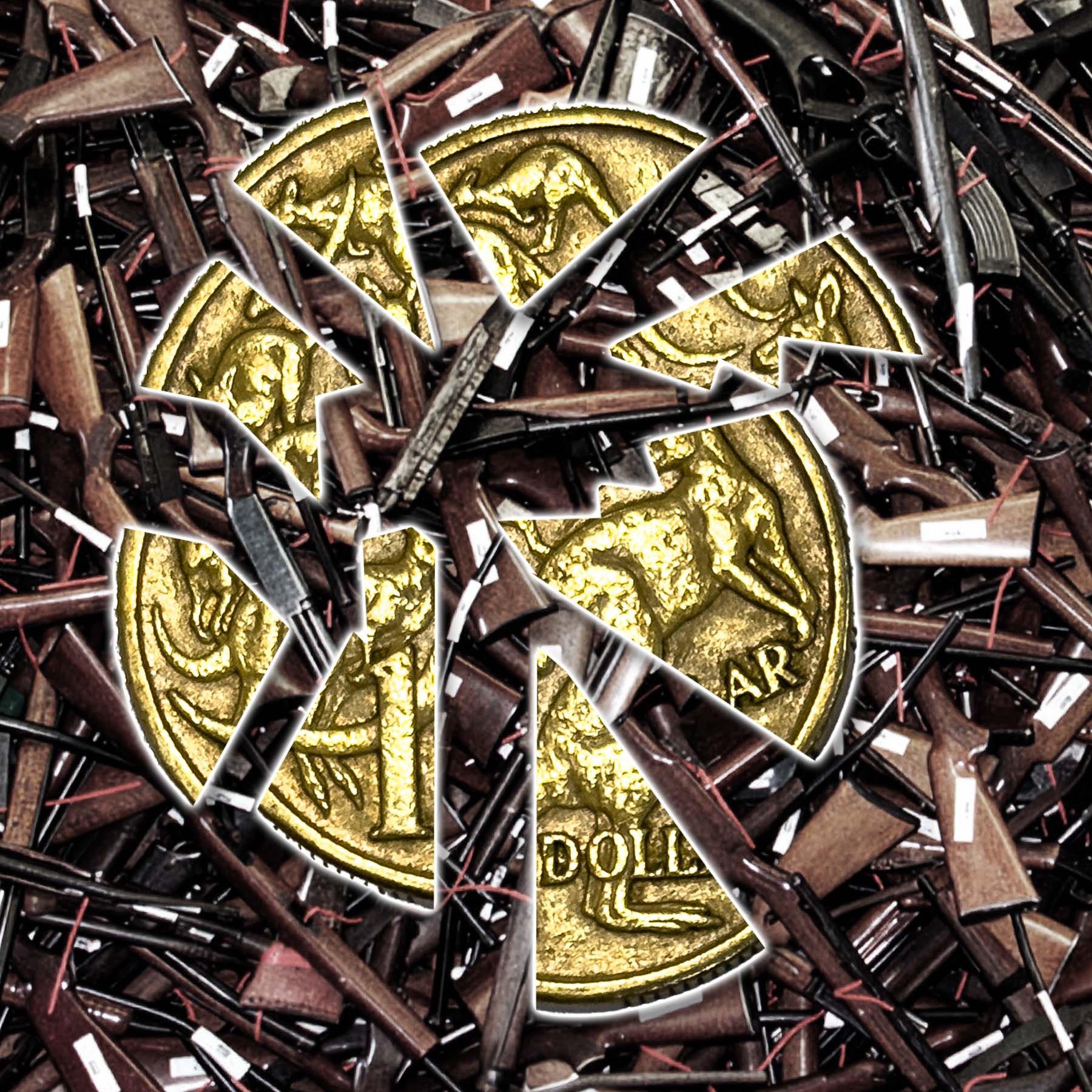



A gun buyback scheme in Victoria would cost taxpayers $99 for $1 of economic value it provides, and will fail to deliver the public safety benefits claimed by the government, according to an independent economic study that has ramifications for all Australian states and territories.
A buyback would provide a “net loss to the … community across all credible scenarios … [imposing] substantial costs while failing to achieve its stated objectives,” the study found.
The study, titled Misfire — Impacts of the Gun Buyback Scheme, was undertaken by Tulipwood Economics for Shooters Union Australia. Tulipwood has done work for groups ranging from the Australian and Queensland governments to the Children’s Hospital Foundation and Google.
The report is likely to further justify the Victorian government’s decision to reject caps on firearm ownership, announced the day after the study was released.
The state is in dire economic straits as it is, and Tulipwood estimates a buyback would cost taxpayers over $437 million in its first year.
Further, the economic impact on the state would amount to a reduction in Victoria’s gross domestic product (GDP) of more than $300m over four years, the loss of 432 jobs in one year and a reduction in spending by shooters of $111m in one year.
The flow-on effects to the rest of Australia’s economy are significant, too: loss of $105m in GPD over four years, and one-year loss of 359 jobs and $90m in spending.
Tulipwood used a number of models in calculating the cost-benefit ratio of a buyback scheme, and found the best-case scenario was that “even on the most optimistic assumptions … for every dollar of cost incurred, only around forty three cents of benefit are realised”.
However, the authors considered their “optimistic assumption to be unrealistic, and found the more likely cost-benefit analysis of the buyback was that “for every dollar invested in this proposal, the return to society would be less than one cent”.
Though focused on Victoria, the report is relevant to the entire nation as the results would be similar, and it does not expand on the additional costs of the Albanese Government’s promise to meet states halfway in the costs of buyback schemes.
The study looked closely at deaths by firearm and found no indication that the proposed laws would make a difference.
It pointed out the obvious fact that “firearm suicide requires only a single shot from one firearm” and therefore ownership limits would have no impact.
The study did not look at black market firearms but did consider them in terms of the effect of ownership limits for licensed firearms owners. It concluded, “around 90 per cent of homicides — and potentially more — will not be directly impacted by changes to the number and type of firearms that can be legally owned”.
However, it also concluded: “Studies that are based on real-world Australian data, that look specifically at firearm suicides and homicides, generally find that there may have been some effect of the [1996] laws on reducing firearm suicides, but less (or no) evidence for any effect on firearm homicides.”
Mass shootings in Australia were examined in detail, too, going back as far as 1966, and the authors reported that “their infrequency makes them difficult to statistically examine”.
After combing through previous studies and existing information, they concluded: “It cannot be assumed that restricting certain firearm types and/or limiting the number of firearms an individual can own will reduce (already extremely infrequent) mass shootings.”


0 Comments