


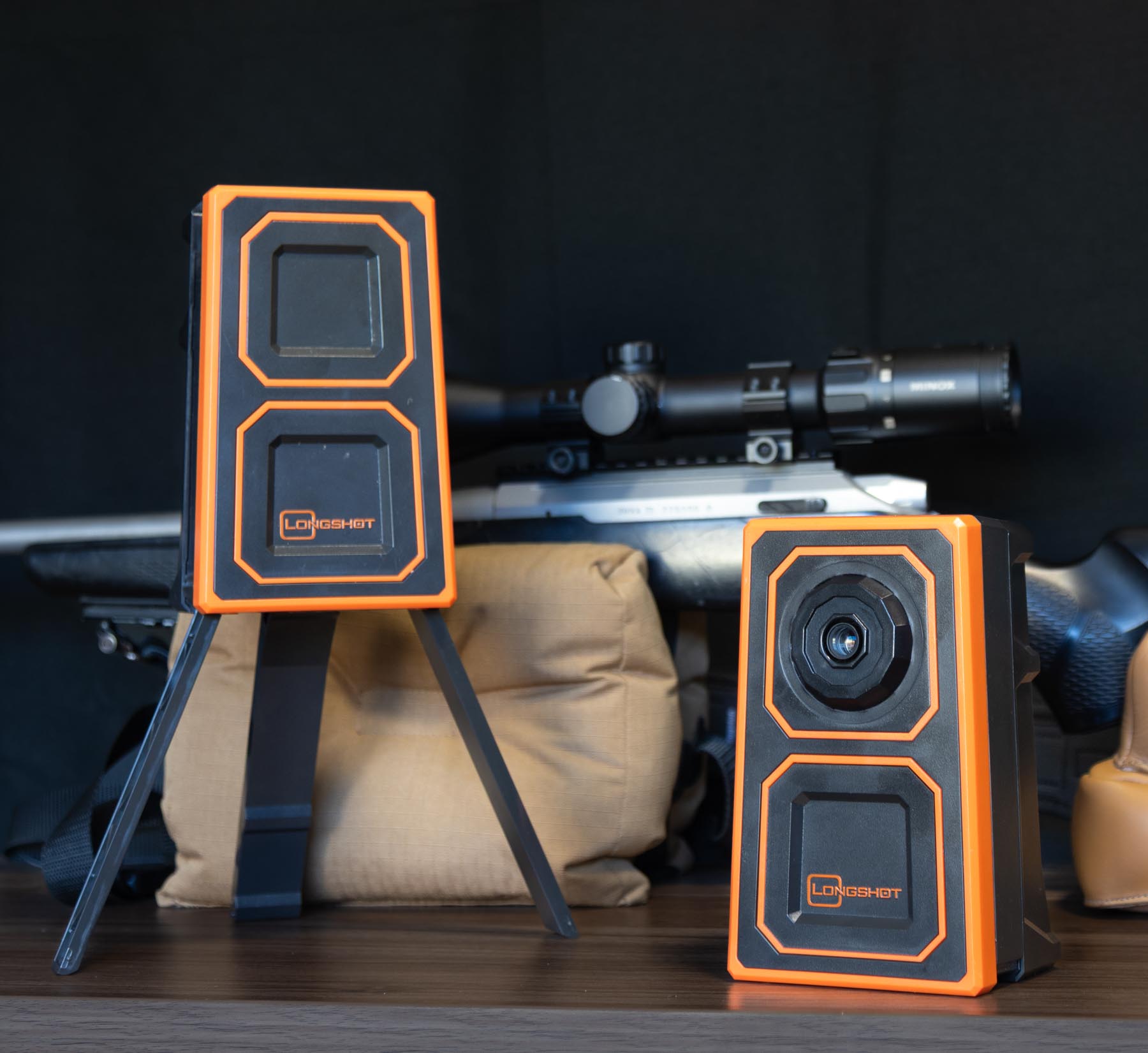

Longshot’s Ranger+ target camera system is more than a way to see what’s going on out at your target. It lets you analyse your progress in real time, logging individual shots and groups, calculating group sizes, steering you in to zero your sights and reducing the need to go and patch targets.
It’s also among the most affordable long-range target camera setups you can buy, providing 900m-plus (the American company claims 1000 yards) of video reach for $799. Or if you’re only shooting 100m or so, you can buy the single-unit Ranger and at least that range for half the price.
The Ranger+ is a wifi system with a camera that you set up near your target to broadcast video back to a receiver that sits with you at your shooting position. By using your phone or tablet to hook into the Longshot’s wifi, and operating it with the Longshot app, you get access to not only the vision but a host of genuinely useful functions.
The first question is: does the wi-fi work that far out? Yes, it does. I set it up at 900 metres (14m shy of a true 1000 yards) and got clear signal producing quality imagery on my smartphone. I took it back to a genuine 1000m and still got a decent signal but it was starting to break down by then.
I hasten to add that I didn’t shoot that far because it’s beyond the combined abilities of me and my rifles. However, I am sure I could have in the right circumstances, given the success I had with the Ranger+ at up to 400m with my Model 70 in .30-06 — a humble stalking rifle that I was feeding factory ammo.
And there’s a story in that, one worth going into because it puts the worth of the Longshot into perspective as a vital tool for hunters as well as those of us who love to shoot paper and steel.
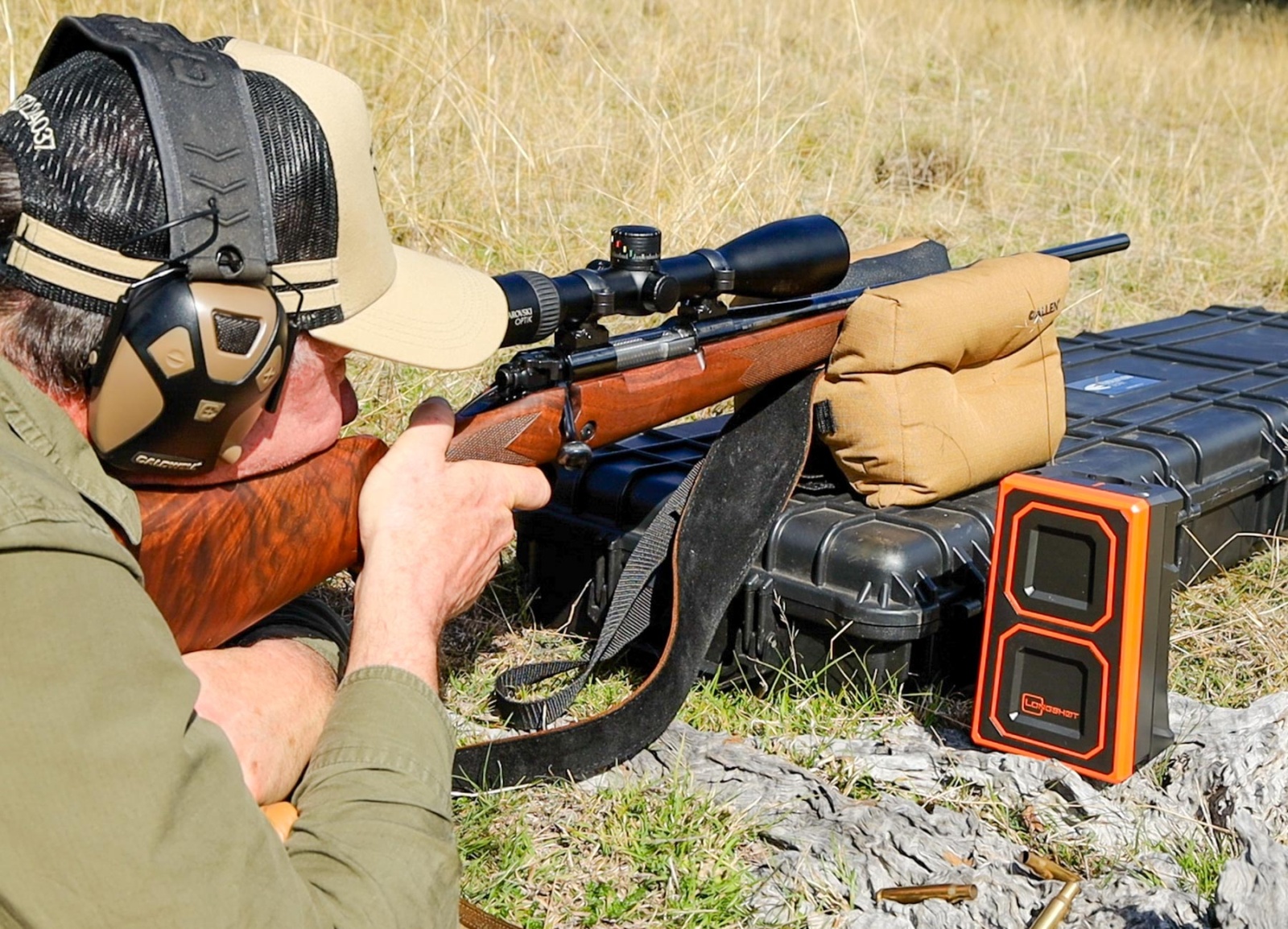
I was about to take the Winchester on a sambar and red deer hunt and not only needed to work out its accuracy potential out to 400m but had to set up the ballistic turret of the Swarovski Z5+ scope I’d just fitted. I chronographed the Federal ammo in the process of zeroing the scope, plugged the data into a ballistic app and set up the turret’s colour-coded rings to match the 400m trajectory.
Then I shot it at specified ranges, with the Longshot looking on. Turns out the ballistic program was wrong and my shots were wildly high compared to what I’d expected. But using the camera, I saw instantly how far out I was, and used only a handful of shots to get on zero at each distance. I didn’t have to budge from behind the rifle except to move the camera and target out to the next distance.
The camera was vastly superior to a spotting scope, too. No heat haze to worry about, and increasing distances didn’t make bullet holes appear smaller until they vanished. I fact, I didn’t even bother with a spotting scope. Maybe your money’s better spent on the Longshot, which shows your hits as clearly as if you were at the target, even when you’re 900 metres away.
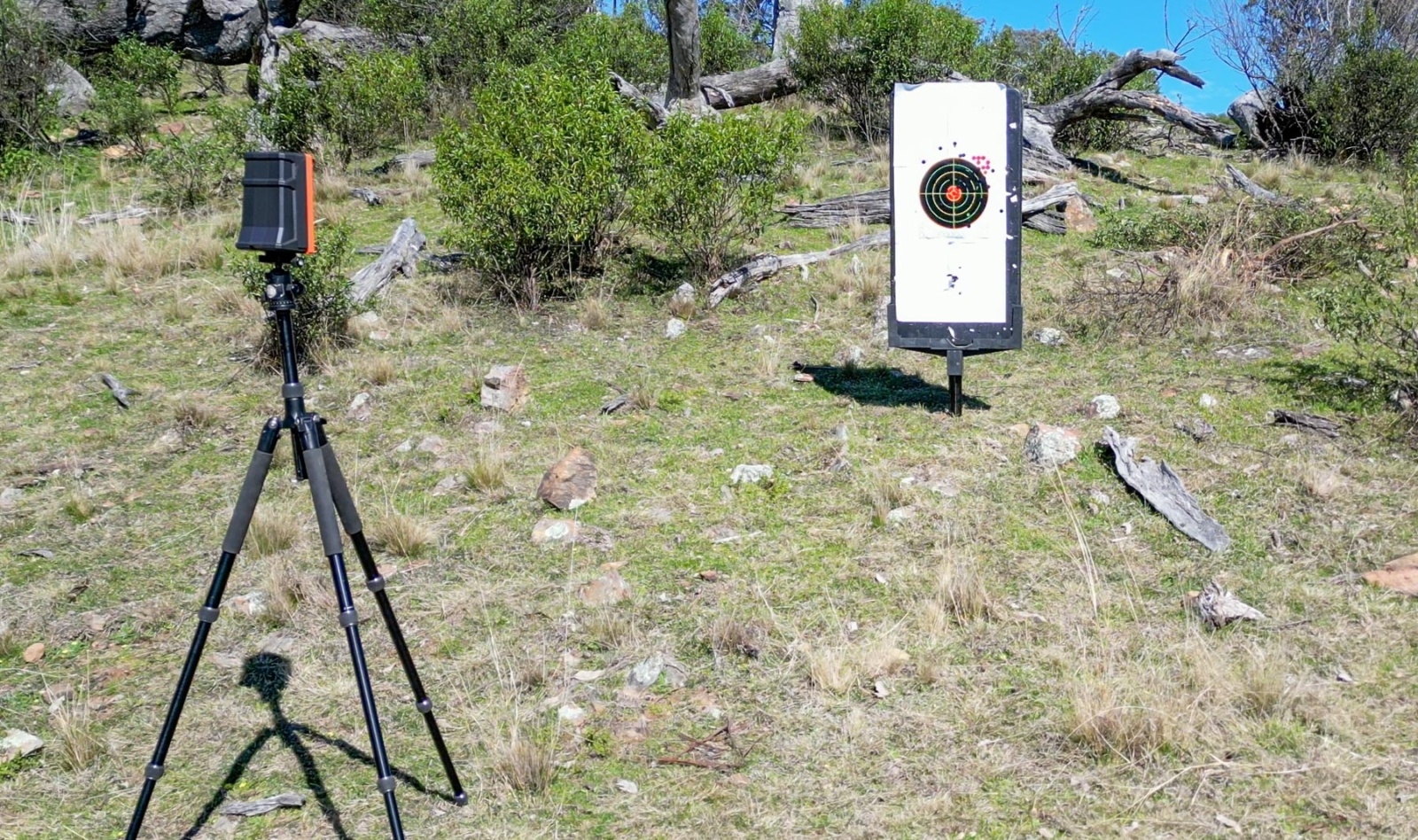
Anyway, the upshot was I realised this ammo isn’t an ideal match for my rifle but it still shoots minute-of-sambar at 300m, which would do for the upcoming hunt. Enough about that.
Most of my use of the Longshot was for shooting at 100m to check accuracy and zero in. For that, I could test the camera in simple Ranger mode — that is, with just the camera, no receiver. I also used the receiver at 100m and further out, so you can take all these comments as being relevant to the Ranger and Ranger+.
The first step in setting up is placing the camera, and Longshot makes it easy with the inbuilt folding legs attached to the unit as well as the thread for attaching a tripod. My 100m target is set high, and my longer-range targets get placed on a steep hill as needed, so in both cases I used a lightweight tripod.
Because the camera has a fixed focus, it must be set up between roughly 2 and 7 metres from the target, and just far enough to the side or below so that you won’t shoot it. If you do shoot your camera, Longshot covers it under warranty, which is nice to know, but of course you want to avoid it anyway because breaking your camera ruins your day.
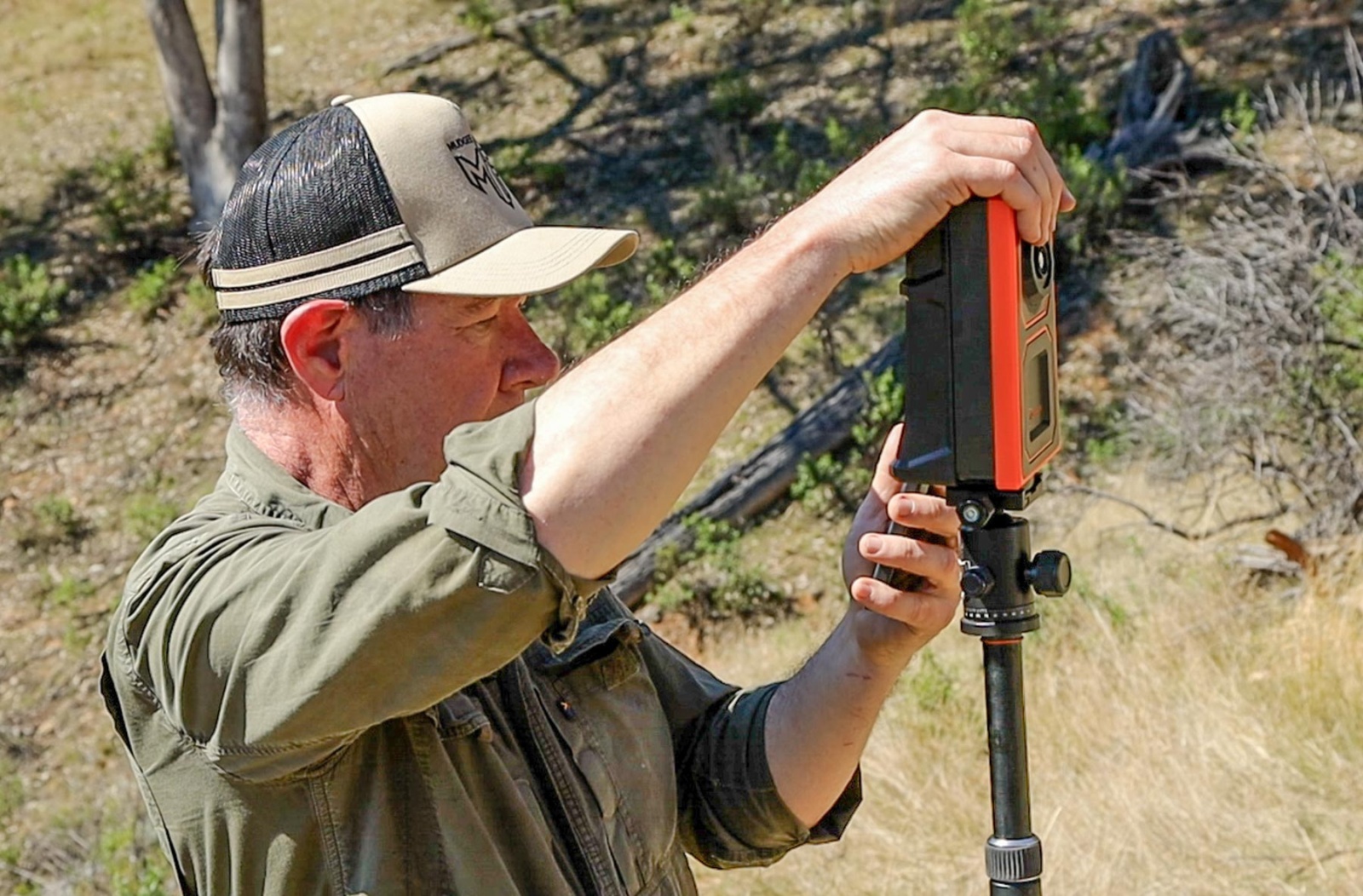
Connect your smartphone to the camera’s wifi, open the Longshot app, and you can see the picture being captured. The camera’s lens sits on a ball mount so once you have placed the box you can fine-tune the framing by manipulating the lens angle. Another neat solution.
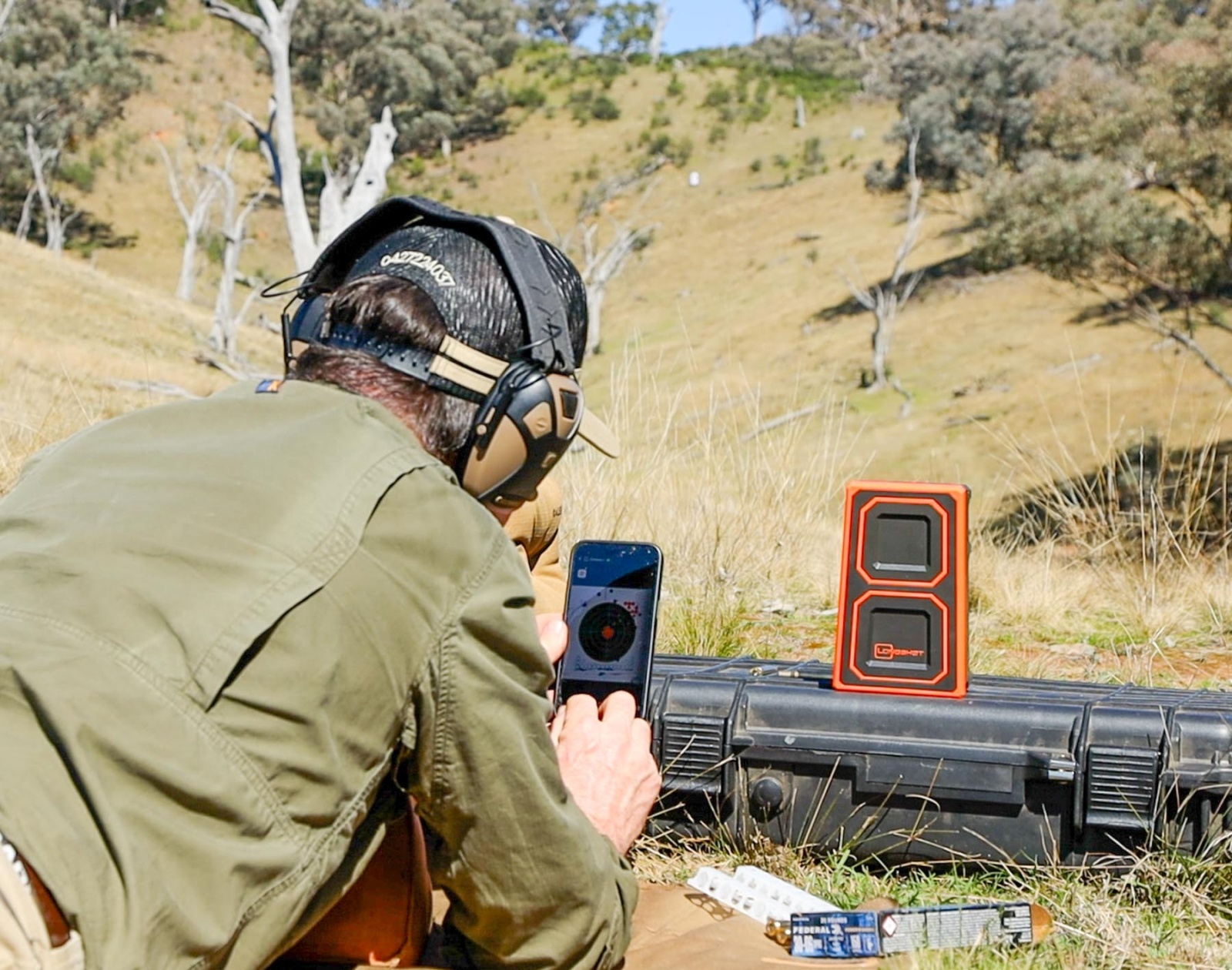
Leave the camera switched on at the target and go back to your shooting position. If you’re shooting from near enough, you can stay connected directly to the camera. If not, switch to the receiver’s wifi and you’ll find it has automatically picked up the signal from the camera.
Now you can start throwing bullets downrange and see the shots on screen as you shoot. But if you want to make the most of the Longshot’s capabilities, get set up properly in the app first.
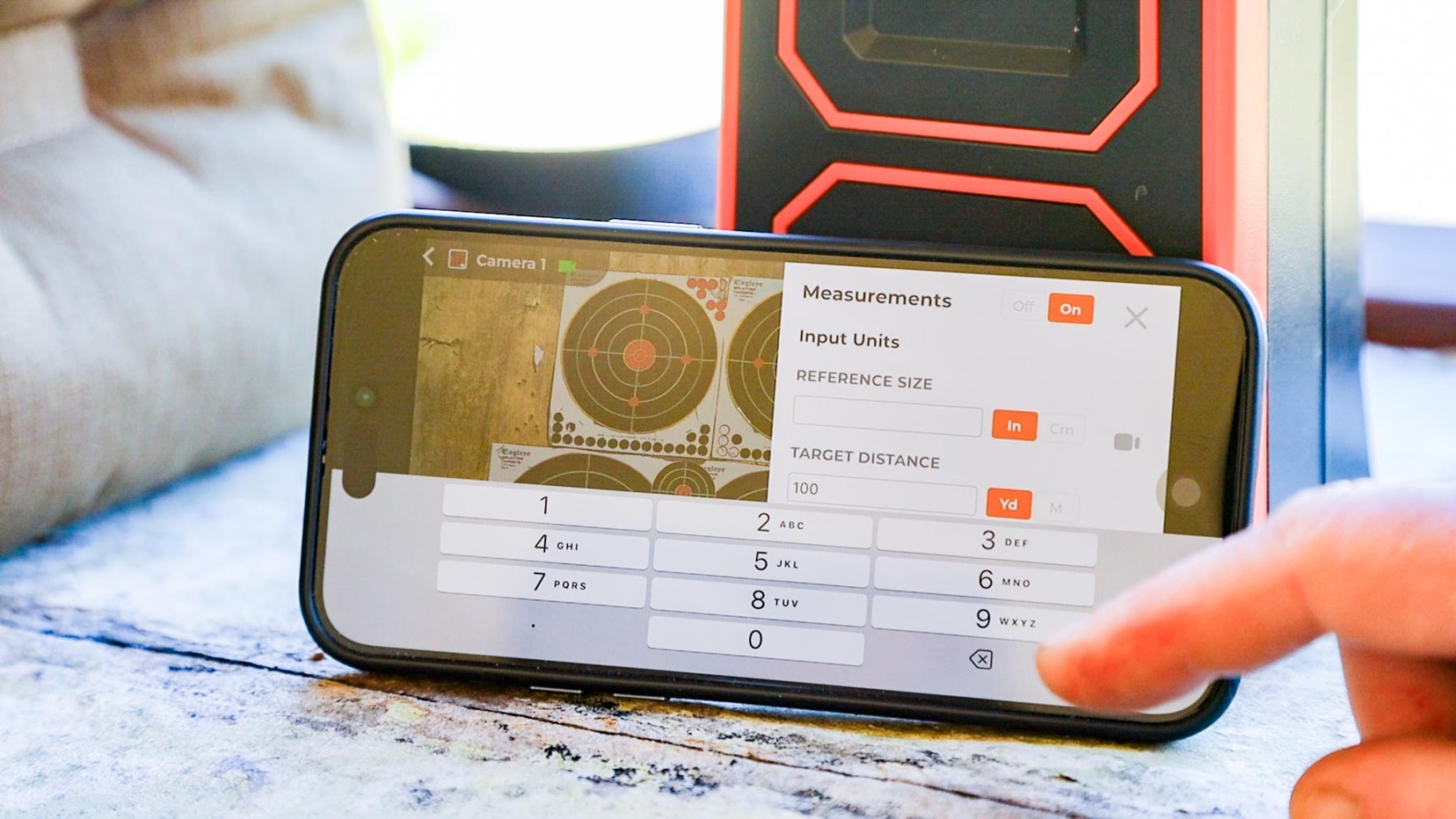
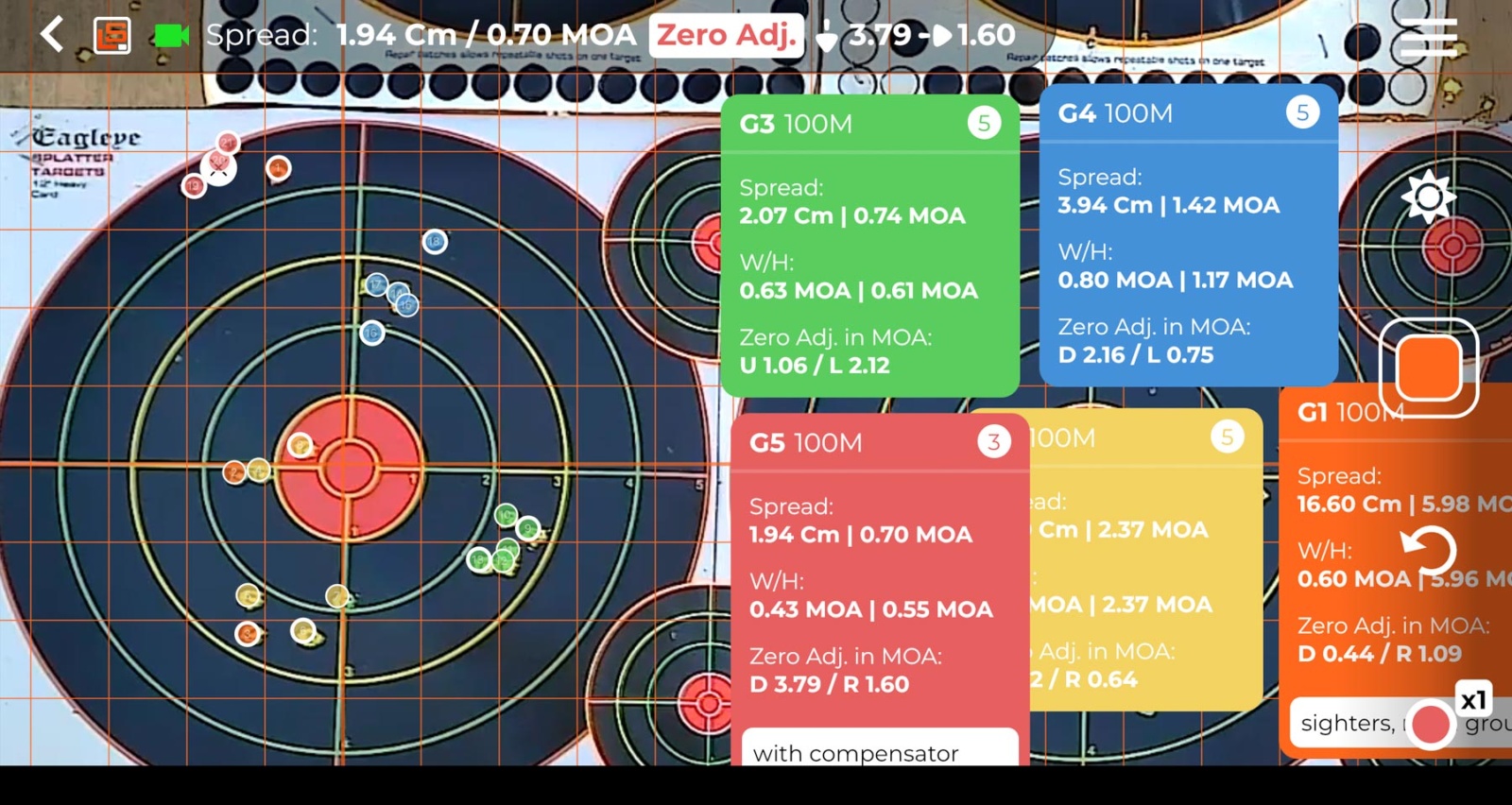
Set up a grid in the calculator menu, which gives you and the app a reference for group sizes. Key in the distance from the target, a reference distance based on two known points on the target (this will make sense in a minute), and the measures you wish to use — MOA, inches, centimetres and so on.
Then use your fingers on the screen to tap the two reference points I mentioned above. Now the app knows what it is measuring. Indicate your points of aim and you’re done.
Its accuracy will depend a bit on how precisely your fingertip plots the points as well as to some degree on how far off your shooting line you position the camera. It’s not hard to get a very good indication of how well you’re shooting but if perfect measurements are required you’ll still have to physically measure the groups afterwards, just to be sure. The way I had it set up, I was always a fraction on an MOA out, but was quite satisfied with the comparative data I was getting for the groups.
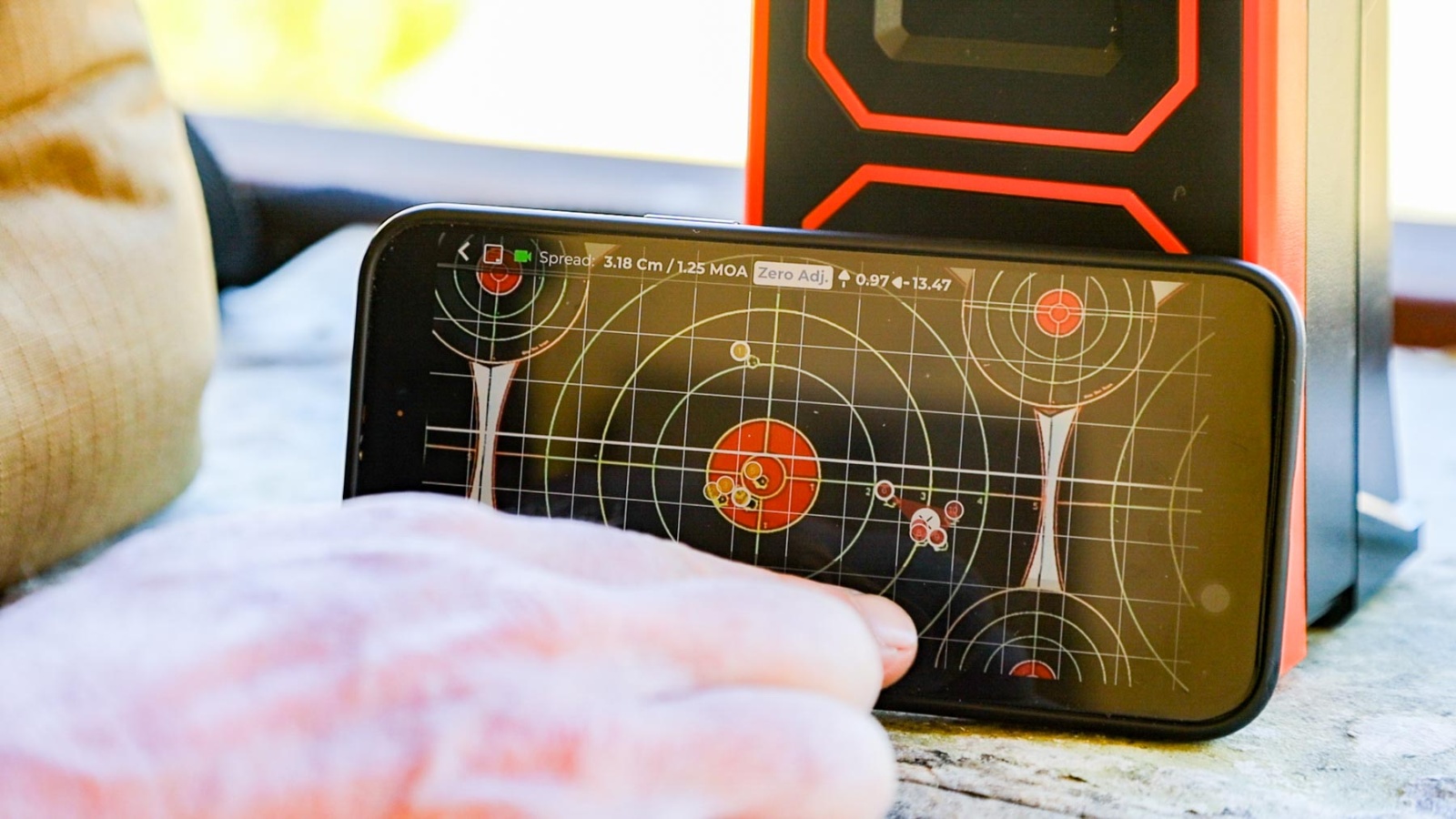
As you take your shots, you can make the app flash each one as you go. Keep a record of each shot by tapping the screen at the point of impact. The app will measure the group size, show the group’s centre and tell you how far from your point of aim it is hitting.
When you’ve finished a group, set a new colour and start marking the next one. You can add notes to each group as you progress, and because you can mark shots you can shoot the same target full of holes without constantly patching it.
There’s no database in the app but you can keep a visual record of your performance by taking photos or videos, and key in the data to your own records later if you like.
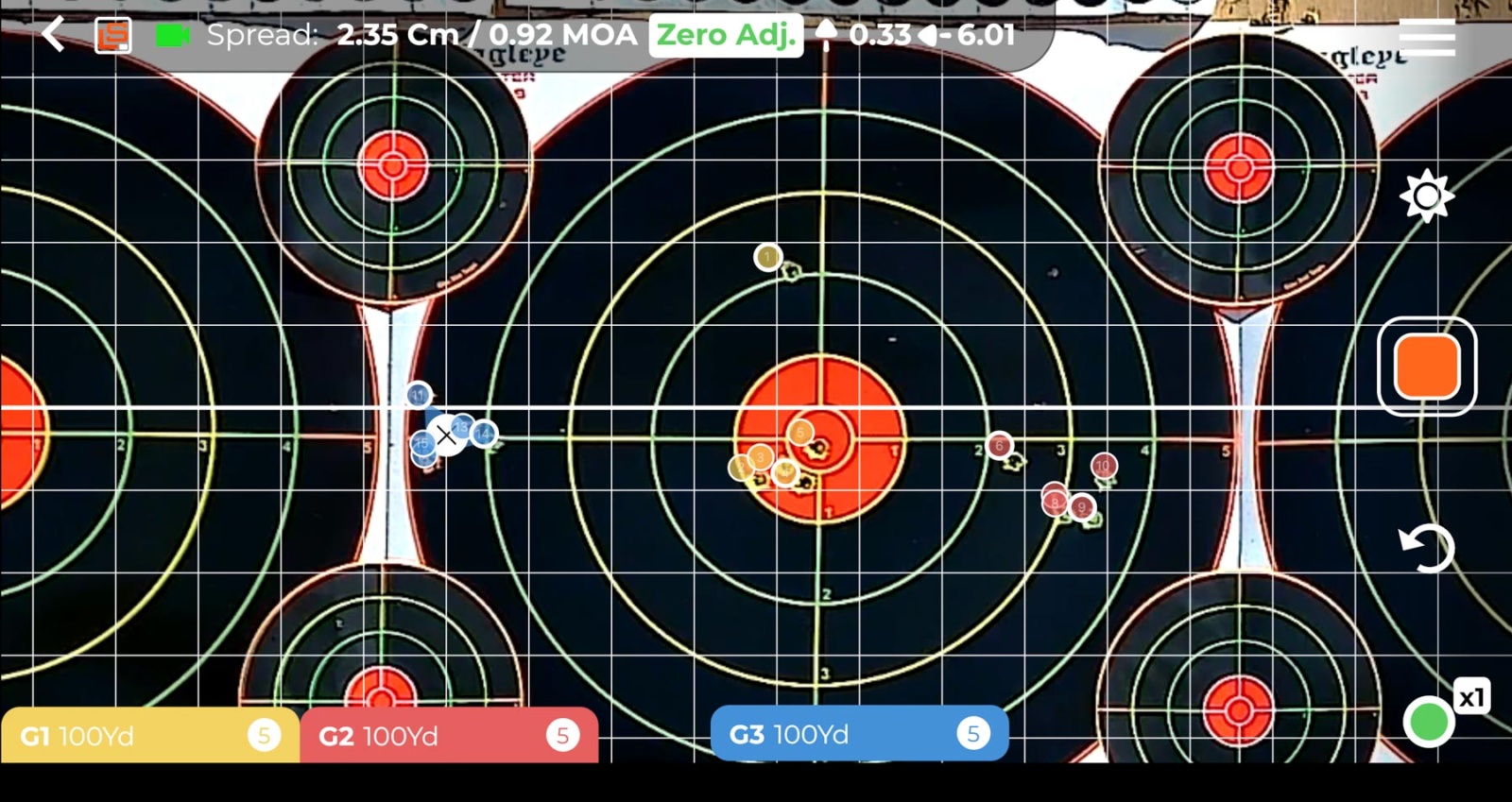
The image quality is spot on — genuine full high-definition, and this means you can zoom in to see precise detail.
Sending images to your computer is easy. Just open the gallery in the app, select the ones you want, hit the upload button, chose the sending method and/or destination and away they go. The photos are 2796 x 1290 pixels — that is, pretty big — but from my iPhone the videos come through smaller at 932 x 430 pixels, which is not what’s meant to happen; they should be 1080 HD videos. I suspect this is more an Apple thing, having had similar issues with other devices.
You can also record sound, which can be handy for the record as well as for entertainment.
It is all very easy and very useful. After my first couple of sessions with the Ranger+ I was already in the habit of relying on it to help me quickly zero in, compare the accuracy of different loads, prove trajectories over longer distances and gather data. It was fun, too.
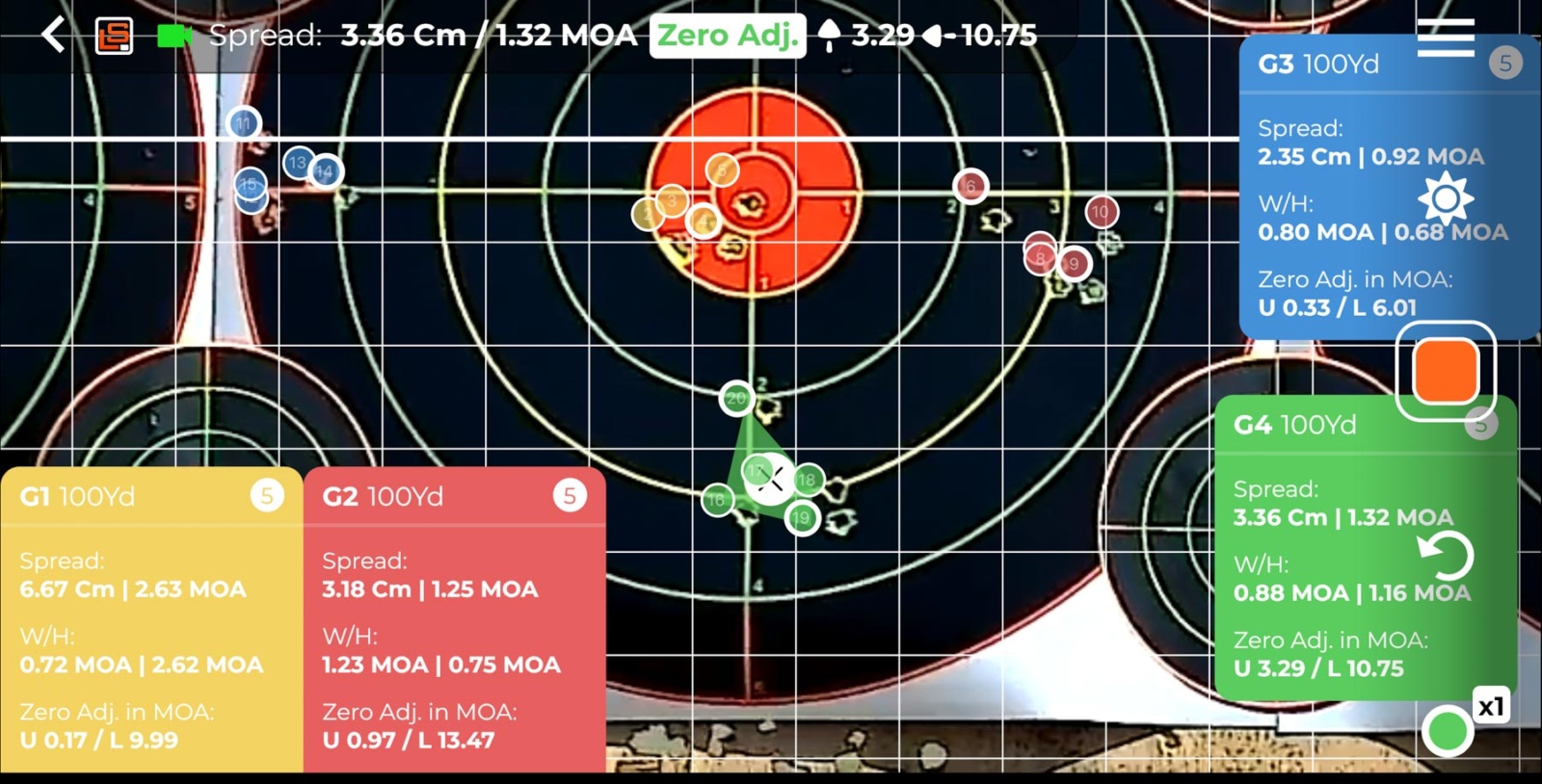
Another good point about having a live feed at your target is that you can see, shot by shot, the effects of distance, wind, canting your rifle and, if you’re aware of them, things like flinching or pulling shots.
The Longshot didn’t go perfectly. One day I had trouble staying connected properly from several hundred metres away, for no reason I could work out; line of sight was clear and batteries were charged. But it was just the once.
On the other hand, I often found the camera could transmit directly to my phone, reliably, from more than 200m away, so you know there’s plenty of leeway built into it.
When it comes to batteries, the camera’s one is the crucial one when you’re using the Ranger+ system. Not only does it sit downrange all day where you can’t easily switch it off, but it uses more power because it is transmitting data. Longshot claims up to six hours run-time, and that seems about right in my experience.
The batteries are built in to each unit so it’d pay to have a means of charging them if you’re going to be out for a long day.
There are bigger, flasher and longer-reaching target cameras available but what the Ranger+ does is bring the price down to a much more affordable level yet still produces quality results, with an app that is simple to use and gives you the info you need and bit more that’s nice to know. You can get by with the cheaper Ranger at 100m and go all the way past 900m with the Ranger+ combo.
The Longshot will not only take the back-and-forth travel out of a day at the range, it’ll speed up your sighting in, your load development and your data gathering. Its value on a shooting range is obvious, as well as to anyone who regularly shoots long distances or just wants to learn how. I’d add that it’s a very handy tool for reloaders who love tinkering with new loads and a nearly essential one for any hunter who’s serious about shooting accurately beyond their rifle’s point blank range.
The Longshot is distributed in Australia by Australian Sporting Agencies.


0 Comments