


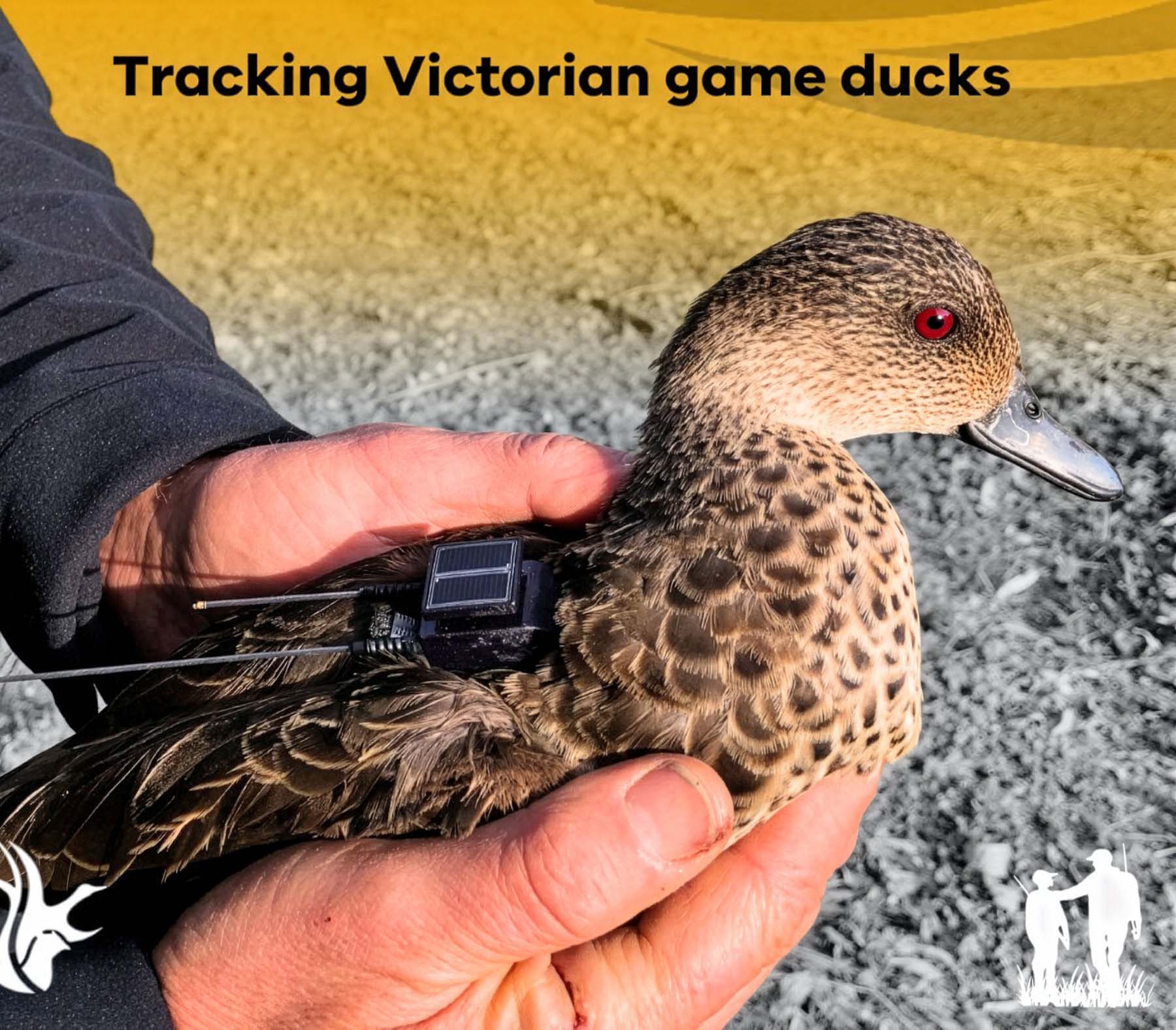
Solar-powered satellite tracking devices are being attached to ducks in Victoria as part of an innovative waterfowl research program being undertaken by the state Game Management Authority (GMA) in conjunction with Deakin University.
The program began in June this year and runs until 2028, and involves attaching small, solar-powered satellite tracking devices to more than 400 individual ducks from four game species – namely Pacific black duck, Australian wood duck, grey teal duck and chestnut teal duck.
According to GMA, the lightweight tracking devices operate 24 hours a day recording information about the duck’s location, movement, breeding, feeding and resting patterns.
They transmit the information to GMA and Deakin University researchers via the mobile phone network.
The data gathered from the devices is intended to help the GMA make informed, scientifically robust decisions regarding Victoria’s annual duck-hunting season, including its length, bag limits, locations, and harvestable species.
GMA research principal Dr Jason Flesch said the project represented the largest study of the movement and lifespan of game ducks undertaken in Australia.
“This project aims to identify the drivers of game duck movement in relation to fluctuating environmental conditions, including water availability, in the Australian landscape,” he said.
“It will also record how long game ducks survive.
“This vital knowledge will be used with other research to inform adaptive harvest management of game ducks in Victoria, which is being implemented to ensure duck hunting in Victoria remains sustainable.”
Deakin University Professor Marcel Klaassen said the knowledge gained from the research would not only assist with providing reliable data for hunting seasons, but also be used to develop a better understanding of diseases which can transfer between animals and humans, such as avian influenza and Japanese encephalitis.
“By modelling game duck movements, we will, for instance, be able to predict how the highly pathogenic form of avian influenza currently impacting wildlife and poultry populations globally may spread, should it arrive in Australia,” he said.
Approximately 60 ducks have been fitted with trackers so far; the goal is to fit 100 trackers to members of each of the four species being studied.
Members of the public who find one of the trackers (perhaps on a deceased duck) are asked to contact research@gma.vic.gov.au.
For more information on the project – including maps showing where the ducks are travelling, interviews with researchers and analysis of gathered data – visit https://research-stories.shorthandstories.com/tracking-victorian-game-ducks/


0 Comments