


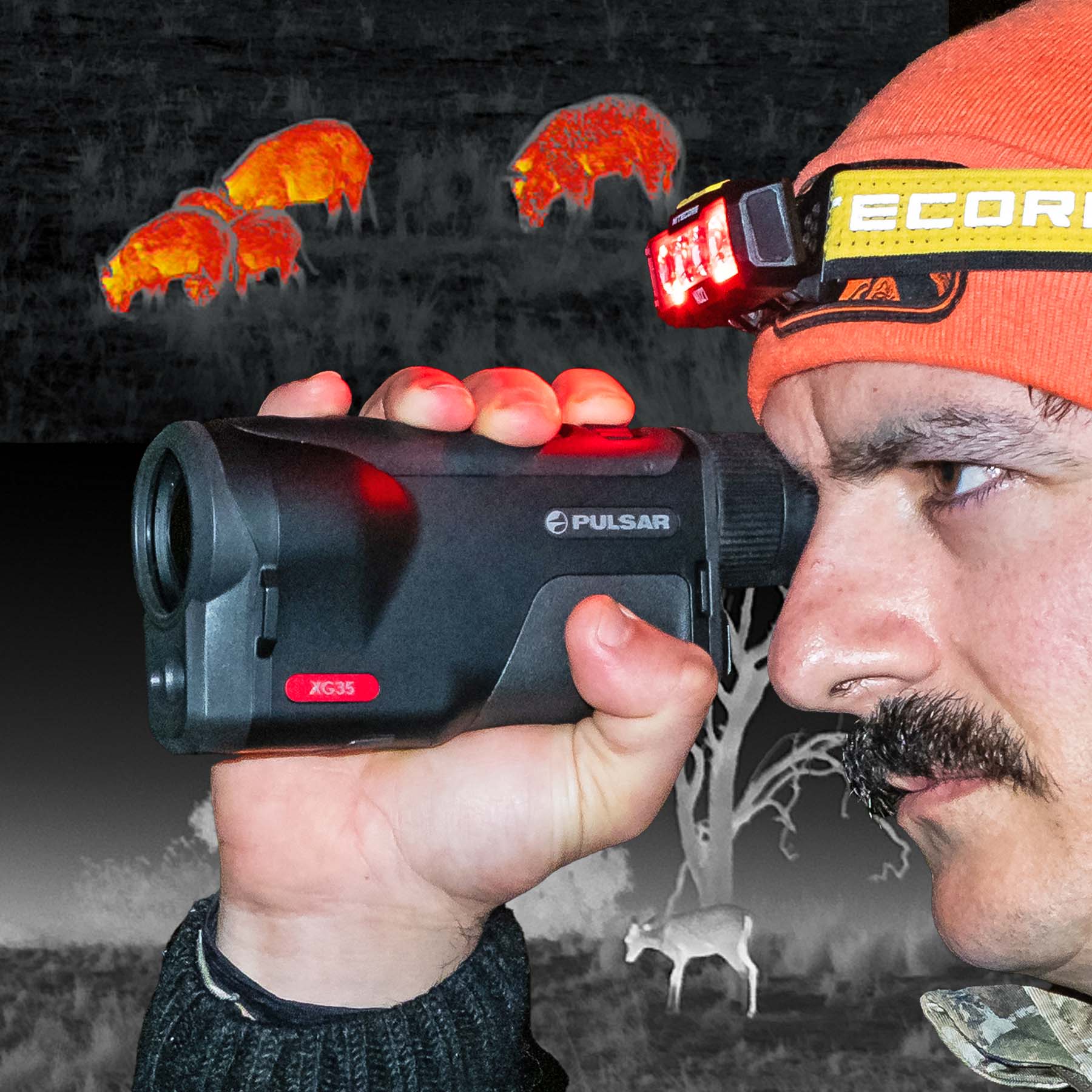

The Pulsar LRF XG35 thermal monocular hits the mid-to-premium segment of the market, combining a 640 x 480 thermal sensor, integrated laser rangefinder and practical field features in a compact package built for real-world hunters, all for $4000 — a price that is relatively approachable.
As more Aussie hunters discover the advantages of thermal technology for locating game after dark, many are rethinking where they invest their hard-earned dollars.
As with most things, you usually get what you pay for, but even budget thermal options can cost as much as a decent rifle or glass scope.
At the other end of the spectrum, you have units that can cost over $10k, and all of a sudden you’ve left enthusiast territory and moved well into the serious professional category.
This Pulsar fits somewhere in between and inarguably one of the best choices because of that.
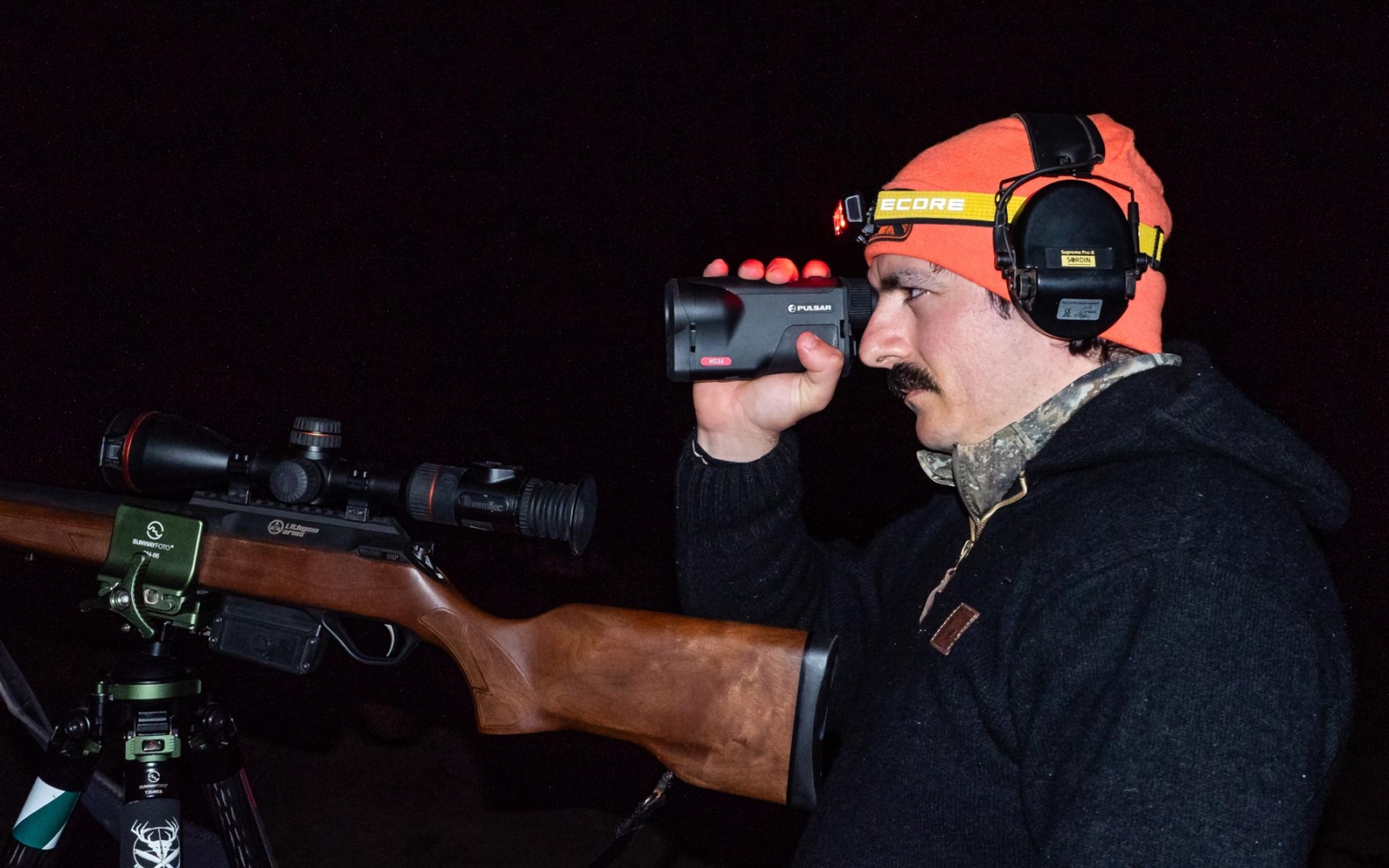
One of the first things you’ll notice when you hold this unit is that it is comfortable, relatively light at 500 grams and has been designed to be operated with one hand.
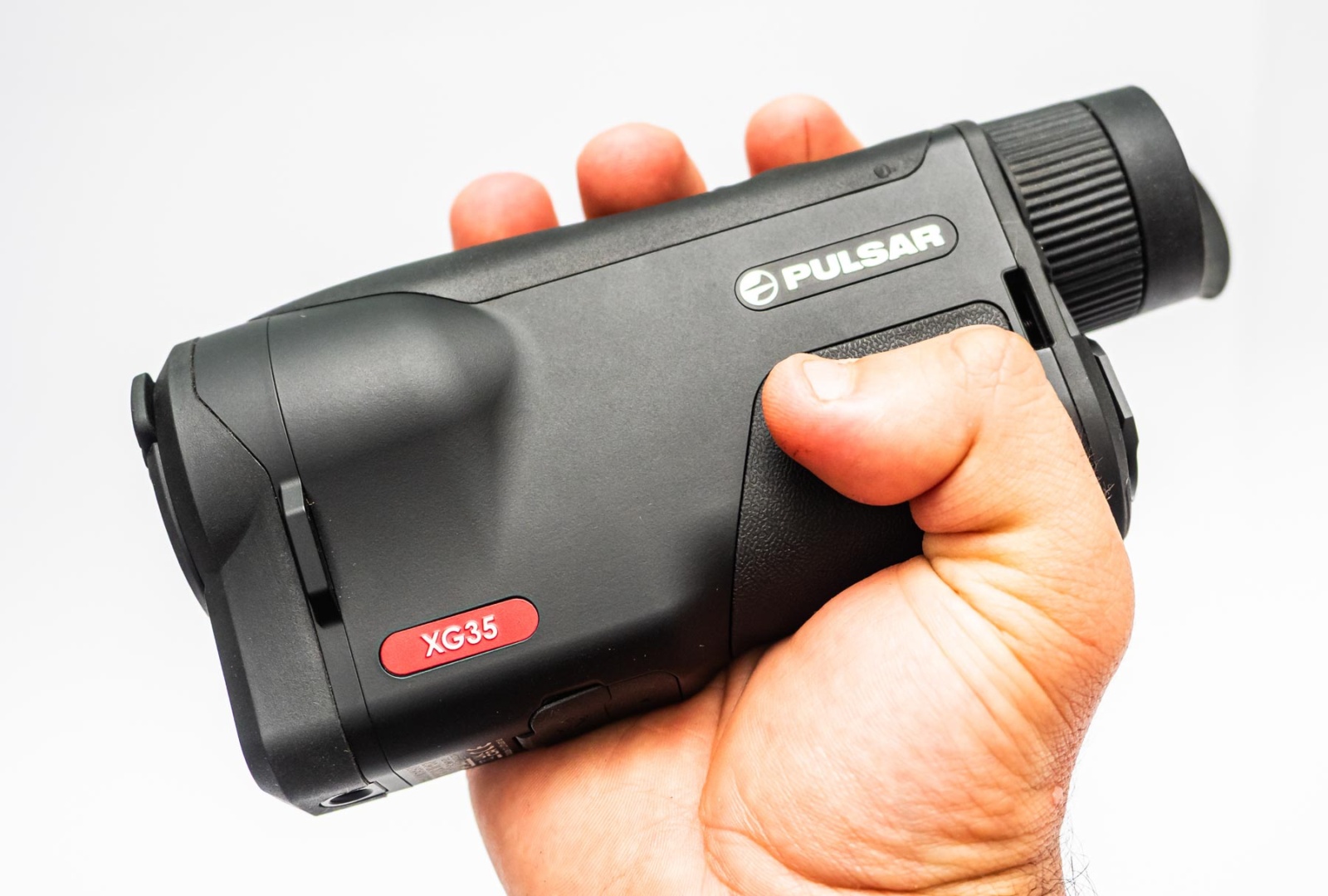
The body, being made from magnesium alloy, ensures it’s tough but it has a nice rubber coating that stops it from feeling too cold and keeps it quiet.
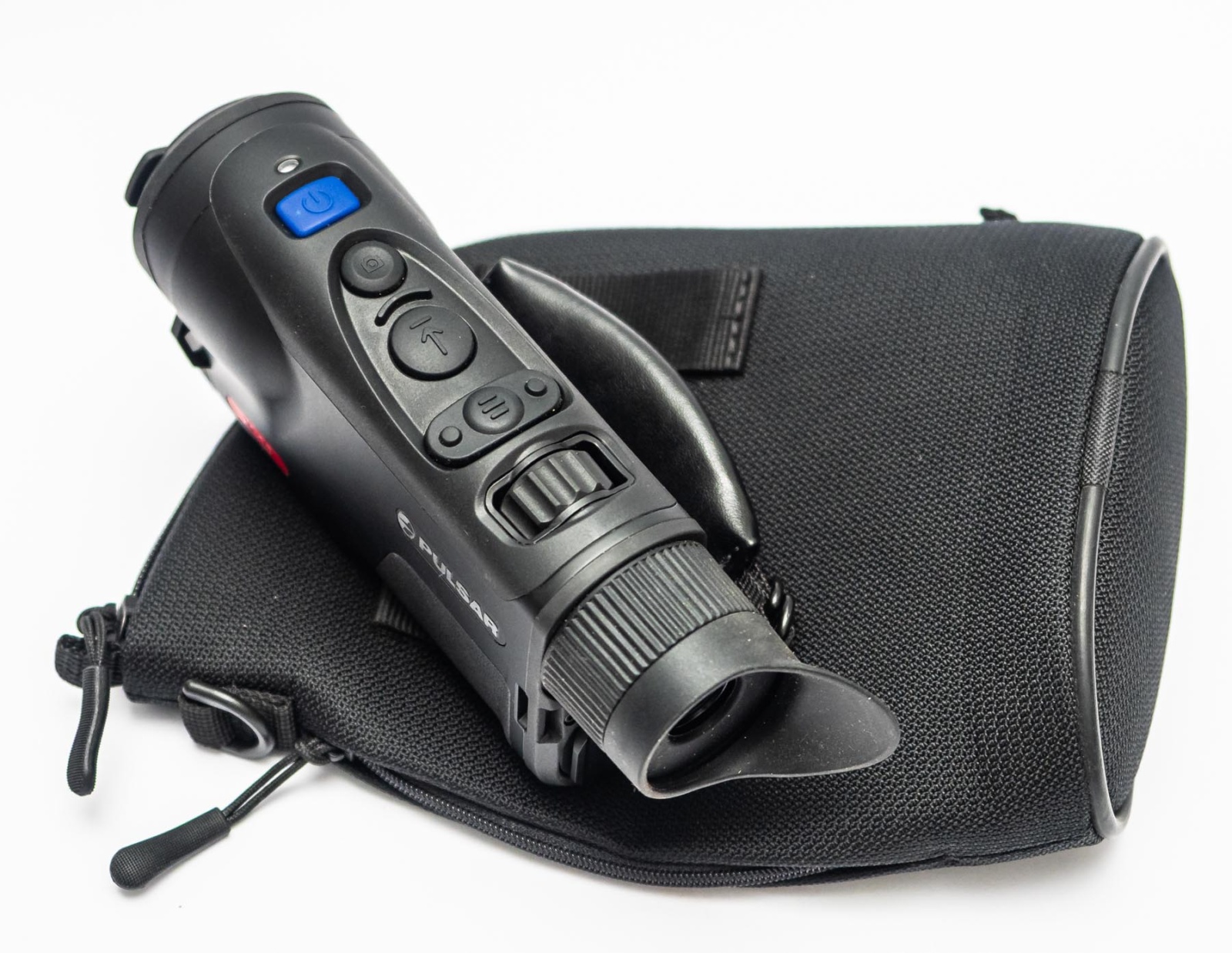
All the controls are on the top of the unit and feel different enough that you can work them in the dark without looking, but it does take a bit of practice. After a couple of nights, the controls became second nature to me.
It comes with a short strap for easy carry that also has a magnet inside it that allows you to fold the lens cap out of the way and not have it flap around. This strap can be put on either side of the unit so it’s truly ambidextrous.
The heart of any thermal monocular is its sensor, and the Oryx’s premium 640 × 480, 12µm sensor delivers the sort of image quality you’d expect from a unit in this class.
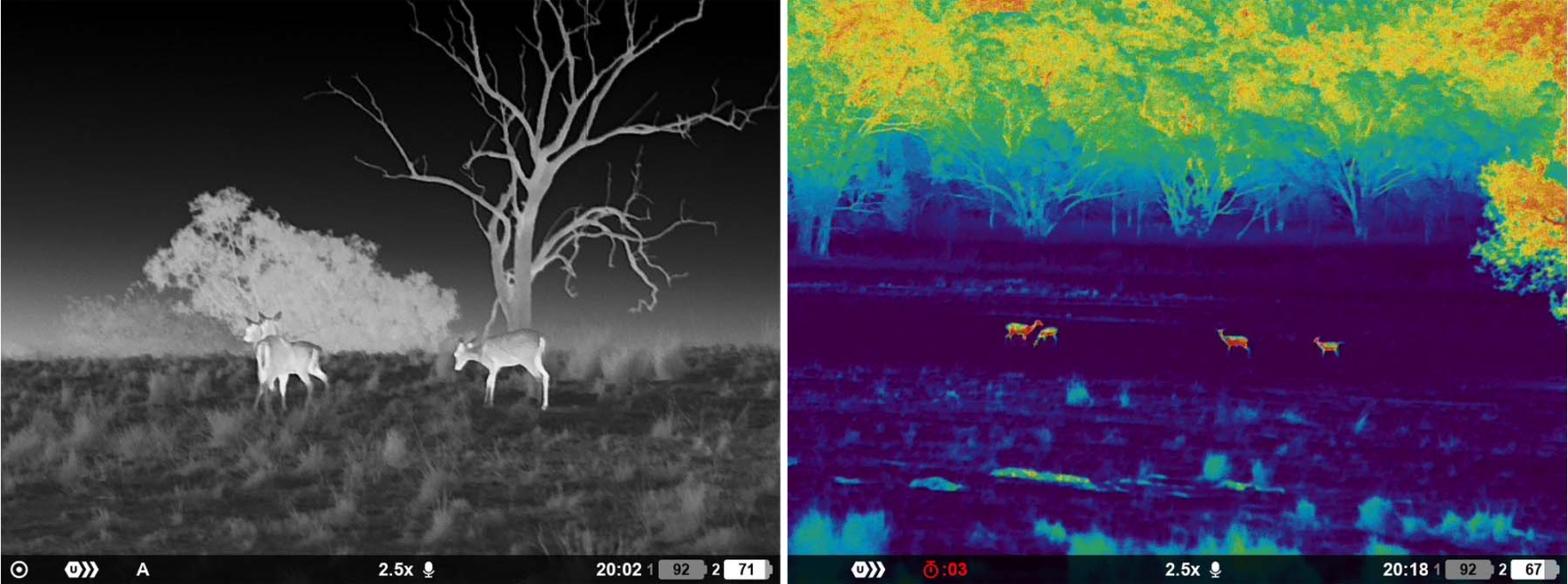
It provides enough detail that identifying animals at practical hunting distances is noticeably easier than with many entry-level thermals, particularly when trying to distinguish between similar-sized game or pick animals out against cluttered backgrounds.
Pulsar has paired the sensor with a 35mm F1.0 germanium objective lens, producing a base magnification of 2.5x and a generous 12.5-degree field of view (21.9 metres at 100 metres).
In practice, I found this to be an excellent balance for scanning large paddocks, creek lines and timber edges, allowing me to cover plenty of country without feeling like I was looking through a straw.
Digital zoom is available out to 20x when you need a closer look, although, as with any thermal, image quality begins to degrade once you move far beyond the native optical magnification.
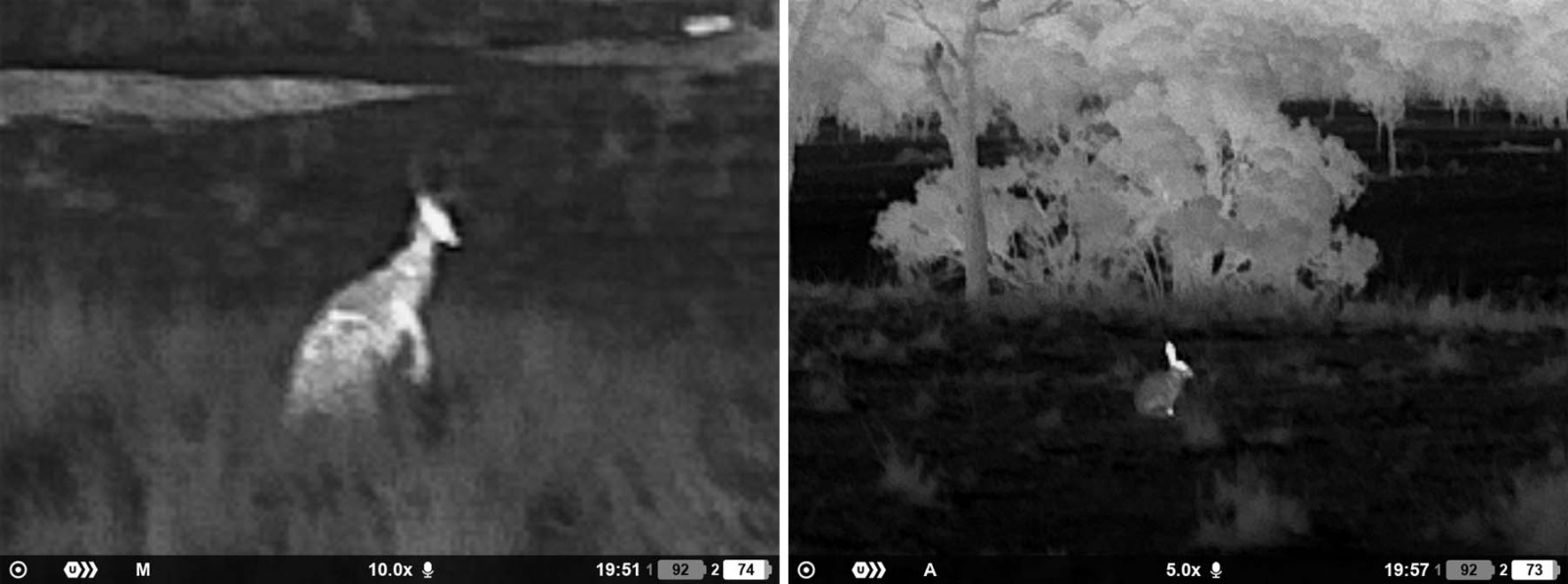
Pulsar offers a range of display colour palettes but, like most thermal users, I found myself gravitating to either white hot or black hot. It’s certainly nice to have the flexibility of different colour options, but many premium thermal units these days offer the same capability, and I found overall image quality and detail to be far more important than the choice of colour palette.
Pulsar quotes a thermal detection range of up to 1800 metres, but that figure simply indicates the distance at which a heat signature may be detected rather than positively identified. In practical hunting terms, I found I could confidently identify deer, pigs and kangaroos at around 600m in good conditions, and it was within those distances that the integrated laser rangefinder really came into its own.
Rated to 1500 metres, it consistently provided fast, accurate readings throughout testing, removing much of the guesswork when planning a stalk or confirming shooting distances after dark.
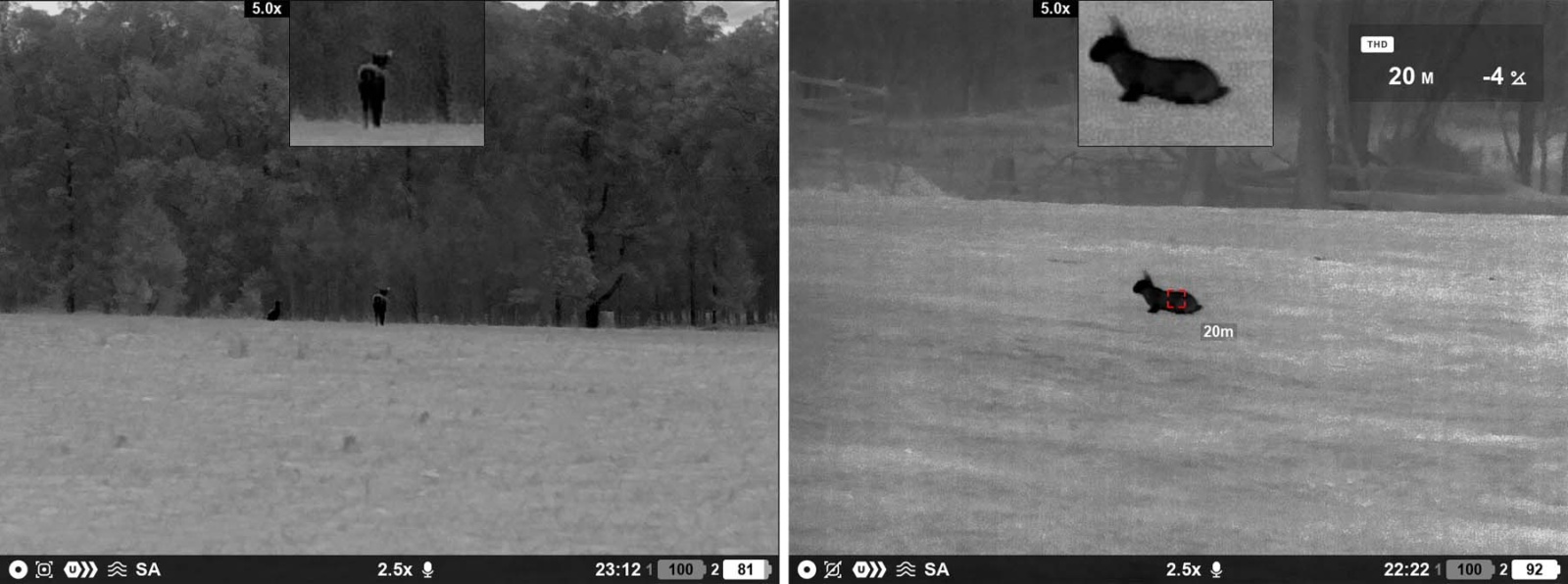
One feature I found myself using more than expected was picture-in-picture (PiP) mode. Rather than magnifying the entire display, PiP places a magnified window at the top of the screen while retaining the normal field of view below. It proved particularly useful when trying to identify animals at longer distances, allowing me to zoom in on the target without sacrificing awareness of the surrounding area.
The Oryx also allows the user to choose between automatic, semi-automatic and manual calibration modes. Automatic worked well overall, but I occasionally found the calibration interruptions a little more frequent than I’d have liked. As a result, I spent most of my time using the semi-automatic mode, which allowed me to trigger a quick calibration with a brief press of the power button whenever I felt the image needed refreshing.
It may seem like a small detail, but when following moving animals through the bush, having control over when the image briefly pauses for calibration is a genuine advantage.
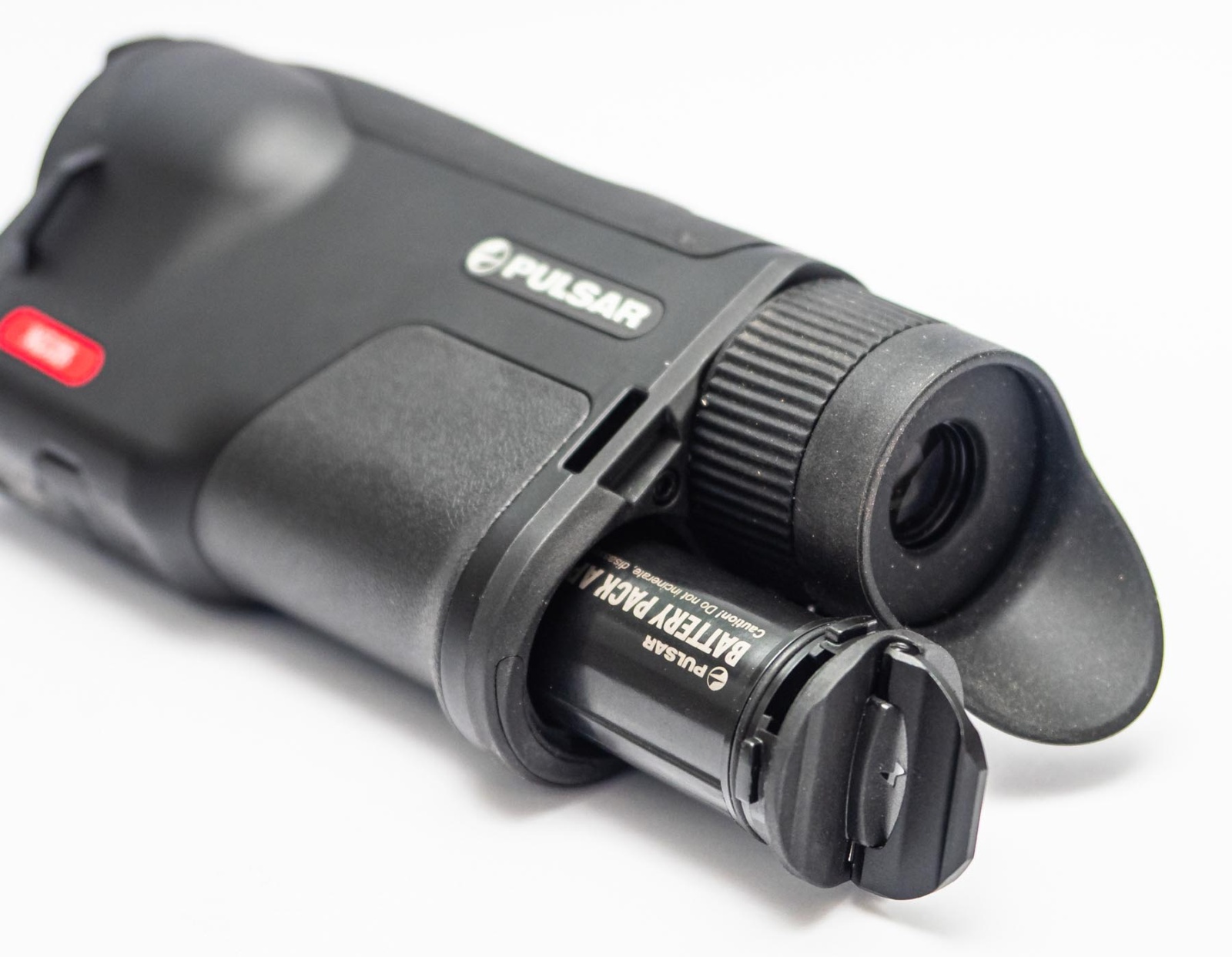
Throughout testing, I never found battery life to be a concern. The Oryx combines an integrated internal battery with a removable APS battery pack, providing plenty of runtime for extended evenings in the field.
The real advantage, however, is the ability to hot swap the removable battery while the internal battery keeps the unit powered, allowing you to continue using the monocular without shutting it down or waiting for it to reboot. It’s not a headline feature, but it’s one of those thoughtful touches that becomes surprisingly convenient once you’ve used it.
Like most premium optics these days, the Oryx also offers smartphone connectivity via Pulsar’s Stream Vision 2 app.
While the monocular functions perfectly well as a standalone unit, the app provides a convenient way to update firmware, transfer photos and videos, and adjust a range of settings from your phone.
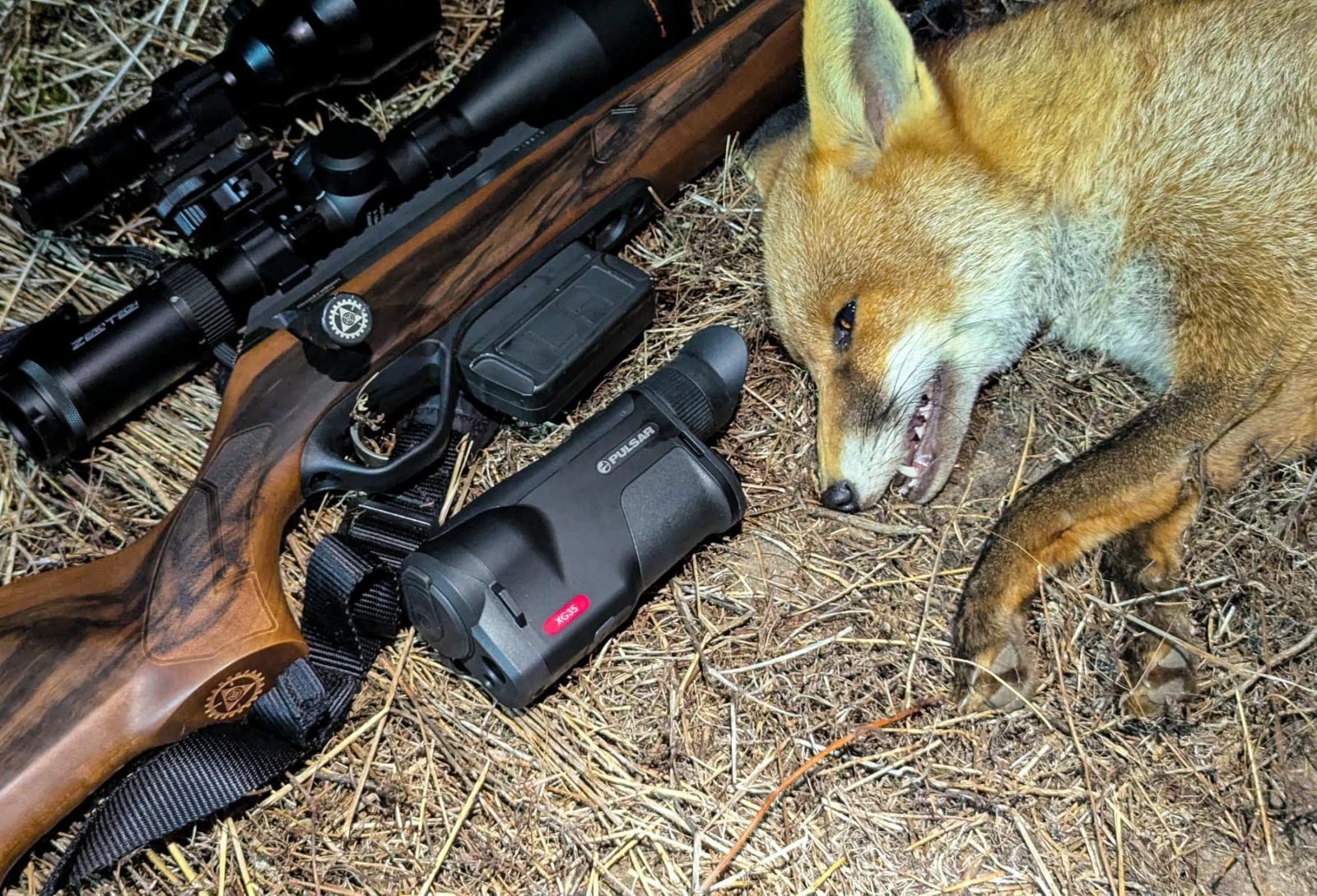
It also allows the live thermal image to be streamed to a mobile device, making it easy to view things remotely, to share what you’re seeing with a hunting partner or review footage after a hunt. It’s not a feature I’d choose the Oryx for on its own, but it’s a polished addition that complements the unit well without feeling like a gimmick.
The Pulsar Oryx LRF XG35 isn’t the cheapest thermal monocular on the market, and if you’re simply after a basic unit to occasionally scan a paddock without spending too much money, there are more affordable options available. Equally, if you’re prepared to spend considerably more, there are premium options that offer an even higher level of image quality and performance.
For me, the Oryx hits a sweet spot between those two extremes. It combines excellent image quality, a useful laser rangefinder, thoughtful ergonomics and practical features.
If your budget is somewhere around the $4000 mark and you’re looking for a thermal monocular that performs well across a range of hunting situations, the Oryx LRF XG35 deserves a look.
Pictures by Dylan Smith and Bailey Simmons.
SPECIFICATIONS
- Manufacturer: Pulsar
- Sensor: 12µm 640×480
- Display resolution: 1024×768
- Recording: 1024×768 .mp4/.jpg
- Objective lens: F35mm/1.0
- Magnification: 2.5x optical up to 20x digital
- Field of view: 12.5 degrees (21.9m at 100m)
- Diopter adjustment: +4/-5
- Detection range: 1800m
- Rangefinder: 1500m
- Eye relief: 15mm
- Operating temperature range: -25°C to +40°C
- Body material: Magnesium allow
- Protection: IP67
- Power: Internal Li-Ion battery pack 3200mAh, removable 4900 mAh
- Dimensions: 179 x 52 x 77mm
- Weight: 500g
- Price: $3999
- Distributor: TSA Outdoors


0 Comments