


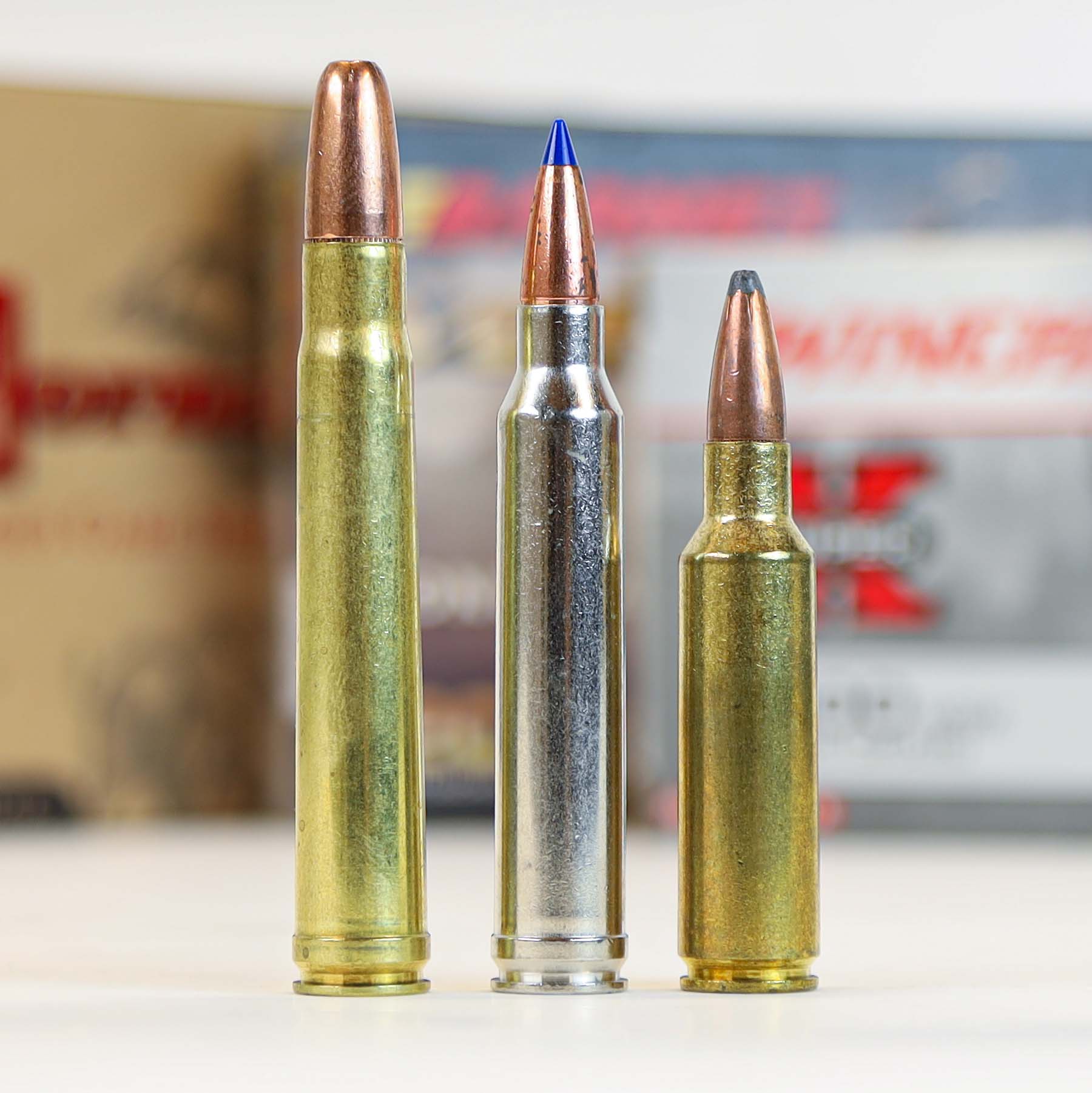


Q: After beltless magnums appeared on the shooting scene we were subjected to a barrage of misinformation, including claims that belted magnums didn’t feed smoothly and a number of other criticisms. How valid are these remarks?
Mark Mullins
A: Not very. We were told for decades how good belted magnums are. In order to justify the then-new short magnums, much was made of their being chambered in short actions and requiring 12mm less bolt travel, something hardly noticeable in the field.
The belted case was introduced in 1912 by Holland & Holland for the .375 H&H Magnum and carried over on the .300 H&H in 1925. After that, a cartridge wasn’t a magnum unless it had a belted case.
But what made a belt necessary in the first place was the slight shoulder angle of the H&H rounds. The .375 H&H has a shoulder angle of 12 degrees, 45 minutes and the .300 H&H is only 8° 30’. With such slight shoulders, these early magnums needed something more solid on which to headspace.
Therefore, they were given a ‘belt’ ahead of the rim. This case head has been used as the basis for almost all the other belted magnums that followed. Roy Weatherby even claimed that a cartridge without a belt couldn’t be called a genuine magnum.
To gain a proper perspective, Speer’s Rifle and Pistol Reloading Manual No 12 says that the .375 H&H and .300 H&H are the only two belted magnums made today that actually need the belt for proper functioning. That manual says all other belted magnums have enough shoulder to headspace on, just like any other rimless cartridge.
But the shooting public came to expect belts on their magnums whether needed or not.
The claim that belted cases don’t feed smoothly is a myth. They feed as easily as any other type of case.
My old Brno ZG 47 would feed, extract and eject five empty .308 Norma cases as easy as shelling peas.


0 Comments