


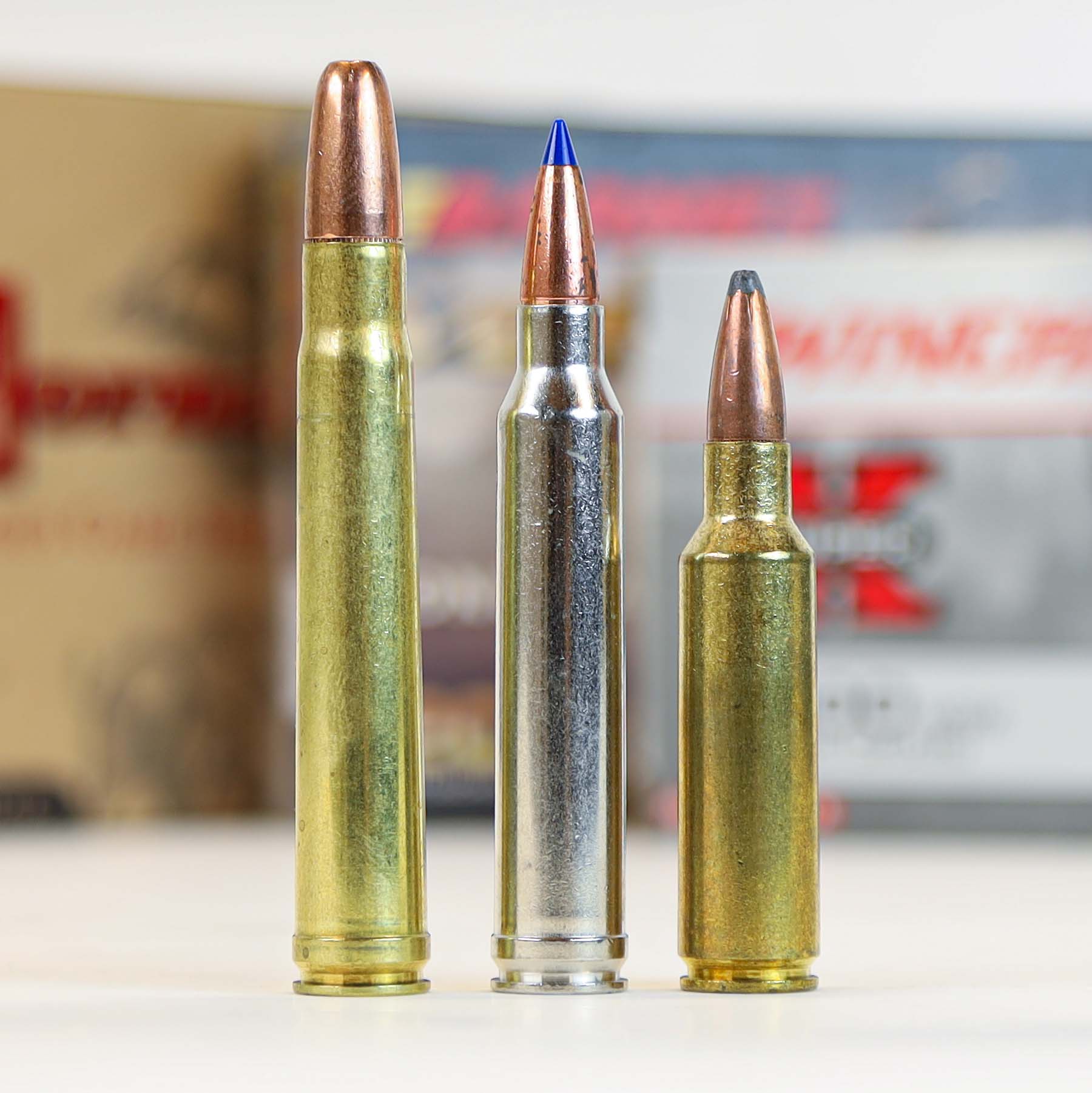

Q: When, why and how did the belted magnum cartridge originate? I’ve been told the first belted case was the .300 H&H magnum which was introduced in 1925.
But why was a belt needed on the case? Modern cartridges based on the .404 Jeffery case have proved the belt was not needed.
Kenny Marlowe
A: The name ‘magnum’ referred to an extraordinarily large bottle of champagne, and it represented that which was the biggest and best, and so it was with cartridges.
In 1912, designers of the .375 H&H rimless case considered its shoulder area too small for positive headspacing in a bolt-action rifle, so they added a belt just forward of the extraction groove.
A rim would have done the same job, and in fact, that was done when Holland & Holland modified the .375 H&H case for double rifles, creating the .375 Flanged Nitro Express. But rimmed cases don’t feed smoothly in bolt-action rifles.
In 1925, the Holland Super .30 (.300 H&H) was born and its case really did have excessive body taper and mild shoulder angle, so the case was also given a belt.
The majority of American-designed factory-loaded and wildcat belted magnum cartridges were based on the original H&H duo.


0 Comments