


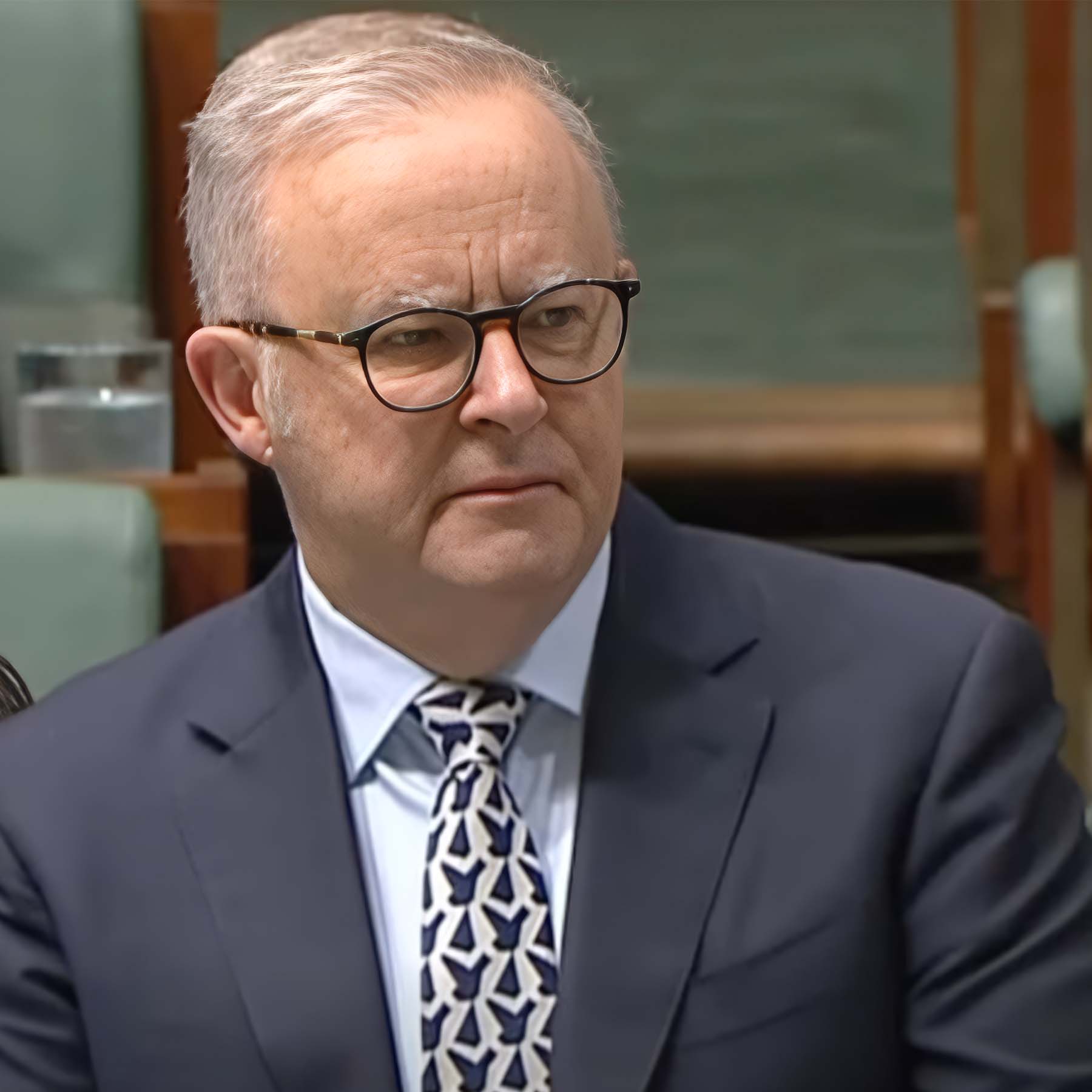


Firearms laws around Australia are undergoing their most radical change since 1996, and if we thought “Flak Jacket” Johnny Howard was quick off the mark back then, Prime Minister Anthony Albanese gone one better.
His Combatting Antisemitism, Hate and Extremism (Firearms and Customs Laws) Bill 2026 legislation was rushed through this week without proper consultation or scrutiny, just a mad scramble to get them through — and the fallout is already causing trouble.
Here is a quick overview of what the laws have done and how they are already having a dire impact on the shooting sports and industry.
We can agree that the good thing about the commonwealth laws is that they may, through the background checks and intelligence gathering they enable, keep a few guns out of the hands of a few more bad people. But they do a lot of harm, too.
The commonwealth legislation was so rushed they didn’t even have a chance to calculate what the buyback might cost, and so it contains no mention of an amount to be paid.
FIREARMS IMPORT BANS
The importation of straight-pull, lever-release and button-release firearms of all kinds and calibres has now been banned in almost all circumstances, as are spare parts for them, meaning that any examples remaining in private hands will become unrepairable junk.
In addition, pump-action firearms will also be blocked because the definition of a straight-pull appears to capture them, too, as repeating firearms “operated by movement of a bolt or handle along a single linear axis”.
Note that this ban only applies to future imports, not to firearms already in Australia or made here. Ongoing possession of those firearms is up to the individual states and territories.
The new legislation gives a government minister the discretion to decide whether a firearm “poses a risk to the health, safety or security of the public or a segment of the public”. This decision can be entirely subjective: a firearm’s appearance might cause it to be banned, much like the appearance laws in NSW.
This same clause stresses that “the public” includes “emergency services personnel who serve the public” — ie, police, who are not only the minister’s key advisors here but have repeatedly demonstrated the attitude that all firearms pose a risk to them. So if the police claim firearm poses a risk to them, and they get in the minister’s ear, it might be banned.
Pistol imports have not been stopped, as was feared. However, importers say the added layers of red tape will be an imposition that will cost time and money. At least one requirement is patently unnecessary, duplicating reporting that already occurs elsewhere: for every handgun sold, importers will have to advise the government of which dealer it has gone to, and then the dealer will have to advise the government of who ends up buying it from them — despite that information passing through firearms registries already, including (if it ever comes to fruition) the National Firearms Registry.
RELOADING DATA AND SHOOTING VESTS WERE ALMOST BANNED
Until the very day of the bill reaching parliament, the legislation would have banned sharing, possessing or accessing reloading data in electronic form, except for licensed manufacturers of ammunition or those who fit one of a handful of other obscure or security-related exemptions. It would have been a criminal offence, punishable by up to five years in prison, to look up loading data or reloading techniques online, or to discuss reloading online or even by email.
Fortunately, the word ‘ammunition’ was removed from the clause. However, the bill still bans having or accessing other electronic information: anything that “provides instructions on the manufacture or modification of … a firearm, firearm accessory, firearm part or firearm magazine” as well as anything that “supports or facilitates the manufacture or modification of” them.
That’s a very wide net. Under the law, firearm accessories and parts are not your run-of-the-mill items like Picatinny rails or even stocks (it’s OK, bedding instructions are fine) but does talking online about the benefits of legally shortening a barrel count as supporting or facilitating modification of a firearm? Does storing your research about it, before you decide what you want your gunsmith to do, count? Let’s hope not.
The commonwealth legislation would have banned the import of things like shooting vests and belts that hold more than 30 rounds, but this was removed at the eleventh hour. It was part of a section that has stopped the importation of speed loaders.
THE BUYBACK
The commonwealth legislation sets the basis of the national gun buyback, without actually establishing its value nor explaining how it would work if states refused to cooperate with the 50/50 funding split demanded by Albanese.
Interestingly, the government attempted to change history in arguing its case for the buyback, insisting that it only acted because states had already imposed ownership limits under their own laws. The facts are that Albanese floated the biggest buyback since 1996 within days of the Bondi terrorist attack, and that only NSW had already moved on imposing gun limits (WA’s had been run and done).
BUT WAIT, THERE’S MORE
The legislation will impose more red tape on imports, including the need for multiple permits that used to be covered by one, and additional reporting about sales of pistols, as mentioned above.
The instant imposition of the laws, with no transition or grace period, stopped all imports in their tracks the moment parliament enacted them. It is a fiasco, and the departments involved are not set up to deal with the problems.
There is still a lot we don’t know about this bill and how it will affect us, but Sporting Shooter will report on developments as they become apparent.


Trying to put finger on why this leaves a sickening taste of institutional decay.
It’s not just that our PM is too scared to have hard conversations with the Islamists and their sycophants because he probably is one.
It’s also the way this process which impacts us loyal Australians was brought to bear so suddenly and arbitrarily.
It’s one thing when legislation is brought to an election as policy or debated. When you can reach out to your local representative and feel heard. Even if you don’t think they agreed.
To feel like your side lost the argument to will of the majority is one thing. It’s a part of the non violent power sharing that is liberal (the concept not party) democracy. But when legislation gets rushed through and debate is guillotined like it was it is so much harder to accept because it’s the least democratic that such a process could be.
Hardly any time for most of us to know we needed to write letters emails etc.
No real discussion by those voting on it. Absolutely no case made to actually justify these laws and as we all know it’s unjustified from any kind of logical basis.
While the laws have changed this approach to any legislation really undermines its legitimacy among those it impacts.
Shame on them!