




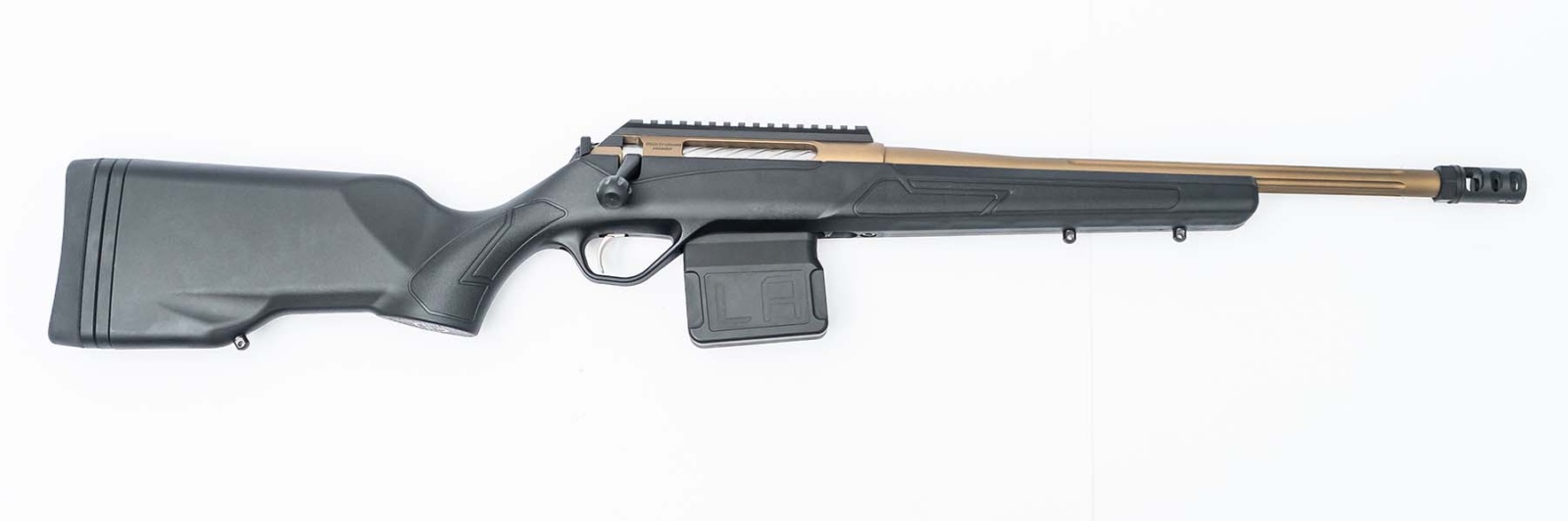
The new Lithgow Arms LA102 Waler gives a nod to some of our earliest and most important military history; that of the Light Horse. The Waler is aptly named after the breed of horse that our soldiers rode in World War I, in legendary battles such as Beersheba. Most of us aren’t hunting on horseback, but this rifle is designed to be at home with modern cavalry like quad bikes, side-by-sides and utes.
The name Waler conjures up ideas about a product designed to be used hard in harsh environments. While that is the case, it’s no more or less rugged and reliable than other Lithgow LA102 models, featuring the same action, trigger, synthetic stock, hammer-forged barrel and overall build quality.
The high-quality Cerakote finish is in a new bronze colour, which helps set it apart from other models, and looks great. You will have no issues with durability. Other differences are in the barrel being fluted and shortened to 41cm (16.5in), with threads on the end and a muzzle brake fitted. It’s a medium contour and tapers from 22mm at the receiver to 19mm just before the threads. If we’re ever able to access suppressors more widely, this rifle would be a great fit.
You also get a 10-round Grizzly magazine as standard, so there is no shortage of firepower on offer.
The sum of all parts is a rifle that is designed for easy manoeuvrability and high-volume shooting.
The rifle I tested was chambered in .308, and Lithgow is offering the Waler in .223 as well. For this sort of rifle, these cartridges make sense, as a wide variety of bulk factory ammunition is available.
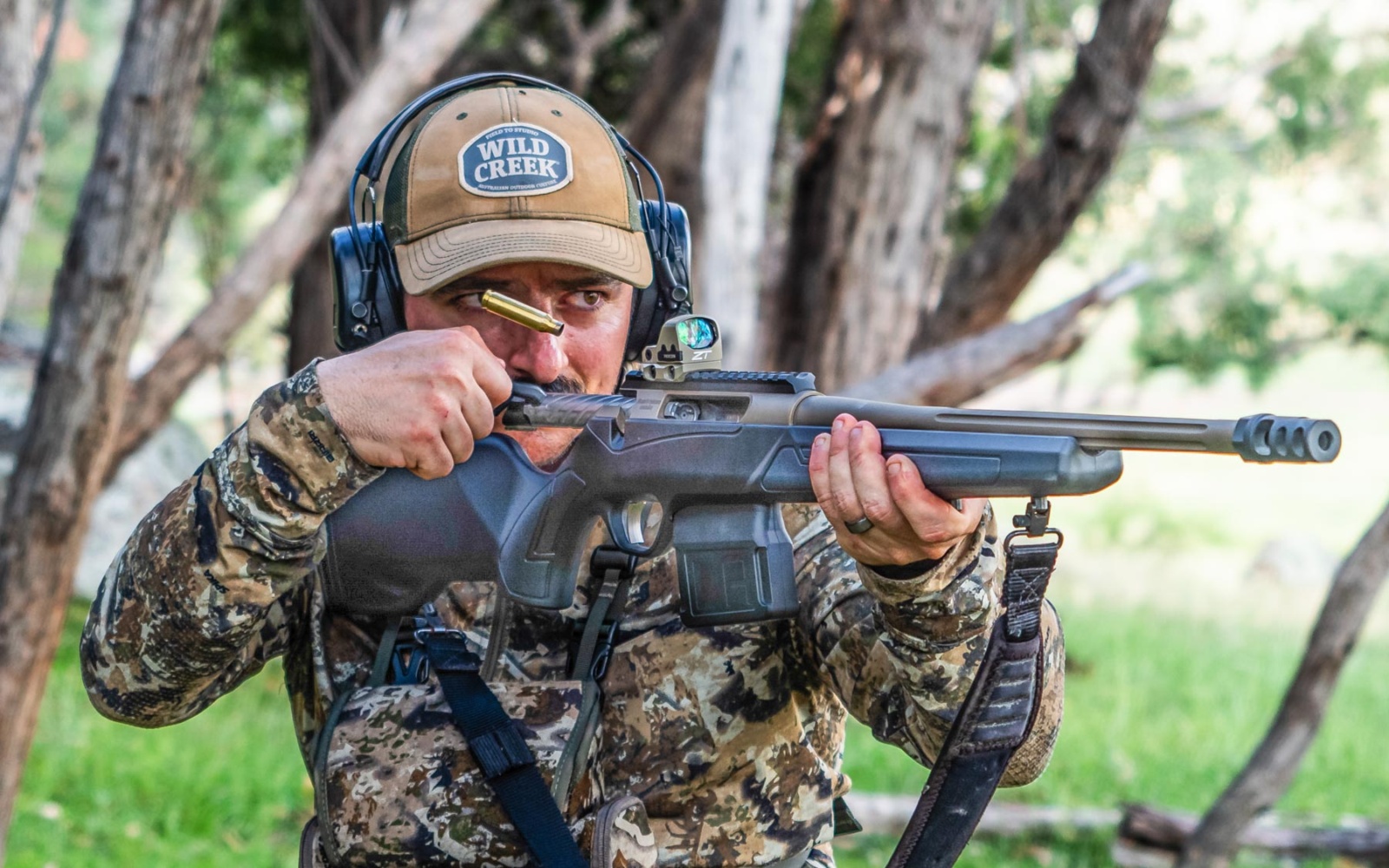
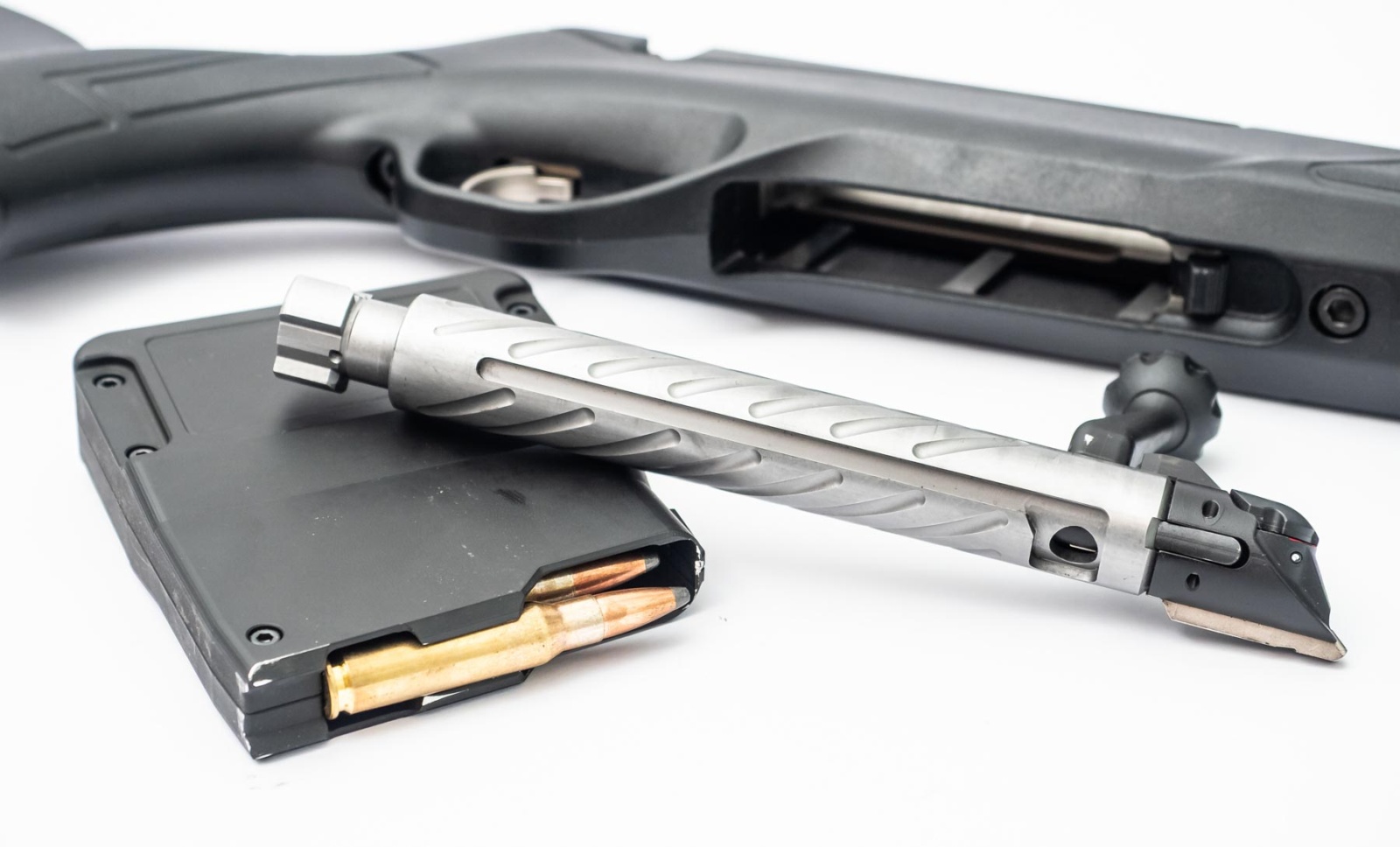
The 22mm diameter bolt is fluted to give a nice aesthetic touch and reduce weight slightly. It is incredibly smooth with no wiggle or slack. The three lugs provide a solid lock-up and a short throw, which makes some of the new LPVO scopes on offer a great fit for this rifle. One of the lugs houses the extractor claw which is held in place by a spring loaded ball bearing. The plunger ejector works the same as other LA102s and I appreciated the authority at which the spent brass was thrown, as I was shooting this rifle with great enthusiasm most of the time.
The bolt knob is the same polymer style found on the Crossover with knurlings on the ball at the end to help with a good grip.
The three-position safety is located on the bolt shroud and functions exactly how you’d want and expect. One click backwards blocks the firing pin and bolt from lifting, and a further click backwards keeps the firing pin blocked while allowing you to open the bolt.
The magazine is made from two aluminium halves bolted together with a spring follower inside. It’s solid. When it’s close to empty and you’re throwing the rifle around you can sometimes hear the spring moving a bit, but it’s not something that bothered me, nor something the critters noticed after the first nine rounds had been sent in their direction. I shot and cycled this rifle quickly in most of my field testing and the magazine performed flawlessly.
The single-stage trigger is adjustable for weight, over-travel and sear engagement. The rifle came to me with the trigger set to 1.3kg (or 2.9lb) and had very little creep to it. For a rifle of this style, this was a weight I found practical in the field so I left it where it was. It broke consistently on my Lyman trigger gauge, never deviating more than 50g either side of the average pull. I liked how it felt and a very small amount of creep gave me good feel when building tension and letting shots go quickly. You can adjust it to take the creep out of you wish.
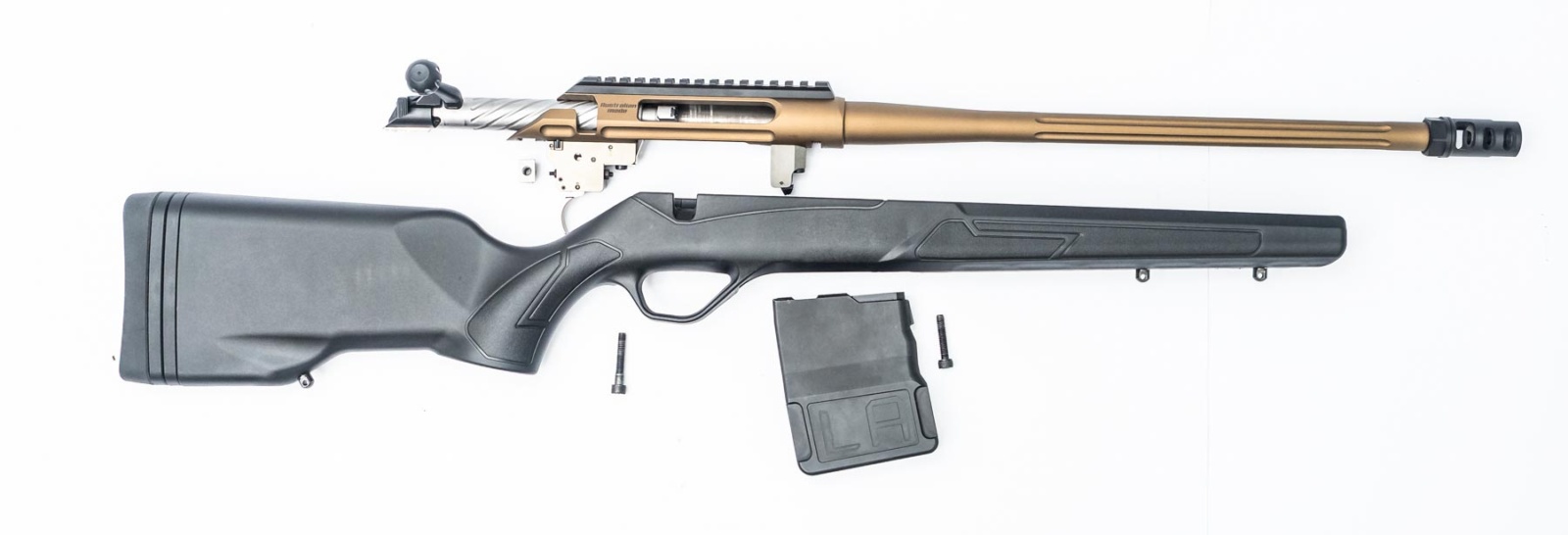
The stock is the same as the Crossover, and people at Lithgow have told me that their polymer is stronger than aluminium. It’s the same that’s used on their military rifles and is built to last. This is one of the better synthetic stocks I’ve seen and used.
The barrel is floated up to the bottom of the receiver where a recoil lug is found. The action is also mounted into aluminium bedding pillars, so the potential for accuracy and repeatability is high. The length of pull sits at 360mm with the spacers installed and you can take these out if you need it shorter.
Shooting offhand with this stock was comfortable, and the section under the butt for a rear bag was useful when accuracy testing. I can’t imagine much benchrest being shot with this rifle but someone may find themselves lying prone and shooting from a bipod. In any case, the stock being designed to perform well in both areas is a bonus, and while the rifle is only available in right-handed models, the stock is ambidextrous. When being used from prone or off a concrete bench, the design helped lock the back end of the rifle into my shoulder.
My first tests in the field were with a ZeroTech 1x28mm reflex sight. I was able to quickly get a 75m zero when shooting Sako 130gn HP ammunition from a standing position off an Edge of the Outback shooting tripod. Over a couple of easy walks, I accounted for 18 goats and two pigs. Most shooting involved quick reloads and follow-up shots on the run, and the balance of the rifle worked beautifully. I never short-stroked the bolt and heard a click on an empty chamber.
I moved through some tall weeds and thick timber at times, and the overall length of about 985mm helped me slink through and not get caught up. This was also helpful when the rifle was riding in a side-by-side buggy, and occasionally being swung around to shoot out of the front window.
After having a good time with the reflex sight, I mounted one of the new ZeroTech Vengeance HD 1-10x28mm LPVO scopes and went bush again. It performed well on this rifle. The weight near the back helped the Waler maintain good balance, and the generous magnification range was versatile in both thick and open terrain. I sighted in using Sako 150gn SP ammunition and accounted for a few more goats.
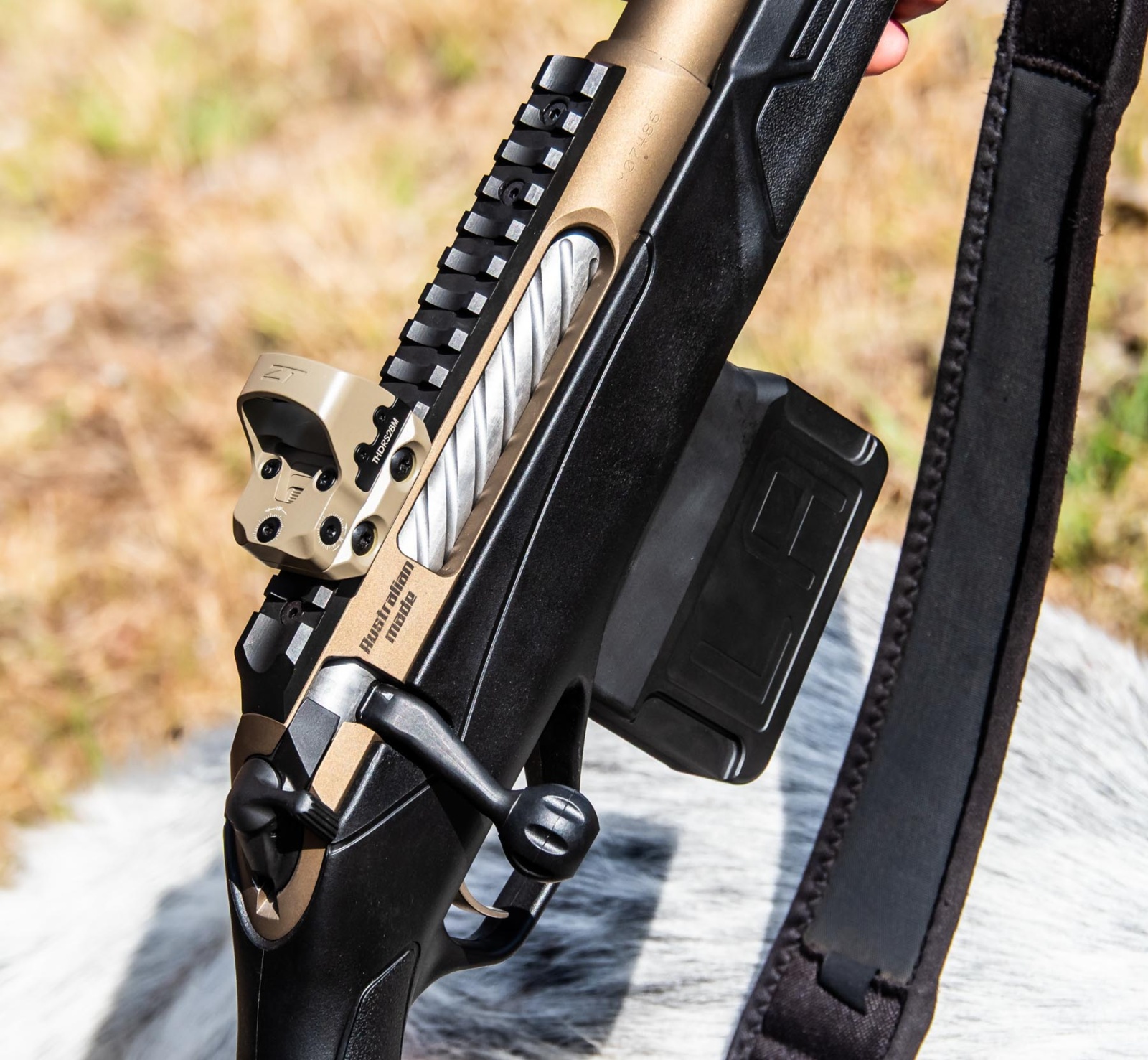
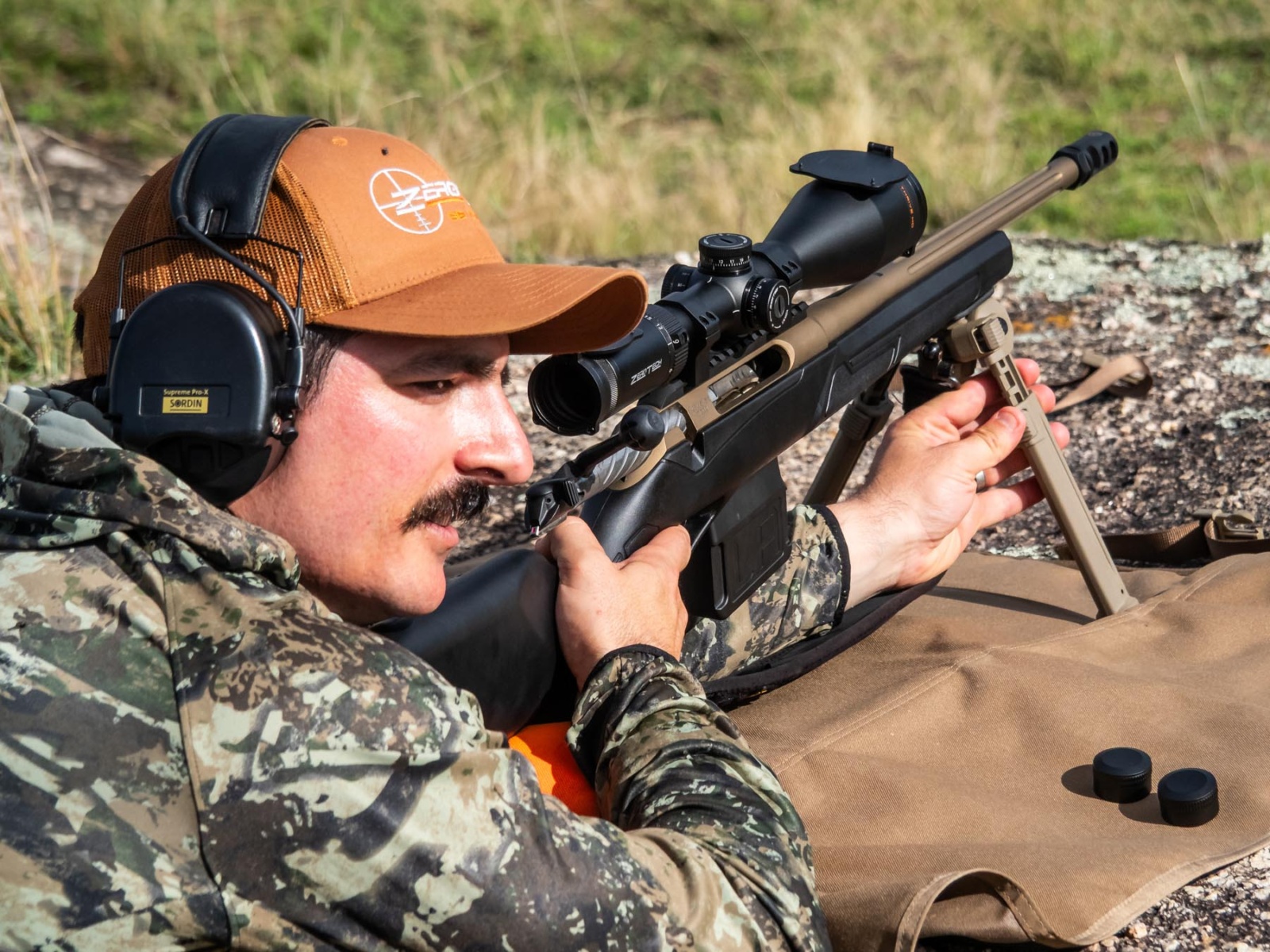
I mounted a bigger scope for accuracy testing to get the best idea of what it’s capable of and determine whether the Waler was a one trick pony or something more versatile. A ZeroTech Thrive HD 3-18x56mm fit the bill. After getting on paper quickly in the field with the Sako 150gn ammunition again, I took an opportunity to dispatch five pigs from an Edge of the Outback tripod, before heading to the range and settling in for more trigger time.
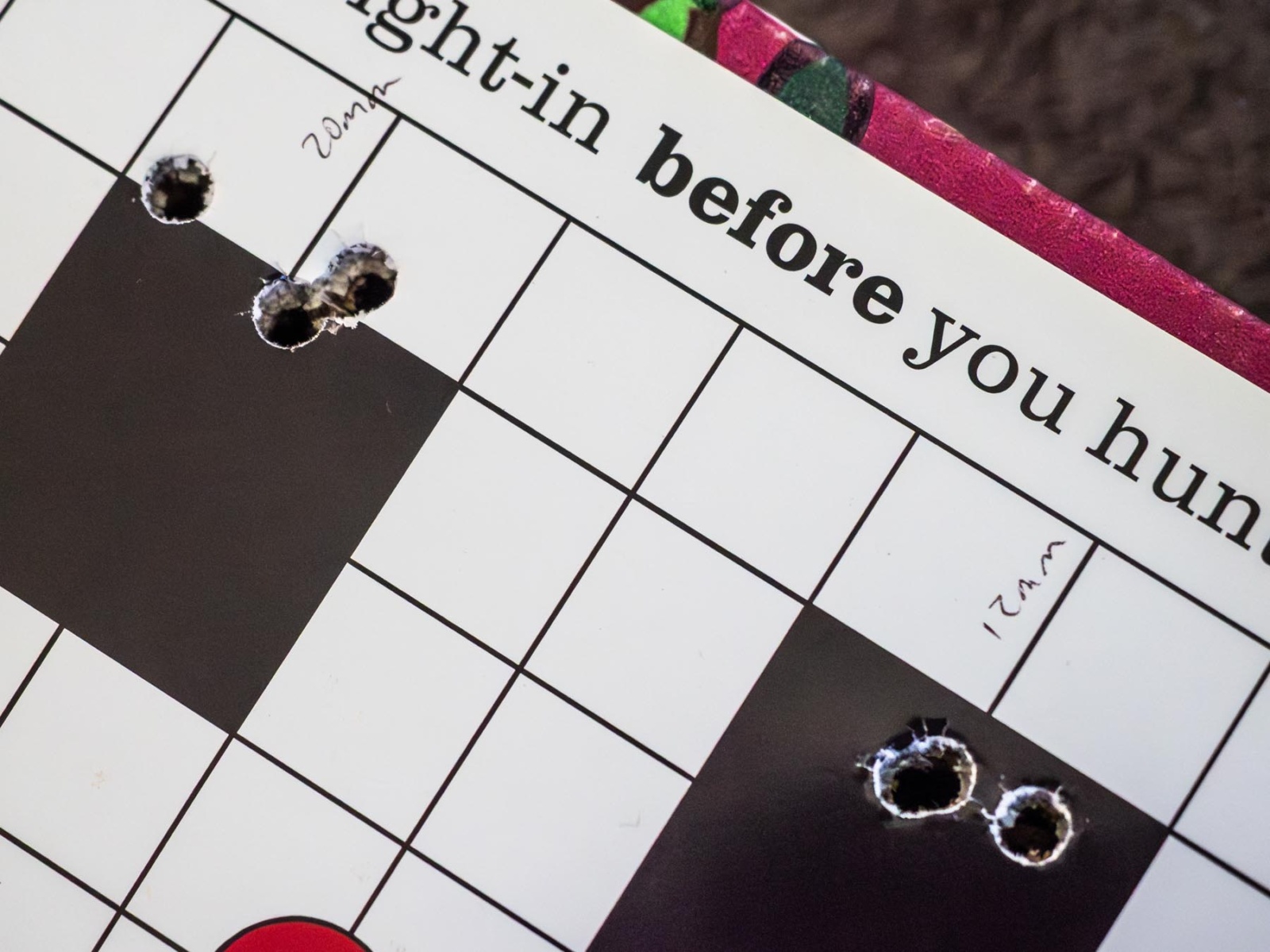
Accurate and consistent are two words that encapsulate how this rifle performed on paper. Taking four varieties of ammunition and at least a trio of three-shot groups from each one into account, this rifle averaged 0.9 MOA. Ammunition was all on the affordable side of things as most shooters who buy this rifle are likely to be shooting plenty of rounds, so the price of premium choices is harder to justify.
PPU 150gn soft points averaged 1.1 MOA, Hornady American Whitetail 150gn Interlock and Sako Gamehead SP 150gn averaged 1.0 MOA, and the Sako Gamehead Varmint RX 130gn HP was a standout, shooting group after group at an average of 0.6 MOA. I also experimented with shooting some groups in quick succession and, within reason, the groups didn’t open up much once things started getting hot.
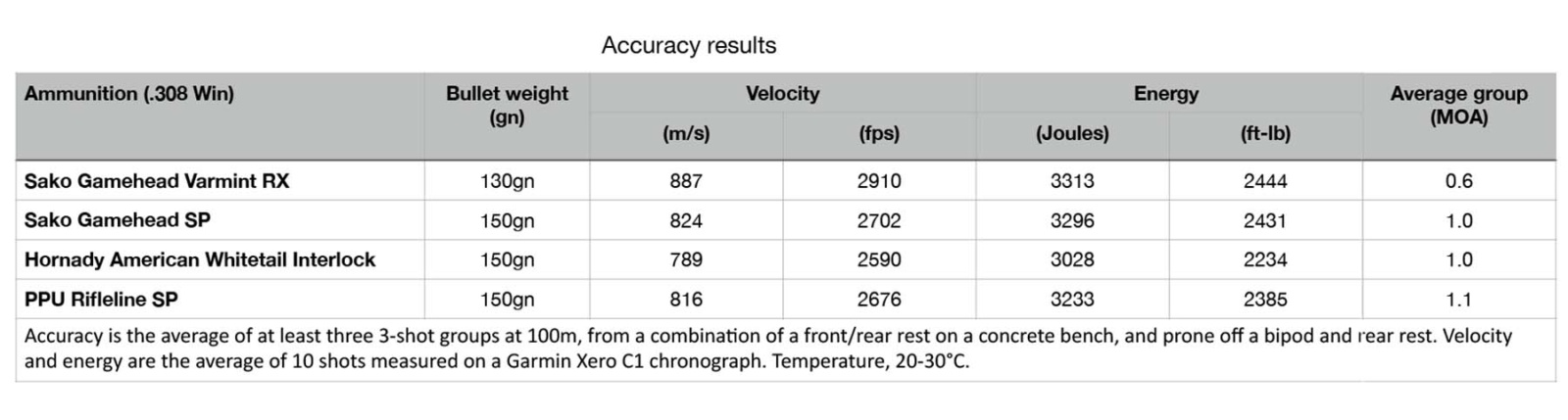
The .308 cartridge is efficient and consistent, and the velocity you can expect out of the 41cm barrel is adequate for the type of shooting this rifle is designed for. The 130gn ammunition averaged 887m/s (just over 2900fps), and the 150gn varieties fell either side of 800m/s (roughly 2600-2700fps).
I was curious how this velocity might compare to other cartridges, and what it might mean for real-world hunting inside reasonable distances. Using the Sako 150gn ammunition going 824m/s (2700fps) as a baseline, I compared it to data I have for a 6.5 Creedmoor shooting 143gn ELD-X bullets at almost 800m/s (2616fps) from a 56cm (22”) barrel; a load praised for being flat shooting. With both loads zeroed at 100m, the .308 drops around 54cm at 300m, compared to the Creedmoor’s 47cm — a 7cm difference, which is 0.24 mils, or 0.82 MOA. In colloquial terms, stuff all!
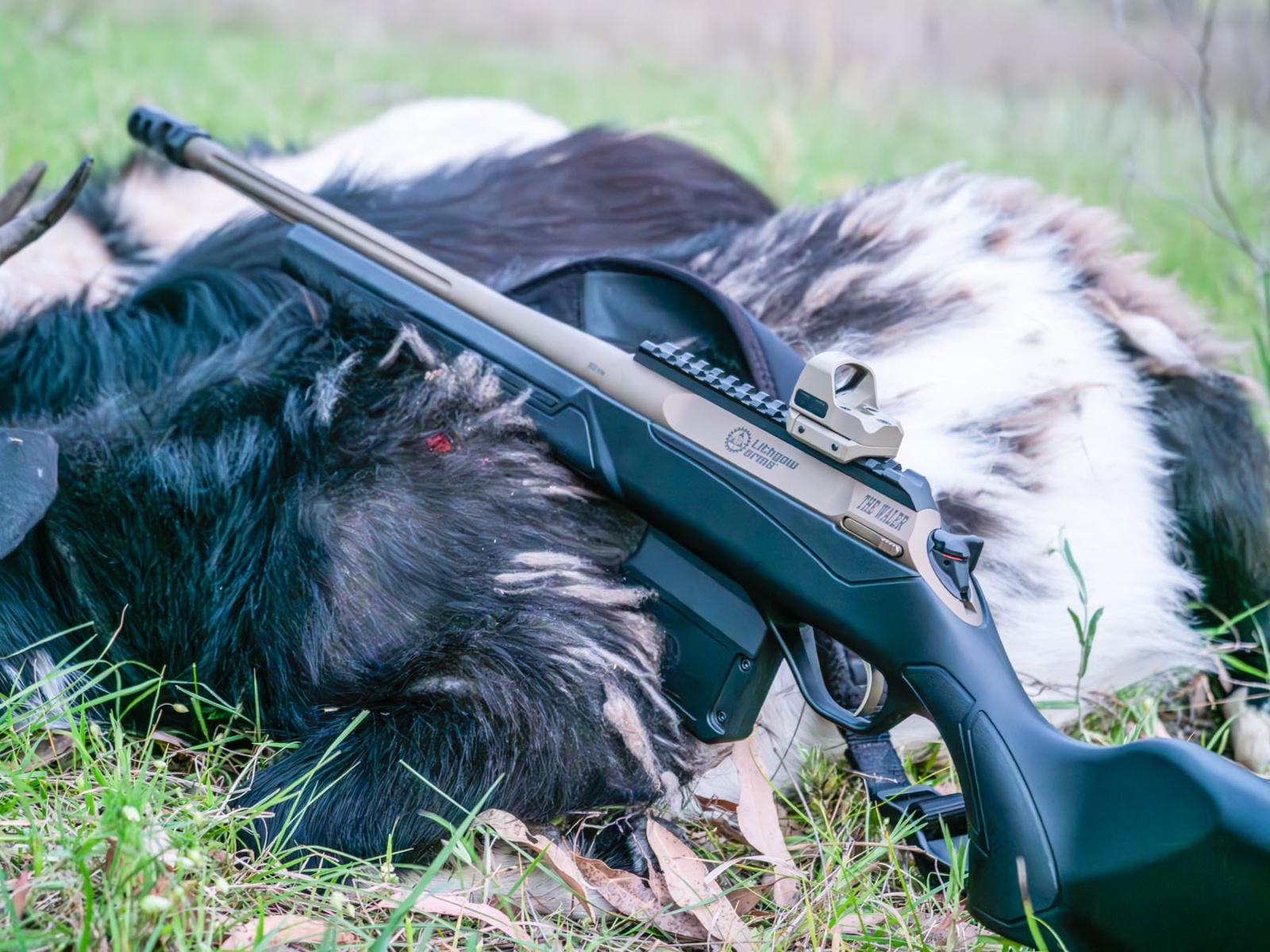
The Creedmoor’s trajectory and energy start to surpass the .308 past the 300m mark in this instance, but the .308 still has close to 1500 Joules (1100ft-lb) of energy at 300m, which is more than enough to shoot large deer, let alone pigs, gots and fallow. There are certainly better choices for rifles you might use to shoot medium game at medium distances, but I’m making the point that with a good LPVO, you have a quick-handling rifle for short-range pig busting from a quad bike, that can take the odd deer at 300m if you know your elevation adjustments. That should ease any concerns about the velocity from the short barrel in real-world terms.
I was wearing quality hearing protection for all my shooting. There is no getting around the fact that a braked 41cm barrel is obnoxious. This isn’t really a drawback, as these features make the rifle easy to shoot the way it’s intended, and hearing protection should be worn for the overwhelming majority of field shooting anyway, especially when shooting lots of rounds. With good ear muffs, the Waler was comfortable to shoot in the field, and easily manageable off the bench.
Because of the short barrel, be mindful of how close it is to the ground or other terrain; I found myself getting covered in bark chips when using a log for a rest on one occasion.
With the Waler, Lithgow Arms has delivered a rifle that echoes the qualities of its namesake — tough, dependable and built to work. It combines durability with finesse, handling rough country, rough vehicles and rough treatment without complaint, yet still offering the accuracy to place every shot intentionally. Kept within its design envelope and paired with sensible hearing protection, the Waler is an unapologetically purpose-driven workhorse that delivers confident hits and leaves you smiling well after you’re back at camp after leaving enough ferals in the paddock to keep the crows happy.
SPECIFICATIONS
- Manufacturer: Lithgow Arms, Australia
- Action: Turn bolt
- Calibres: .223 and .308
- Barrel: 42cm (16.5in) fluted, medium profile
- Stock: Synthetic
- Finish: Bronze cerakote
- Magazine: 10-shot, detachable, single stack
- Safety: 3-position
- Trigger: Single-stage, adjustable 0.9-1.8kg (2-4lbs)
- Sights: None; Pic rail fitted for scope mounting
- Length: 985mm
- Length of pull: Adjustable 35-36cm with spacers
- Weight: 3.7kg with brake
- Price: $2400
- Distributer: TSA Outdoors


0 Comments