




It’s a common refrain: “Australia doesn’t make anything any more.” And it’s true in a lot of cases, but there is one area where we’re punching well above our weight: firearms.
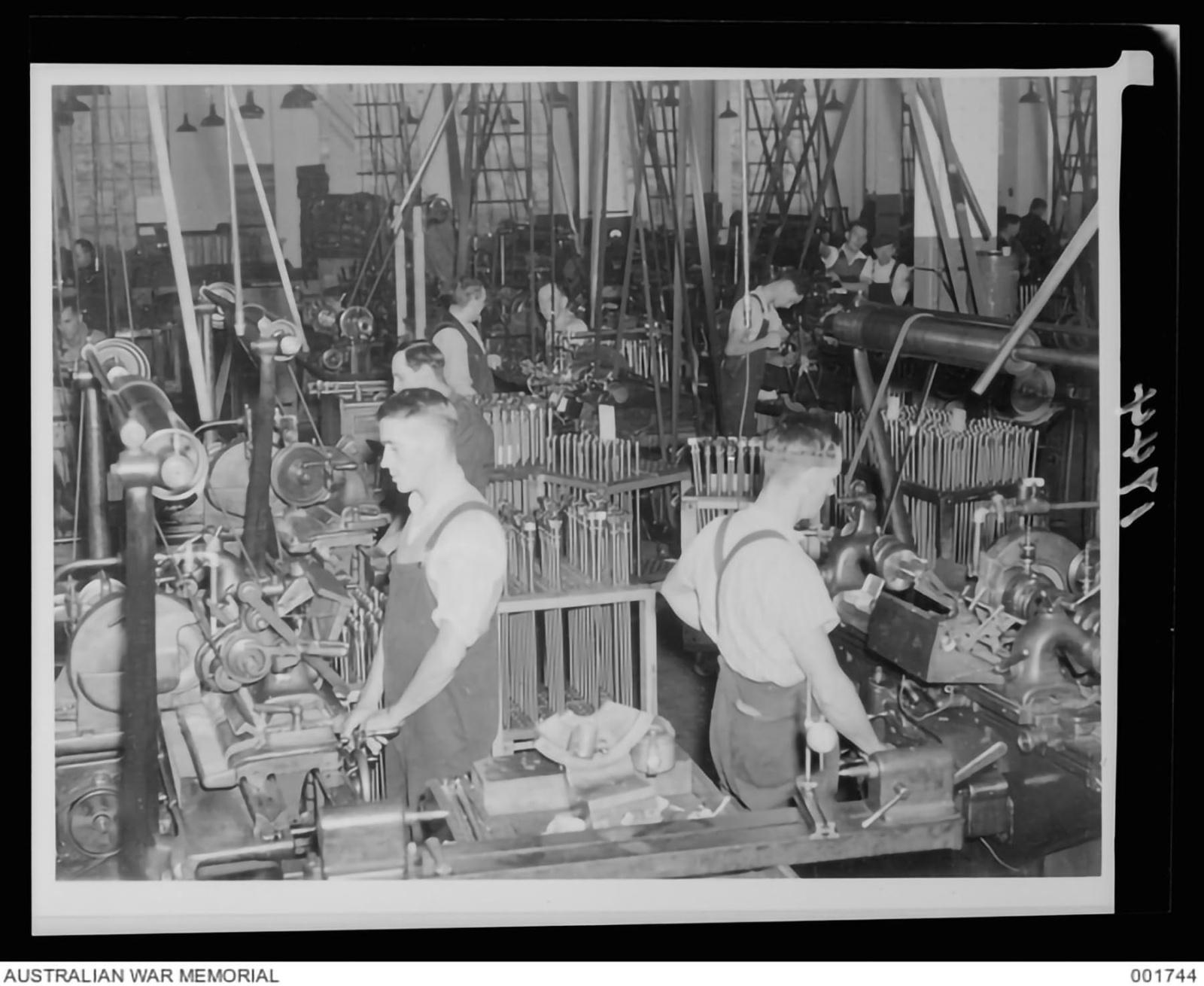
Australia has been producing firearms on a commercial scale since 1912, when the Lithgow Small Arms Factory was opened in the NSW Blue Mountains town.
The site was chosen for two main reasons: first, because of its proximity to coal mines, which were necessary for powering the furnaces and machinery at the site. Second, it is a long way from the coast and therefore well out of range of artillery strikes or bombing attacks by the primitive aircraft of the time.
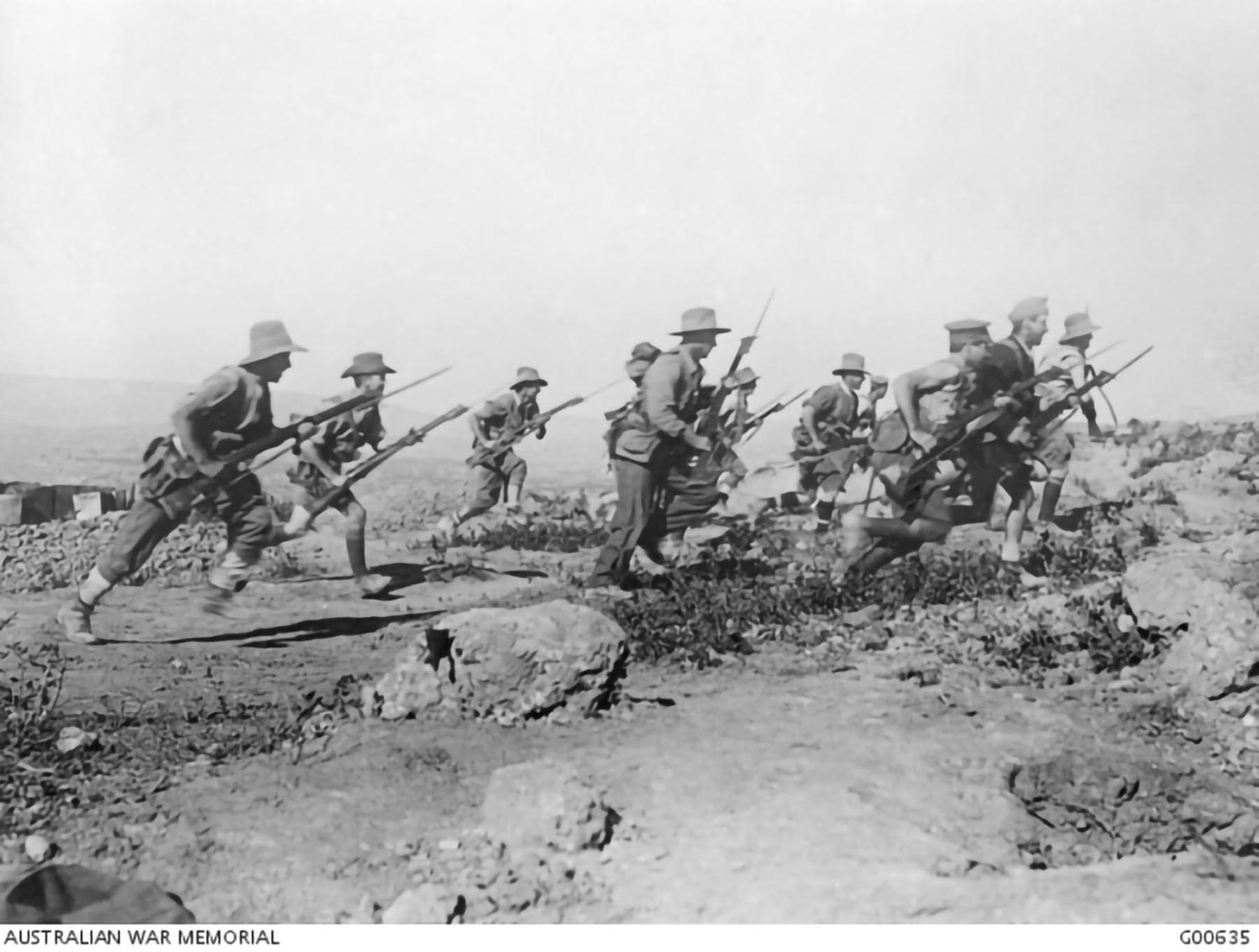
The factory was government-owned and its first order of business was to produce Short Magazine Lee-Enfield Mk III rifles for the Australian military — and produce them it did, manufacturing more than 640,000 between 1912 and 1953, with production expanding to include Vickers machine guns and Bren light machine guns during WWII.
Post-war, the factory switched to sporting firearms — notably the Lithgow Model 1 and Model 12 .22 LR rifles, and a .22 Hornet rifle built on an SMLE action — while also manufacturing the L1A1 SLR for the military.
Production of civilian rifles ended in the 1960s, but there are countless Lithgow .22 rifles still about today and still shooting as well as they did more than 60 years ago.
Following the discontinuation of those rifles in the 1960s, the factory focussed on making and overhauling military firearms, in particular, constructing the iconic F88 Austeyr rifles from 1984, the MAG-58 7.62mm NATO and FN Minimi 5.56mm NATO machine-guns, and more recently, the F90 assault rifle used by the Australian Defence Force.
The factory still makes military firearms today on a much reduced scale, under the ownership of French defence firm Thales. However, military contracts tend to be an all-or-nothing model for businesses: you’re either flat out making a large amount of equipment or you’re waiting to land the next contract, especially in peacetime.
This inconsistency led to the resumption of production of civilian hunting and target-shooting in 2014 under the name Lithgow Arms.
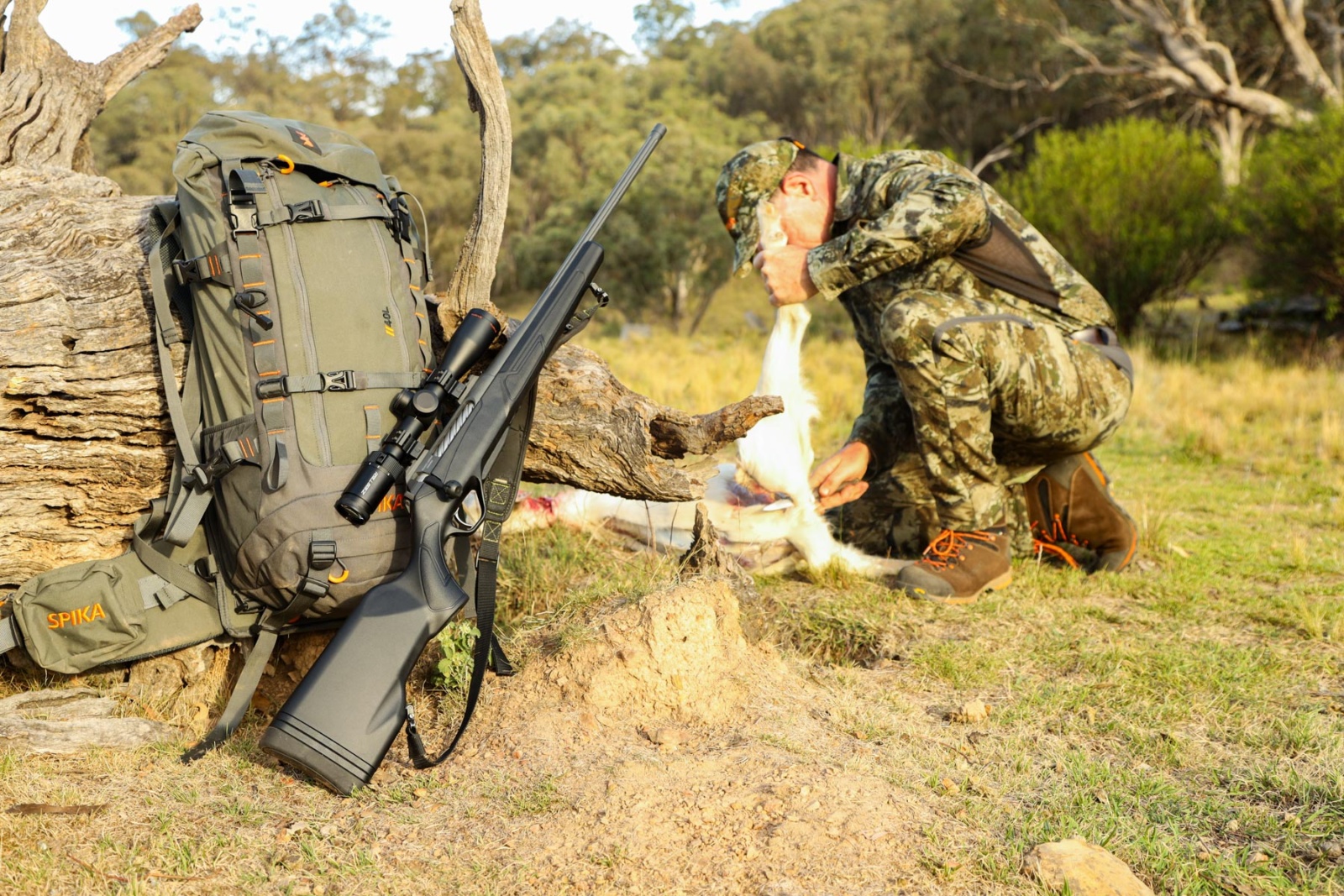
Lithgow Arms fielded the LA102 Crossover centrefire, LA101 Crossover rimfire and LA105 Woomera long-range rifle. They were well-received, particularly for their build quality and accuracy, but struggled with market recognition and, as a result, sales didn’t meet expectations.
A couple of years ago, a renewed push in the commercial market brought a long-awaited introduction of additional models to the range — the lighter LA102 Hunter, the heavy-barrel LA102 Varmint, and the Outback in both rimfire and centrefire. More recently, it released the Waler centrefire.
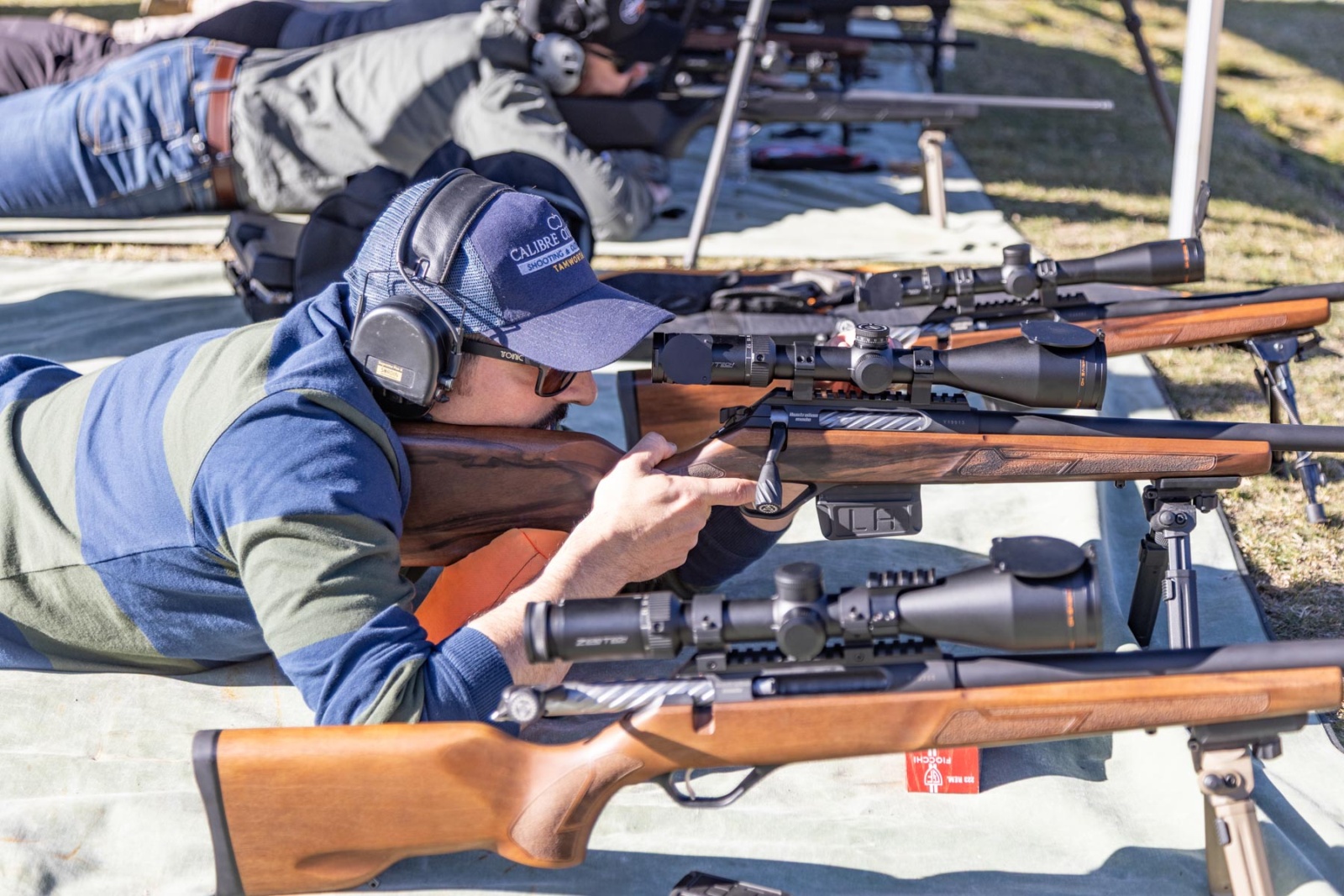
Recently, Lithgow Arms signed on with distributor TSA to help raise the profile of the rifles, and also adopted a new tagline: “Accurate, Reliable, Australian Made”. The Australian-made aspect is important, especially in an era when there’s increasingly little on shelves (no matter what the product is) that’s actually made here.
While the Lithgow Arms factory is still running on its original site, more than 120 years after it was established, its operations are much smaller today. The reduced scale of production is natural since we’re not currently trying to arm a conscripted army to defend the country against invasion.
Lithgow Arms’ increased focus on civilian rifles has come about as a way to keep the factory ticking over between military and police contracts. Lithgow Arms produces and overhauls firearms for military and law enforcement use, but those contracts aren’t constant so the factory can produce hunting and target rifles made to the same standards, on the same machinery.
A highlight of my factory visit was the display room, with examples of every rifle and shotgun made at the factory, ranging from SMLEs and Bren guns to the F88 and F90, along with the Lithgow 1A and even the locally-made version of the Model 1887/1901 lever-action shotgun, developed just after the 1996-97 law changes came into effect.
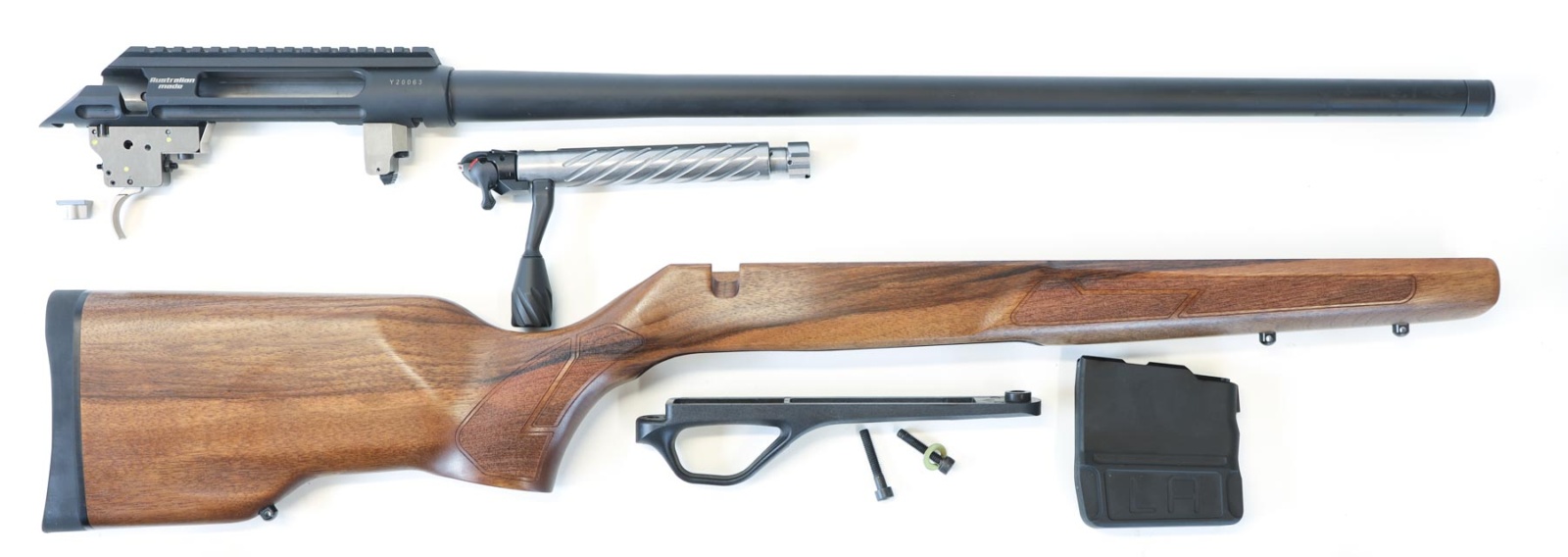
The complete range of Lithgow Arms sporting and target rifles was also on display, in a variety of configurations including timber, synthetic and chassis stocks.
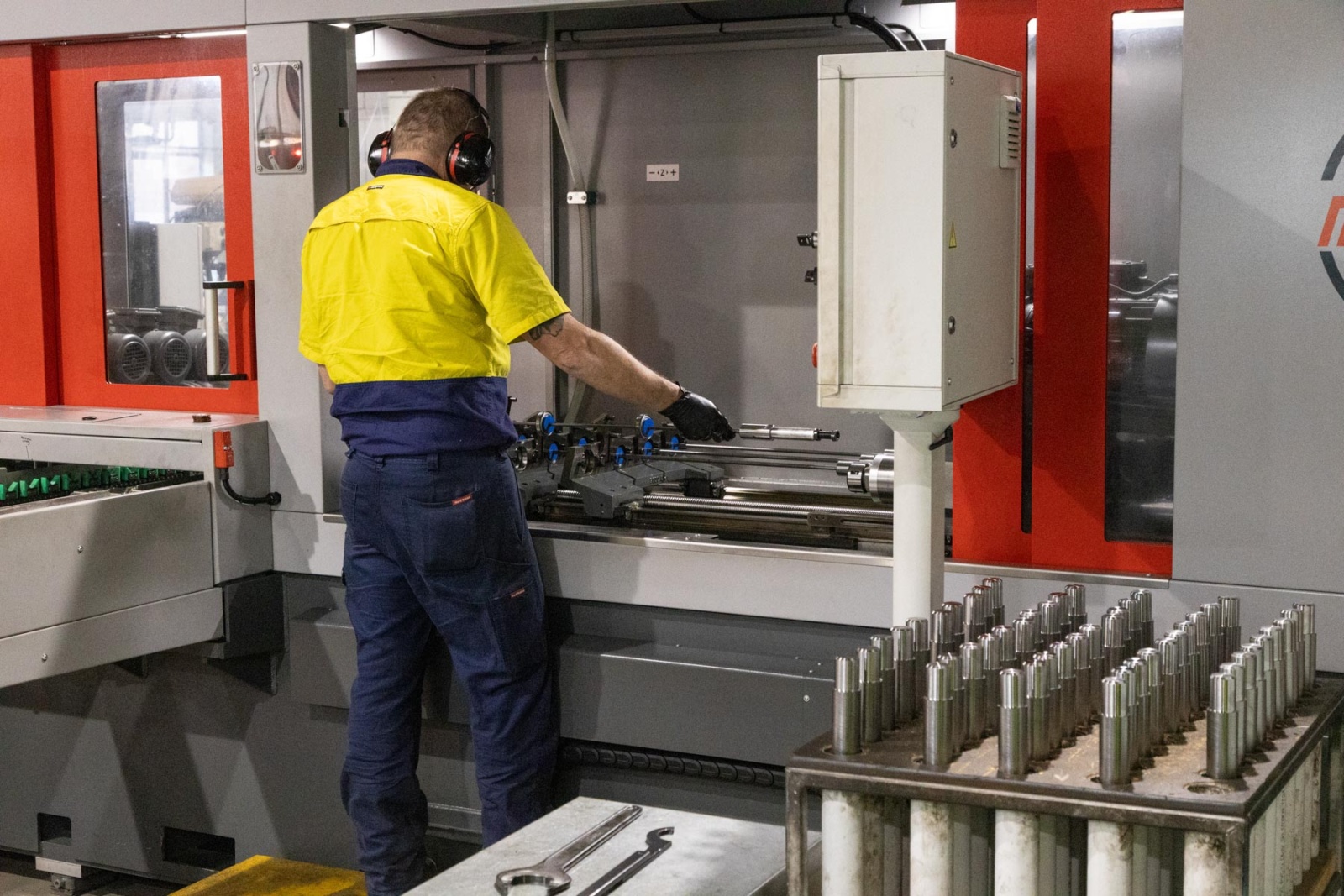
Touring the factory is a fascinating experience. Some of the buildings are heritage listed, and the machinery is a unique mixture of 1980s and 1990s-era for smaller parts, with modern computer-controlled systems handling key parts of the production including barrels and actions.
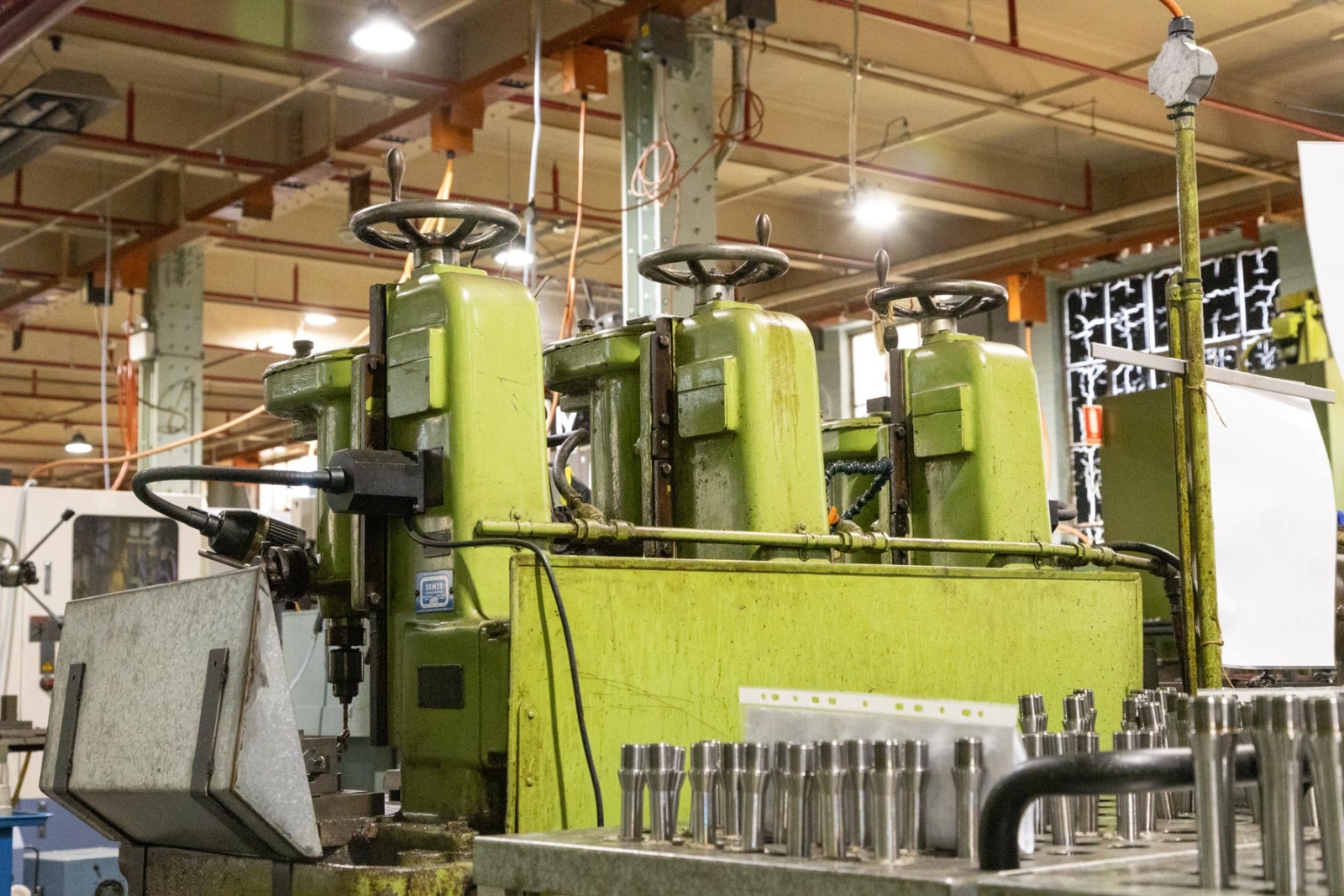
The mixture of classic and new machinery is an apt metaphor for the rifles being produced at the factory — building on decades of practical experience and knowledge, while taking advantage of new developments and technologies to build a world-class product.
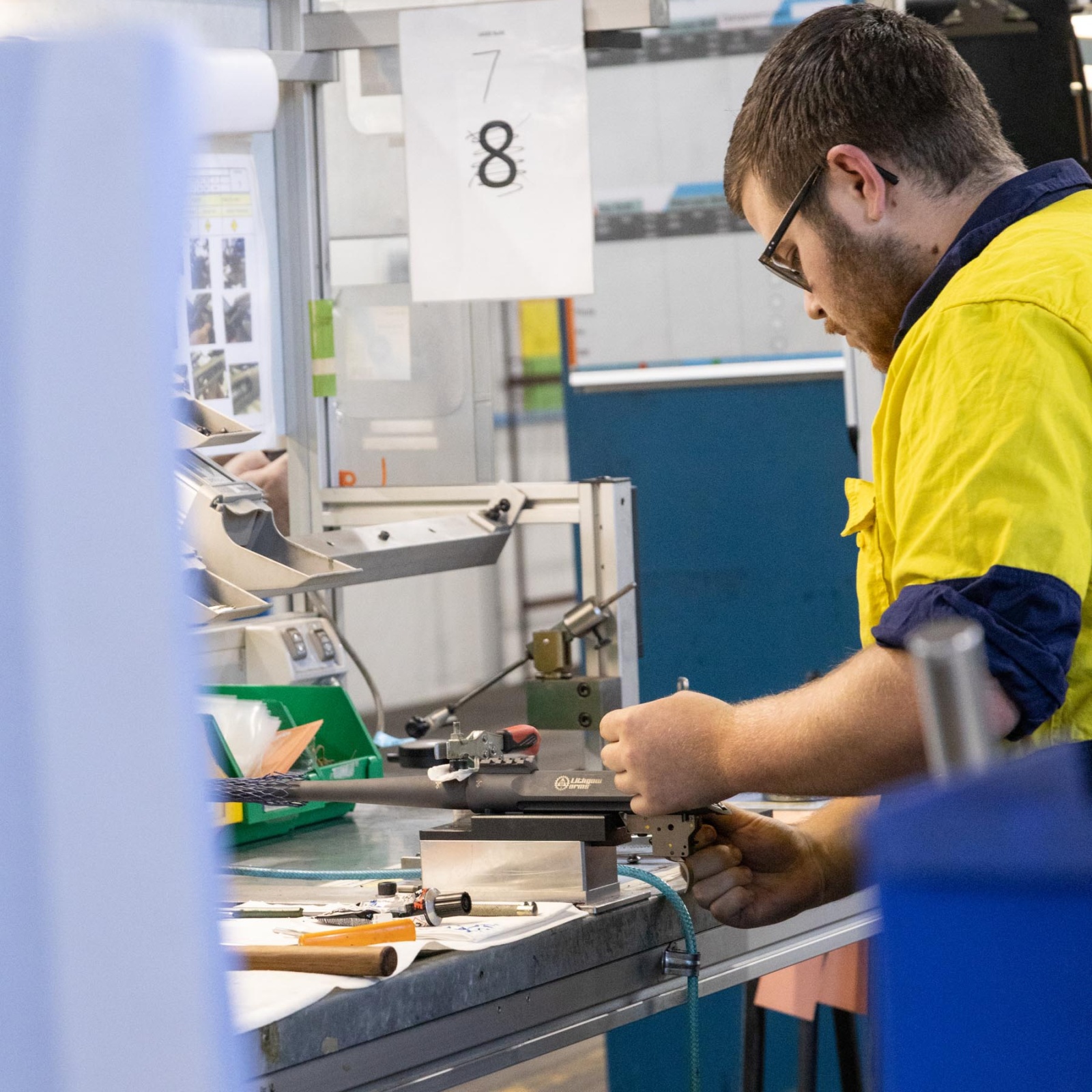
Lithgow Arms rifles really are Australian made. They’re not just assembled from parts made overseas. Pretty much every part of the rifles — including actions, stocks and barrels — is made in Australia, much of it at the Lithgow Arms factory itself, overseen by skilled Australian staff, including a number of apprentices learning the trade.
The staff in the factory are clearly passionate about what they do, and take great pride in their work, whether they are making blank-fire adaptors for F90 rifles, producing receivers for the new Australian Combat Assault Rifle (ACAR), or manufacturing the LA101, LA102 and LA105-series rifles and their component parts.
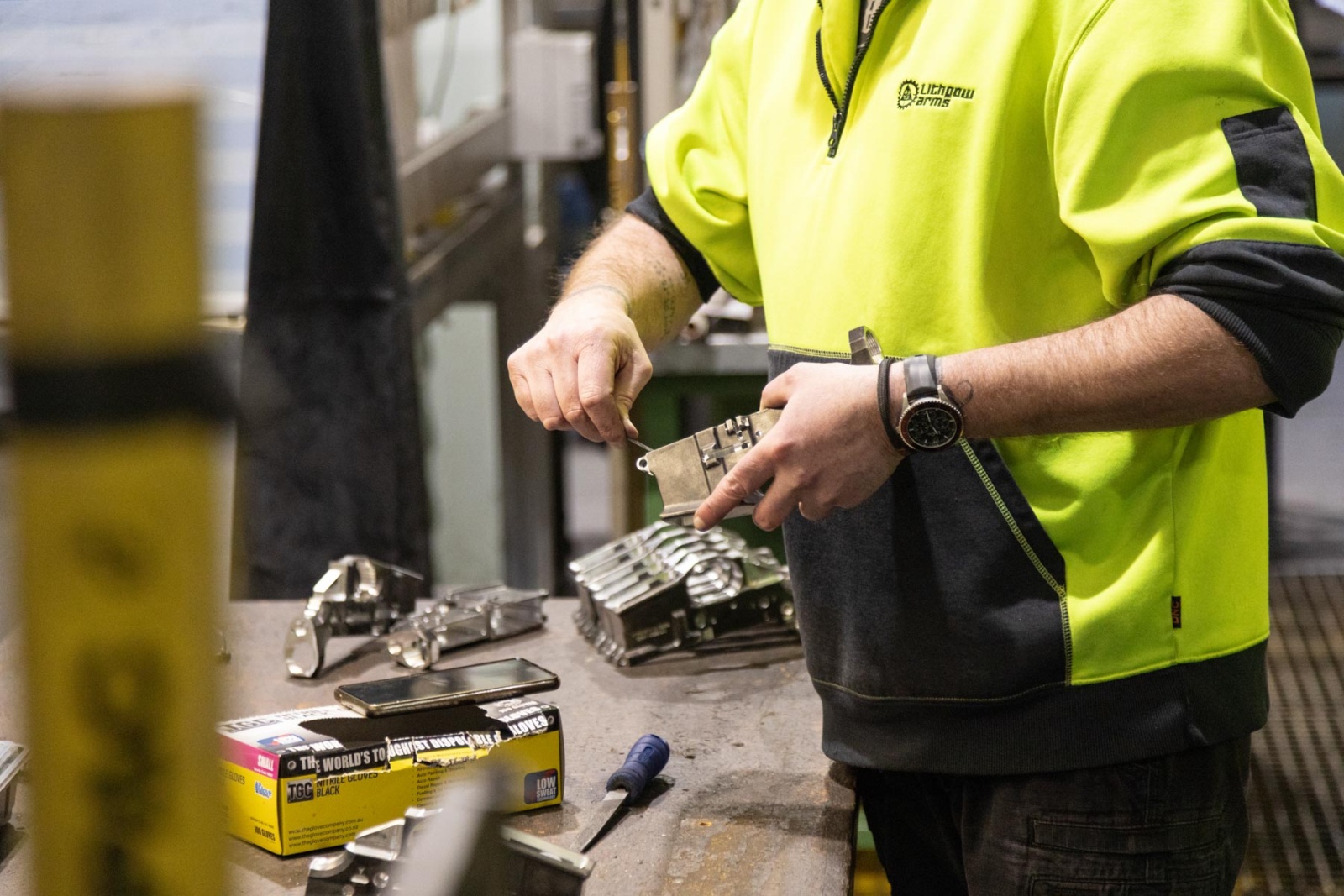
The moly-chrome steel barrels used in rifles are hammer-forged at Lithgow, using modern computer-controlled processes. Currently, the factory manufactures barrels in .22 LR, .22 WMR, .17 HMR, .204 Ruger, .223 Remington/5.56x45mm NATO, .243 Winchester, .308 Winchester/7.62x51mm NATO, and 6.5mm Creedmoor.
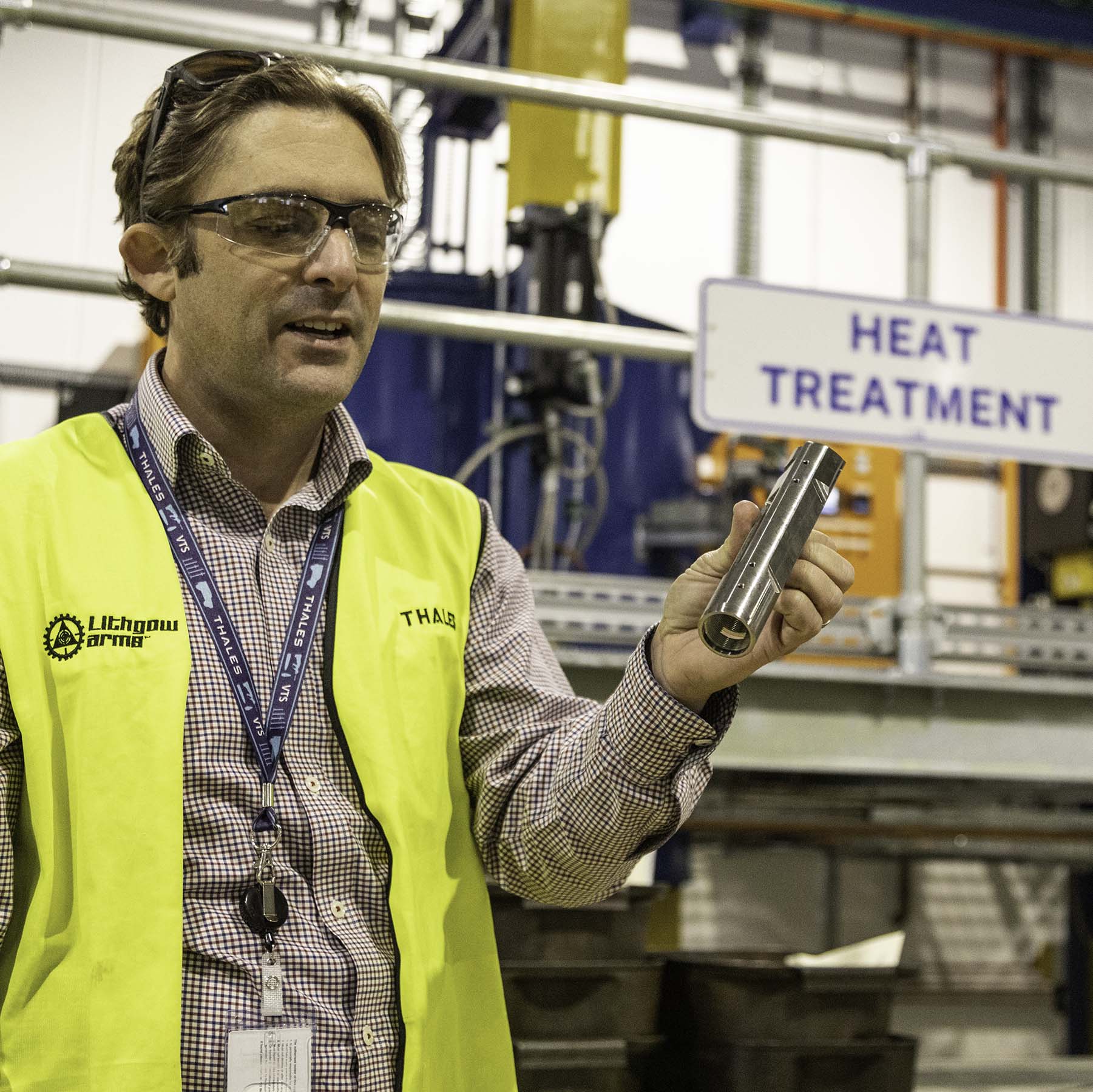
The rifle actions and bolts are also made at Lithgow, and all the parts for the guns are heat-treated in a newly constructed facility at the factory. The same facility also handles the finishing coats on the completed rifles, meaning the overwhelming majority of the work to make a Lithgow sporting rifle is done on-site.
Some of the rifle magazines are made at Lithgow, while the magazines for the LA102 Varmint rifle are made by Grizzly Magazines in Sydney.
Australia is not a signatory to international proof testing treaties, and does not have mandatory firearm proofing, yet every firearm Lithgow Arms makes undergoes CIP-standard proof testing in an on-site facility. This proof testing is conducted just like that undertaken by the European proof houses such as in Birmingham in the UK, St Etienne in France, Prague in the Czech Republic, and Eibar in Spain.
It means that each individual rifle has proven itself as being more than capable of handling the cartridge it is chambered for.
All this is meaningless if the guns don’t perform, but they absolutely do. They are accurate and reliable firearms, which is something we’ve always found in our tests, but on my visit the Lithgow team was only too keen to demonstrate it again.
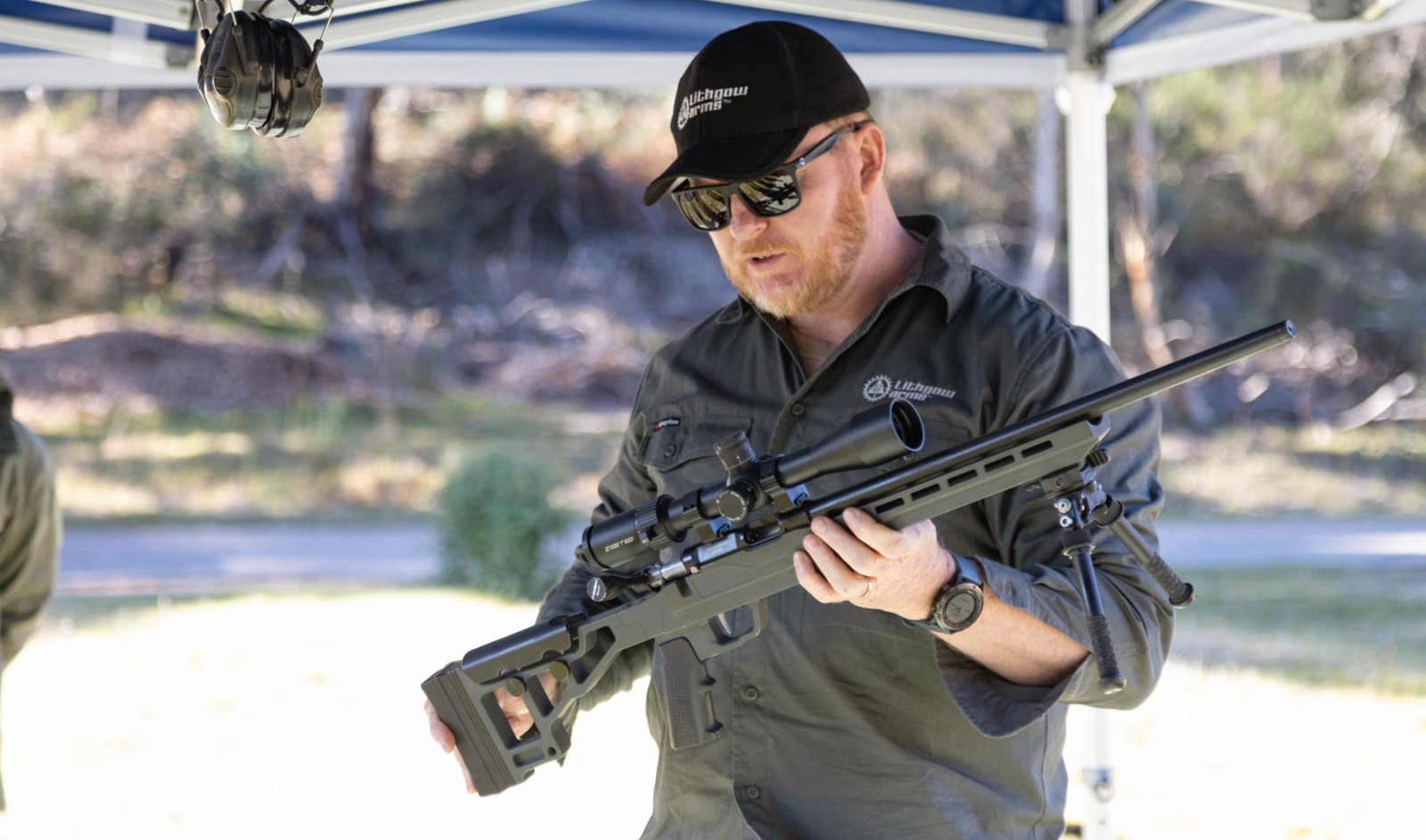
Several demonstration rifles — including the LA102 Outback in .308, the LA102 Varmint in .204 Ruger, and the LA105 Woomera in 6.5mm Creedmoor — were set up at the factory’s outdoor range, with targets at distances from 50m (for .22 LR rifles) to 550m.
The demonstration rifles were fitted with ZeroTech scopes and consistently hit a target the size of a mandarin at 550m. It’s well known among long-range shooters that rifles such as the LA105 Woomera can accurately reach out to 1km consistently.
One particularly notable demonstration at the event involved taking a brand-new LA102 rifle out of the box, selecting and attaching a ZeroTech scope, bore-sighting it, and then having it dialled in to be shooting 1 MOA groups at more than 200m in a mere seven rounds.
The fact that Australia still has a rifle-making factory in operation more than a century after it opened is impressive enough to begin with, especially given the major changes in the country’s attitude to firearms in that time. Seeing the quality of the guns it produces, and how it now produces them, certainly offers hope that this tradition will continue well into the future.


0 Comments