




Mauser has made a straight-pull hunting rifle with a new and unique design that is exceptionally smooth, light and quick to use, and produces exceptional accuracy. Rather than working on existing concepts from other straight-pulls, Mauser’s designers have come up with some novel concepts for its new Model 25 that bring worthwhile outcomes, yet they’ve kept the price at the lower end of the scale for rifles like this.
The Mauser 25 is a strong entry into the market, but also cheeky. Mauser has arrived late on the scene and so has had the luxury of time to look at what everyone else has done and try to out-do them. It’s all part of Mauser’s stated goal of dominating the lower part of the market with its range of turn-bolt and straight-pull rifles. We’ll see.
The last time — indeed, the only time — Mauser made a straight-pull was the short-lived Model 1996 (later made for a while by Roessler) but the Model 25 is nothing like that.
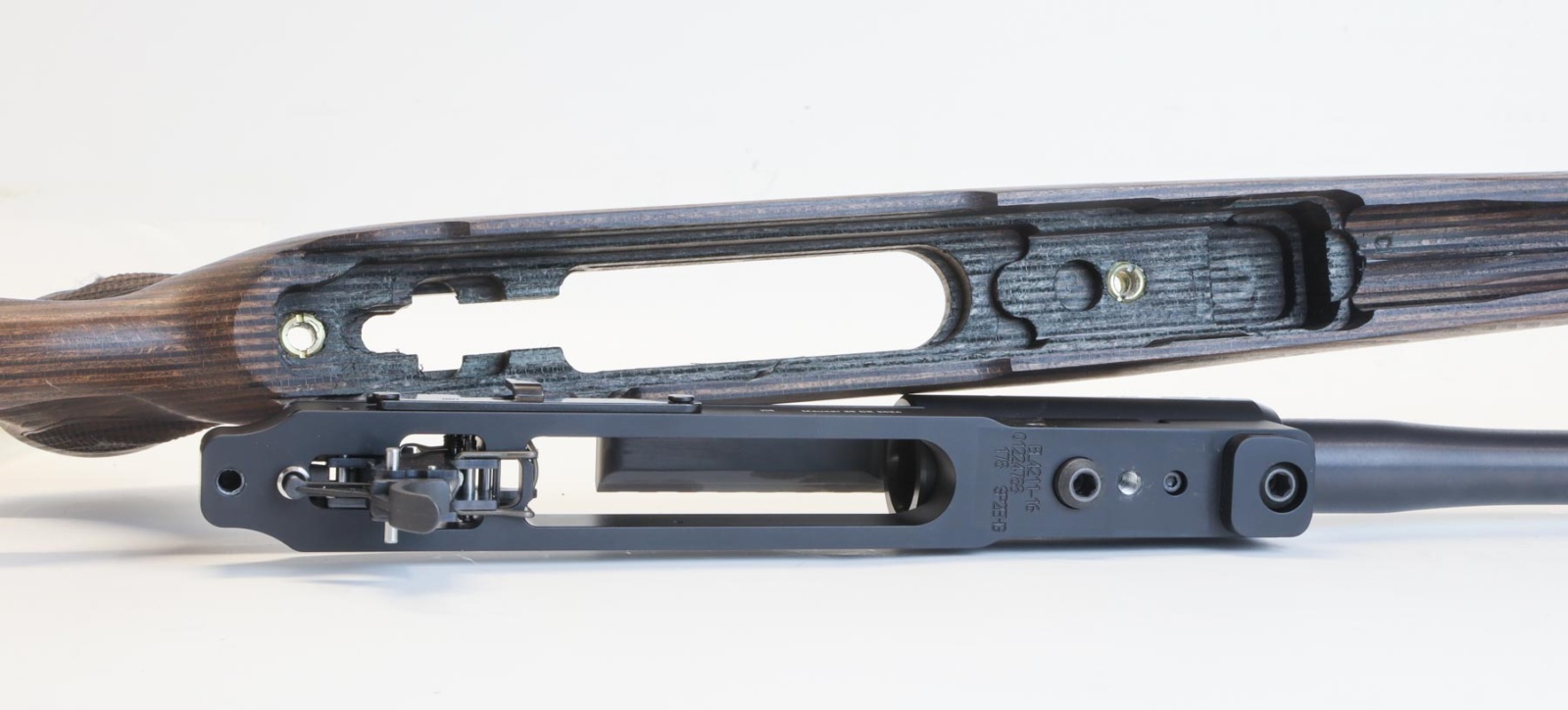
The action is entirely dependent on a block of a chassis, milled from a solid piece about 26cm long. Two rails cut into the upper edges of the chassis accept the bolt carrier. The contact of the carrier with the rails is delightfully light so that the carrier flies along them like a bullet train. The rails also guide it with accuracy — there’s minimal scope for sideways or vertical wobble, just slick movement fore and aft. To get the bolt moving backwards, you only have to move the bolt knob about 13mm and the assembly is free to slide, and it has just under 13cm to travel before it hits the stop and you’re pushing it closed again.
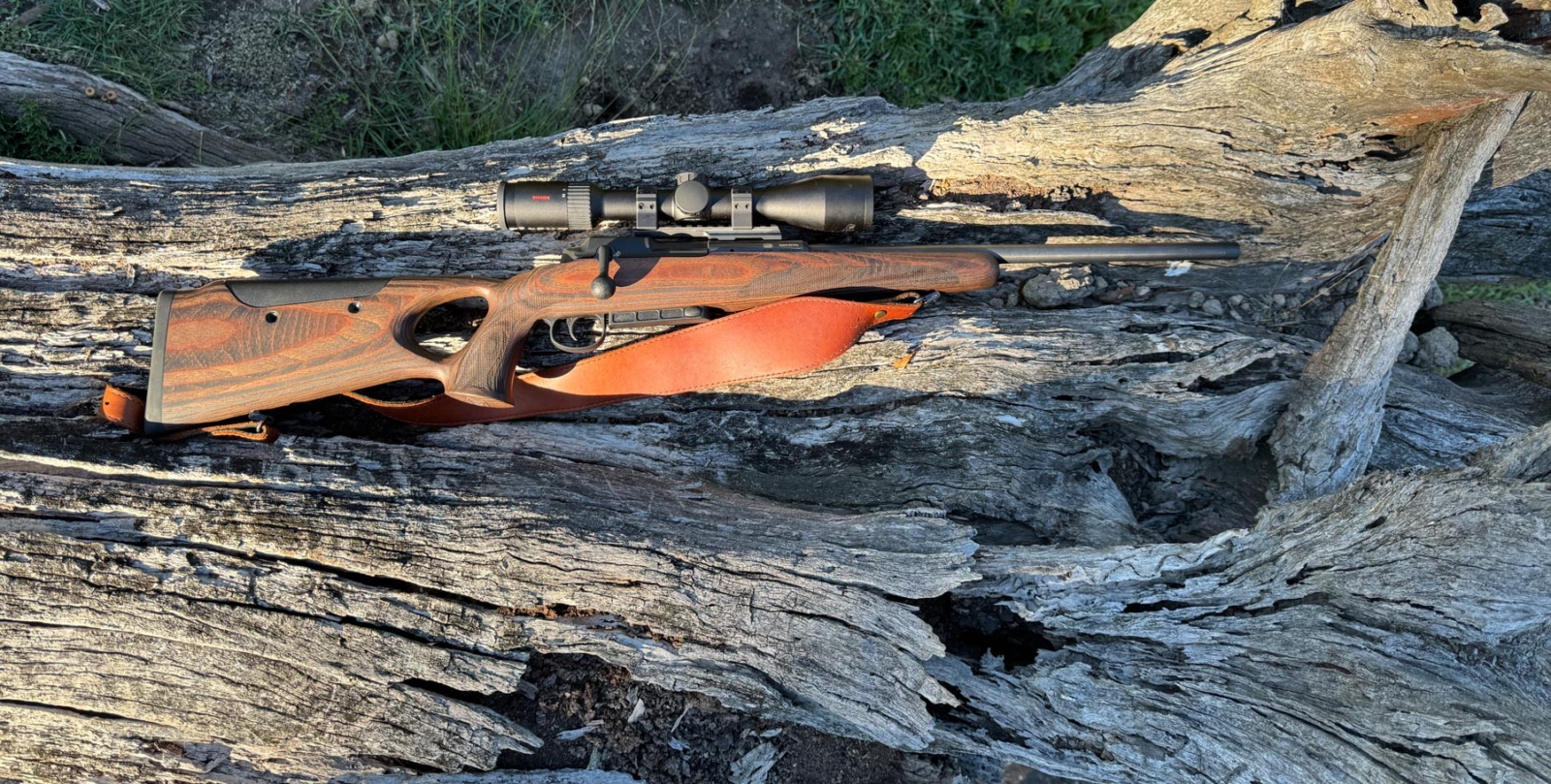
Cycling is incredibly quick and smooth. It’s also very light, the most resistance being in stripping the bullet from the magazine. The bolt handle’s position adjacent to the trigger reduces the necessary hand movement. The design asks minimal input from you, which helps you get or stay on target more successfully.
It does all this reliably, too, with not a single misfeed or hang-up during the test.
The bolt lockup system is very clever. Unlike many similar setups, this one does not use a rotating bolt head. Instead, it bears a vague resemblance to the Blaser and Savage systems, which both rely on designs that flare radially inside the full 360 degrees of the receiver. Blaser uses 14 lugs and Savage uses six ball bearings, but Mauser opted for two huge locking lugs and a wedge.
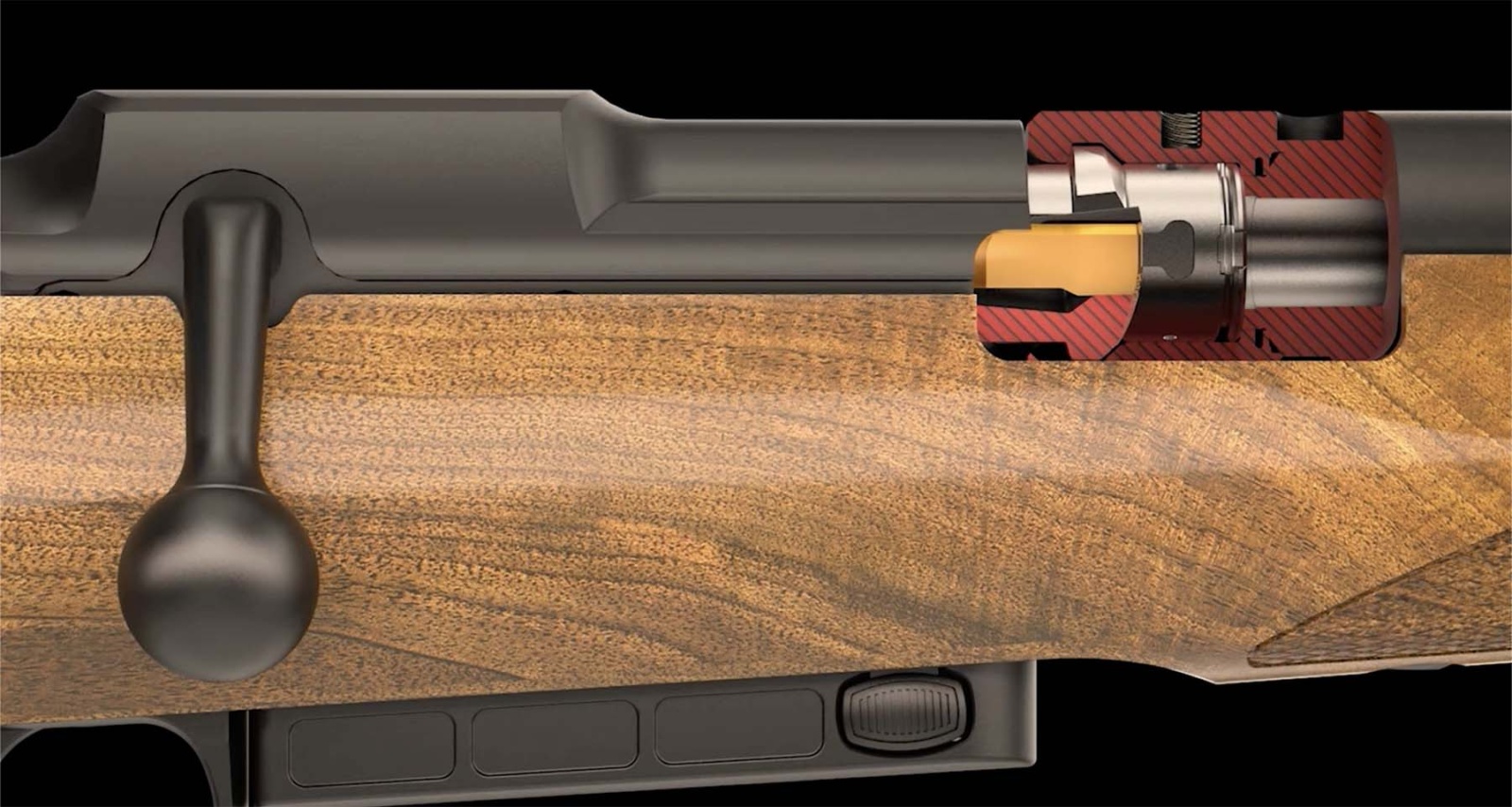
The wedge, which is set inside the bolt assembly, pushes the lugs outwards into battery. It continues forward after the lugs have reached the limit of their forward travel, spreading them apart in the final few millimetres of bolt movement. When the bolt handle pivots fully forward in the same moment, it locks the action closed, and only your rearward pull on the bolt handle will open it again.
Mauser says the contact between lugs and receiver covers a greater area than the two front lugs on a Mauser 98 bolt, providing great strength — which is an admirable boast given the 98’s reputation. The receiver walls are about 5mm thick, providing further confidence. If a case fails, two large gas ports — one each side of the receiver — are there to vent the gasses. The cartridge head sits 3mm into the recessed bolt face, which encircles it except for a 4mm cutout to allow for the little extractor claw.

Ejection is handled by two bare springs protruding from the bolt face. The setup looks unfinished and untidy but works well, throwing cases clear or just dropping them nearby if you extract slowly.
The way the bolt head is pinned to the bolt body, and the way the bolt handle is mounted, make it look like the Mauser could be capable of calibre swaps and switching between right- and left-handed, but neither is the case. Left-handed versions are offered, though.
The 25 uses a tiny hammer, only about 25mm long from its pivot, to hit the firing pin. The hammer pivots inside the trigger assembly, which in turn is pinned into the chassis. The sliding safety catch works by holding the hammer down and preventing it flying forward.
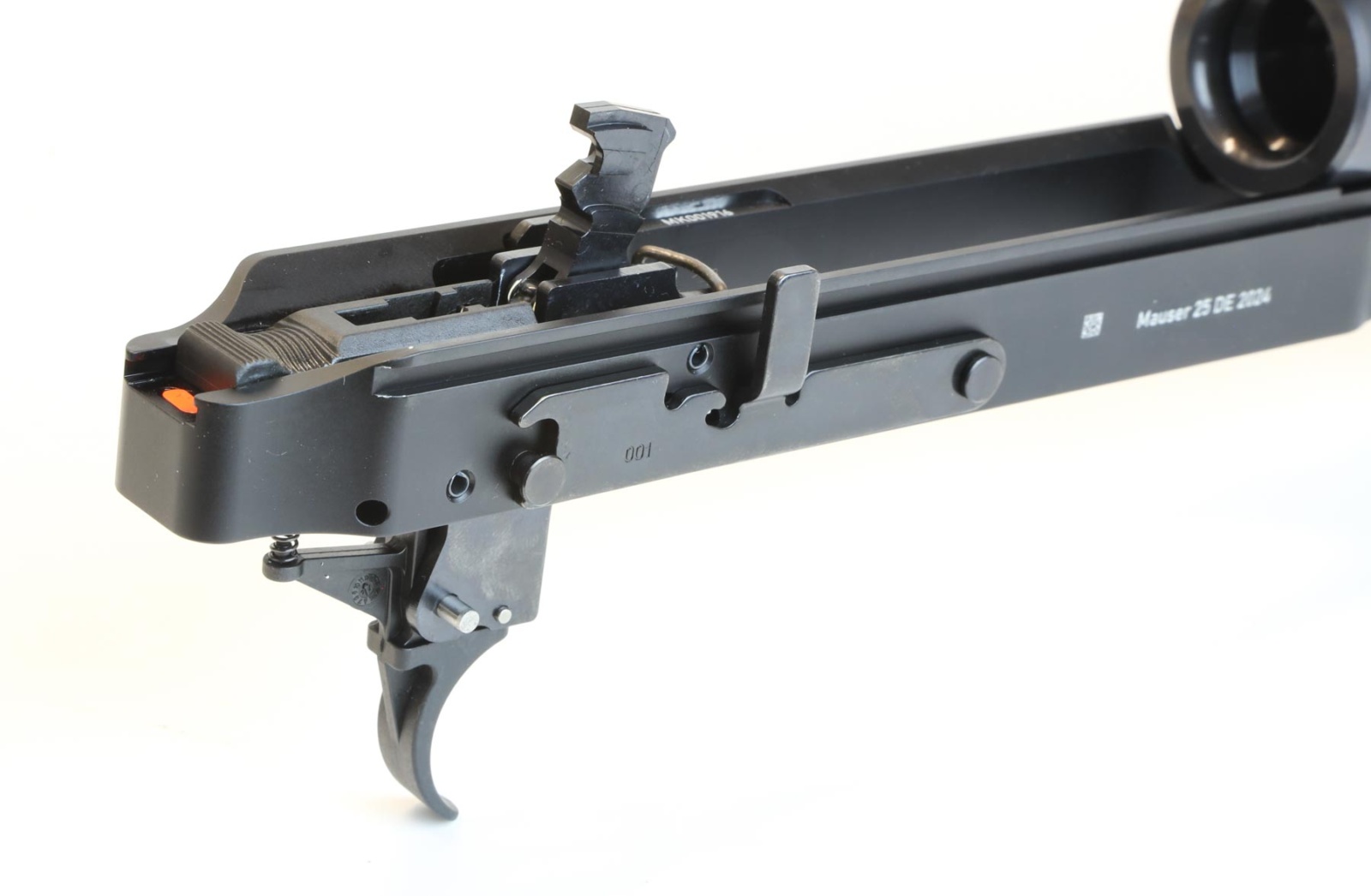
The very simple trigger engages directly with a cutout in the back of the hammer’s head, with nothing else to interfere with its exceptionally quick, crisp release.
Trigger pull weight is adjusted via a screw accessed by putting a jeweller’s screwdriver down through the safety catch, the only awkwardness being that it’s almost impossible to do this with a scope mounted. The adjustment screw has limits of travel both ways, so you can’t over- or under-tension the spring. The test rifle’s trigger could be set anywhere between 750g and 1100g (1.7-2.4lb).
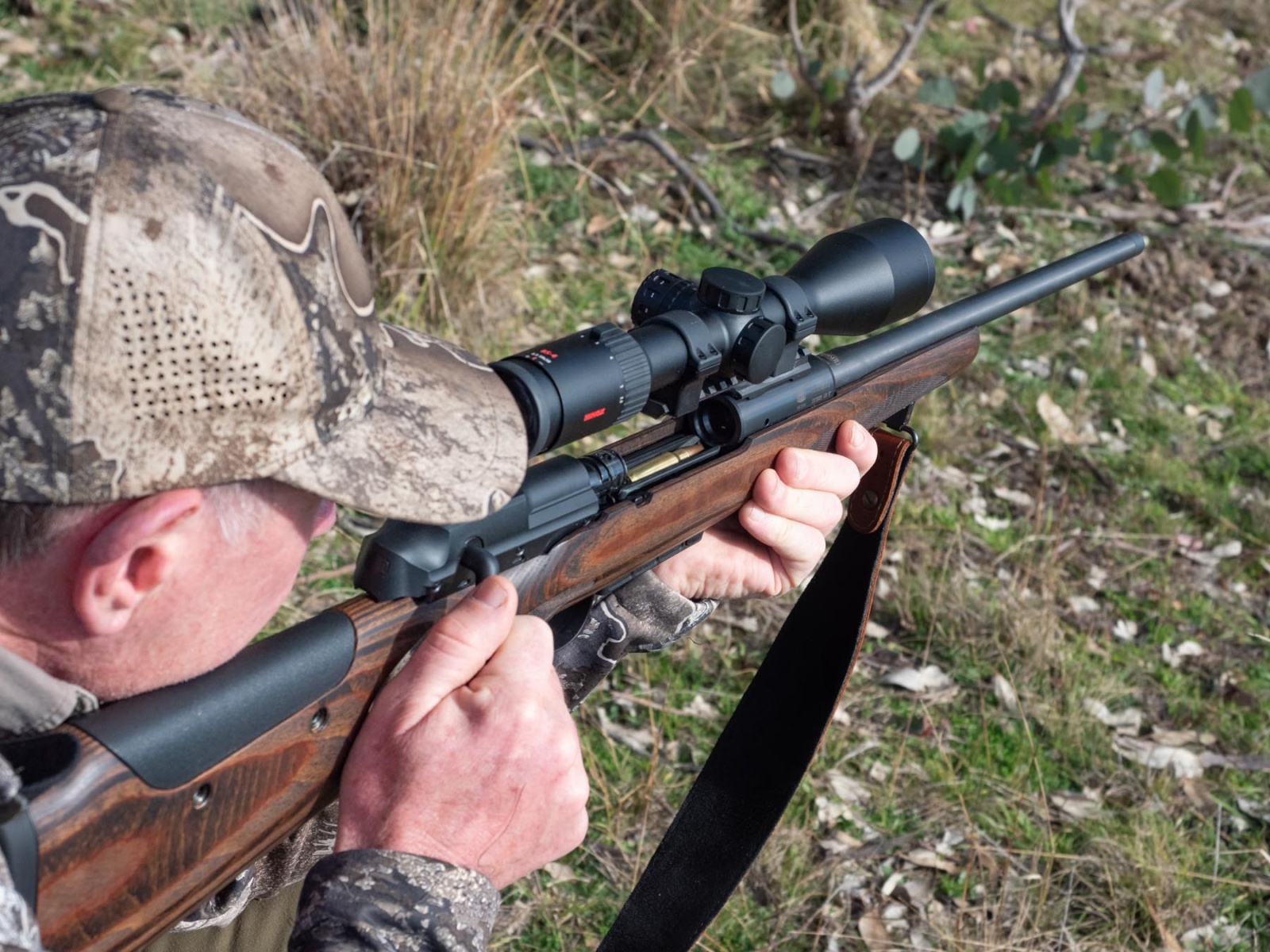
The single-stage trigger is so sweet, with such positive feel and no creep, that I was happy to set it light. From pull to pull, there’s never more than 50g variation in let-off weight, and usually it’s less than half that, which is remarkably consistent. The hammer’s short movement, encouraged by a notably strong spring, is very quick and I would venture that lock time is extremely fast for this kind of mechanism, comparable with the speed of a good turn-bolt’s striker.
Inside the safety slide, there’s a pop-up bolt blocker to prevent the action being opened when it is cocked and on safe. To override it when you’re emptying the chamber, just push it down with your thumb as you pull back on the bolt handle. When the Mauser is not cocked, you can open the action at will, regardless of whether or not it’s on safe.

The bolt assembly is covered by a plastic shroud which hides its many components. It gives the rifle a bulky look, despite the stock spanning only 5cm wide under the action. On the inside, the size of the chassis block leaves a narrow well for the magazine, which is only a single-stacker — perhaps the only disappointment.
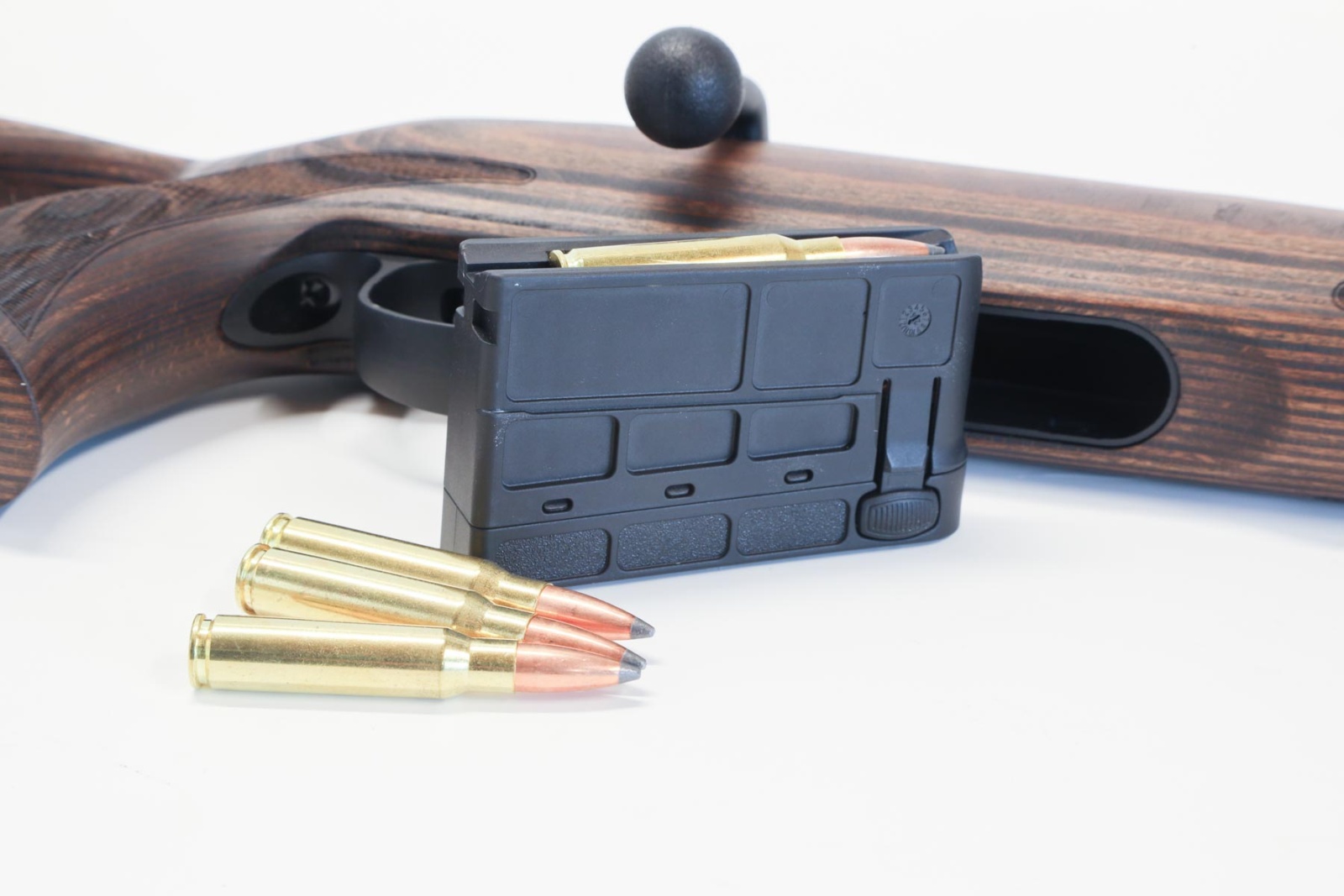
The three-round polymer magazine protrudes 14mm below the stock, and the optional five-rounder hangs lower still. It is well made, with a firm spring and two release tabs built into the front section. These twin tabs prevent accidental release but fall perfectly between your thumb and finger so you can intuitively grab them and pull out the magazine.
The front 9.5cm of the chassis has a concave top onto which the cylindrical receiver, which is about the same length, is solidly bolted. The 51cm (20”) hammer-forged barrel is left to float freely out front. The sporter barrel tapers quickly to 19mm in front of the receiver and then slowly to 17mm at the threaded muzzle, which wears a cap that blends in nicely. The barrelled action is finished in a strong plasma oxide in satin dark grey.
A pair of action screws thread into the bottom of the chassis, running through brass bedding blocks threaded into the timber of the stock. The chassis has good contact on the stock’s precisely inletted interior. All up, the 25 is a very, very solidly bedded rifle.
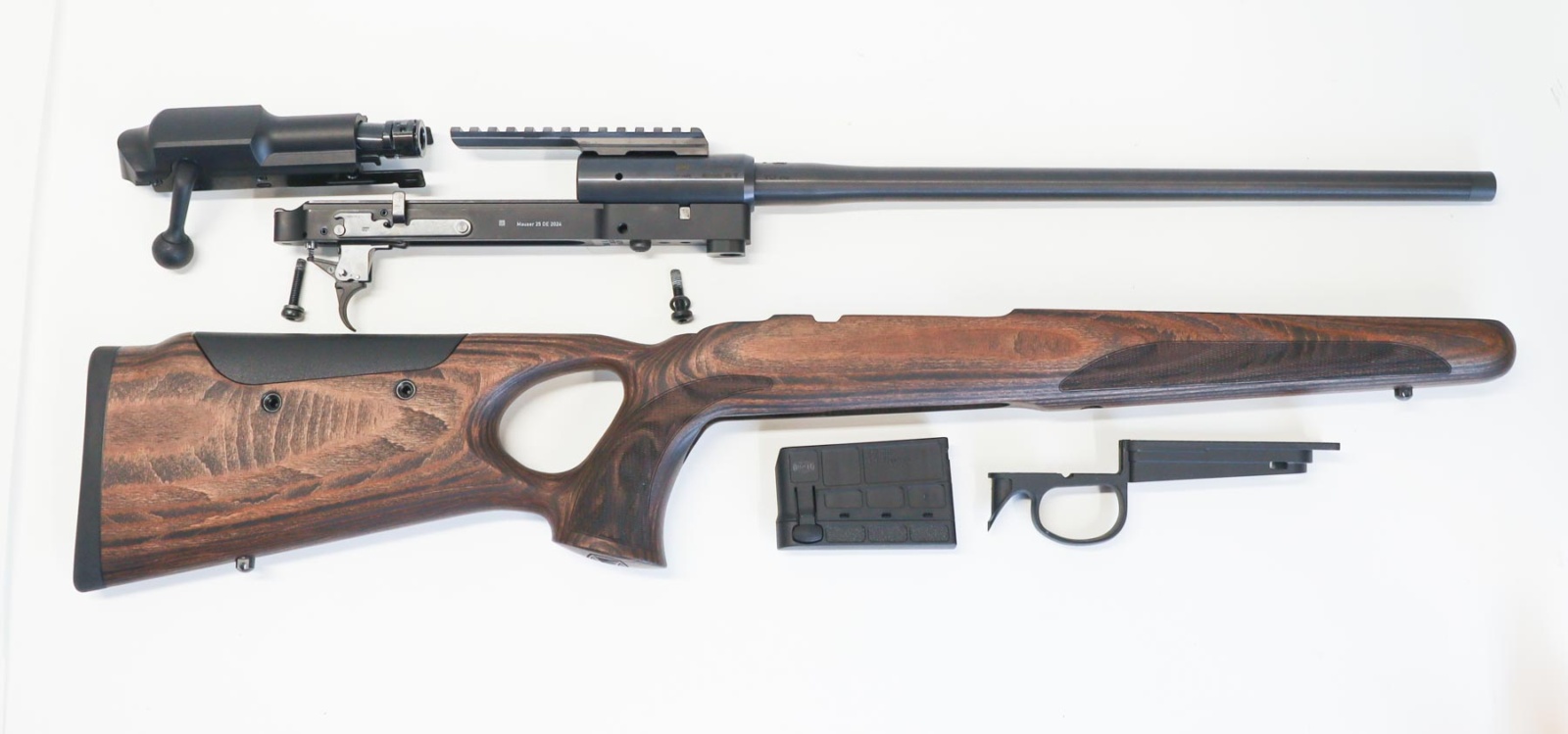
The test rifle is the Max version of the 25, which has a thumbhole stock of laminated timber with a comb riser. The Extreme and Pure versions offer choices of sporter stocks in polymer or walnut respectively. The Max costs a little more than the others.
The laminate is very pretty if you like character in your timber. The wood is coarse-grained, each layer laid at right angles to the next, and the effect is eye-catching — more so since the glue between layers appears to be transparent so it doesn’t create dark lines as on some laminates. It’s also fairly dark with a matte finish.

The Max’s pistol grip is steeply curved to a more upright angle, which suits prone or rested positions better but is still comfortable when used offhand. Length of pull is 36cm. The fore-end is deep but not wide, with sharp chequering, and is easy to hang on to. Many people will appreciate the cheek riser because the scope mounting setup elevates the scope a little higher than on most rifles and the higher comb helps get your eye lined up more naturally.
You need to lower the riser to remove the bolt assembly, and that requires a Torx tool, so it’s not necessarily an easy thing in the field. It’d be nice to have knobs on the riser’s retaining screws.

The Max weighs 3.6kg bare and is well planted as you aim, whether on a rest or offhand. Even with the firm-ish recoil pad, the Max tames the kick of a .308 to easily manageable levels. The sporters weigh 3.2kg but you shouldn’t feel much more boot and will enjoy the lower mass when hunting.
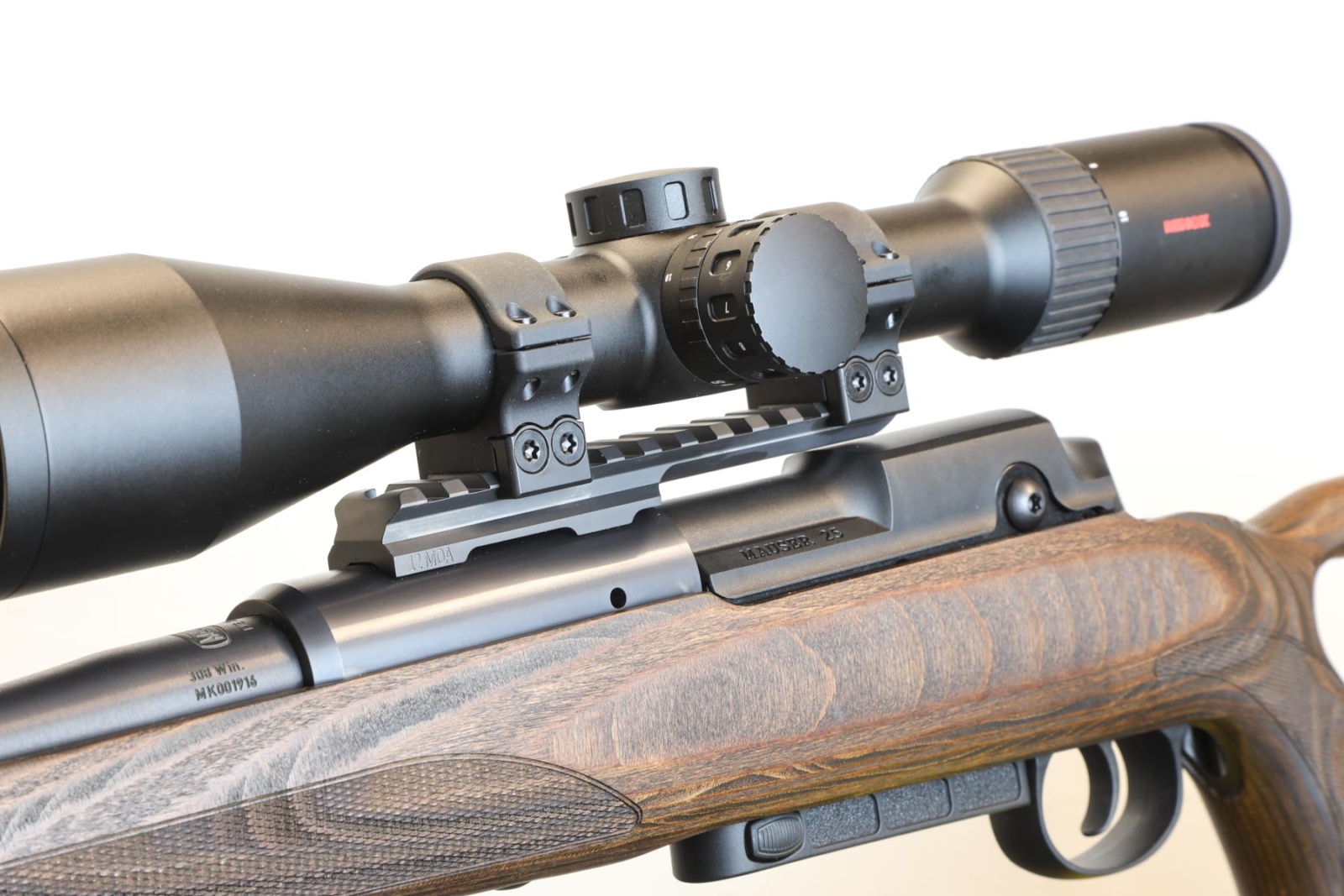
The scope mount attaches to the receiver with two bolts, and hangs back over the open action. The test rifle was supplied with the Picatinny mount, but saddle and rail mounts are also offered. The rifle had a Minox RS4 scope mounted in Mauser rings, which are very neat things. Their mounting clamps are sprung so they open outwards as you release the screws, which in turn are tidily countersunk to sit flush and to ensure everything is perfectly centred. I’m not certain they work better than other rings, but they’re an elegant solution that is less likely to come loose.
This Mauser shoots like a demon. After zeroing, the first three-shot group, using Sierra Sports Master 165gn factory ammo, measured just 8mm across, or less than .3 MOA. It was no fluke, with four of the five groups averaging 11mm and just one shot pushing the fifth group to 32mm. Normally you’d be stoked with a 32mm group in a hunting rifle but it felt like that one wider shot was a flyer!
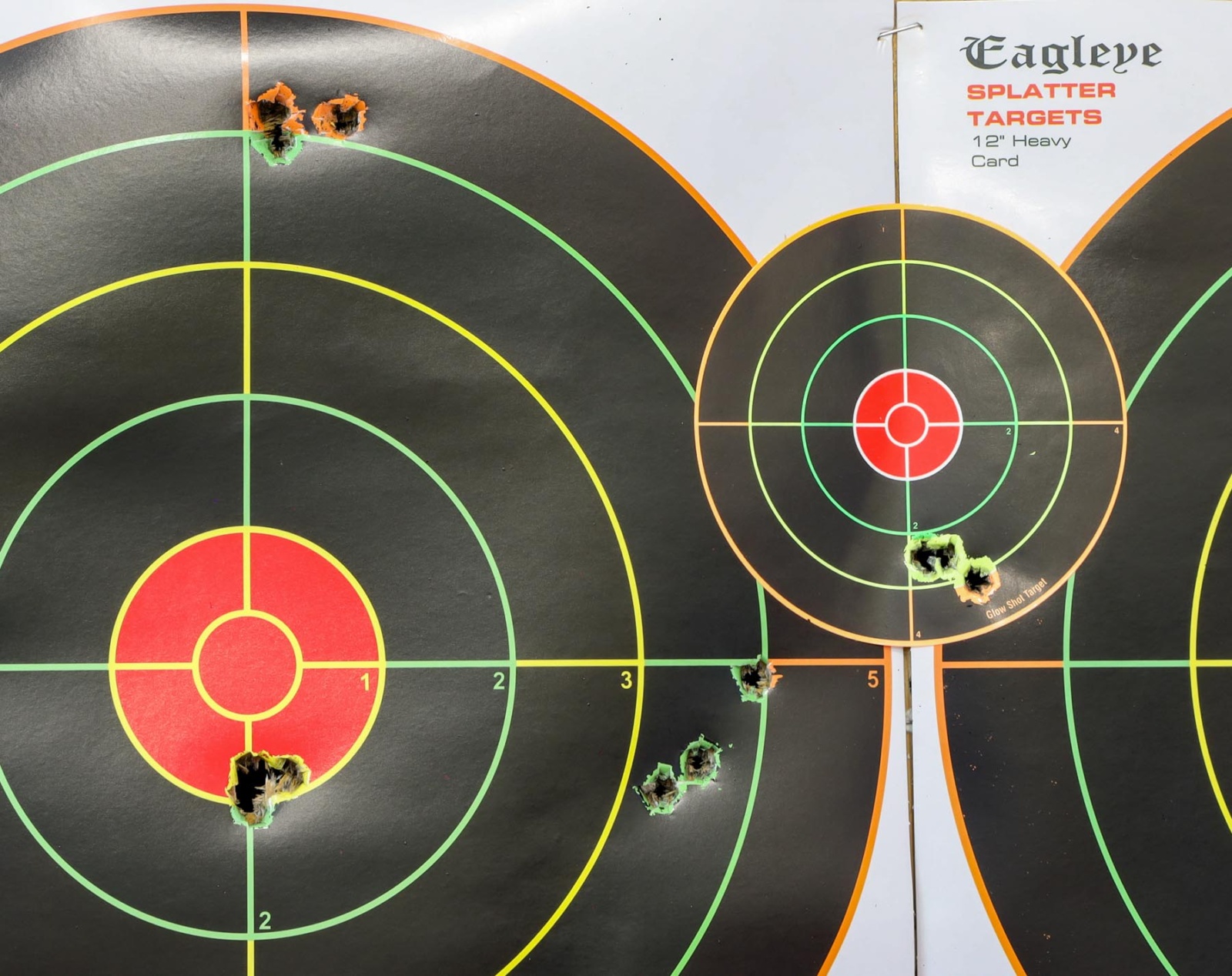
The Mauser shoots all .308 bullet weights well, from 130gn to 180gn. It qualifies as a genuine sub-MOA rifle and, looking at the results, I have no doubt you could quickly find a handload to average less than ½ MOA. There was one load the 25 shot so badly I didn’t persist, but that’s not unusual; some loads and barrels just don’t get on.
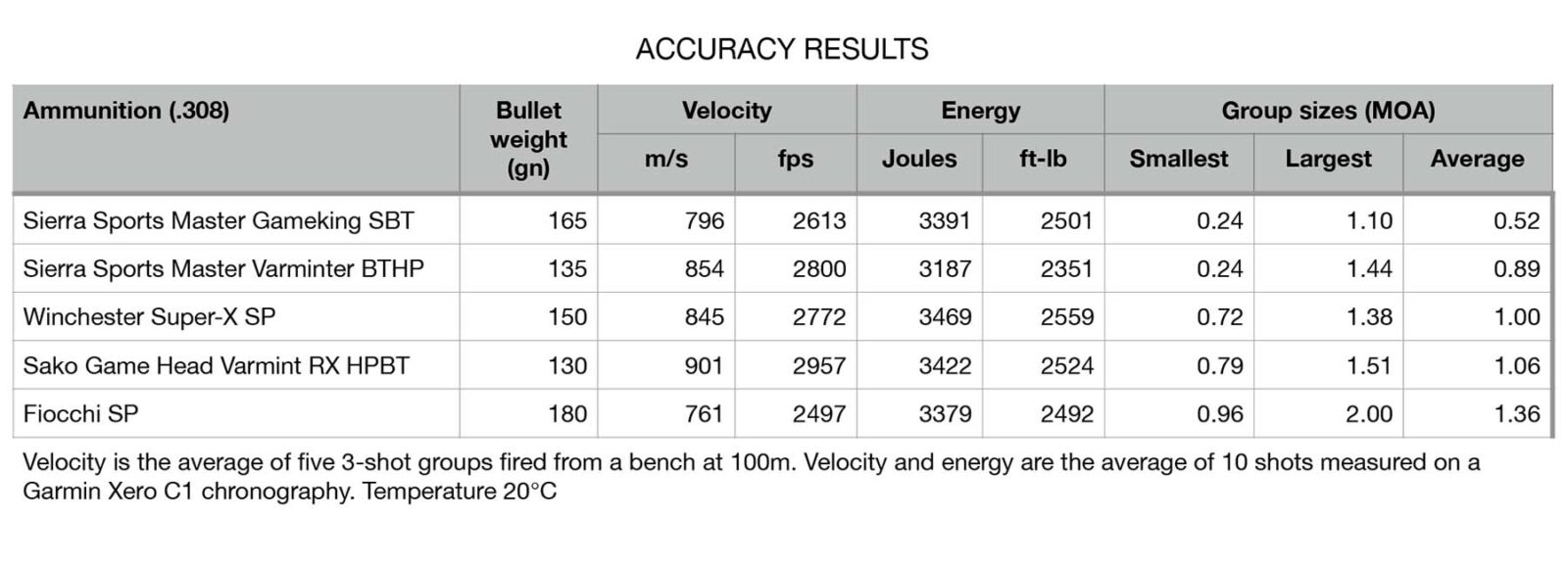
Those results were achieved on a bench, but the Mauser’s handling characteristics help you achieve your own potential for accurate shooting in the field. I made clean kills on a running game at 30m and at distant game beyond 200m. The lovely trigger release, the overall balance and stability, and the way the Max tames recoil all work in your favour. Above all, there’s the fast, super-fluid action, which comes into its own for a fast follow-up shot because you can manage it so instinctively.
The Mauser 25 is like many other great hunting rifles in that it works so very well, but for me what sets it apart is the fact that it is also such a beautiful thing to use.
Thanks to Mudgee Firearms for assistance with this test. Photos by Mick Matheson and Dylan Smith.
SPECIFICATIONS
- Manufacturer: Mauser, Germany
- Action: Straight-pull bolt
- Calibres: .308 (tested), and others to follow
- Barrel: 51cm (20”), hammer forged
- Magazine: 3 rounds (5 optional), detachable
- Trigger: Single-stage, adjustable 750-1100g
- Sights: None; drilled and tapped for scope mounts
- Stock: Laminated timber, thumbhole, adjustable cheek riser
- Length of pull: 36cm
- Comb: Adjustable
- Weight: 3.6kg bare
- Length: 100cm
- Price: Around $3000 (Max)
- Distributor: OSA Australia


0 Comments