


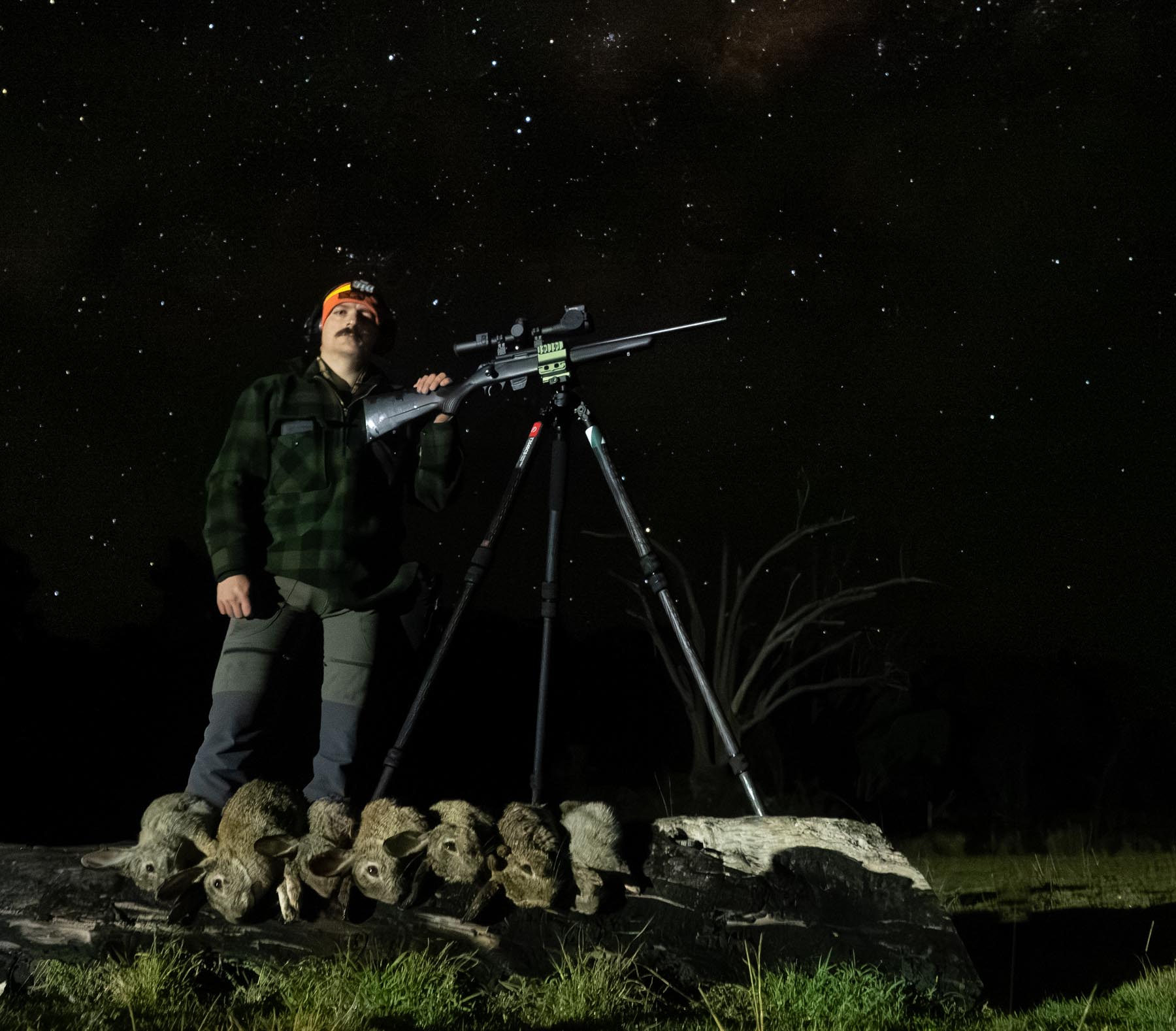


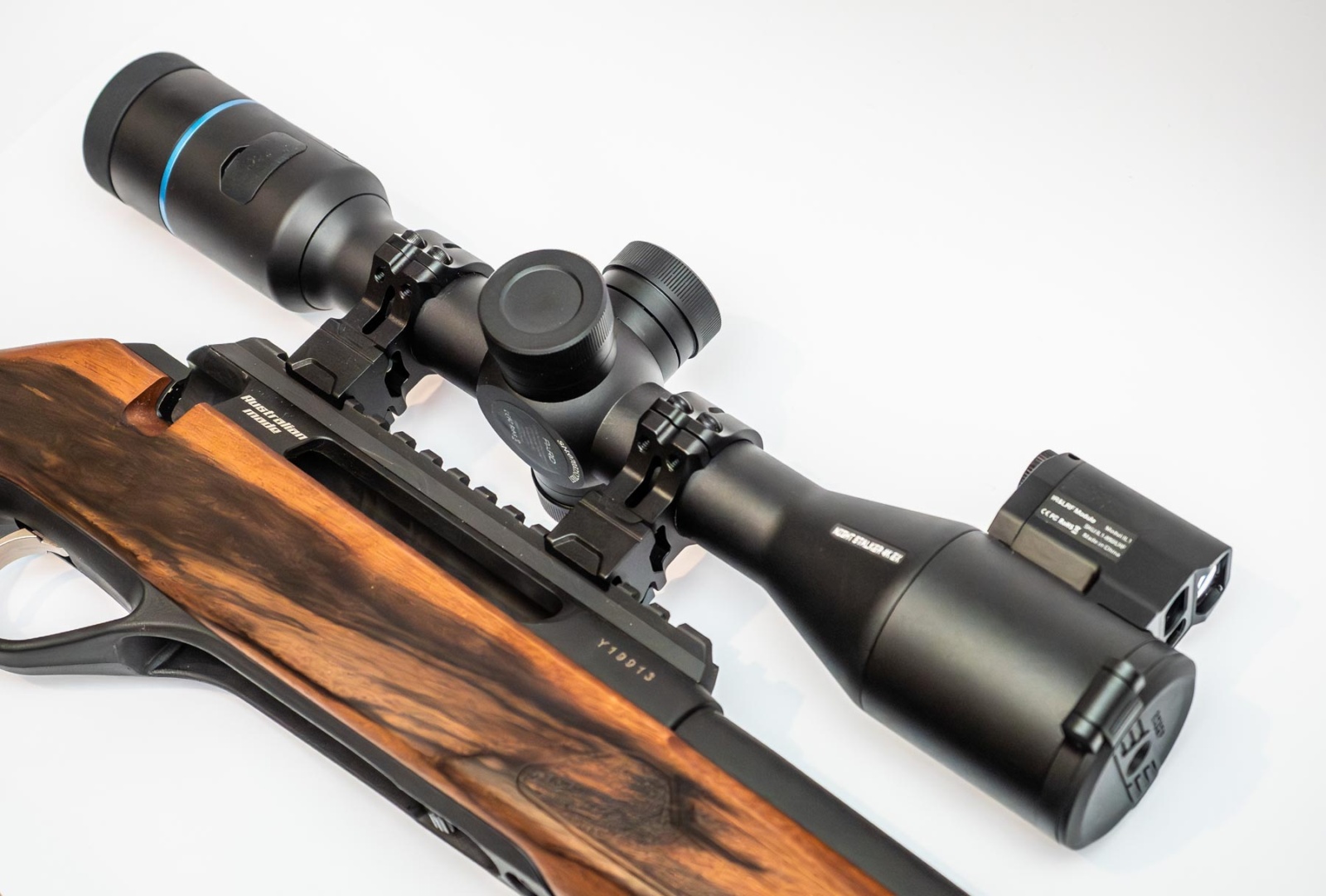
The Pard Nightstalker series features digital night vision scopes that are designed to look like a regular scope, but offer more versatility. The Pro and EX models can be considered big brothers to the Nightstalker Mini that we’ve reviewed previously, in that they’re larger, offering more features, for a bit more cost.
The styling of the Nightstalkers is like traditional rifle scopes, and the Pro and EX are roughly the same size as a typical 3-18x analogue scope, at 361mm long. Fully decked out, they weigh 730 grams and 896 grams respectively, so they have a bit more bulk than comparative analogue scopes, but the amount of features Pard has packed inside makes this a worthwhile compromise.
The scopes come with a set of rings that work well. They weigh 56g each and clamp to the 30mm tubes using four screws and grip tape. One of the rings features a recoil lug that helps mount it in a secure and repeatable manner to a typical toothed rail, but it can be taken out if you’re using it on a flat-topped surface. The two-screw clamps are sprung for easier removal and attachment. The mounts are on the high side, so it’s worth keeping that in mind when considering whether they will suit your application or not, but I found they worked fine.
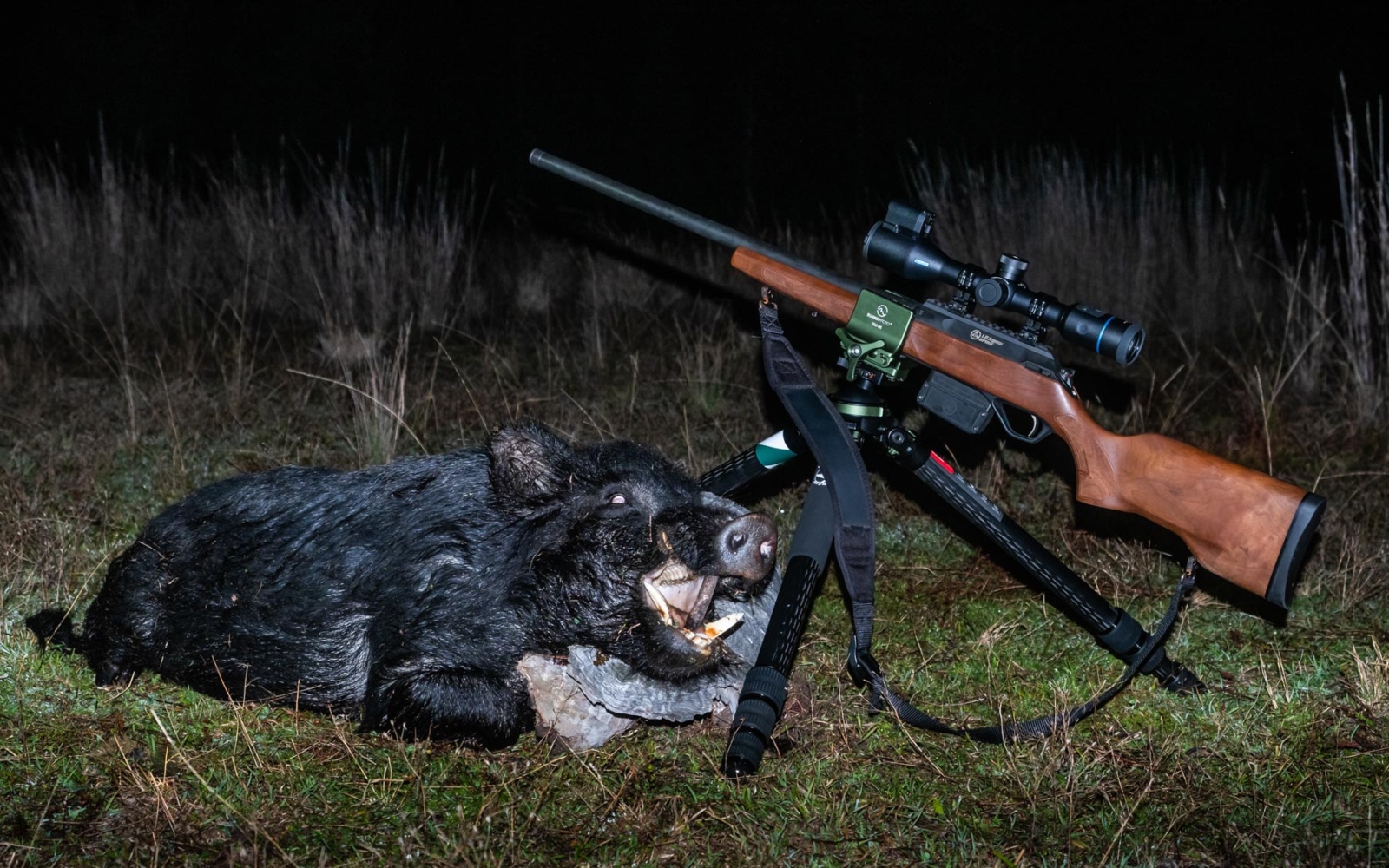
What makes these scopes ‘night vision’ is an infrared (IR) sensor inside, that works with sources of IR light, to allow shooters to see in the dark. They also have regular colour sensors that work effectively when the sun is up, or at night time if you’re using a torch that throws a beam of visible light, such as white, red or green.
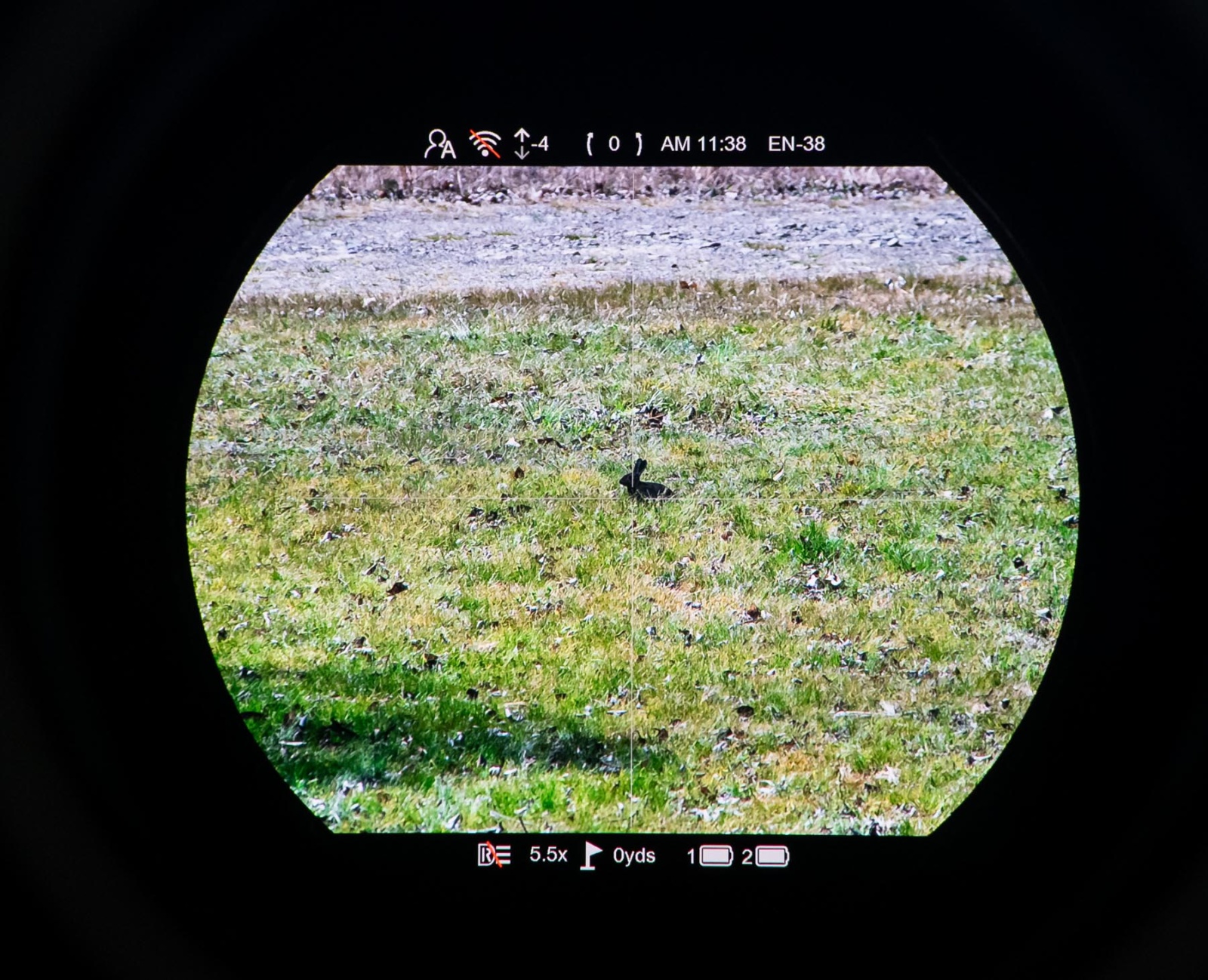
Both the Pro and EX are fitted with a 4K CMOS sensor that picks up excellent detail, which is shown through the display screens in the ocular of the scopes. The Pro has an in-plane switching LCD screen that’s 800×800 pixels, whereas the EX has an organic light emitting diode (OLED) screen, which is 2560×2560 pixels. While both displays show great colour and detail, the EX has about 10 times more pixels, and you definitely notice the extra clarity at both day and night.
The image you see when looking through the Pro is completely round and gives a feel of looking through a traditional analogue scope, whereas the EX has a slight crop at the top and bottom of the image. I didn’t find this a problem and to be honest, I didn’t even notice, and it has to do with the fact that the overall display has far more pixels. The cropped sections are also where most of the data is displayed like the range, zoom selection, etc, so it doesn’t complicate the scene. With the Pro, the view is obviously cut into the rectangular display, so this means your target will fill a little more of the screen than will be shown on video recordings, but the EX has an advantage with its display in that the field of view at 100 metres on the 5.5 zoom is 10.7 metres, nearly double the 5.7 metres of the Pro.
Both scopes can take pictures and record video, but the image you look through on both scopes has more detail than the files it spits out at the other end. It’s also worth noting that while the EX takes larger photos than the Pro, the Pro records slightly larger video. Pard doesn’t specify why on its website, but I would assume it has to do with overall processing speed and writing memory. In any case, the photos and videos both scopes record will be useful for various content creation applications.
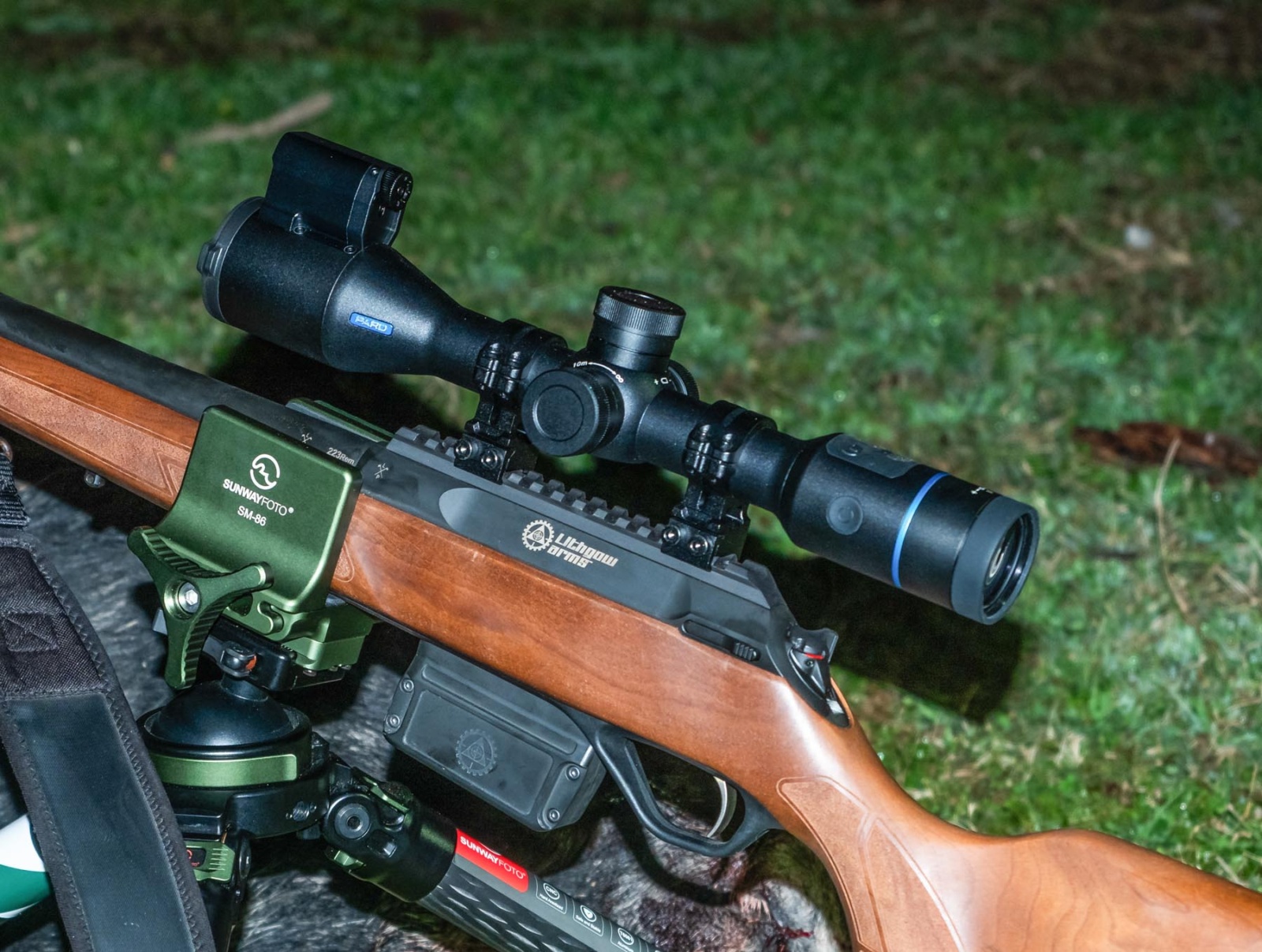
For my testing I mounted the Pro on a Tikka T1x .22 LR, and the EX on my Lithgow LA102 Varmint in .223. I sighted in both scopes during daylight and the colour image was more than adequate for precise shooting. I shot my .223 to the same potential I shoot it when using a regular scope. You have six brightness settings to choose from to fine-tune to what suits you. For best results with these scopes and using them to their highest potential, press the mode button to select black and white function. The frame rate for display will drop from 60hz to 30hz, but the sensor is much more sensitive to whatever ambient light may be available, and the 50mm objectives help make the most of this.
If there isn’t enough ambient light, you won’t see anything through the display of course, but the scopes come with a module that attaches to the objective that provides both IR light and a laser rangefinder. The modules I tested gave 850nm, which is usually considered best for hunting, but they are also available in 940nm if you would like a slightly softer image at the expense of less range. The button on the diopter of the scope will let you cycle between three brightness levels and a dial on the back of the module allows you to go between a focused or flooded beam. You can also opt to leave these modules off the front of the scope and use an external IR torch if you have one you like, but that will mean more bulk and losing the LRF capabilities.
How well you see targets at night will depend on how much light you are throwing, how much contrast there is between the animals and the background, as well as how long the grass is. The 850nm module claims a range of 350 metres but I found I could identify deer, pigs and roos at over twice that distance provided the grass was short enough. Their eyes will reflect IR back most of the time as well, which helps. Manipulating the power of the IR beam allows you to get the most distance possible, and the left turret on the scope allows you to finely tune your focus anywhere from just inside the advertised 10 metres to as far as you’d like.
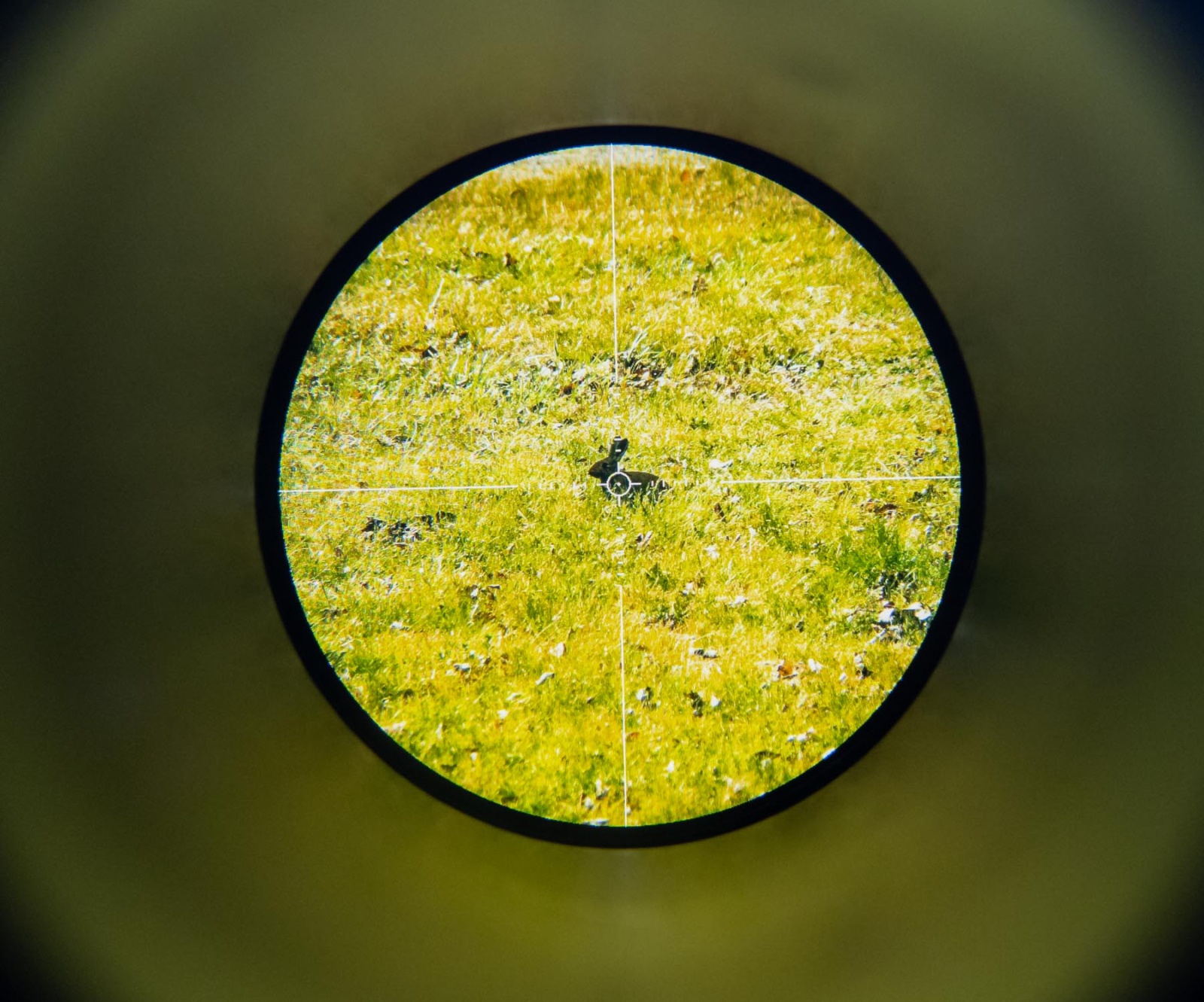
Both the Pro and EX boast a zoom range from 5.5x and 5.6x to 22x, selected from the top control turret. Rather than being a continuous zoom between the magnifications, it just doubles itself with each click of the top turret. I experimented with the zoom settings extensively when shooting paper and critters. With this capability, you may hope to take advantage of the reach of the IR beams inside reasonable night-shooting distances. The image becomes more pixelated the more you zoom in, but that’s what comes with the territory of digital zoom. It still looks pretty good.
Further to this, the LRF capability and ballistic calculation built-in to the scopes makes longer range shooting much easier than it would be otherwise. Configuring the LRF is a simple task but needs to be done at night so you can line up the aiming point with the illumination. Once this is done, you can enter the ballistic information of your load, and a couple of presses of the LRF button on the diopter will range your target, and give you an aiming point on the Y axis of your reticle.
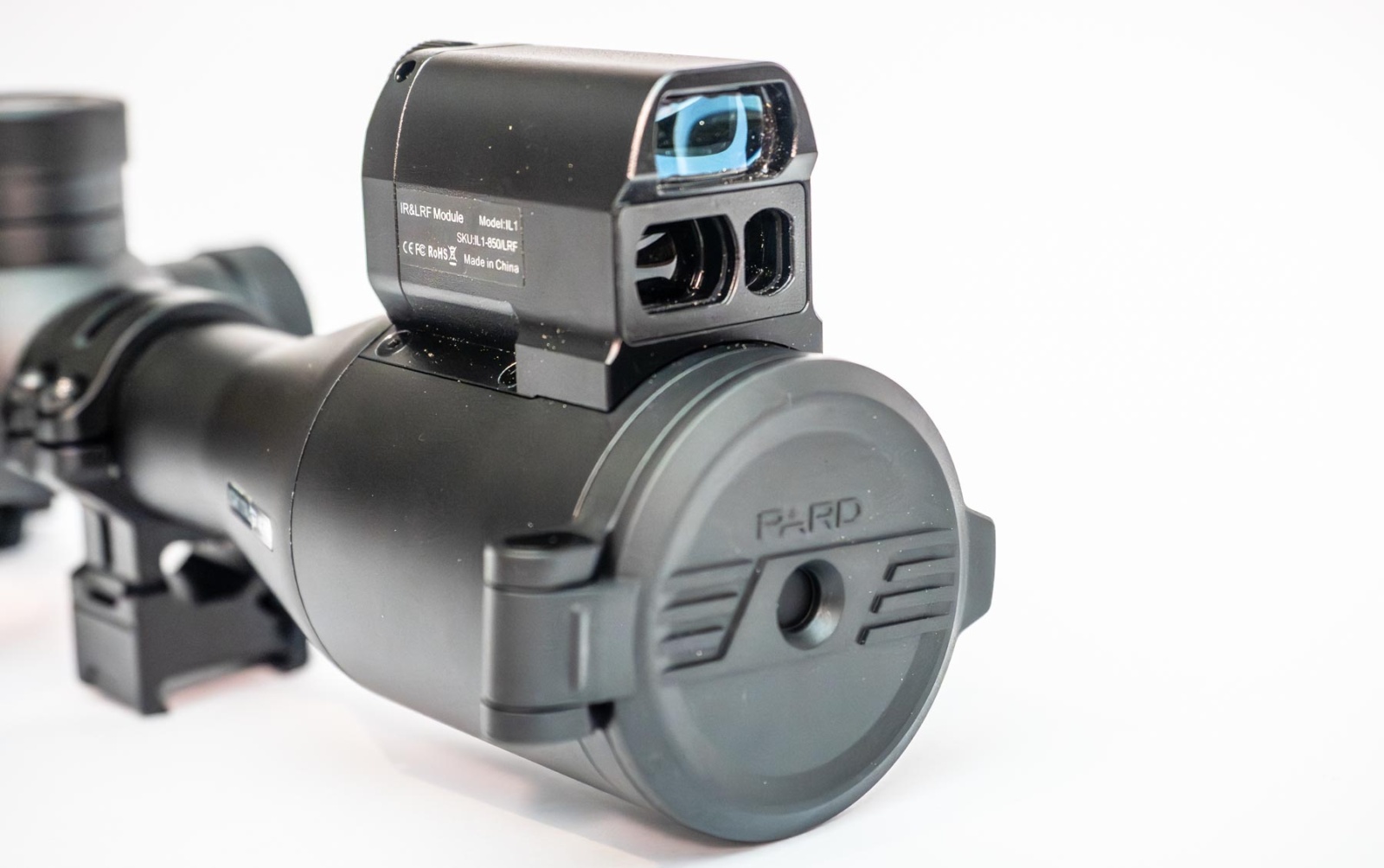
Of course, the accuracy of the data you input is your responsibility, but I found the system quick and robust. The same can be said for the zeroing process, where you have the option of six or seven different reticle styles in a few different colours. You also have the option of storing multiple ballistic profiles in the scopes for various applications. Because the zeroing is digital, the different profiles will be 100% repeatable, as opposed to having two sets of load data with a regular scope but needing to change the zero each time you go between the loads.
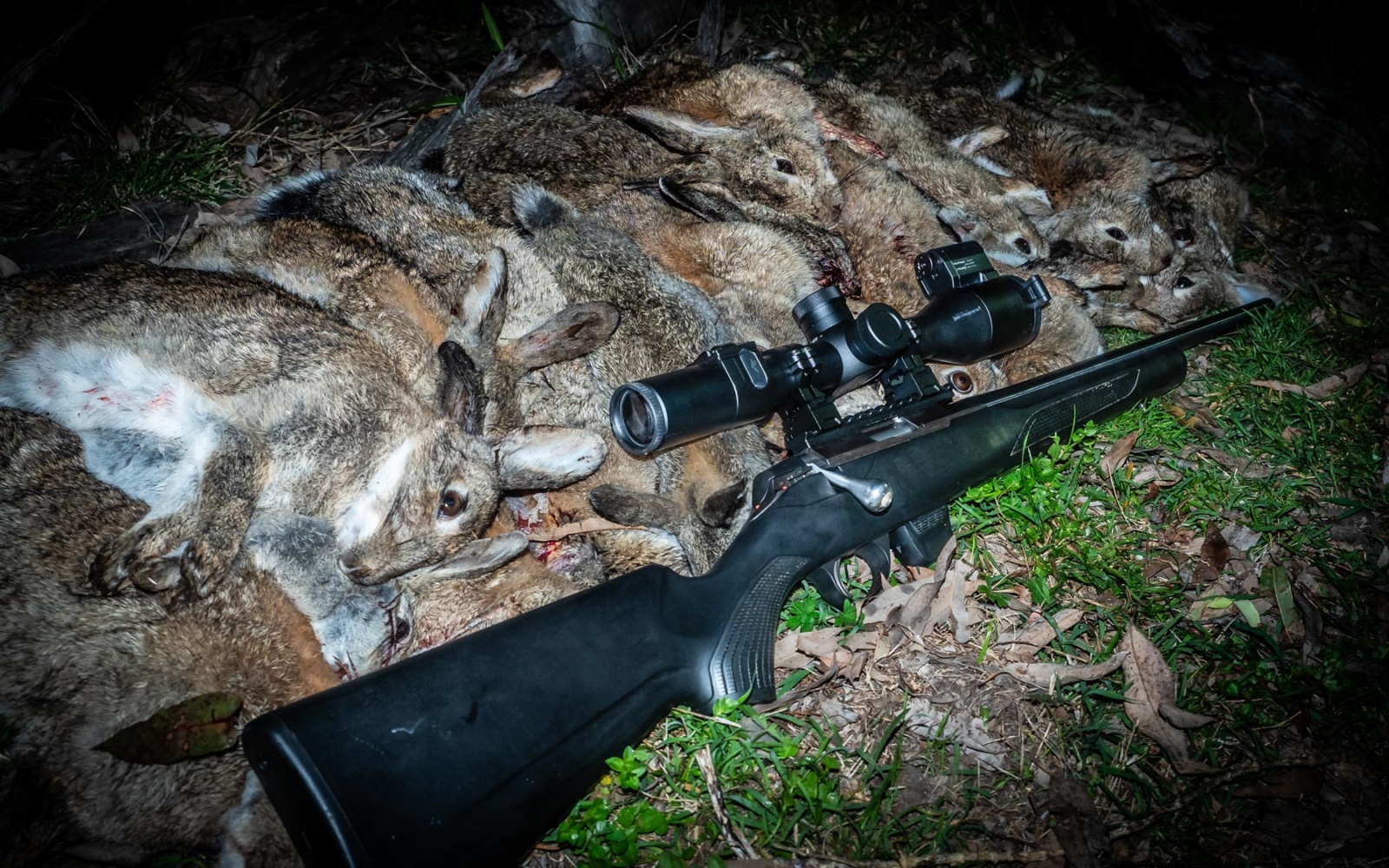
On the Pro, I had one profile for high velocity ammo, and another for sub-sonic ammo. I was able to shoot rabbits confidently at over 100m with the subsonic after setting up a 50 metre zero. I didn’t test this feature with the EX and my .223 as all shots were inside about 150 metres, but I think it’s safe to say this system works well. If for whatever reason you decide to run these scopes without the module attached, you can still use the ballistic compensation feature, but you’d need to range the target with an external rangefinder and then wind in the adjustment manually.
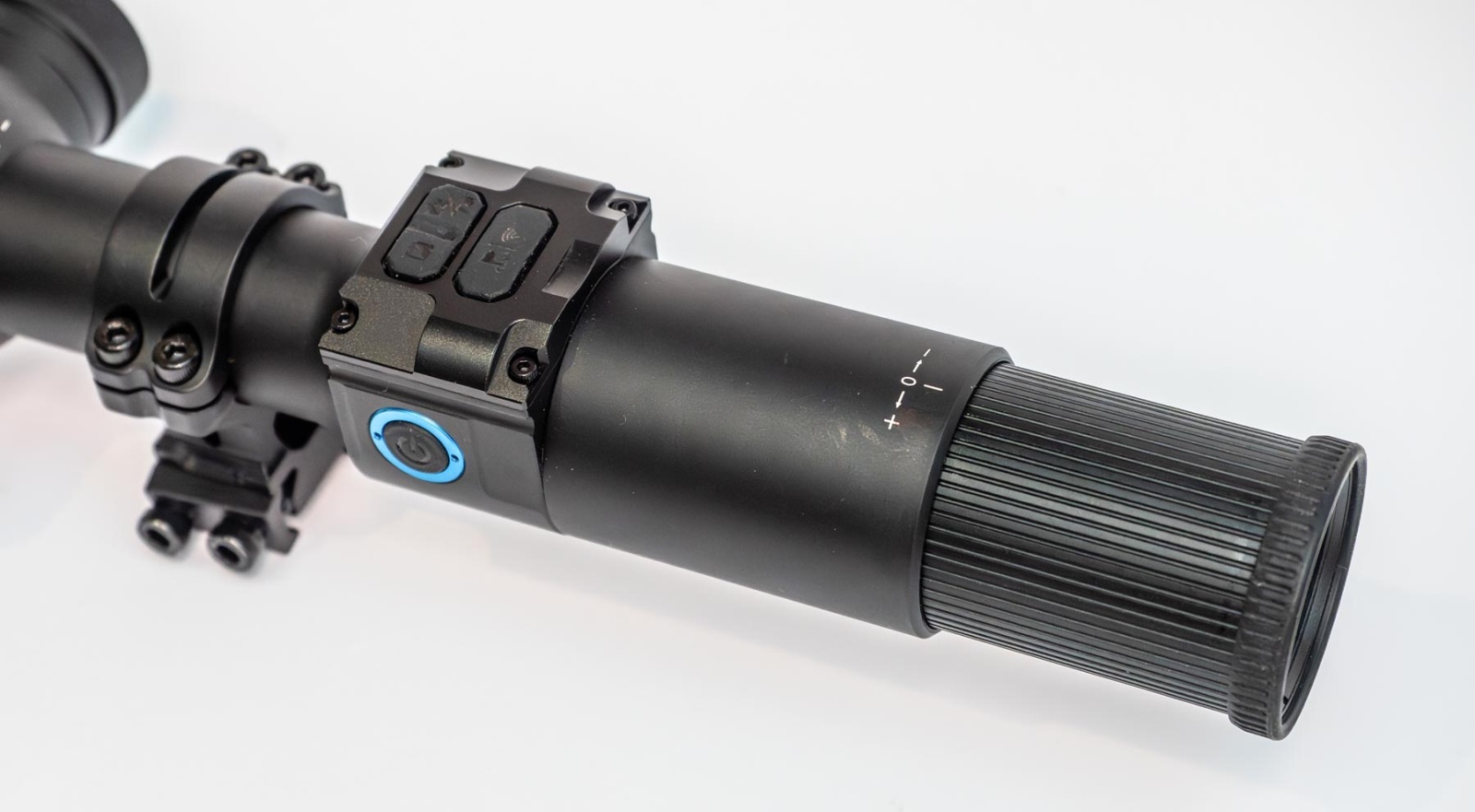
All these features, as well as plenty of others, are available through the top turret. A short press opens the basic menu options and a long press opens the full range. You can look these up in your own time as the possibilities are extensive, but both scopes are packed with features. Further to this, buttons on top of the diopter control colour modes, as well as photos, video, rangefinding, wi-fi, and stepping back through the menu. If you download the Pard Vision2 app on your phone or tablet, it allows you to access some of these features, as well as download images, and watch the live action.
The diopter on the Pro winds out to over 40mm, but the EX doesn’t come out quite that far. Still, everyone should be able to get a clear, crisp image. The advertised eye relief of 100mm doesn’t include how far you’ve wound the eye piece, so getting behind these scopes is a very comfortable and familiar feeling; as close to the feeling of an analogue scope as can be hoped. The side of the diopter also has a rubber cover over a panel where you can plug in your microSD card to capture your photos and videos, as well as an HDMI input and USB-C input.
Both scopes are powered with an 18650 rechargeable battery but the EX has an additional in-built 21700 battery. This sees it weigh roughly 170 grams more than the Pro, but it also means you can last up to 14 hours before you need to switch the 18650 out. The Pro manages six hours at best, but with both scopes, the amount of run time you get will have a lot to do with how much illumination you’re using.
These Pard Nightstalkers offer a lot of capability in a package that is pleasing to the eye and priced nicely, with the Pro retailing for $1549 and the EX retailing for $2049. Shooters looking for a versatile optic that can be used out to a fair distance would do well to check these scopes out.
Pard is distributed in Australia by Australian Sporting Agencies.
SPECIFICATIONS: NIGHTSTALKER PRO
- Manufacturer: Pard https://pardusa.com
- Sensor resolution: 3840×2160
- Display: 800×800
- Frame rate: Colour 60hz, black and white 30hz
- Optical lens focal length: 70mm
- Optical magnification: 5.6x
Digital zoom: up to 22x
Field of view @ 100m: 5.7m - Focus range: 10m to infinity.
- Eye relief: 100mm.
- Reticle style: 6
- Reticle colour: red, white, yellow and green.
- Colour modes: Colour, black and white, yellow, and green.
- IR power: 5.
- IR illuminating level: 3 levels.
IR distance: 350m. - IR wavelength: 850/940.
- Battery type: Lithium Ion 18650×1
- Output voltage: 3.7
- Operating time: 6 hour maximum
- Housing: Aluminium alloy
- Objective lens: Glass
- Weight: 730gm with battery and LRF/IR illuminator
- Length: 361mm
- Price: $1549
- Distributer: Australian Sporting Agencies
SPECIFICATIONS: NIGHTSTALKER EX
- Manufacturer: Pard https://pardusa.com
- Sensor resolution: 3840×2160
- Display: 2560×2560
- Frame rate: Colour 60hz, black and white 30hz
- Optical lens focal length: 70mm
- Optical magnification: 5.5x
Digital zoom: up to 22x
Field of view @ 100m: 10.7m - Focus range: 10m to infinity.
- Eye relief: 100mm.
- Reticle style: 6
- Reticle colour: red, white, yellow and green.
- Colour modes: Colour, black and white, yellow, and green.
- IR power: 5.
- IR illuminating level: 3 levels.
IR distance: 350m. - IR wavelength: 850/940.
- Battery type: Built in 21700×1, replaceable Lithium Ion 18650×1.
- Output voltage: 3.7
- Operating time: 14 hour maximum.
- Housing: Aluminium alloy.
- Objective lens: Glass
- Weight: 896gm with batteries and LRF/IR illuminator
- Length: 361mm
- Price: $2049
- Distributer: Australian Sporting Agencies


0 Comments