



John Dol built a .303 on steroids by running with a P14 and the .303 Epps Improved, creating a knockabout rifle delivering a knockout blow.
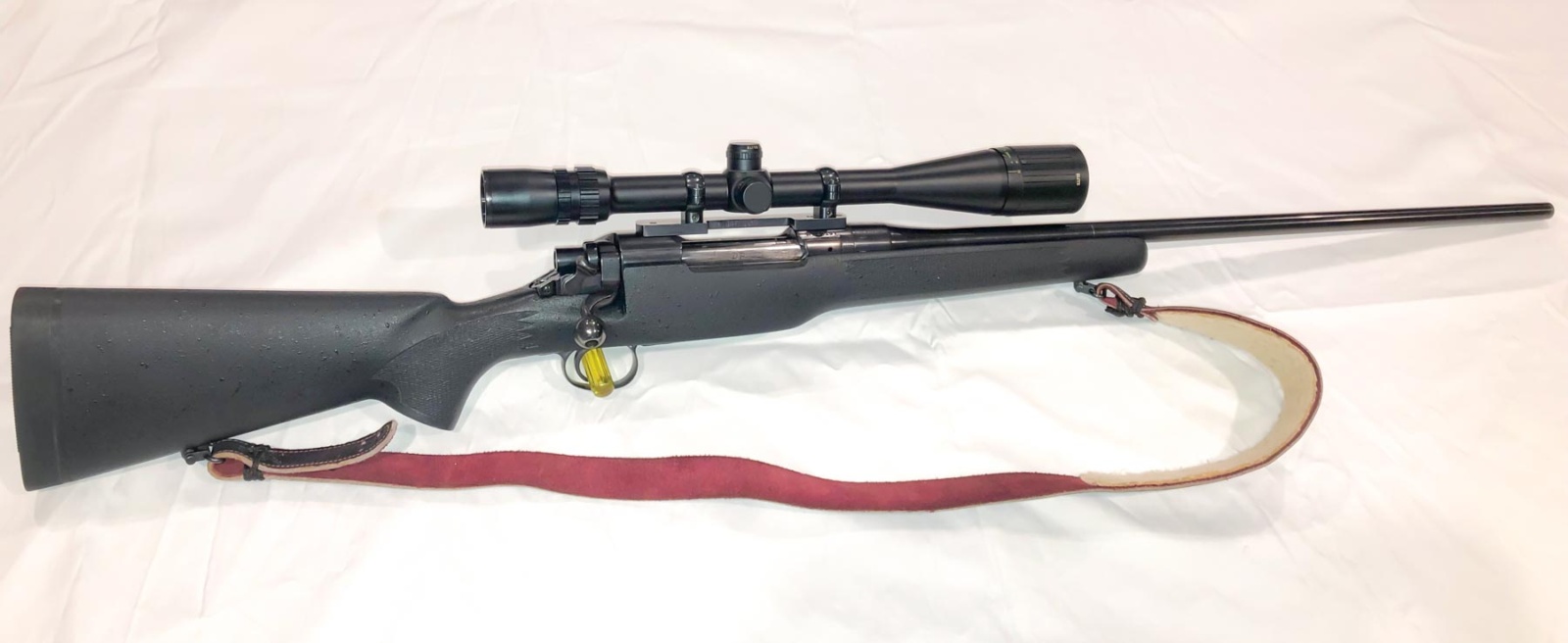
The .303 British, as a hunting cartridge, is revered by some, sneered at by others. You either love it or hate it. Most rifles chambered for it are Lee Enfields, another love/hate proposition. Much less common are the Mauser-based Enfield P14s, made by Winchester, Remington and Eddystone, and originally designed for the .276 Enfield that never saw production but delivered ballistics close to the 7mm Rem Mag.
End of the history lesson.
Years ago I needed a cheap knockabout hunting rifle that didn’t matter if it got the odd ding or scrape on it. Just because it was available, I put together a P14 in .303 British using a basic Winchester-manufactured action.
I located an original military barrel, preferred as they are hammer forged, and had Barry Smith at The Gunsmiths put it all together for me. He machined the protective sight ears off, contoured the receiver and drilled and tapped it for a scope mount.
From the USA, I got a Bell & Carlson stock made a Carbelite for the P14. It wasn’t a perfect fit right out of the box and I had to do some final fitting and inletting. While I was at it, I bedded the action and recoil lug area and full-floated the barrel.
Initially I added a Leupold 4-12×40 scope which I later changed for a much better 6-24×40 Bushnell Elite.
I was happy with the performance my .303. But I thought, “What if I had got Barry to recut the chamber using his Epps reamer?”
Eventually I stopped wondering and decided to have the chamber recut to .303 Epps. I ordered my own reamer from JGS tools in the USA. When it arrived, I noted it was labelled .303 Epps Improved. OK, I thought, that sounds right as the Epps is an improved chambering.

Mialls gunshop could do the re-chambering job and John Miall was most pleased when I told him I would provide the reamer.
Afterwards, I fire-formed 20 cases with ADI Trail Boss powder and some 100-grain .32-cal pistol bullets that actually measured up at .312” diameter. The fired cases came out with not only much straighter sides and sharper shoulders, as expected, but also a somewhat shorter neck than expected. They should have been about 8.4mm (.330”) but these measured 6.5mm (.257”) with a 2mm longer body length. It turned out .303 Epps Improved was the right description.
I got some loading info from the internet (sometimes the worst place for misinformation), cross-referenced it with what I already knew from the previous .303 British loadings and came up with what would be a high-end .303 British load as a starting load for the Epps. I wasn’t disappointed and worked it up from there.
The resulting velocities, after much development and testing, were impressive. With 150gn bullets, a .303 British load should get 2820fps (859.5m/s) but the .303 Epps Improved achieved 3190fps (972.3m/s). With 174-180gn bullets, the .303 Brit should do around 2684fps (818.1m/s) but the .303 EI averaged 3010fps (917.4m/s).
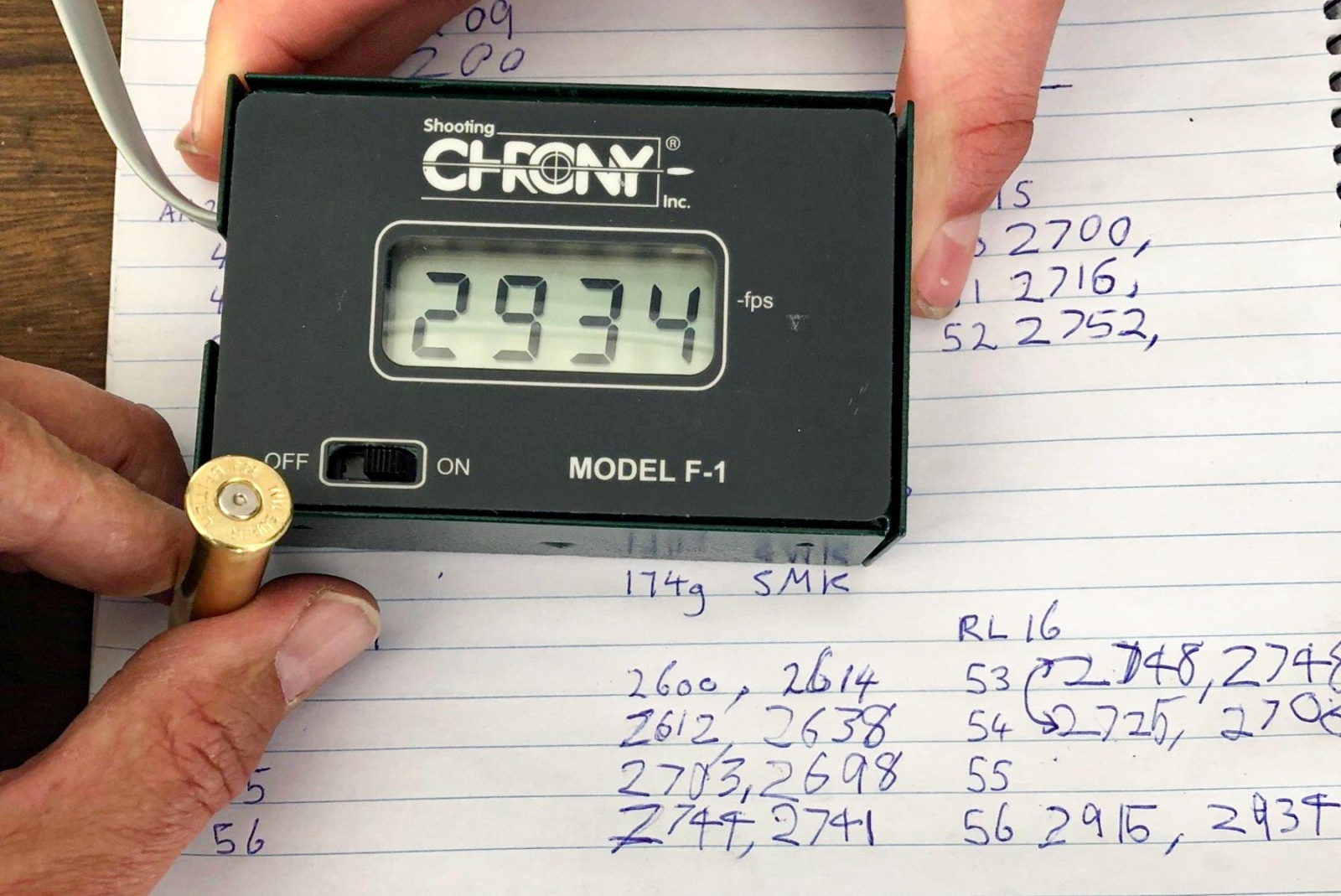
I can’t say what the pressures are but after a lot of careful measuring and inspection of the brass cases, before and after firing, I consider the velocities that I recorded in my rifle with the standard 26” military barrel to be safe maximums.
The easy velocity gain seems to have come not just from an increase in case capacity but also a straight-wall case with sharp shoulders, as opposed to a tapered case with droopy shoulders, reducing the bolt thrust. This goes with what Nick Harvey and all the other major gun writers around the world have said all along.
It’s also worth noting that the case capacity increase I recorded with ADI AR2208 is a full 10 grains of powder over the standard British case when filled to the top of each case.
I read with interest Nick Harvey’s story on the .303 Epps about the same time I started load testing, which sort of set me up for what I could reasonably expect but I definitely did not expect the results I got. My higher velocities are possibly the difference between the .303 Epps and the Improved version, but to keep apples with apples it must be said not just any old powder does it, either. The single-based ADI stuff, while superbly accurate, was about 100-120fps slower across the board than the Alliant Reloder powder.
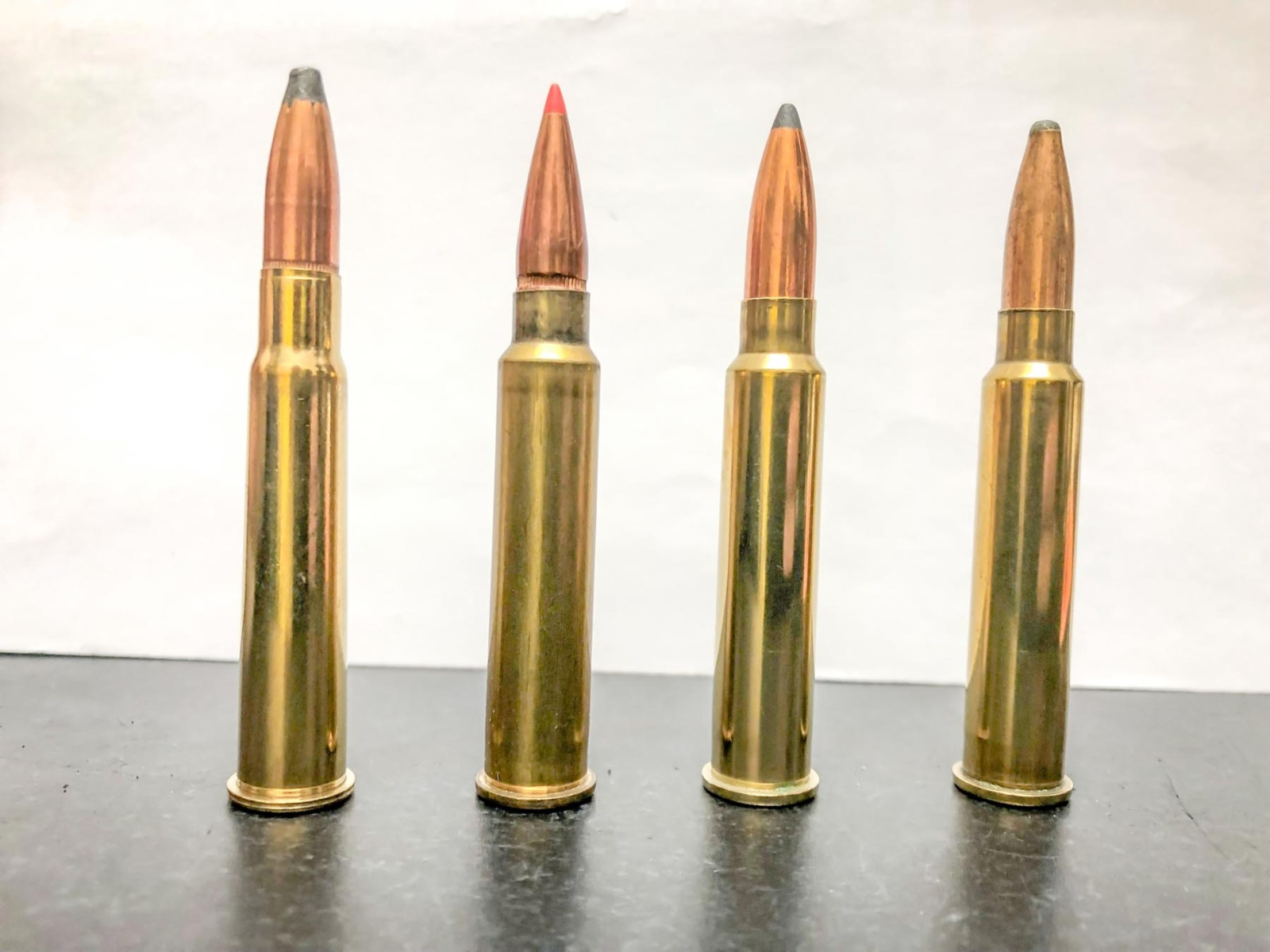
When changing from AR2209 to Reloder 16 with the 174-180 grain bullets I got similar accuracy, additional speed and a much cooler-running barrel.
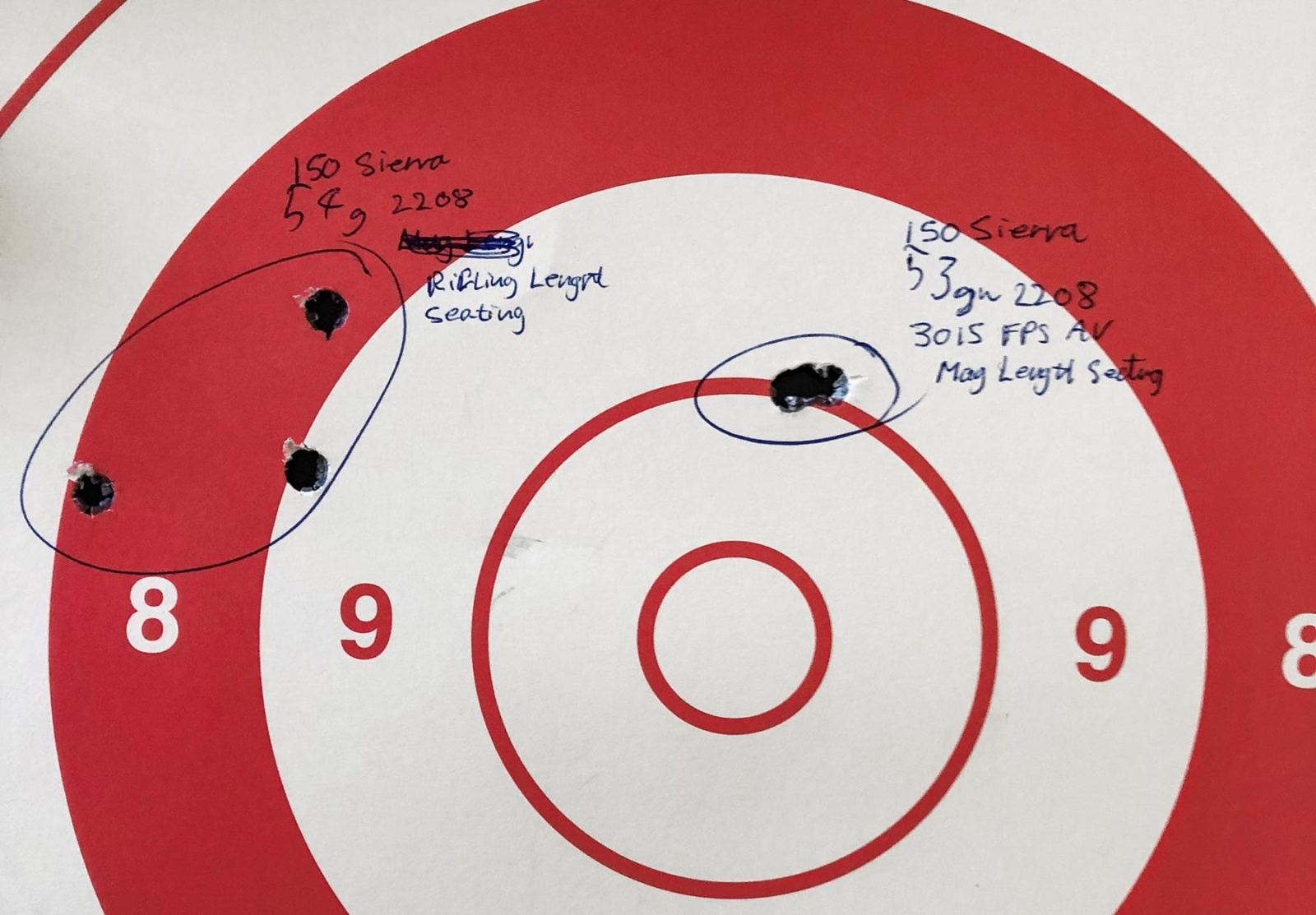
I fiddled with seating depth, which turned out to have a profound effect on accuracy and tightened my groups. A bullet set to the magazine length gave incredible accuracy as opposed to having it set back just off the rifling.
I eventually backed off the 150gn bullet load of 55.5 grains of AR2208 (just under 3200fps or 974m/s and a ragged 1” group) to 53 grains, right on 3000fps (914.4m/s) for a 6mm (¼”) three-shot group at 100m. The 174-180gn bullets preferred slower burning RL16 or AR2209 powder, averaging 3010fps (917.4m/s) with 56 grains of RL16.
The biggest challenge of the whole conversion was to get the much straighter and fatter Epps Improved case feeding as slickly as the original tapered British case through the feed rails, which I had to do myself.
In an age where magnums are the norm and you’re no one if you don’t have one, my old parts-bin knockabout .303 with its new lease on life turned out to be more of a work in continuous progress to what it finally is now. It’s able to compete more closely with some of the newer, smaller, flat-shooting .30 magnums on the market in what is essentially a 120-year-old military barrel and action in a modern carbon-fibre stock with a good, modern scope.
It’s no .300 Win Mag but it’s no slouch either and I’m pleased with its performance. During load development at the range, it got a lot of looks from guys who know what a .303 Brit should do and what mine is doing.
Story by John Dol


0 Comments