


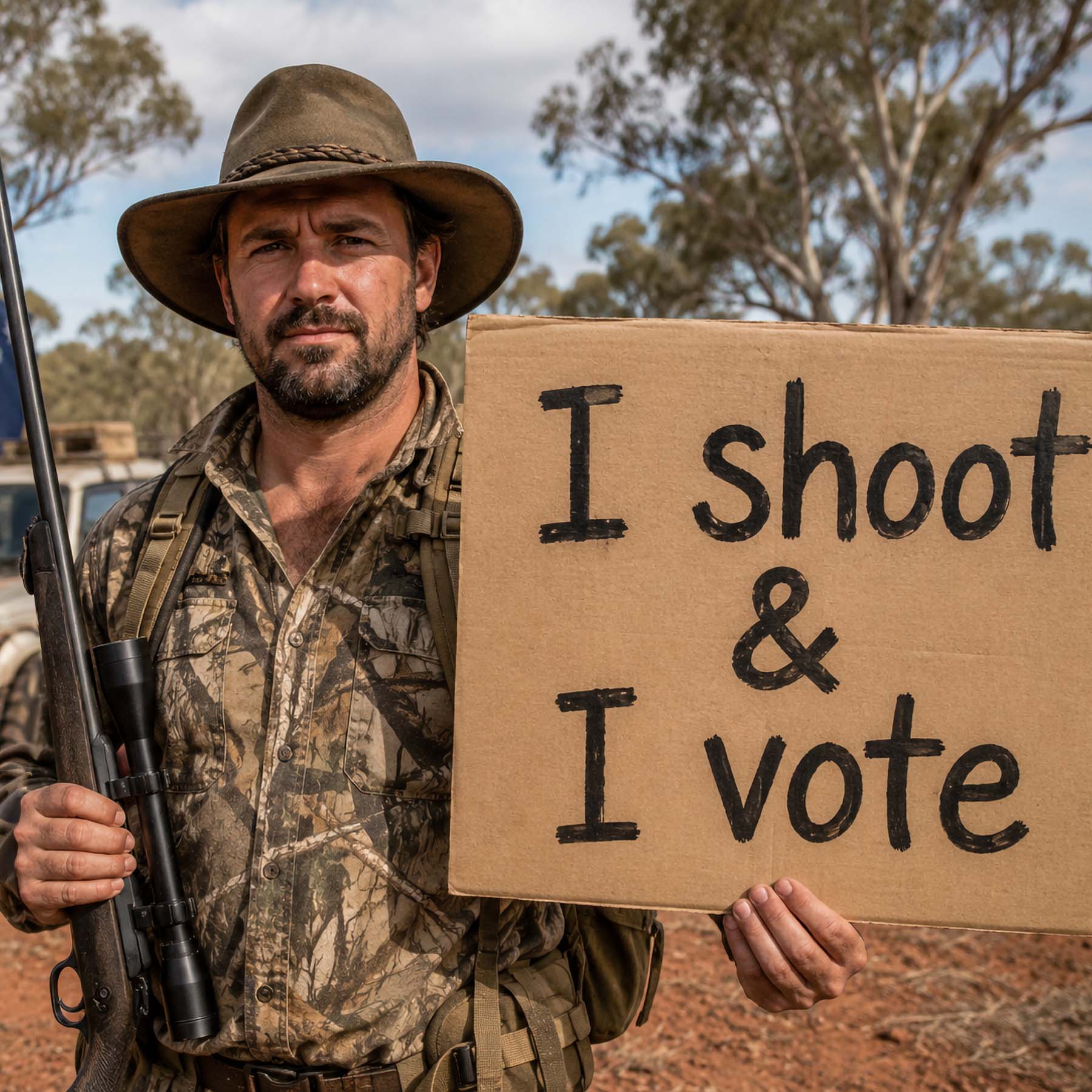


If shooters remain silent on gun law reform, it will just keep getting tighter.
For most Australians involved in the shooting sports, firearms ownership is understood in practical terms. Firearms are equipment for sport, tools for hunting or pest control, items of historical interest for collectors, or necessary for occupational purposes. That reality will not change.
Lawful firearms owners will always see firearms for their practical purpose. What has shifted is the political perception. Governments are increasingly turning their focus to law-abiding owners as a convenient point of response to broader policy failures. Every time a firearm-related incident occurs, regardless of the situation, governments again shift focus, driving policy by emotion, without evidence or meaningful consultation. This results in bad outcomes for good people.
When policy is developed in this way, those affected cannot remain outside the process, nor can they remain silent.
What Australia is currently experiencing is clear evidence of that. Following the Bondi terrorist attack, a renewed national push for firearms reform has emerged. Once again, the focus is not on the failures that allowed the offender to access a firearm, but on imposing further limitations on law-abiding shooters.
A line has now been drawn; and whether shooters like it or not, this line clearly articulates that firearms ownership and use in Australia has become a political act.
THE POINT OF INFLECTION
The modern political environment surrounding firearms ownership in Australia can be traced to the aftermath of the Port Arthur massacre. The events in Tasmania in April 1996 shocked the country. They were tragic.
What followed were sweeping reforms under the National Firearms Agreement. Licensing requirements were tightened, entire categories of firearms were prohibited, and a national buyback scheme removed these firearms from private ownership. This marked the start of the politicisation of firearms in Australia.
Like today, the reforms of 1996 affected individuals who had committed no crime. Governments argued that surrendering their legally owned property was necessary to maintain public safety, a proposition presented to the electorate as a matter of urgency.
From that point forward, the relationship between firearms ownership and politics fundamentally changed. Firearms ownership was no longer simply about sport, hunting, collecting or rural life. It became an enduring subject of political debate and legislative intervention.
POLICY IN THE WAKE OF TRAGEDY
Since 1996, firearms policy has often been shaped in response to major incidents. The issue is not that governments respond, but how they respond. Too often, policy is developed quickly, without a full understanding of the facts, and before the completion of formal inquiries, investigations or inquests. As a result, reforms frequently fail to address the factors that contributed to the event and are directed instead towards the system that regulates those who use firearms legally.
By taking this approach, governments are targeting law-abiding people in an attempt to prevent criminal behaviour. It is a policy approach that doesn’t withstand scrutiny, yet it remains the key play by all governments around Australia.
The 2014 Lindt Café siege in Sydney is another clear example. The offender, Man Haron Monis, used an unregistered and illicit pump-action shotgun to commit an act of terror. He was well known to police for holding extremist views and had an extensive criminal history. He was on bail at the time, despite facing serious charges of assisting in the brutal killing of his ex-wife, and 43 counts of sexual assault.
Yet the initial policy response to this event did not focus on the systemic failures that allowed him to remain in the community or possess an illicit firearm. Instead, the immediate government response was that further restrictions were needed on lever-action shotguns. The government even cited these as new technology, despite them having been in Australia for over 150 years.
This pattern has become familiar. A tragedy occurs, governments feel compelled to act, and new restrictions are imposed on those who were never responsible. Each time, the regulatory burden increases for law abiding individuals. The evidence that such measures improve public safety is often limited or contested. Governments rarely demonstrate how their policies will achieve the intended outcomes, and industry impacts are frequently overlooked.
The post-Bondi response reflects the same approach. The Labor government ran a campaign to promote its new firearms laws and national buyback. Politicians were proudly proclaiming their approach would “take dangerous guns off our streets,” a narrative designed to cause fear of rampant illicit firearm possession that they were now doing something about.
But the truth is the reforms and buyback are focused on removing registered firearms, owned by licensed individuals. These are not on the street, these are sporting firearms, owned by police-checked, law-abiding people and are safely and securely stored in safes.
For the shooting industry and licensed firearms owners, these policy shifts have real consequences. Sporting disciplines face new limitations, collectors lose access to historically significant firearms, farmers encounter increasing compliance burdens and small businesses across the supply chain are dealt with further regulatory complexity that threatens their viability.
This is why firearms ownership in Australia must now be understood as part of the political process.
LESSONS FROM OTHER COMMUNITIES
Other parts of Australian society recognised long ago that their interests are shaped by political decisions. Farmers did not choose to become political, they had to. Agricultural policy directly affects their livelihoods. Water, land use, vegetation clearing and live animal exports are no longer purely operational matters, they are political decisions, debated daily in parliaments around Australia, that ultimately determine whether businesses survive.
Environmental advocates operate in the same space. Their engagement reflects an understanding that policy determines how land is managed, how resources are allocated and what environmental outcomes are prioritised.
The trade union movement provides another example. Its influence has always rested on a simple premise, that workplace conditions are shaped through political processes. Workers organise, engage with elected representatives and advocate for change where policy settings affect their interests.
The common thread is grassroots participation. Influence is built through numbers, organisation and sustained engagement. Individuals don’t sit outside the system; they involve themselves in it. They write to politicians, attend meetings, contribute to consultations and engage in the broader political conversation.
They also work within the system itself. Many join political parties and seek to influence policy from the inside. Where a party position does not reflect their interests, they attempt to change it through internal advocacy and organisation. They also put candidates forward in pre-selection processes to run for parliament.
Shooters are now confronted with the same reality. If the industry and the sport are to continue, there needs to be a clear recognition that disengagement is no longer an option.
THE SQUEAKY WHEEL
In politics, silence is rarely interpreted as neutrality. It is more often taken as acceptance. If policymakers consistently hear from those calling for tighter restrictions, and rarely from responsible firearms owners, the policy direction becomes predictable.
Australia has close to one million licensed firearms owners. That is a significant number, but numbers alone do not create influence. Participation in the political process does. A single supportive member of parliament raising concerns carries limited weight. A coordinated effort, with multiple members presenting consistent, constituent-driven concerns, is far more effective.
Petitions and letters are useful, but direct engagement is more effective. A steady flow of requests to meet with members of parliament, or ministers who are directly responsible for the decisions, sends a clear signal that the issue matters. At the end of the day, politicians are responsive to electoral pressure. If constituents consistently raise concerns, particularly in marginal seats, those concerns are far more likely to be taken seriously.
WHAT SHOOTERS SHOULD DO
Political engagement does not require becoming an activist, it requires participation and a few hours of work. Meet with your local member of parliament or engage with them at community events. Explain why shooting sports or firearms ownership matters to you. Follow up with a written letter and request that your concerns be raised with the relevant minister.
Write to the police minister and the premier. If you are a business, make sure you include the small business minister. Follow up your correspondence: call offices, request updates, and send additional letters.
Ask your local member to facilitate a meeting with the minister. If that is not possible, seek support from friendly members of the Legislative Council (upper house) to arrange meetings and to advocate on your behalf.
Participate in consultations and make submissions where opportunities arise. Even a concise, evidence-based letter can be effective.
Individually, these actions may seem small, but collectively they ensure policymakers hear from those directly affected. For too long, the burden of the masses has fallen on a small number of politically active participants. This is no longer sustainable. Every law-abiding shooter must get involved. One person can be ignored; a hundred thousand people is a different matter entirely.
It is also essential that we advocate from within our community. Encourage others in the shooting community to get involved, attend club AGMs and meetings, and request that they make representations and get involved in the political process as well.
This is the reality we face. If shooters do not engage in the political process, others will continue make decisions on their behalf.
STANDING UP FOR THE FUTURE
The shooting sports and firearms industry have long been part of Australian life. They support regional economies, provide legitimate sporting opportunities and represent a community built on responsibility and compliance with the law.
But the future cannot be presumed. Since 1996, firearms ownership has existed within a political environment shaped by ongoing debate, legislative change and scrutiny. This will only amplify over time. A line has been drawn that can no longer be ignored, and any licensed firearms owner who wants to see a future for the sport or the industry must recognise that engagement is not optional.
We must speak up, we must engage with elected representatives and we must advocate for evidence-based policy. And, most importantly, when setbacks occur, we must regroup, stand up again and continue the effort.


0 Comments