


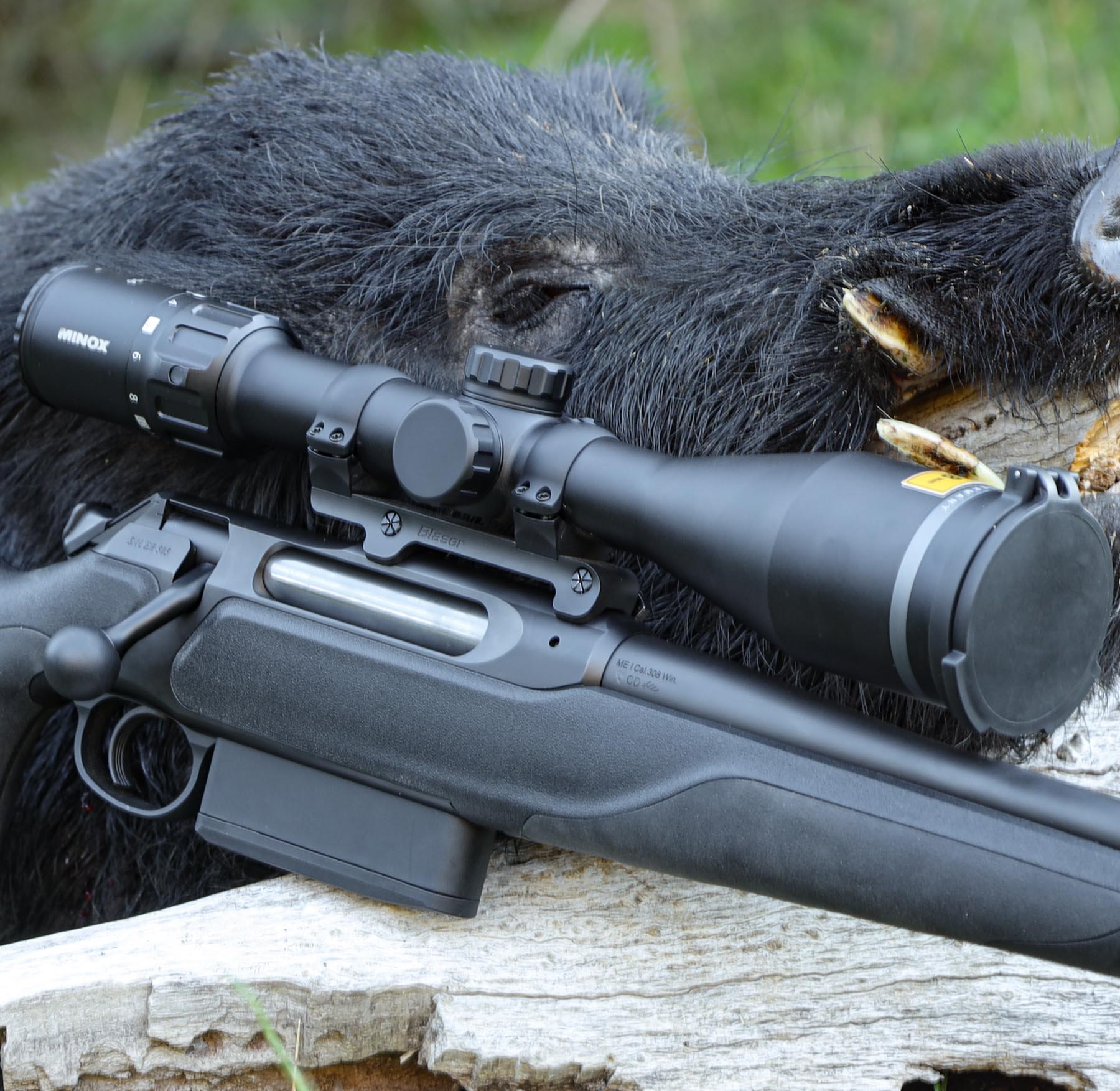

Minox is not the sort of company that does things by halves, and it shows in this Allrounder 3-15×56 scope. It’s an immediately impressive scope.
In the past decade or so, Minox’s design and engineering has risen to higher levels and this Allrounder is one of the results. I had some Minox optics a bit more than 10 years ago and can confirm that the latest ones are leap forward in every sense.
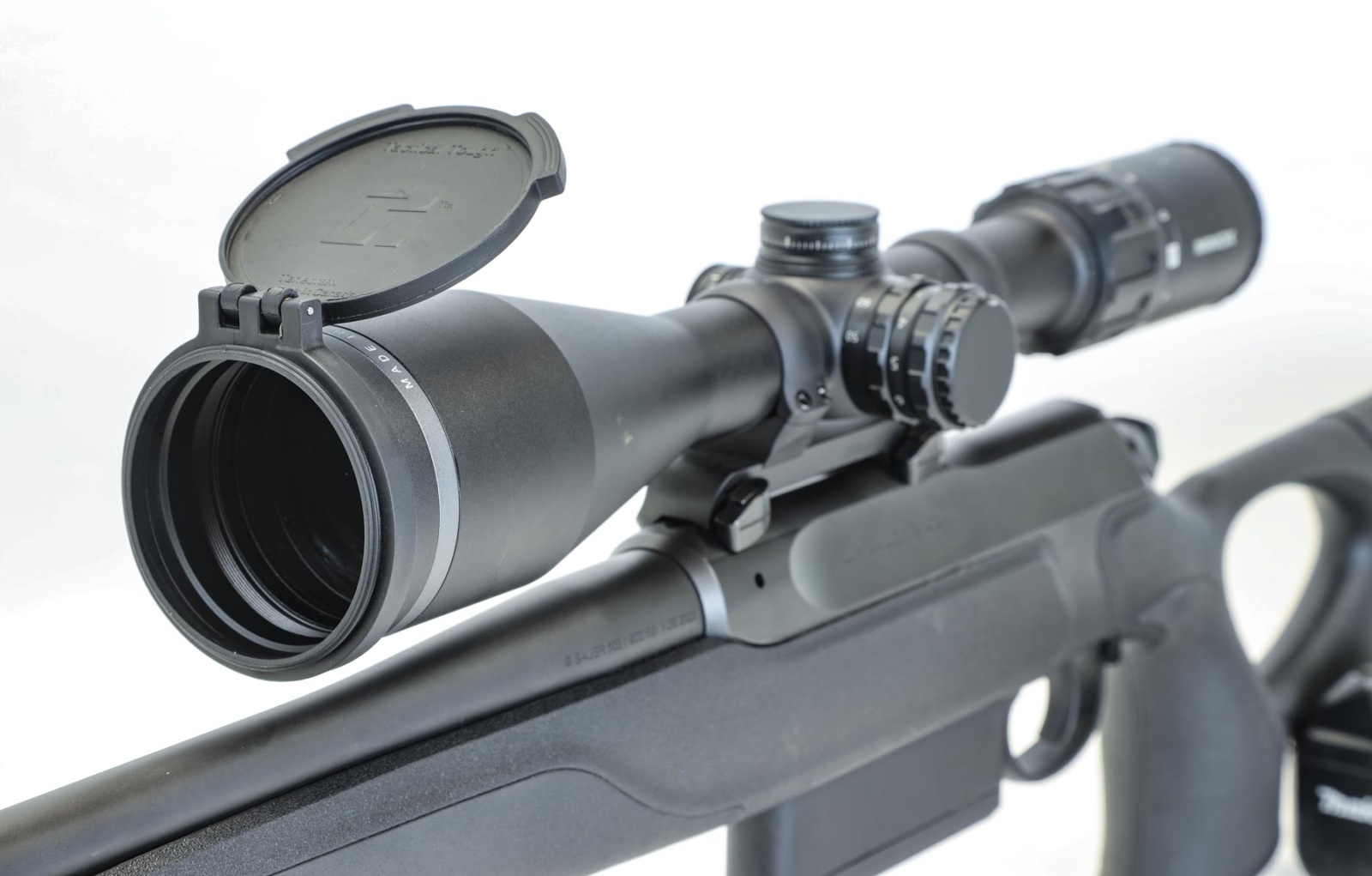
Based in Isny, Germany, Minox is part of the Blaser Group, with ties to Mauser, Sauer and others. It shows.
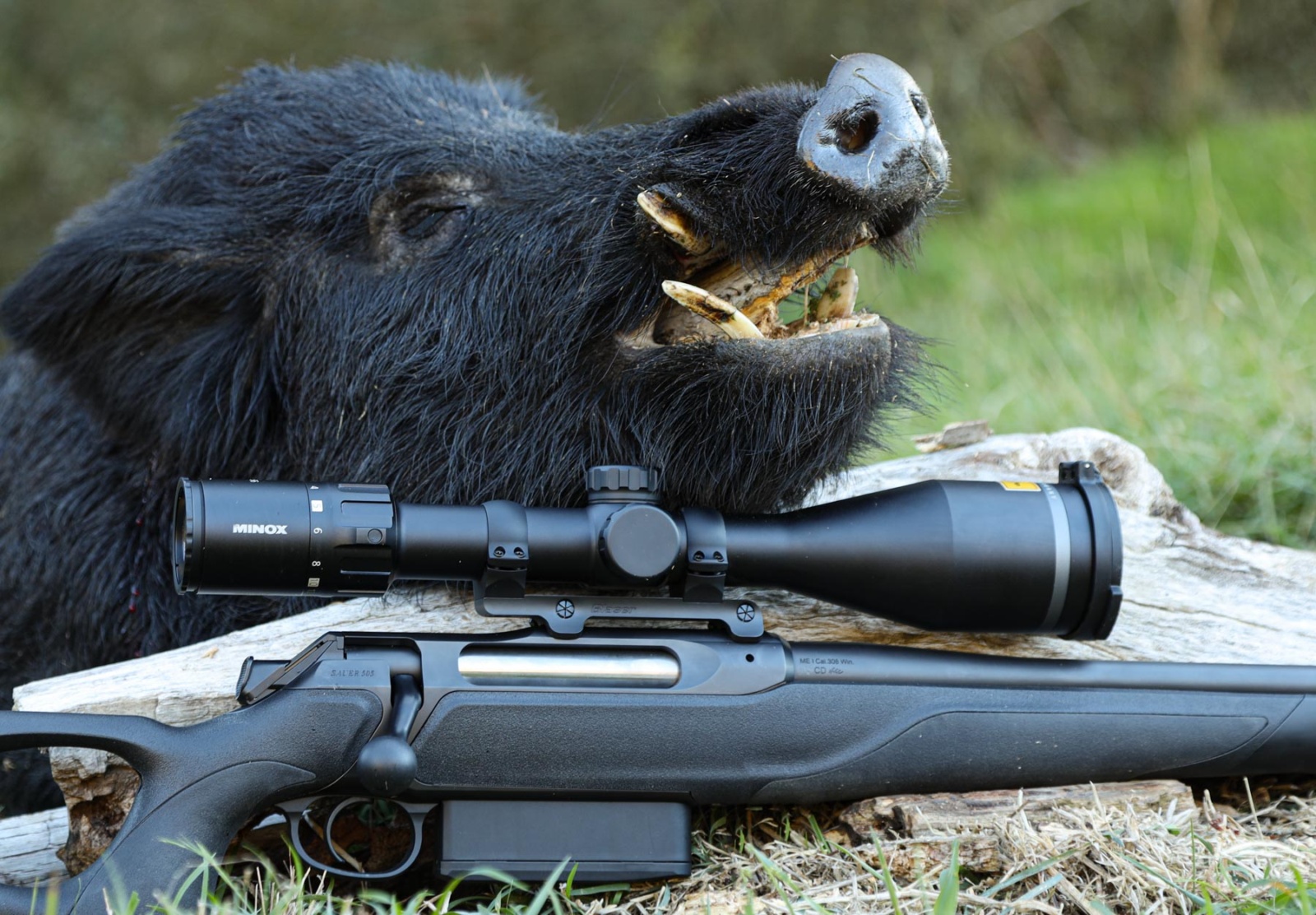
The Minox was supplied with the Sauer 505 I tested and should have taken a back seat to this stunning rifle, but it distracted me to the point where I was making as many notes about it as the gun.
A week later, another revelatory moment occurred in the pre-dawn gloom of a foggy morning with a bright moon setting. Through my humble $300 Ridgeline binocular, I’d made out a buck but it took ages to confirm it was the one to take. Then I took aim through the Minox and knew the time had been wasted. The buck stood out clear and clean in the Allrounder, the subtle shades and spots of its chocolate fallow coat obvious. That’s just the superiority of truly high-quality optics.
The basic optical critique is the easy part: the Allrounder is excellent. The view is bright and sharp right to the edges, the M*plus lens coatings enhancing contrast and other qualities to provide a really crisp picture.
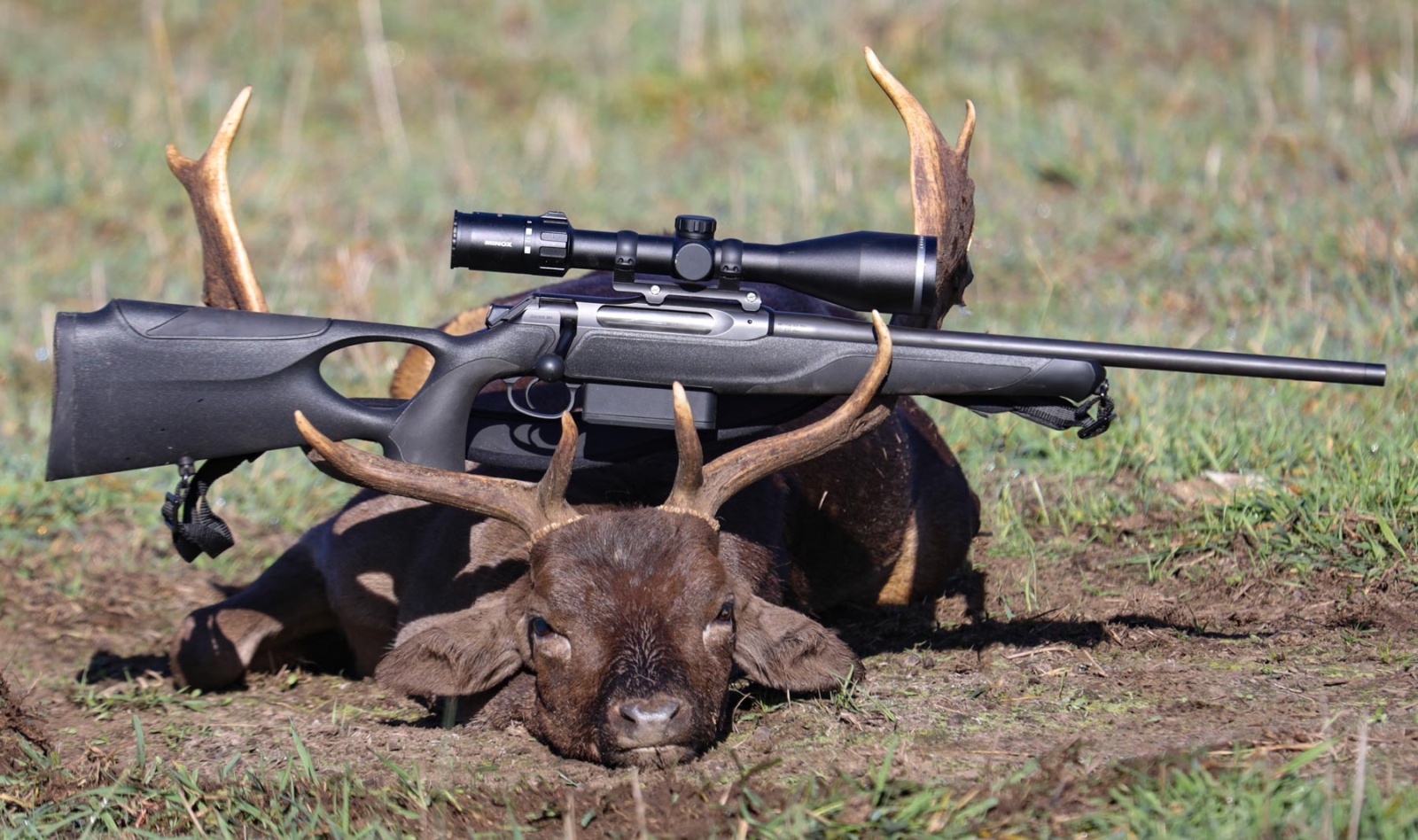
Light transmission is sensational. If that deer in the pre-dawn mist was any indication, Minox is right to claim that up to 94 percent of light gets through the lenses and their coatings to reach your eye, which is about as good as any current rifle scope can manage, and miles better than most.
Minox goes further, providing a chart showing the Allrounder transmits at least 90 percent of light right through the spectrum from the blues through the greens, yellows, oranges and into the reds.
In other words, a huge portion of visible light is available to your eye, and the wavelengths that aren’t so well catered for aren’t necessarily the critical ones for hunters.
The low-light vision is aided by the large 56mm objective lens, providing an exit pupil of 5.6mm at the 10x magnification I had selected for that shot. I would guess my own eyes were dilated to at least that size to suck in the little light available to them; a scope with a smaller objective lens, and hence exit pupil, would have provided a smaller window for light to come through.

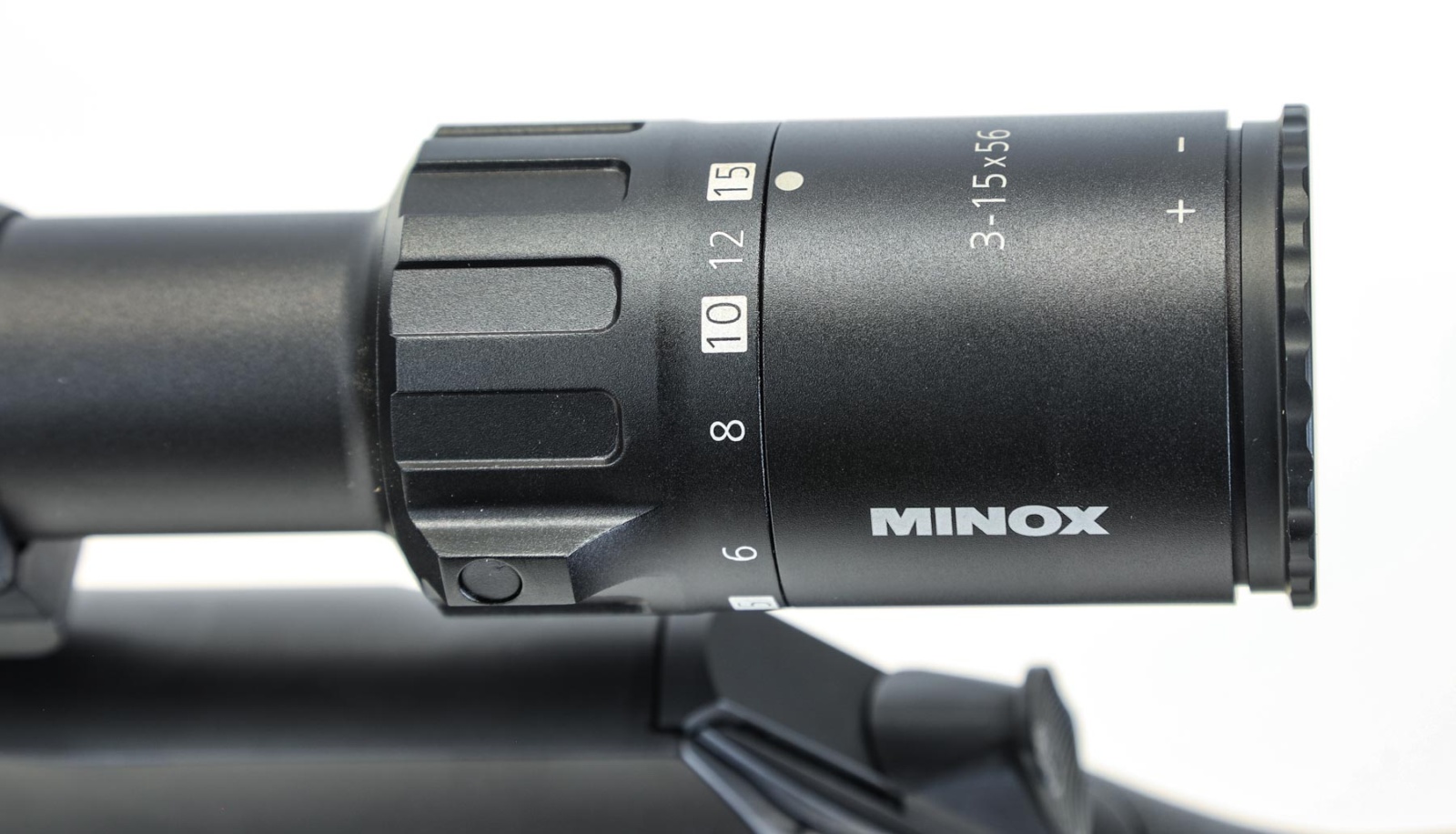
The Minox is very comfortable to look through at any magnification, with the side-focus parallax adjustment and fast-focus diopter ring letting you fine-tune the view in moments.
Some of the credit for the excellent picture goes to the diopter housing, which Minox made larger than usual. Benefits include a relatively wide field of view (between 2.3m and 11.9m at 100m, depending on magnification); reduction of vignetting around the edges (hence the greater clarity mentioned above); and more latitude when lining up your eye behind the scope. Minox indicates the design increases both the range of eye relief you get and the size of the exit pupil.
The increase in exit pupil can’t be much: perhaps 0.07mm at 15x magnification, and possibly giving me a 5.7mm exit pupil instead of 5.6mm in my scenario above above. But every little bit helps.
What I found more obvious was the better eye relief, which Minox says is approximately 100mm (90mm is more common) and which gave a lot of leeway for me behind the scope. When shooting prone with your eye closer to the scope or offhand with your eye further away, you won’t struggle to find the correct eye position even at 15x magnification.
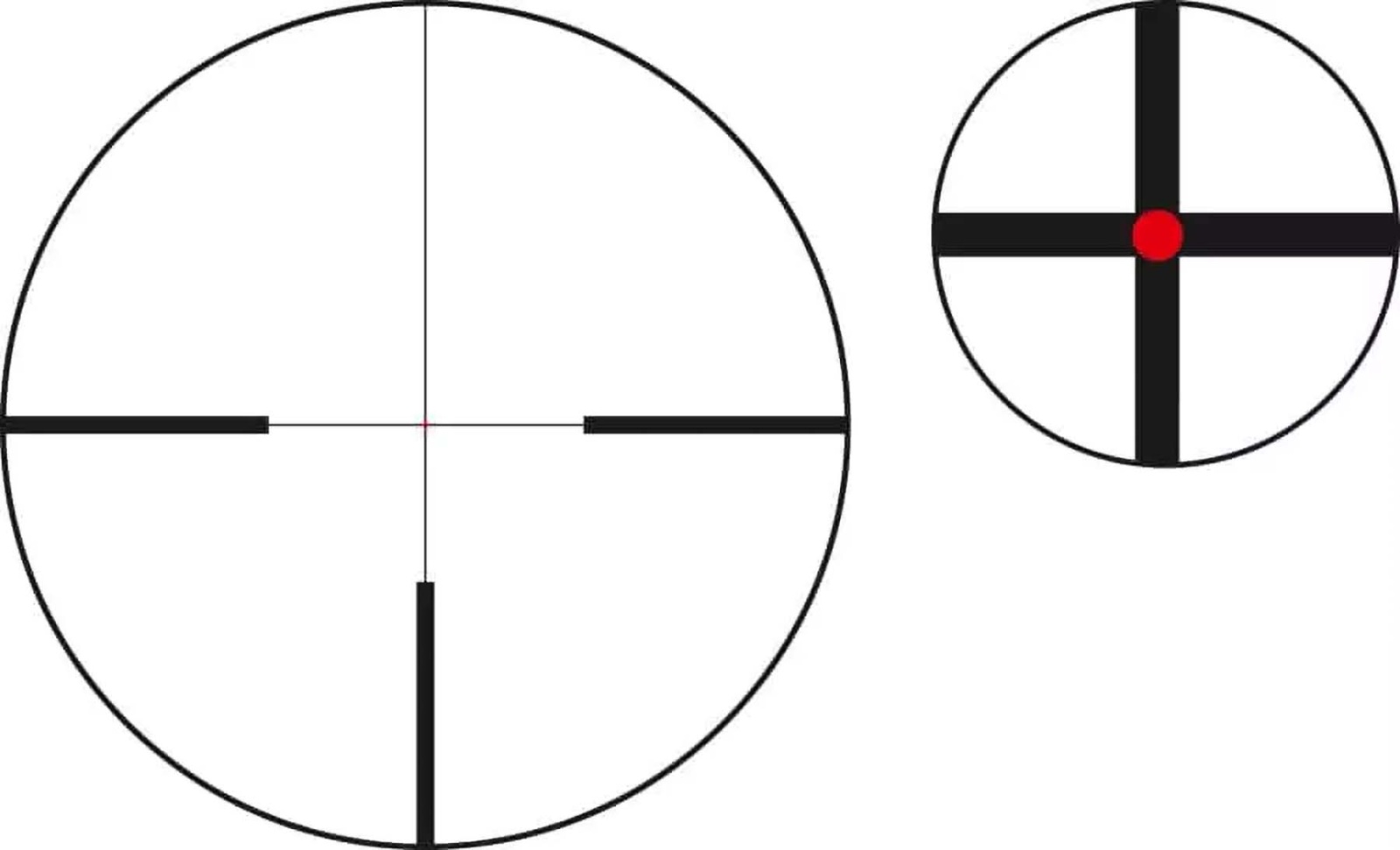
The Allrounder’s second-plane reticle is the classic, uncluttered German #4 crosshair with an illuminated dot in the middle, the light transmitted by a fibre-optic cable running up the lower crosshair. The reticle is simple, quick to aim with and, with the illumination, perfectly matched to the scope’s low-light credentials.
The illumination is powered by a CR2023 battery and is lit up progressively by a rheostat in the left turret, just outboard of the parallax correction dial. There are three beaut tricks to it. First, the battery compartment carries a spare battery, perfect if the main one dies on you mid-hunt. (Don’t chuck the dead one away; both must be in the compartment to ensure a reliable connection for the operating battery.)
Second, the power turns off instantly if the scope is either rolled more than 45° to either side or turned almost vertically up or down. The moment you bring the scope back into use, the light comes on again.
Third, you can set the illumination to operate through either a brighter or darker range, depending upon your preference.

Zeroing is done in 1cm increments at 100m (0.1 MRAD if you prefer) using the low, capped adjustment turrets, which have very tactile clicks. You can count on the clicks to give a reliable 1cm of movement at 100m. Both turrets can be reset to zero, which is marked by a pointer.
The turrets on this scope have no numbers to indicate how far you’ve wound the turrets but every fifth detent is marked by a larger line. Given that this is a hunting scope, not a tactical one, that is enough.
You can, however, opt for what’s called Fast Reticle Adjustment (FRA) turrets, providing both numerical marks and a zero stop, but this scope wasn’t so equipped.
The 3-15×56 is a large hunting scope without being oversized, and at 760 grams it’s not overly weighty. I can see an argument for choosing the shorter, 650g 2-10×50 version instead; the choice is yours. An advantage of the Minox’s size is it will fit long and magnum-length actions with ease.
Is it worth the money? When I shot that buck before dawn, the wind had just changed on me and the does to his right had picked up my scent. They were ready to bolt, and he’d have gone with them. Seconds counted. Those are the times when you celebrate the quality of the scope rather than fretting about the money you paid.
Finally, I can assure you the Minox is strongly built. I dropped it from shoulder height onto tiles, the mass of a rifle on top of it, distorting the objective housing and its outer ring, buckling the threaded ring of the scope cover, and causing a significant shift in point of impact. I thought I’d wrecked it, but when I re-zeroed it the Allrounder held that POI perfectly. Final proof was a five-shot 14mm group. The damage was cosmetic but not critical.
I broke it so I bought it, and I don’t regret it. It has now given perfect service on my go-to all-round rifle for 18 months in all kinds of conditions.
A RRP of $2570 (in 2025) seems right for the top quality and optical performance the Minox Allrounder gives you. But retail prices seem to vary a lot, so shop around and you might get a real bargain. It’s an excellent rifle scope.
SPECIFICATIONS
- Manufacturer: Minox, Germany
- Magnification: 3-15x
- Objective lens: 56mm
- Reticle: German #4, illuminated
- Power: 2 x CR2032 batteries
- Adjustment: 1cm at 100m; 55cm range of adjustment
- Parallax: Adjustable, 50m to infinity; side focus
- Eye relief: Approx 100mm
- Diopter adjustment: +/-2
- Exit pupil: 3.8-11.4mm
- Field of view: 2.3-11.9m at 100m
- Tube diameter: 30mm
- Length: 372mm
- Weight: 760g
- RRP: $2570
- Distributor: OSA Australia


0 Comments