




Sauer has done its best work to create an uncompromised hunting rifle in the ultra-smooth new 505 model, in which everything — action, cycling, safety, trigger and all — function so perfectly that you get a thrill every time you hunt with it.
The heart of the Sauer 505 is the action, a striking construction milled from a 6.5kg block of steel to become a skeletonised sculpture weighing a mere 732g with uniquely sweeping curves, massive strength and the smoothest bolt travel you’ll probably ever feel.
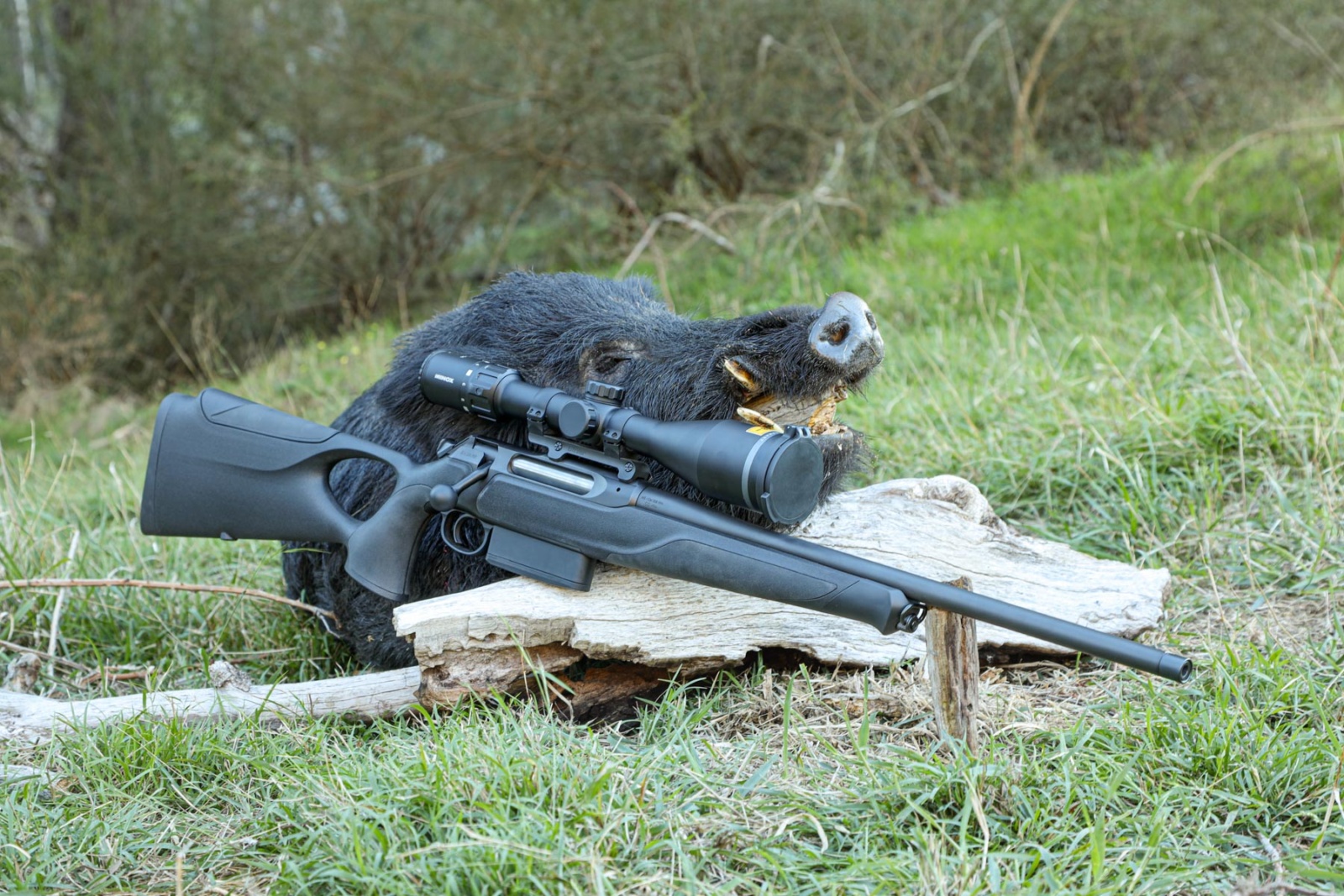
It is the central focus of what Sauer claims is the best looking bolt-action rifle in the world, and while I refuse to be drawn into that discussion, I thoroughly agree with the company’s statement that this rifle is silky smooth, super quiet and extremely fast.
It’s all in the design and execution of the receiver and the bolt.
The switch-barrel 505 is not completely new, but is an effort to take key features from the 202 and 404 models, add a few new concepts, and create Sauer’s best yet. There’s a lot of crossover and compatibility between the 505 and 404, including their stocks and barrels, but there are important differences, too.
The bolt head is a prime example: the 404 has a removable head to facilitate changing calibres whereas the 505’s bolt head is integral with the bolt body. As such, if you change between calibre groups (eg, standard calibres to magnums) on the 505, you’ll need a different bolt instead of just a bolt head.
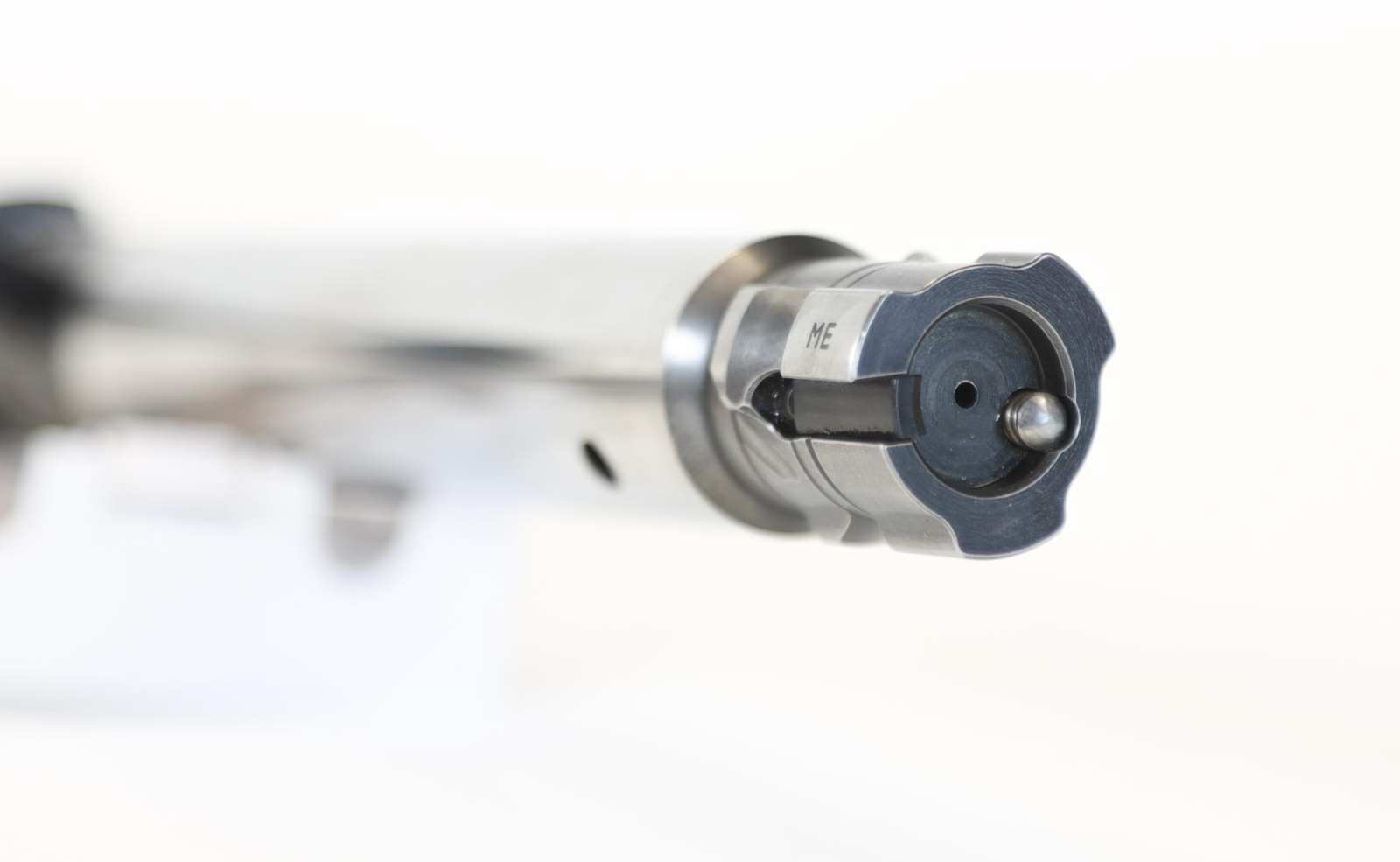
The 505’s one-diameter (21.5mm) bolt requires complex milling to create the six-lug head, which is a work of art. The lugs have cammed edges to pull the bolt forward that last 3mm into battery. The front 13cm of the body is polished stainless steel while the rear is coated matte black.
The bolt face is recessed 3mm deep and has room between two of the lugs for a firmly sprung claw extractor. A single plunger ejector is set into the face.
If a cartridge fails on firing, two gas vents in the receiver’s front ring let pressure escape safely, while another in the bolt body takes gas entering through the firing pin hole and directs it down into the magazine well.
A vertical pin protrudes into the receiver just in front of the sear and acts as the bolt guide and stop. You press upwards on a small tab on the left side of the trigger guard to lower the pin and release the bolt from the receiver. The pin is only a fraction of a millimetre narrower than the channel it engages in the bolt’s body, so the bolt is virtually wiggle-free through its travel.
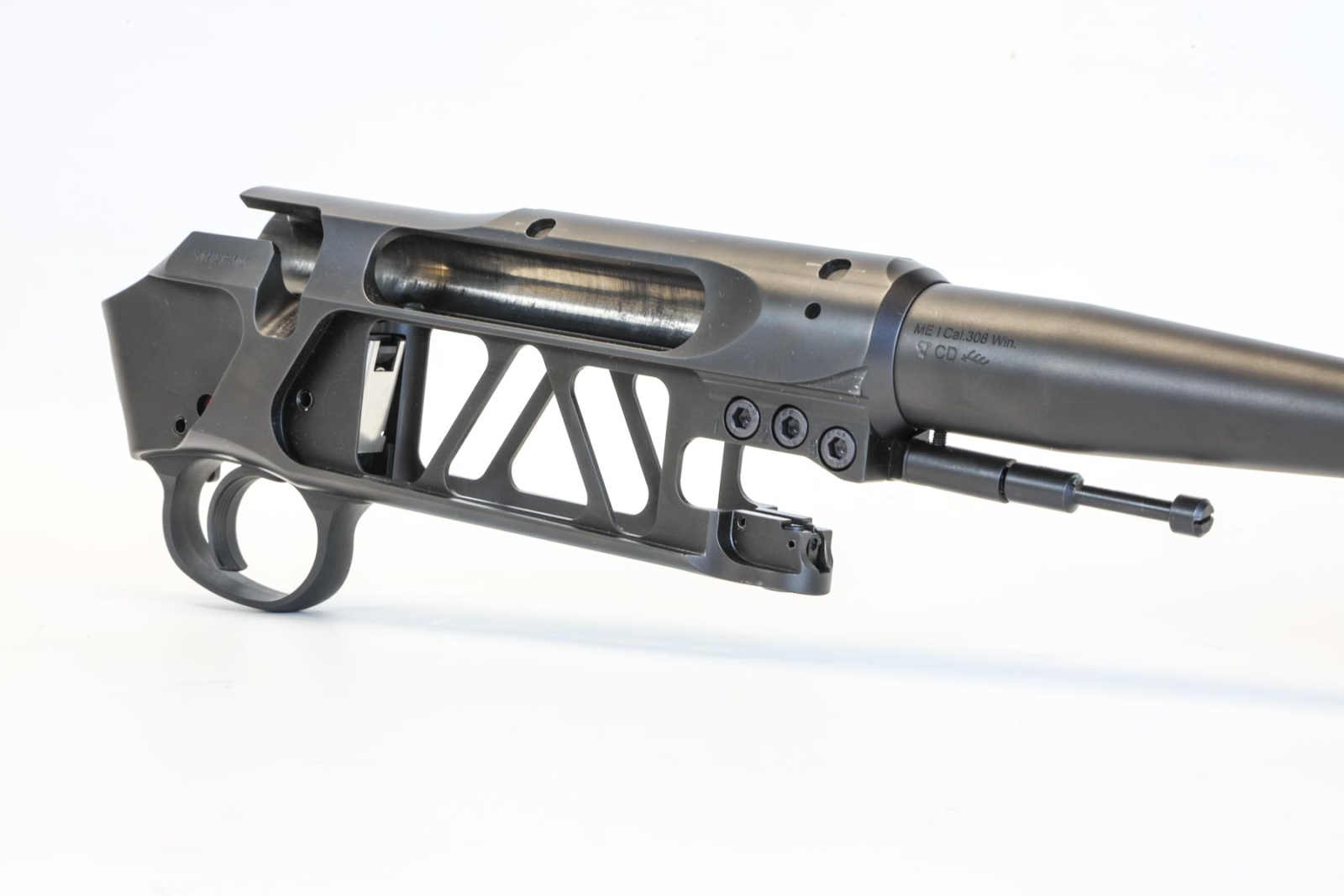
The bolt slides incredibly smoothly. My old Schultz & Larsen is the only thing I’ve used that is comparable. The polished bolt body is a close fit inside the cylindrical receiver and its glass-smooth surfaces. There’s no resistance as you push forward, then barely a notch as the sear catches the cocked firing pin and you turn the handle down.
If you close the bolt with it de-cocked, the whole movement is uncannily smooth and light. You can literally hold the rifle butt-up, let go of the bolt handle and watch it fall closed and lock, assuming the magazine is empty and the action oiled. You get the impression the lugs mustn’t even be contacting the receiver but you’ll find they’re locked in tight without a hint of freeplay.
Sauer’s excellent manual cocking and safety system is used in the 505 with slight changes from the 404, such as the use of a polymer cocking button instead of steel. Push the button forward to cock the rifle; slide it back to de-cock. When de-cocked, there is no tension on the firing pin spring and the pin is well clear of the sear, so the rifle cannot fire. When de-cocked, the bolt cannot be opened accidentally, but push the cocking button forward a couple of millimetres and the handle will lift.
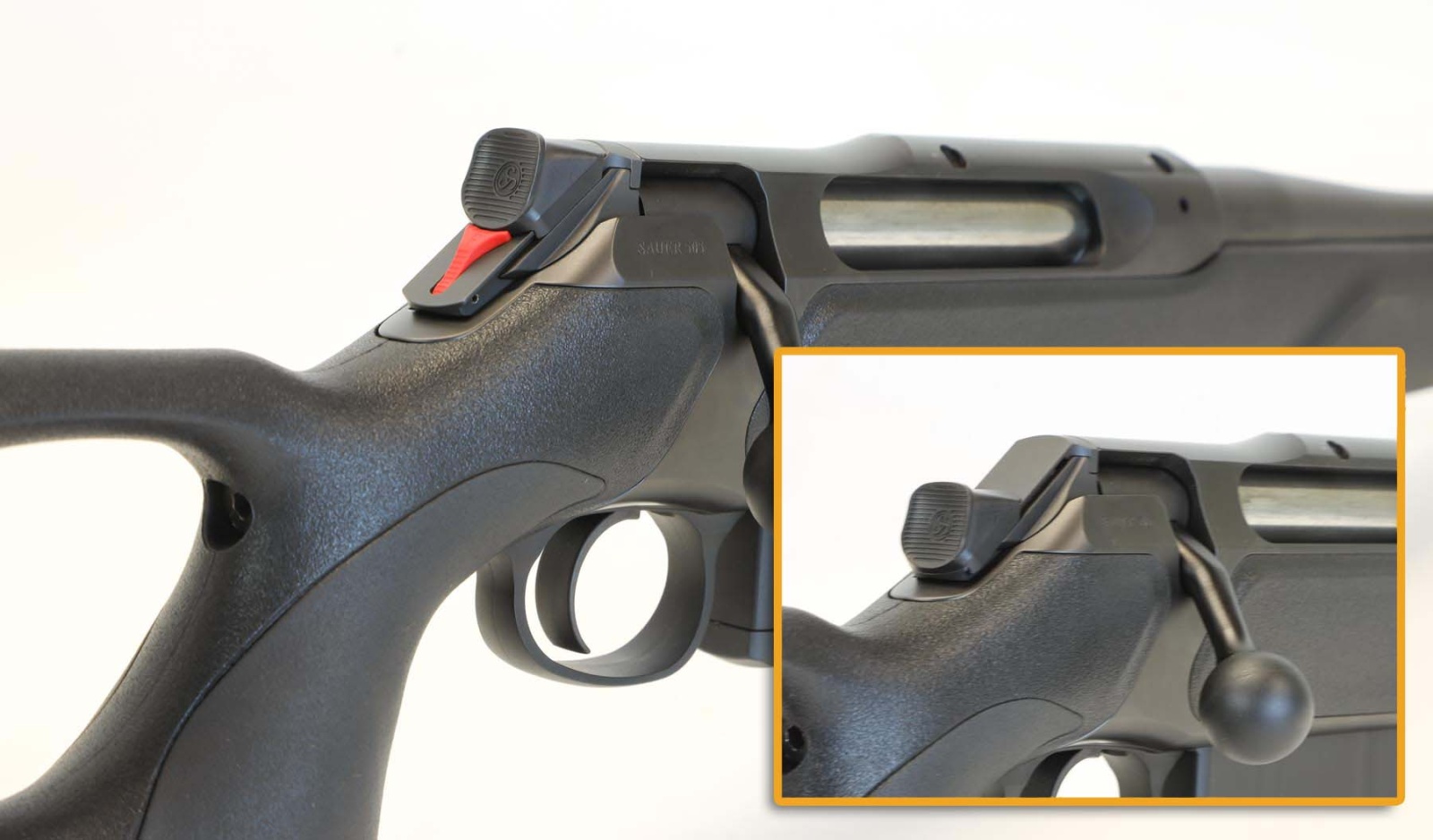
This setup allows you to safely carry the rifle with a chambered round. If you choose, you can cycle the bolt without ever cocking it. When a shot presents, you can quickly and quietly cock the rifle. After firing, the cocking piece stays in the cocked position so the rifle cycles the next round and is instantly ready to fire again. In my view, there’s no better system in a bolt-action rifle.
The 505 has one of the best triggers there is, full stop. It uses Sauer’s Quattro trigger group, just like the 404 but without the adjustability in the shoe. It has four pre-set pull weights: 350g, 700g, 1000g and 1250g. The test rifle’s releases averaged 360g, 770g, 1070g and 1330g — no great difference. The release weights were incredibly consistent from pull to pull, within a few dozen grams of each other at worst, and sometimes identical to the gram. It’s a superbly crisp, creep-free, single-stage trigger, so good that it’s almost worth the entry price on its own.
The removable barrel is clamped into the front of the receiver by three bolts after the barrel is inserted and given a short twist to set it in place, same as the Sauer 202 and 404, and it’s guaranteed to return to its previous zero. The trigger is pinned into the receiver, and the magazine well is part of the structure, with a release button attached. The butt stock and fore-end are fastened to it as well.
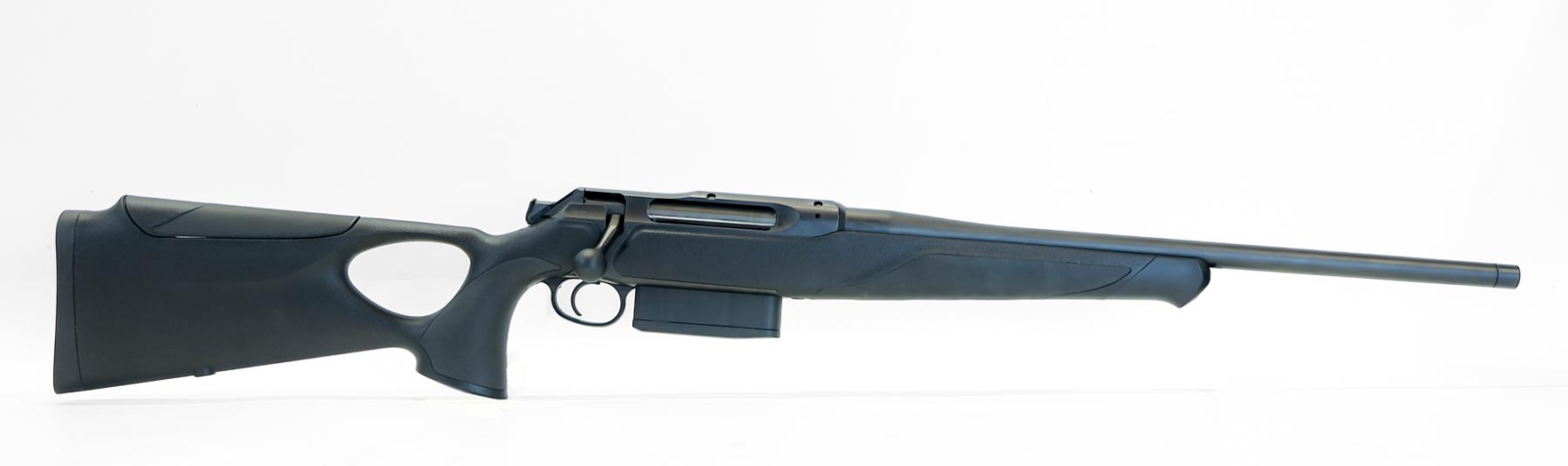
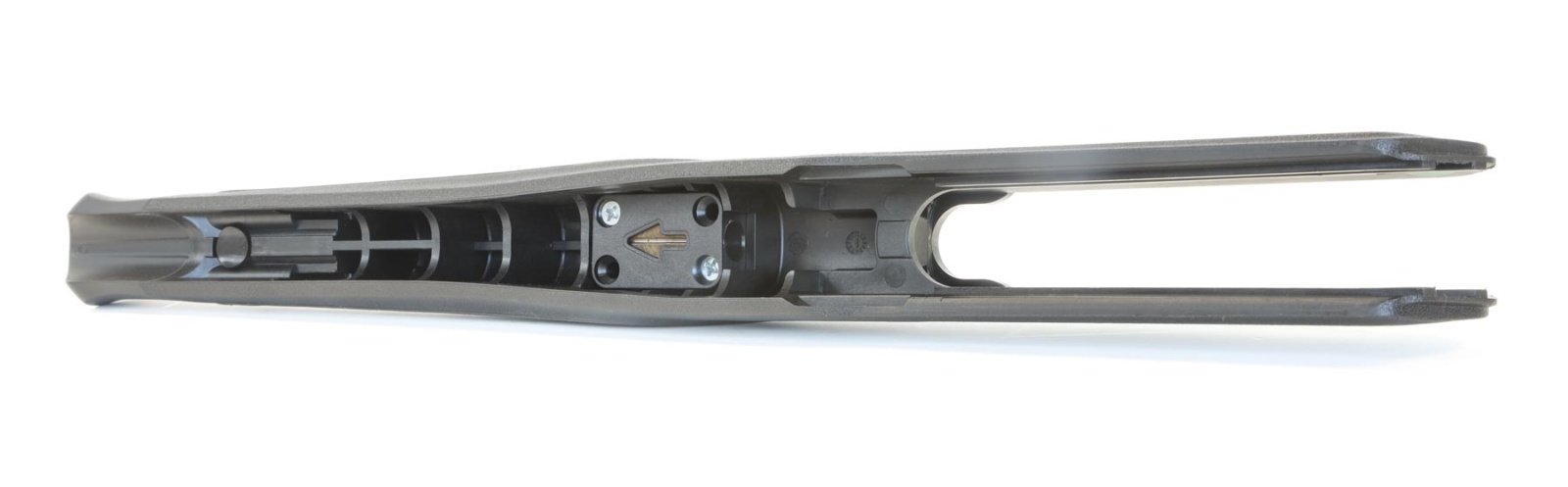
You have all sorts of options for stocks. This XT model has the black synthetic thumbhole version, but you can go for a traditional sporter profile for the butt, as well as carbon-fibre or any grade of walnut your wallet permits. There’s a compact Artemis stock in walnut for smaller shooters, and all butts can be optioned with an adjustable cheek riser, like on the test rifle.
Show me a 505 with Grade 10 walnut and I’ll probably agree it’s the most beautiful rifle in the world! The XT looks more functional than beautiful and I fell for that functionality as the test progressed. The XT is a comfortable rifle with a shape that enhances your accuracy.
The fairly upright pistol grip has a wide palm swell tapering to a narrow neck which at first feels odd because it’s so different but soon becomes welcome because it concentrates your grasp in your lower three fingers and tends to reduce the chance of your trigger finger causing a pulled shot. Partnered with the outrageously good trigger (which, incidentally, I ended up preferring on its light 700g setting), it is hard to go wrong unless your shooting technique is really bad.

The seductively slim fore-end is nice to hold, too, and all gripping surfaces on the XT use a slightly rubberised finish to enhance traction. The XT shoulders very well and sets your eye directly behind the scope if you get the cheekpiece height set right. And it swings like a Bennie Goodman solo.
It’s a combination that works so well that I was able to shoot four piglets on the run with only one missed shot. On test, the 505 also accounted for several deer, all plumb shots from the prone position at up to 200m, and none of which were ever in doubt because of my confidence in the rifle.
I found it especially easy to hold steady and shoot well offhand and in other field positions, too, plinking at targets with better accuracy than I usually manage. In any position, felt recoil is mild and very well controlled.
The one thing I’d have preferred the sporter stock for was cocking the rifle; with the XT you have to take your thumb out and around the stock to reach the cocking/safety button, which is not quite as quick or natural as when there’s no structure above your thumb. It’s the same for most safety catches on other thumbhole rifles, though.
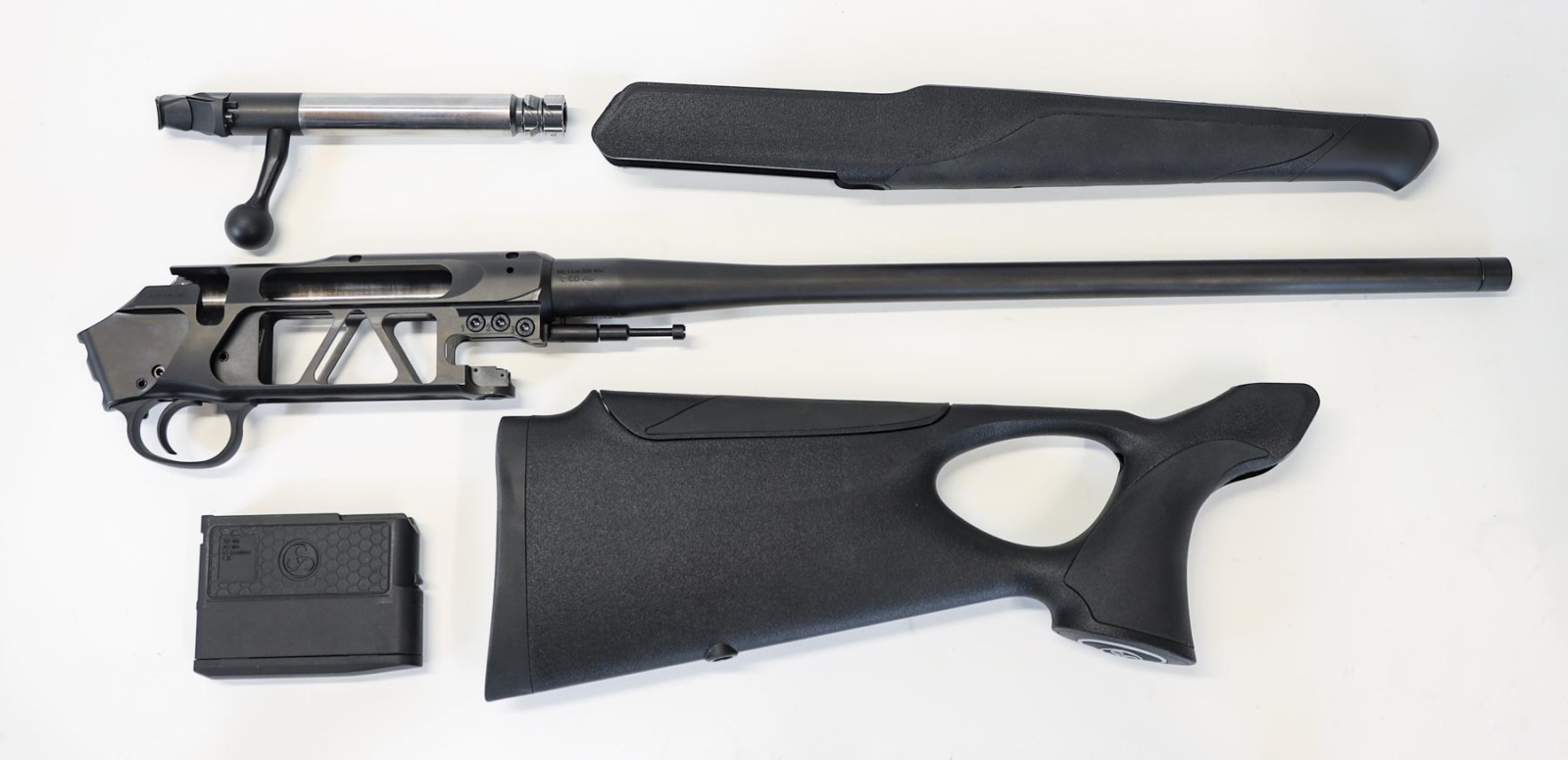
The Sauer’s sling swivels are the quick-detached press-in type, another high-class touch, except that Sauer takes it further by including a special tool in the underside of the front stud, designed to detach and refit the stock components, adjust the cheek riser, adjust the trigger pull weight and even remove the barrel. It’s really just a 4mm Allen key, but it’s still cool.
The 505’s receiver is not set up to accept the Sauer Universal Mount like the 404 and others; it’s now set up to accept only Sauer’s ‘new’ saddle-mount scope bases — which is Blaser’s renowned system, an excellent quick-release setup that guarantees repeatable accuracy after refitting your scope. The mounts are not cheap but, well, if you can afford a 505…
I tried refitting it twice during accuracy testing and it went back to the intended point of impact. With the barrel also returning to zero on reassembly, this is a rifle you should be able to dismantle (perhaps to fit another calibre’s barrel and pre-zeroed scope) then put back together and shoot just as you had before.
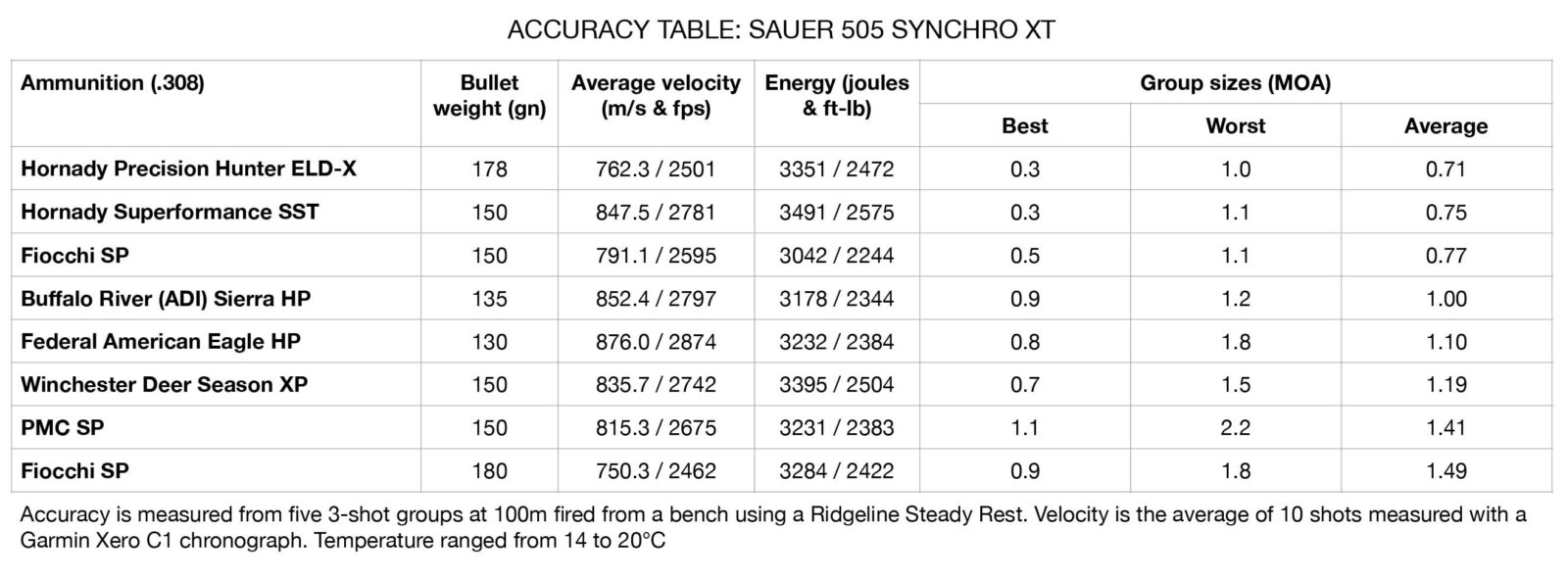
The test rifle was very accurate with a range of factory ammunition, showing excellent hunting accuracy. Four of eight loads averaged MOA or better and the worst was still really good at 1.5 MOA. Results are in the table but it’s safe to say you’ve got no issues with accuracy in a 505, particularly when you factor in its in-the-field handling.
The 51cm (20”) barrel resulted in slower bullet speeds compared to the ammo-box claims, as you’d expect. That’s the 505’s standard length for standard calibres but Sauer offers options of 42, 47 and 56cm (16.5, 18.5 and 22”). Magnums have 62cm (26”) barrels unless you opt for 56cm (22”). The main profile tapers to a 17mm muzzle at the threads, but there’s a heavier 19mm option.
Rounds fed as slickly as the rifle itself. By varying the speed at which you work the bolt, you can eject cases well clear or right beside you. The feed ramp encourages single-feeding through the ejection port, aided by the fact you can lock the magazine in place by sliding the release catch forward.
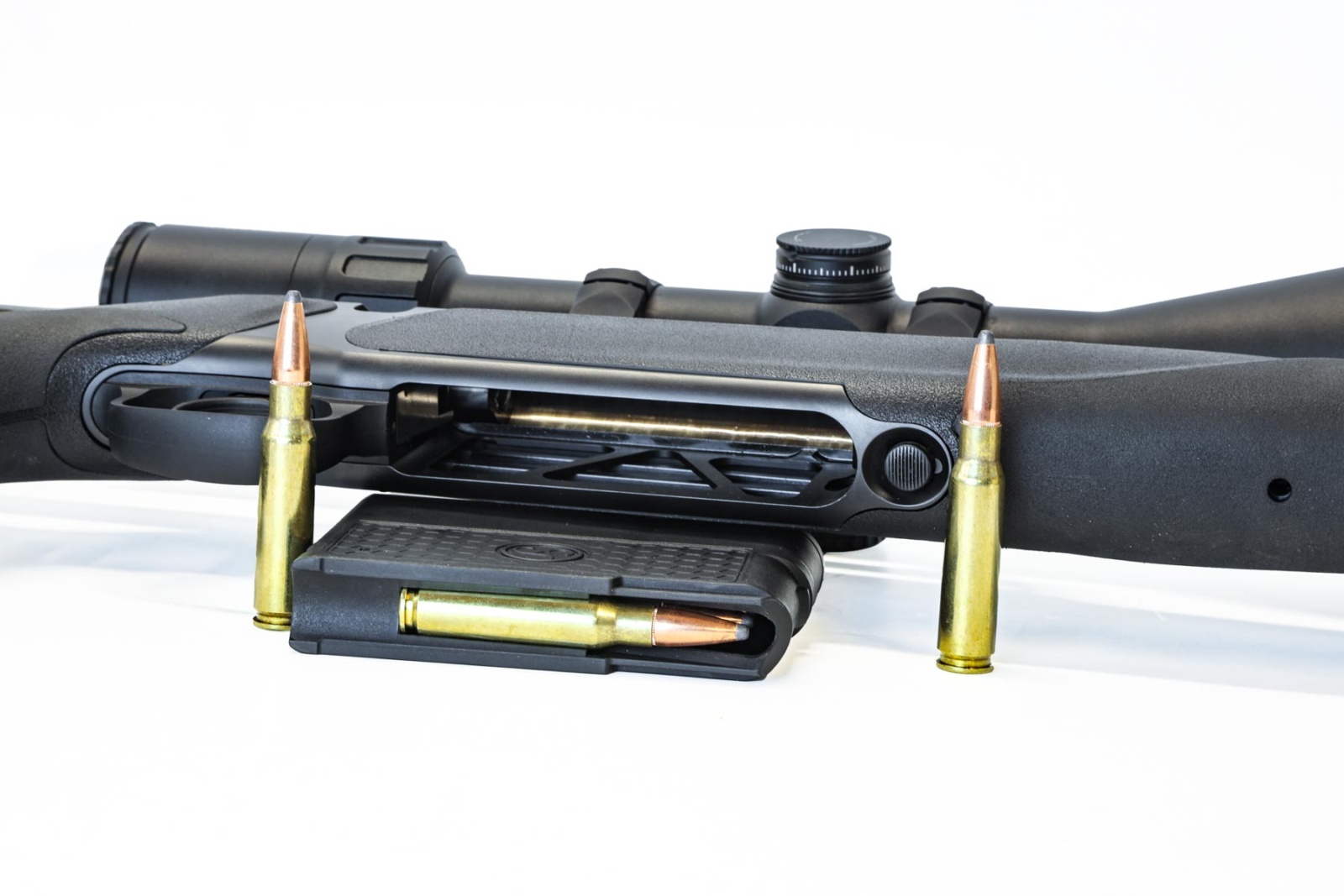
The polymer magazine is just a single stacker holding three rounds but the test rifle had the optional five-rounder which projects below the stock. I do prefer my Sauer 100’s flush-fitting, double-stack five-shot magazine, but going that way would have meant a fatter receiver and stock which would compromise the slender elegance of the 505. I’m also guessing it would have meant milling away material from a much wider block of steel to create the receiver, a big compromise in production terms.
The 505 is not, however, a rifle I’d consider to be compromised. It’s a magnificent piece of engineering with a large degree of artistic merit built in — a stunning rifle you could rightfully boast about and show off to friends, while knowing it’s capable of bringing out your best. Where do we start and finish with its list of superior pleasures: the exquisite Quattro trigger, the gorgeous and strong receiver, the supremely smooth bolt, the outstanding cocking/safety system, the exceptional accuracy or…?
What stands out most when the whole rifle is a standout? Let’s simply say that if you can afford the Sauer 505, you will love it.
SPECIFICATIONS
- Manufacturer: Sauer & Sohn, Germany
- Type: Turn-bolt action
- Barrel: Cold hammer-forged steel, 51cm/20” (as tested) with options; switchable for other calibres
- Twist rate: 1:11” (.308)
- Calibres: From .222 to .375 H&H; .308 tested
- Sights: None; receiver set up for Sauer/Blaser saddle mount
- Finish: Blued (plasma nitrided)
- Stock: Thumbhole; synthetic with rubberised grip surfaces; see text for options
- Length of pull: 360mm
- Comb height: Adjustable
- Weight: 3.6kg bare
- Price: RRP from $4998 (Ergolux polymer); Synchro XT from $5598 but shop around
- Distributor: OSA Australia


0 Comments