





The iconic .303 SMLE Mk III rifle is a part of Australian (and British Empire and Commonwealth) history – it’s accurate, reliable and effective.
So what if it was possible to have all that, but chambered in something much cheaper to shoot, like the budget .22LR? Turns out the British (and Australian) military are way ahead of you there and this article is about that very gun – the Rifle No. 2 Mk IV*.
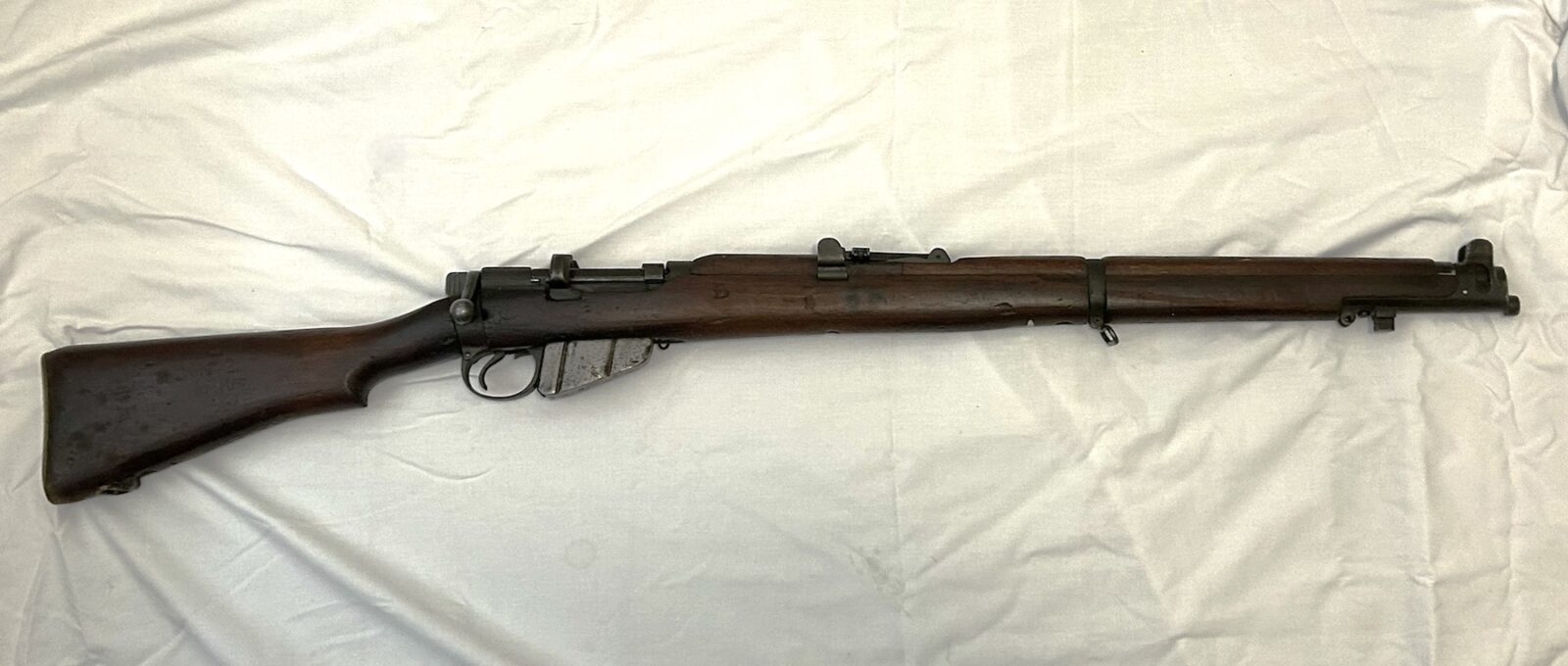
The Rifle No. 2 Mk IV* was the standard British and Australian training rifle from the 1920s, being a single-shot .22LR conversion of the SMLE Mk III* rifle.
Early British training rifles were previously chambered in the now long obsolete .297-230 black powder cartridge, designed to work with a Morris Aiming Tube – essentially a removable sub-calibre barrel insert for full-bore rifles such as the Martini-Henry. By 1904 the British were using the system chambered for .22LR cartridges.
Around this time, the British firm of AG Parker (later to become Parker-Hale) developed a permanent .22LR barrel sleeving system, which they named Parkerifling. This involved taking the worn-out bore of a larger barrel (such as a .303) boring it out, and replacing with a .22LR sleeve, converting the rifle permanently to the rimfire cartridge.
The first conversions of British military repeating rifles to .22LR for training use were authorised in 1911-1912 and essentially involved taking a .303 rifle (generally a Magazine Lee-Enfield) and converting it to .22LR via the Parkerifling process.
During World War 1 (WW1), the British military contracted with Parker to convert .303 rifles to .22LR via this process, and at least 50,000 of these conversions – the majority being SMLEs – were undertaken by 1918.
The major drawback of the conversions was they were all single-shot. The magazines were either removed from the rifle (so the empty case simply fell out of the magazine well) or the magazine itself had its internals removed and the fired case dropped into it when extracted.
A number of attempts were made during WWI to develop a magazine-feeding .22LR SMLE rifle; the best-known is the Parker-Hiscock magazine which held five rounds but was a very complicated design not well suited to rough handling by cadets and troops-in-training. There was also another design from 1918 that used .303-sized adaptor rounds with .22LR cartridges inserted into them, and fed from the SMLE magazine. This had the advantage of simulating proper magazine loading via charger clips, but these rifles needed the special adaptor rounds to work properly and the system was not widely adopted.
None of the magazine-feeding approaches were successful, and ultimately the British stuck with the single-shot system.
The rifles performed an invaluable service as training guns; they weighed the same as a “proper” .303, they functioned (more or less) the same, had the same triggers, were a lot cheaper than using .303 rounds, and it was a lot easier to find somewhere to set up a shooting range for .22LR rifles than it was for their .303 counterparts.
Indeed, the October 1914 British Musketry Regulations note that training with “miniature rifles” (the contemporary term for .22LR rifles, referring to the cartridge and not the size of the gun itself) was a “useful and economical preparation for service shooting, especially where range accommodation is distant or altogether lacking”.
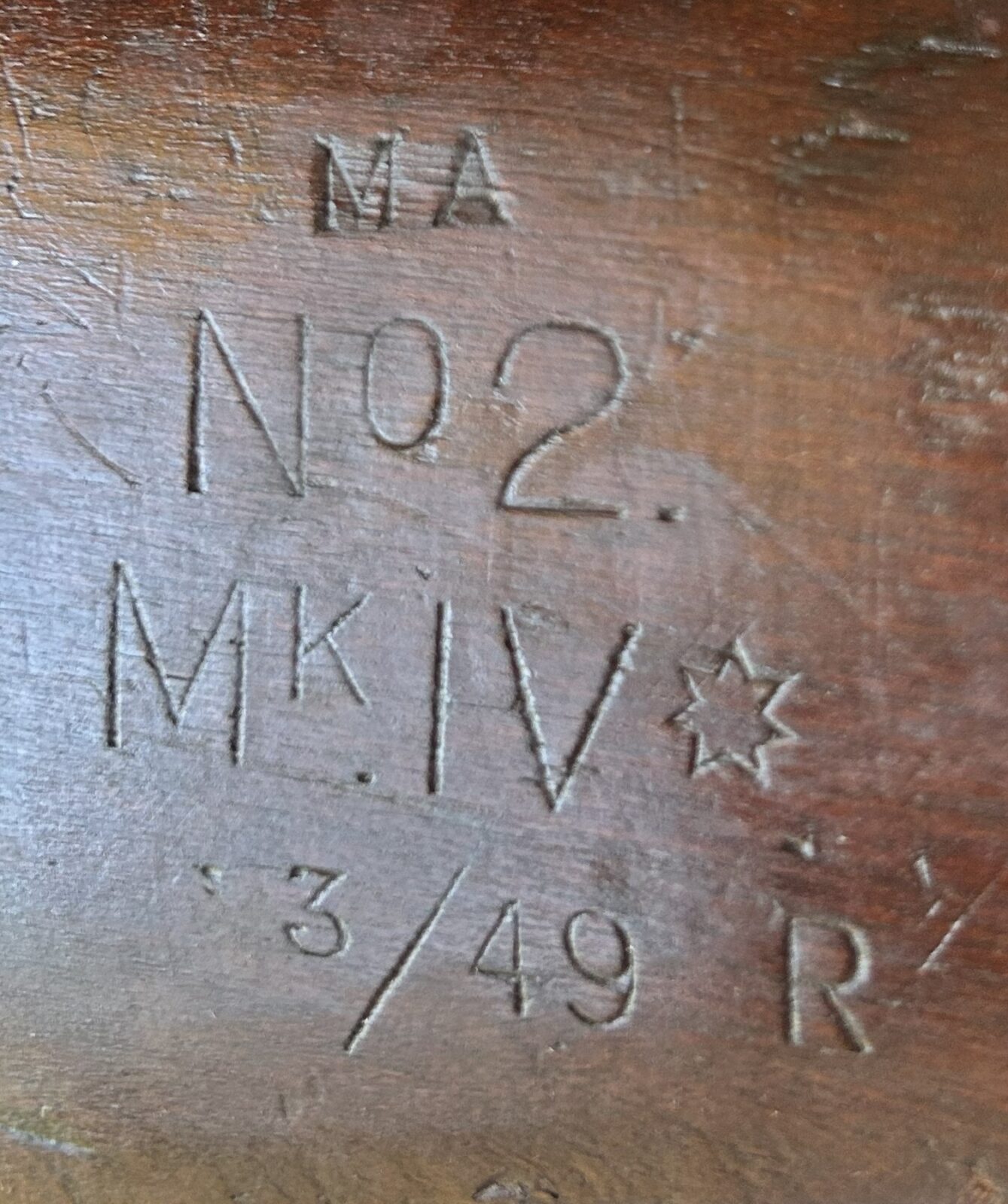
The Rifle No. 2 Mk IV was formally approved in the British Military’s List Of Changes in 1921, which essentially formalised what had been going on since WWI with regards to converting SMLEs to .22LR, and became the standard training rifle of the British, Australian, NZ, and Commonwealth armed forces from that point.
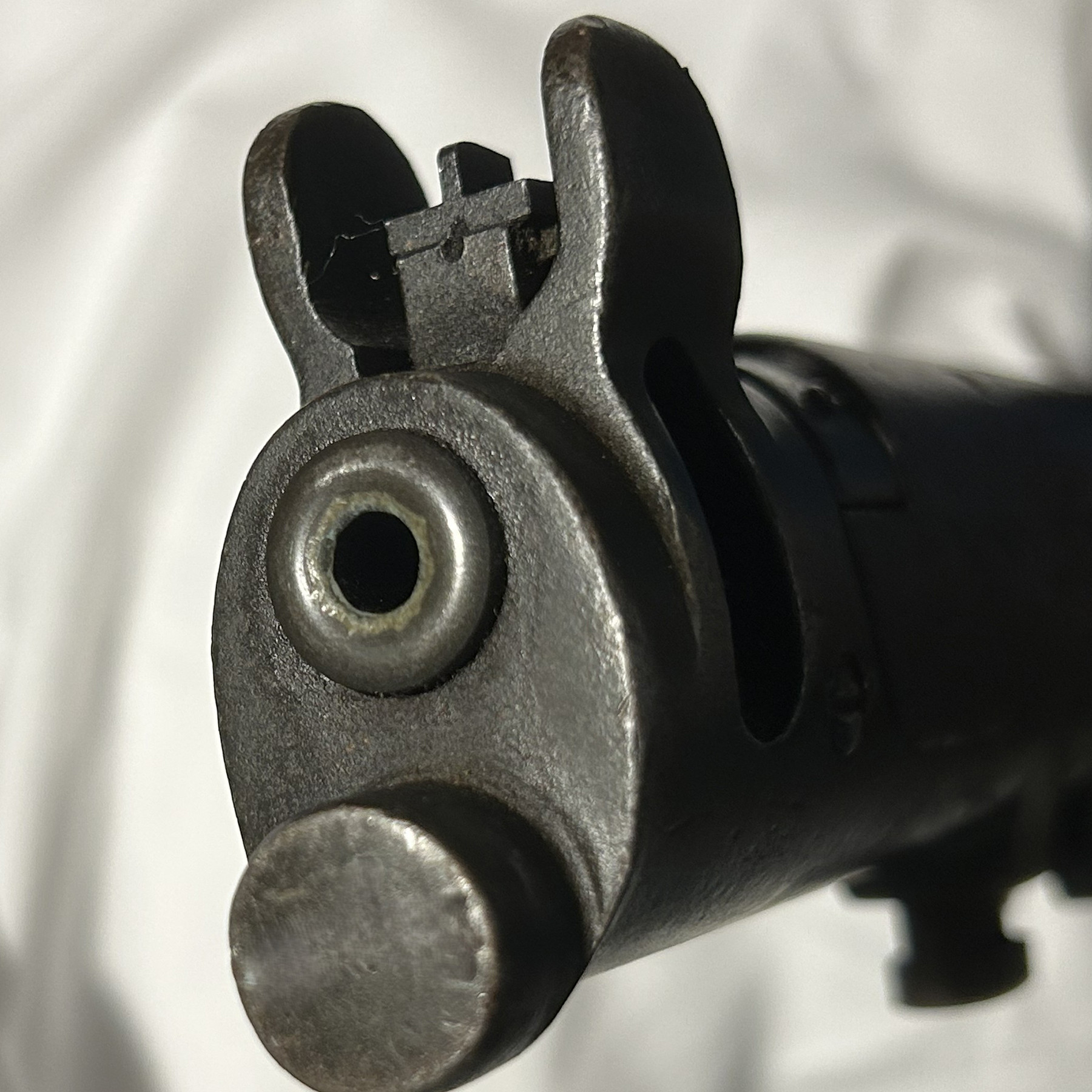
The Rifle No. 2 Mk IV and IV* had a new .22LR barrel with the same profile as a .303 barrel, rather than the “Parkerifled” versions generally produced during WWI. Versions with no magazine were designated Mk IV, while Mk IV* (the most common) indicated a hollow magazine to catch empty cases.
There were two main versions of the No. 2 Mk IV* – one made from scratch using “new” SMLE components, and the other converted from existing rifles. The only practical difference (at least parts-wise) between the SMLE Mk III* and the Rifle No. 2 Mk IV* is the barrel and bolt-head assembly.
India and Australia were significant producers of the rifle (both having plenty of SMLE rifles and parts to work with). Production of the Rifle No. 2 Mk IV* continued at the Small Arms Factory in Lithgow (NSW) until the 1950s and the rifles were used by Defence Force cadets until the mid-1970s, before making their way onto the surplus market and subsequently into gun cabinets around the country.
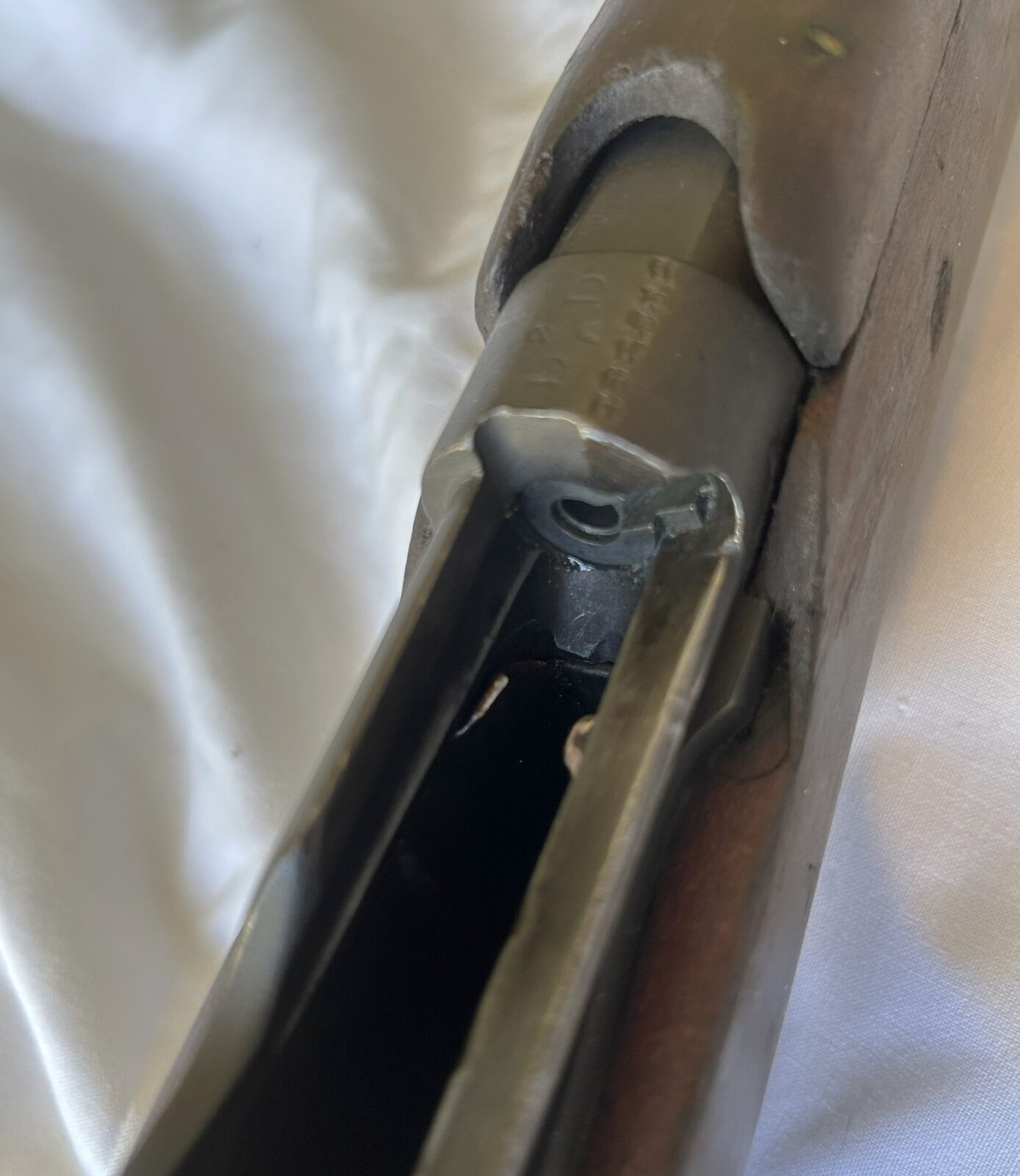
Externally, the Rifle No. 2 Mk IV* is identical to the SMLE Mk III* rifle, so the easiest way to differentiate them is to open the action. If the chamber and loading ramp are for a .22LR, and the bolt head has an offset firing pin, then it’s not a .303.
Generally speaking, No. 2 Mk IV* rifles have a hollow magazine (ie, no follower or spring), but examples have been encountered with regular .303 magazines in them as well.
Due to their heavy barrels – made from standard .303 barrel blanks – the Rifle No. 2 Mk IV* is incredibly accurate. The rifling has eight grooves with a 1:16in right-hand twist.
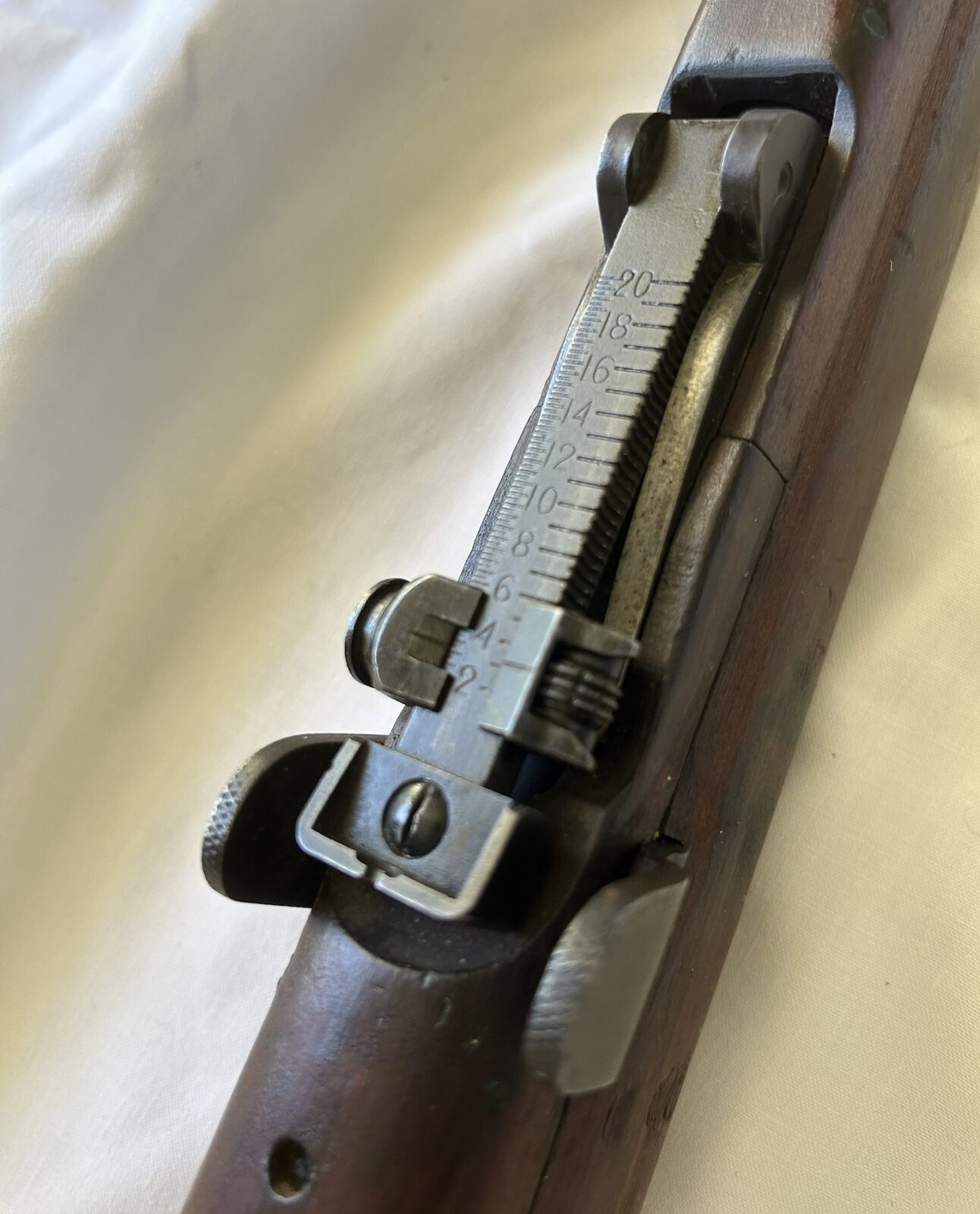
The original SMLE Mk III* sights are still fitted to the rifles and obviously not calibrated for .22LR ammunition. Generally speaking, the rear sight settings for .22LR are as follows:
| RANGE | REAR SIGHT SETTING |
| 25m | 300 |
| 50m | 450 |
| 100m | 550 |
| 150m | 725 |
| 200m | 850 |
These may be slightly different depending which sort of ammunition you are using. The rifles were calibrated for “standard velocity” ammunition (around 1050fps), but a lot of .22 ammunition nowadays is high velocity (1200fps+), which is still perfectly fine to use but will mean you’ll need to do some experimenting to establish the correct rear sight settings.
Unlike some other vintage .22 rifles, the Rifle No. 2 Mk IV can easily handle hyper-velocity .22LR ammunition such as CCI Stingers which run at 500m/s (1640fps).
Being the same size and weight as a regular .303 SMLE rifle, these are not well-suited for regular small-game hunting (unless you like carting around a 5kg single-shot rifle for potting bunnies, of course!) but are highly sought after for Service Rifle Trainer match competitions, as well as being a superb way for SMLE shooters to practice their shooting at a fraction of the cost of .303 ammo.


0 Comments