




Every Australian knows we fought against Germany and Ottoman Turkey in WWI, and firearms from them have been a regular element of collections for a long time as a result
However, the oft-overlooked member of the Central Powers is the Austro-Hungarian Empire, which was the first power to declare war in what became WWI when its Archduke Franz Ferdinand was assassinated. The empire declared war on Serbia (where the alleged assassin was from) on 28 July, 1914, igniting the “Balkan Powder Keg” and starting the Great War in the process.
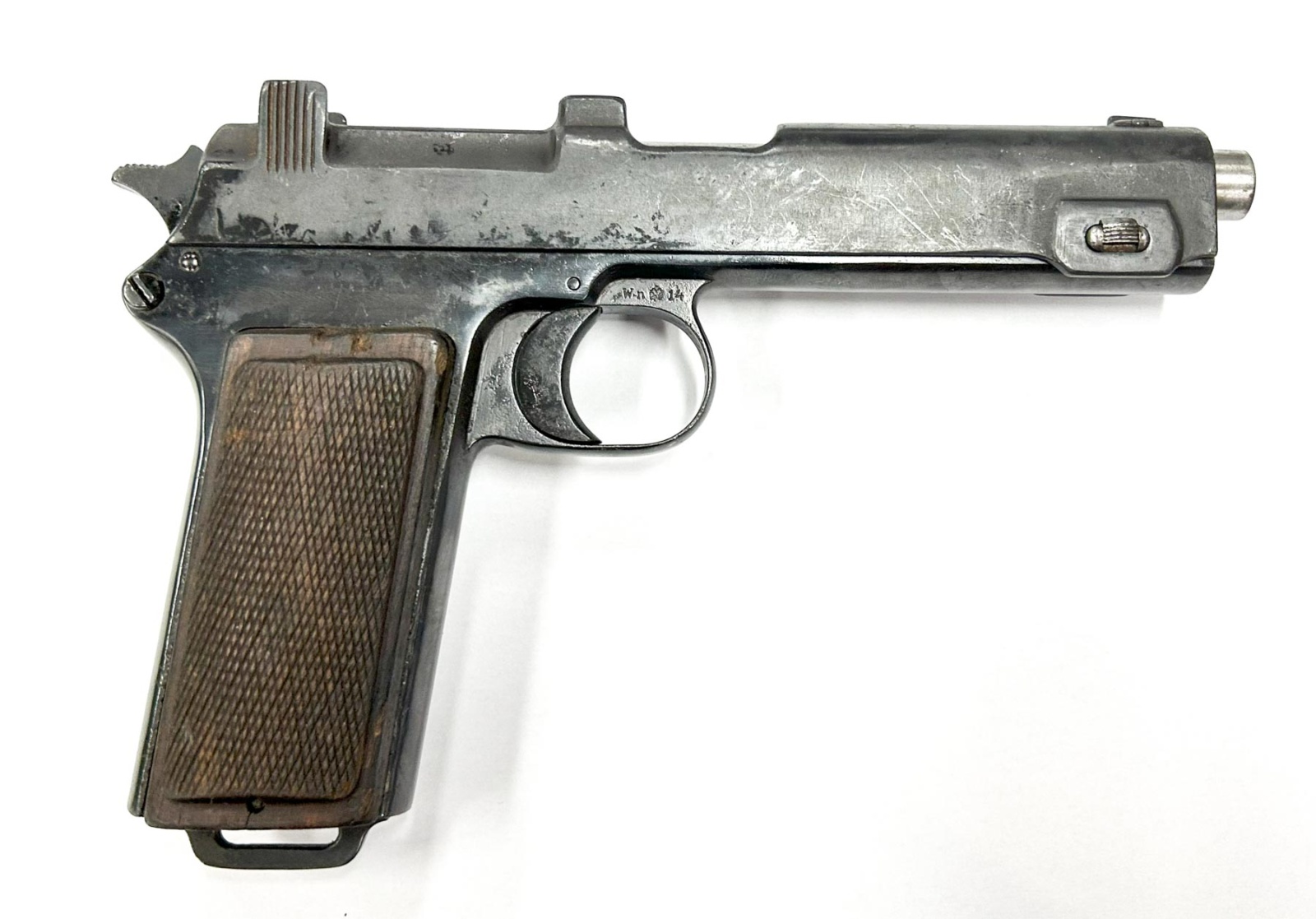
It also fielded an under-appreciated but highly regarded service handgun, in the form of the Steyr Model 1912 semi-automatic pistol.
Designed in 1911 by Steyr, and accepted for military service in 1914 under the designation M12, the pistol has an eight-round fixed magazine, a 128mm (5in) barrel, and weighs 1.2kg.
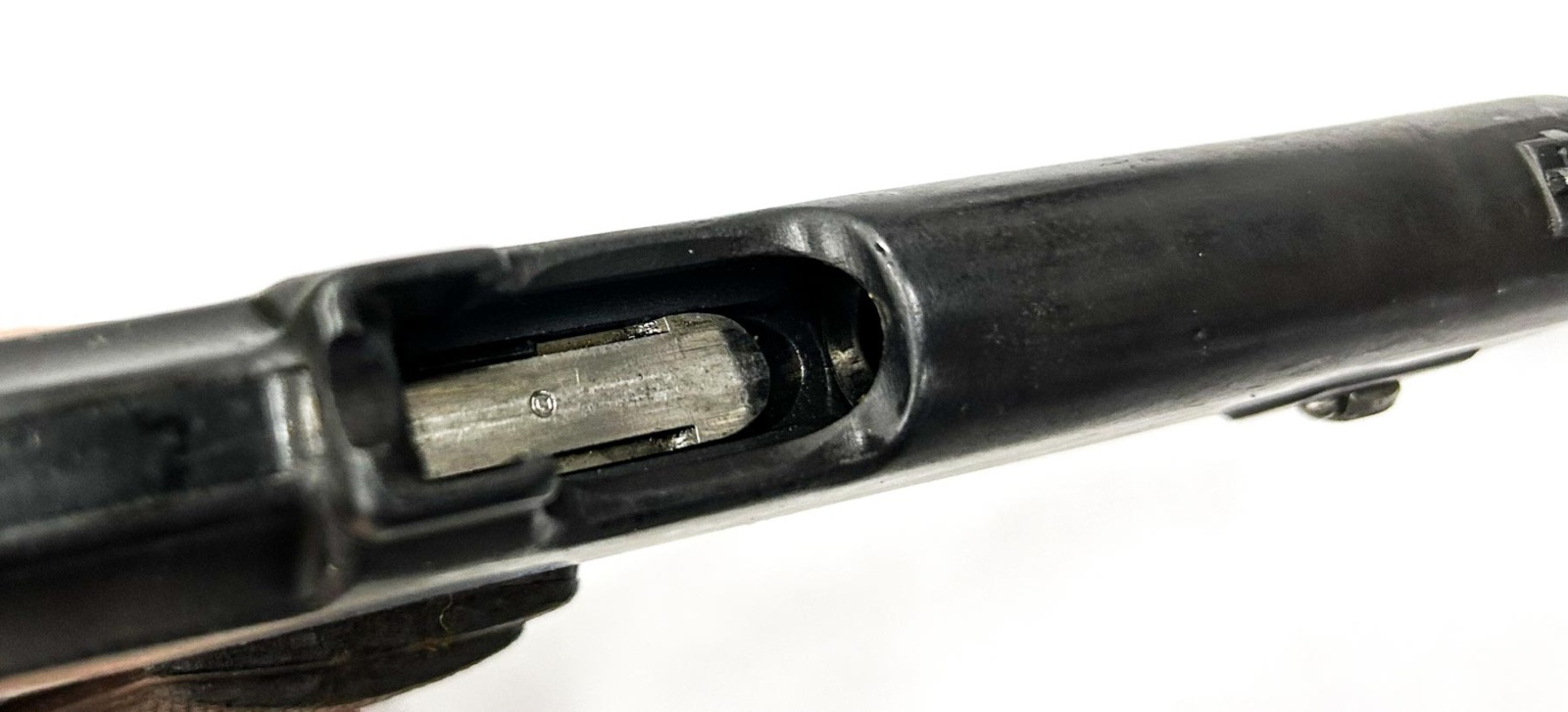
Although quite modern-looking externally, they M1912 still has some significant turn-of-the-century design elements, including a fixed magazine in the grip which is loaded via charger clips from the top of the action.
The gun is often referred to as a Steyr-Hahn; it has nothing to do with the beer brand but rather refers to the external hammer (“hahn” in German) found on the gun and also helps differentiate it from the Steyr M1912 rifle (essentially a Model 98 Mauser clone intended for export).
The 9mm Steyr cartridge the gun was chambered for fired a 115gr FMJ projectile at around 1230fps, and unlike the Colt M1911 pistol, the M1912 used a rotating barrel as a locking mechanism.
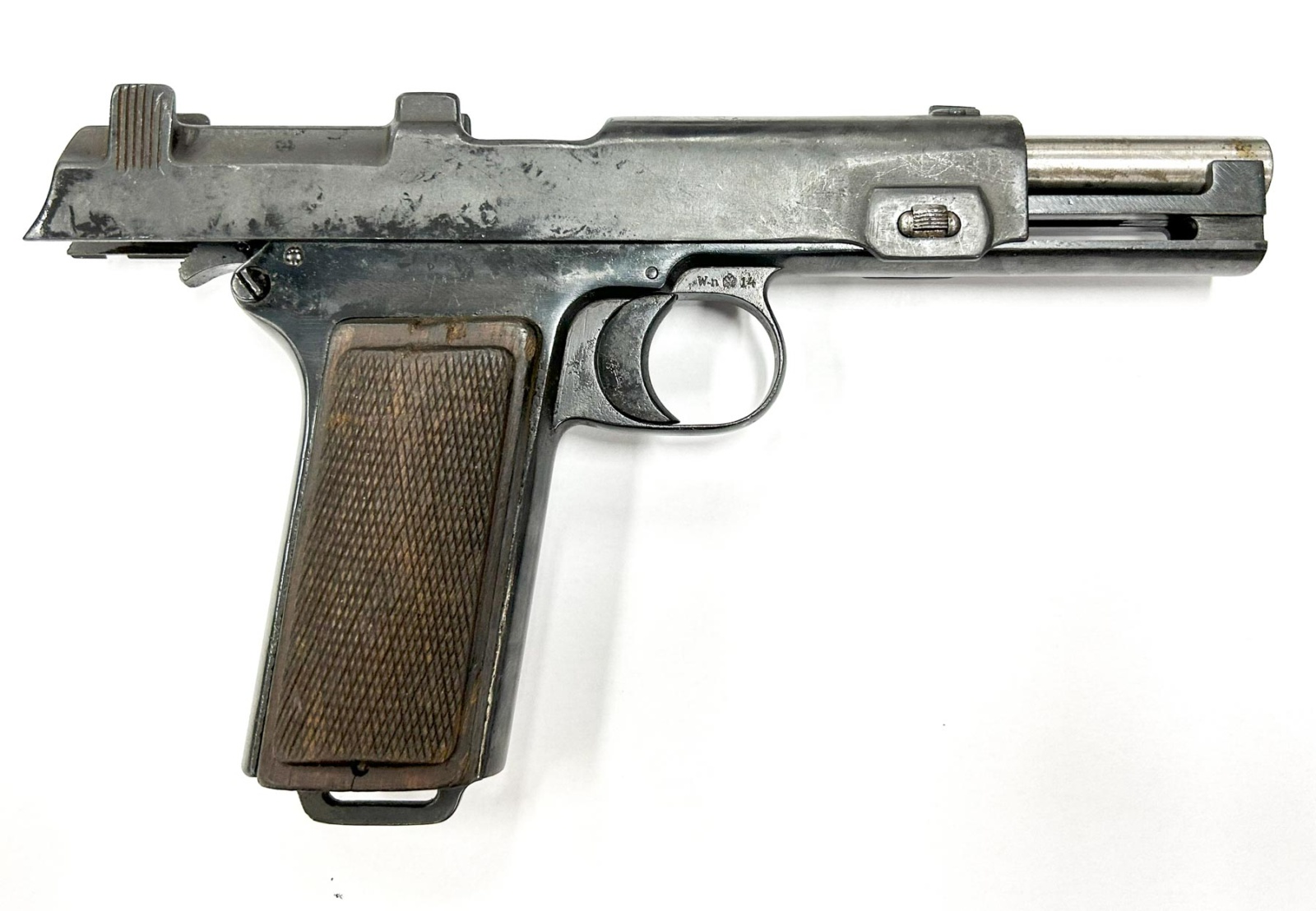
The M1912 took a lot of its design cues — including the unconventional grip angle and the captive recoil spring connected via a wedge at the front of the slide — from the Colt M1902 pistol, along with some elements from the Mannlicher Model 1905 pistol.
Production of the gun actually began in 1911 as the Model 1911, just to be confusing to arms collectors and historians later.
It was marketed to the private-purchase market (military officers of the era were expected to buy their own sidearms) as well as general civilian sales, while Steyr continued to push the design as a standard service pistol to a number of militaries, including Austria-Hungary’s.
The Austro-Hungarian military was initially not all that interested, having adopted another handgun, the Roth-Krnka, a few years previously.
Chile had the distinction of being the first adopter, ordering 5000 in March 1912. Chilean contract guns are dated 1912 but marked “Mod. 1911” and can be easily identified by the Chilean coat of arms stamped on the left-hand side of the slide, as well as the Spanish marking “Ejercito de Chile” (“Army of Chile”) on the right-hand side.
The next order was a much more substantial contract from Romania, which ordered 50,000 in December 1912 and added another 5000 to the contract in June 1913, although only about 37,000 were delivered before WWI broke out.
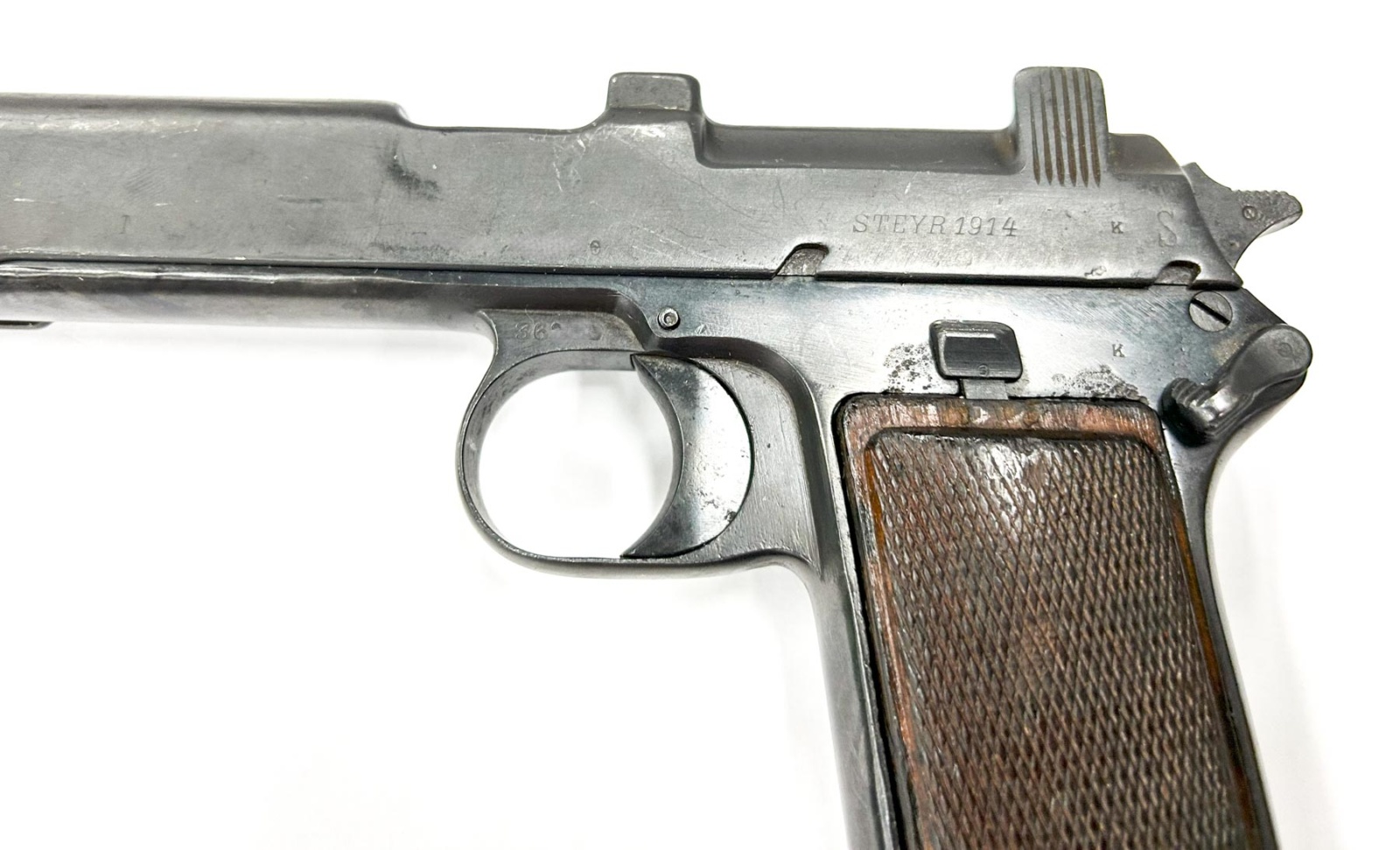
The Romanian contract guns were helpfully labelled “Mod. 1912” and have the Romanian coat of arms on them. They had some minor differences from the Model 1911 ordered by Chile, notably a dovetailed front sight and differently shaped safety catch.
Bavaria received 16,000 during 1916-18. Just after WWI, a few were sent to Czechoslovakia, and in the 1930s another batch — the last M1912s ever made — was made on the quiet for the Austrian military, to avoid issues with the peace treaty Austria signed at the end of WWI.
About 300,000 M1912 pistols were made, most for the Austro-Hungarian military.
Following Austria’s annexation by Germany in 1938, tens of thousands ended up in German service during WWII. These guns can be identified by the “08” stamped on the left-hand side of their frame, and the German proof markings. The barrels in these guns were replaced with new-manufacture ones chambered for 9mm Parabellum but the pistols were otherwise unmodified.
IN SERVICE
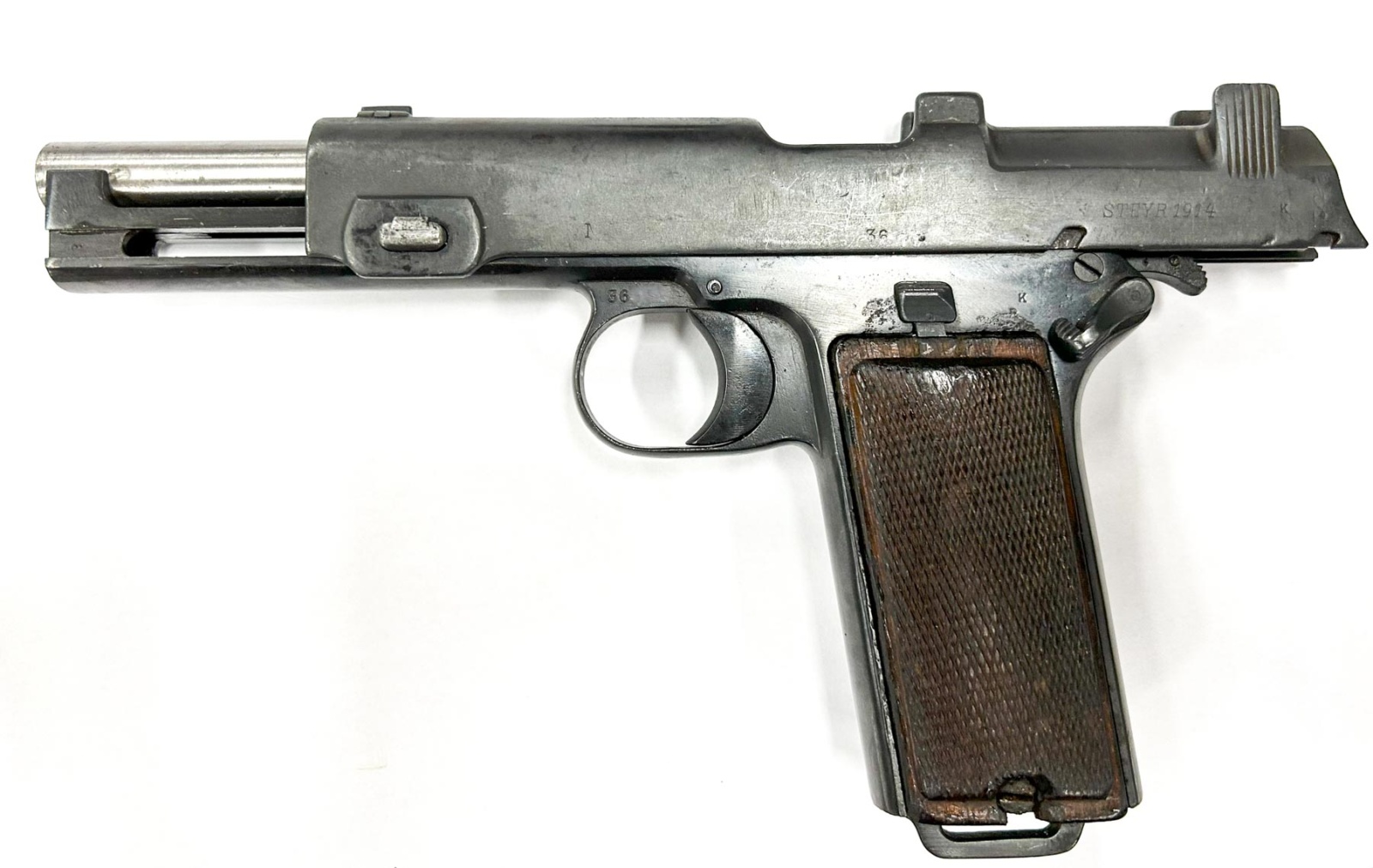
When WWI broke out, Austria-Hungary halted all arms exports, including the pistols destined for Romania, which had joined the Allies. The remaining guns from the Romanian contract were offered instead for private purchase to Austro-Hungarian military officers at a cost of 75 krone each (about AUD720 today).
The Austro-Hungarian government, realising it was going to need a lot of pistols, placed an official order with Steyr for the M1912 and basically kept regularly placing new contracts throughout the war; Steyr was producing about 800 M1912 pistols each week throughout much of WWI as a result.
The M1912 was an extremely well-made and reliable pistol. It was simple, rugged and effective.
From a modern perspective, its only real flaw was the fixed magazine rather than the detachable type used in nearly all semi-auto handguns today.
The Steyr demonstrated it was more than capable of handling the mud and rigours of trench warfare, and functioned equally well in the snow of the Alps.
A detachable buttstock/holster was designed for the pistol, but apparently not used in large numbers.
During WWI a full-auto capable version with a fixed 16-round magazine was also developed and issued for field trials.
During WWII the pistols (which were designated P12(Ö) by the Germans, indicating they were from Austria) were used by German police and reserve or rear-echelon military units. These were generally chambered in the standard 9mm Parabellum cartridge.
SHOOTING THE STEYR M1912
As issued, the Steyr M1912 is chambered for the long-obsolete 9x23mm Steyr round, a proprietary cartridge which does not interchange with the infinitely more common and obtainable 9mm Parabellum round. Ballistically, however, the two rounds are similar.
A few of the M1912s have been converted to 9mm Parabellum over the years, including those used by the Germans during WWII, but the majority likely to be found in Australia are still in their original chambering; it is still possible to find old commercial ammunition from time to time.
9x23mm Steyr looks a lot like the .38 Super and .38 Automatic cartridges, but it is not interchangeable with them. Even reloading the cartridge is generally a hassle, because brass is not uually available in Australia (although Starline does manufacture it at time of writing) and “near enough” dies (such as for .38 Super) have to be used since, to the best of my knowledge, no one makes 9mm Steyr dies commercially anymore.
The eight-round charger clips are hard to find nowadays, particularly in Australia, but the good news is that, thanks to the way the M1912’s slide hold-open works, rounds can be individually loaded into the internal magazine. It’s not fast – something to keep in mind if you’re shooting a timed match – but it does mean the pistol can still be used for target shooting matches etc.
When the slide is locked open, the safety catch should be flicked up, as the safety also acts as the slide release for when the gun is reloaded.
Unlike the Mauser C96 (the other significant stripper clip-loaded semi-auto pistol design), the Steyr M1912 slide does stay locked open when the clip is removed.
Releasing the slide when the magazine is loaded can be done in two ways – either by the ever-reliable “slingshot” method (pull slide back, release), or by pushing the safety catch down, which disengages it and lets the slide move forward.
The button located where the slide release is on modern handguns has two functions on the M1912. When the gun is totally empty, it functions as a slide release, as you’d expect, but when the gun is loaded, the button ejects all the rounds in the magazine in a delightful fountain of cartridges.
As useful as this is for deliberately unloading the pistol, it is also very embarrassing in the middle of a service pistol match if you accidentally press the wrong button to drop the slide for shooting, and would have been even more of a problem in combat!
Despite its rather straight grip angle, the M1912 still handles and points well, but does have more muzzle flip than you’d expect from a 9mm due to the higher bore axis.
The sights are effective, which helps, and the pistols are well known for being very accurate.
Due to the difficulty in obtaining or reloading ammunition for these guns, the Steyr M1912 is more of a collector’s piece than a shooter nowadays, but they are excellent, well-made pistols which are quite affordable (due to the ammunition issue) and a worthy element of any WWI/WWII service firearms collection.
The team at C&Rsenal have an excellent video on the Steyr M1912 which is well worth watching, and contains an excellent history and overview of the gun and its design.
SPECIFICATIONS
- Action: Semi-Automatic
- Calibre: 9x32mm Steyr
- Magazine capacity: 8 rounds
- Barrel Length: 5in
- Weight: 1.2kg


0 Comments