


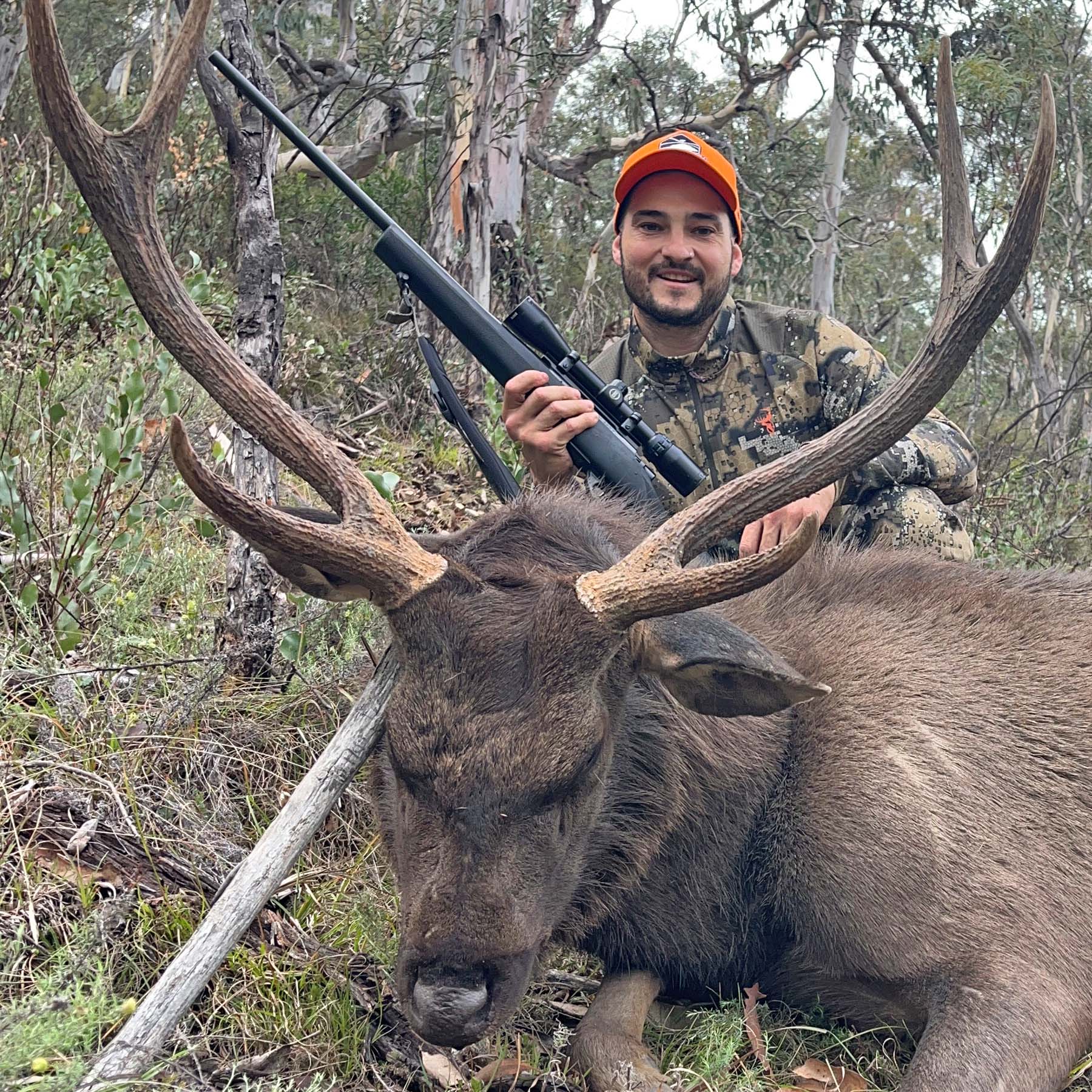
A new study has found hunters appear to have a significant effect on deer numbers in national parks and that they have the overwhelming support of the public to do more of it.
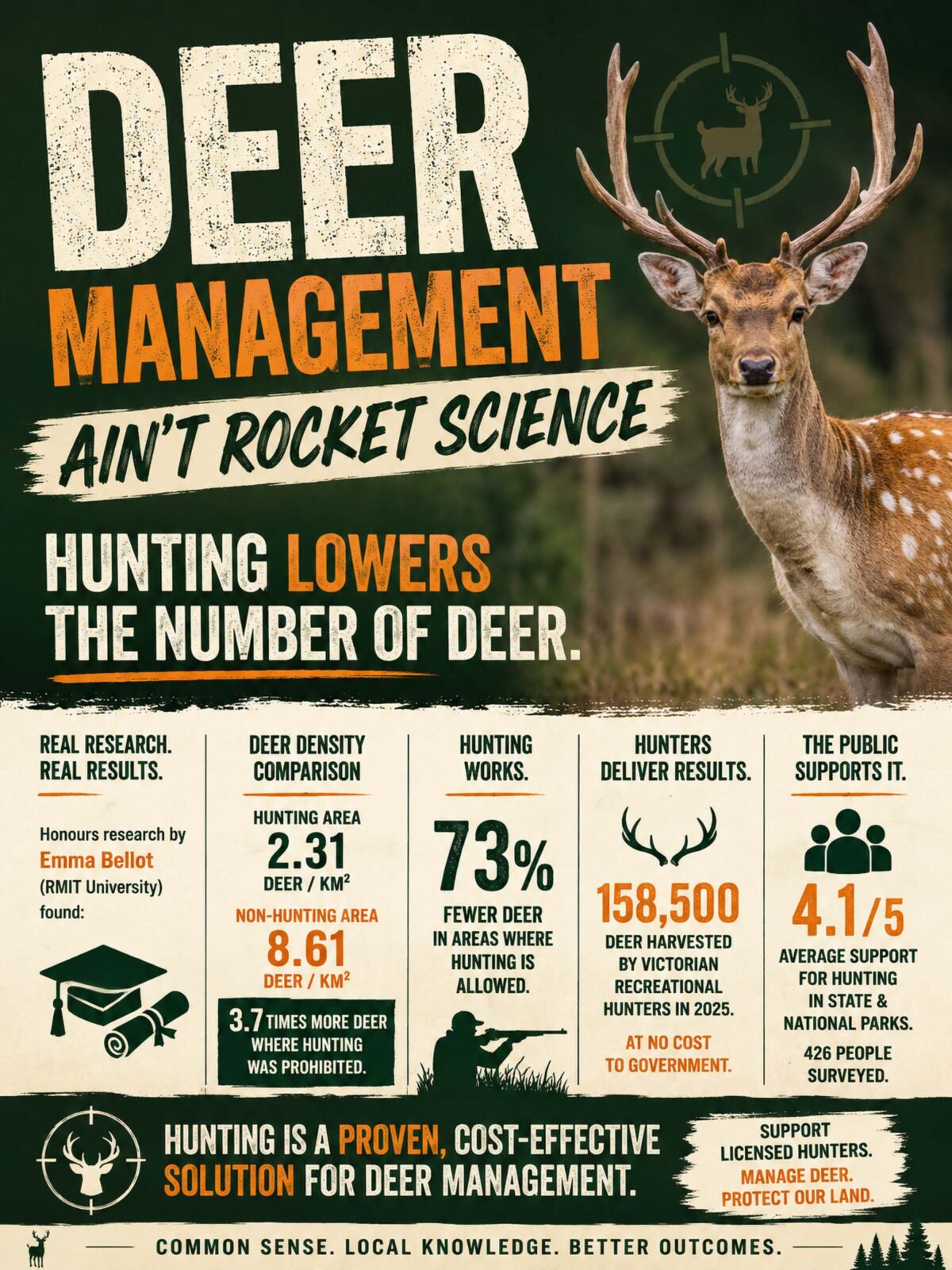
The research, conducted in a Victorian national park, found deer density in non-hunting areas was 3.7 higher than in areas where hunters were active, based on almost 7000 trail-camera photographs in the study areas.
A survey of 426 people found more than 80 percent supported hunting, the majority of them “strongly”.
Aerial culling was the least supported control method, while recreational hunting with rifles topped the preferences, possibly because hunting incurred no cost to the taxpayer but contracted control was estimated to cost $248 per deer killed.
The research was conducted for an honours thesis by RMIT student Emma Bellot, along with supervisor Dr Stephen Headey.
“Overall, this study supports that hunting is possibly having an impact on deer numbers, deer are not impacting vegetation, and respondents support the expansion of hunting zones to allow for recreational hunters to continue to impact deer numbers,” Ms Bellot wrote in the her summary.
“There are currently no published studies on Australian or Victorian public opinion regarding deer hunting,” she noted. “As such this thesis is the first look into what the Australian public believe regarding the hunting of deer.”
She concluded that not only was there majority support for hunting, but “it appears there is no inherent opposition to the recreational hunting of deer in Victoria”.
Despite the higher deer density recorded in the non-hunting areas, the researchers found “no significant differences in most vegetation measures” between the two areas, indicating deer have a minimal impact on vegetation — contrary to the claims of those who want deer exterminated.
“Our study results should be good news for state policy makers as it identifies that recreational hunters could be effective agents in reducing the deer populations in Victorian State and National Parks,” Ms Bellot concluded.
“It also establishes that Victorians are likely to support expanding hunting zones and moreover prefer for recreational hunters to be the management tool as opposed to contracted hunters, saving the government money and whilst addressing high deer densities.”
Her thesis was presented as new outdoor recreation laws are moving through the Victorian parliament, including the creation of a panel that will consider opportunities to open new land for hunting.
In NSW, Shooters, Fishers and Farmers Party MLC Robert Borsak mentioned the thesis in parliament (see video above).
“This is exactly the sort of independent, evidence-based research governments should be relying on when developing wildlife management policy,” he said.
“It’s time for New South Wales to follow the evidence and expand appropriately regulated conservation hunting opportunities on suitable public lands and national parks in NSW as part of a genuine deer management strategy.”
Ms Bellot’s results are expected to substantiated by similar research being carried out in three different areas over a three-year period by the Arthur Rylah Institute.


0 Comments