




The Pard Pantera 256 Q thermal scope is small — and small is beautiful. Q for cute, perhaps? It’s a tiny thermal sight that squeezes a lot of features and decent image quality into something that’s only 29cm long and weighs less than 500g including its battery.
It’s one of two new devices Pard has launched, its nearly identical twin being the Night Stalker Mini night-vision scope, using IR technology instead of thermal. We’ve got a review of that one here. They share the same body, with a few very minor differences.
Pard created the smaller version by reducing the objective lens and its housing, shrinking the lens to just 25mm. The bigger Pantera thermals have objectives ranging from 35mm to 75, and they’re much larger devices overall. Even the 35mm version has noticeably more bulk than this petite 256 Q.
And this gives you several advantages, like less weight; less stuff to get in the way when you’re fumbling about in the dark; a more suitably sized optic for air rifles and rimfires; and a much, much lower tag, which I’ll discuss shortly.
Take your pick of reasons to buy one, because there are not many reasons to stop you.
But that comment brings up the obvious question: why aren’t they all this small? There’s always a compromise and in this case it is ultimately the image quality.
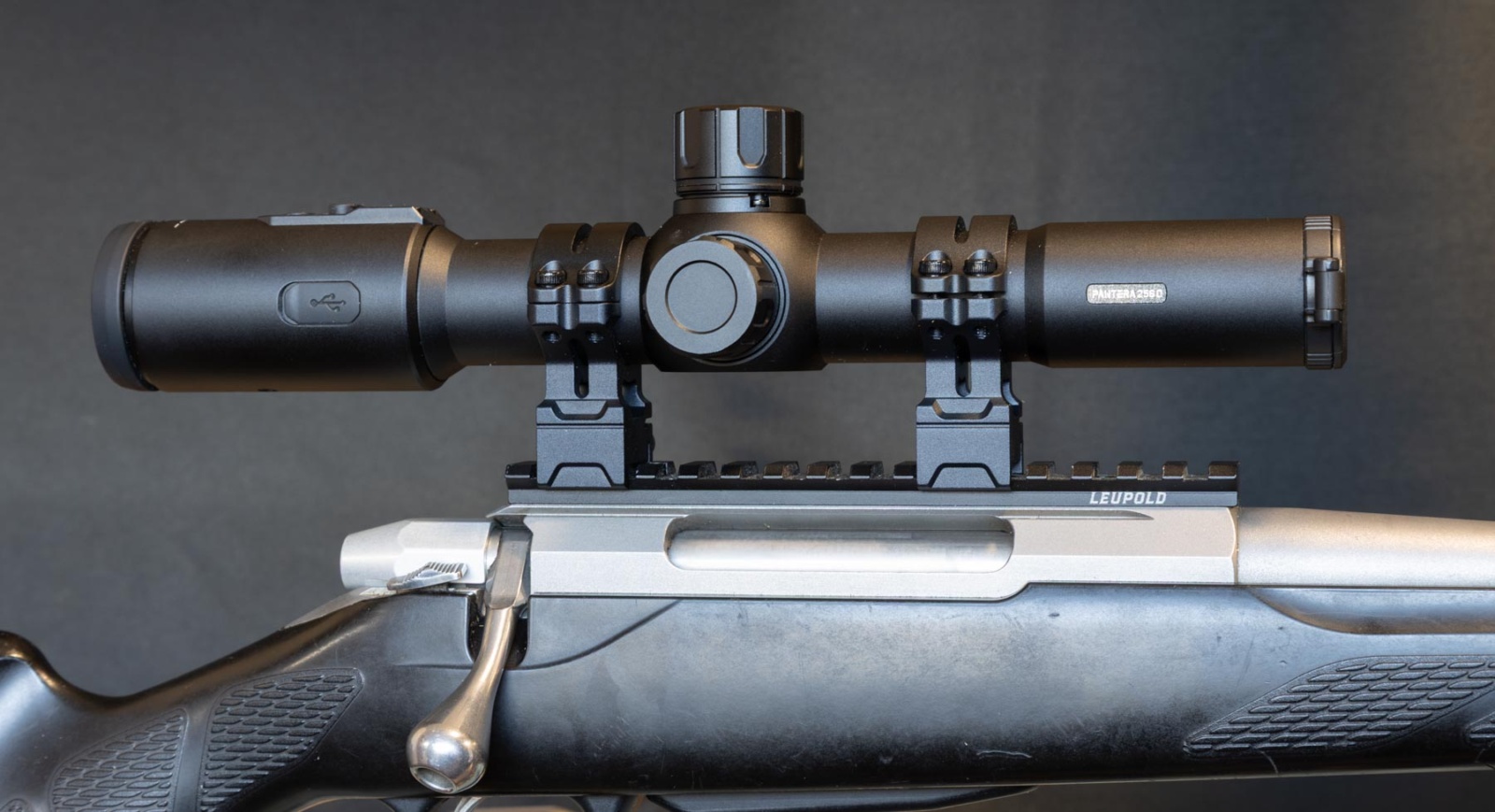
If your priority is seeing things more clearly and further away, those bigger Panteras come into their own — just like with regular rifle scopes.
Which brings up the next obvious question: how good is image quality in the 256 Q?
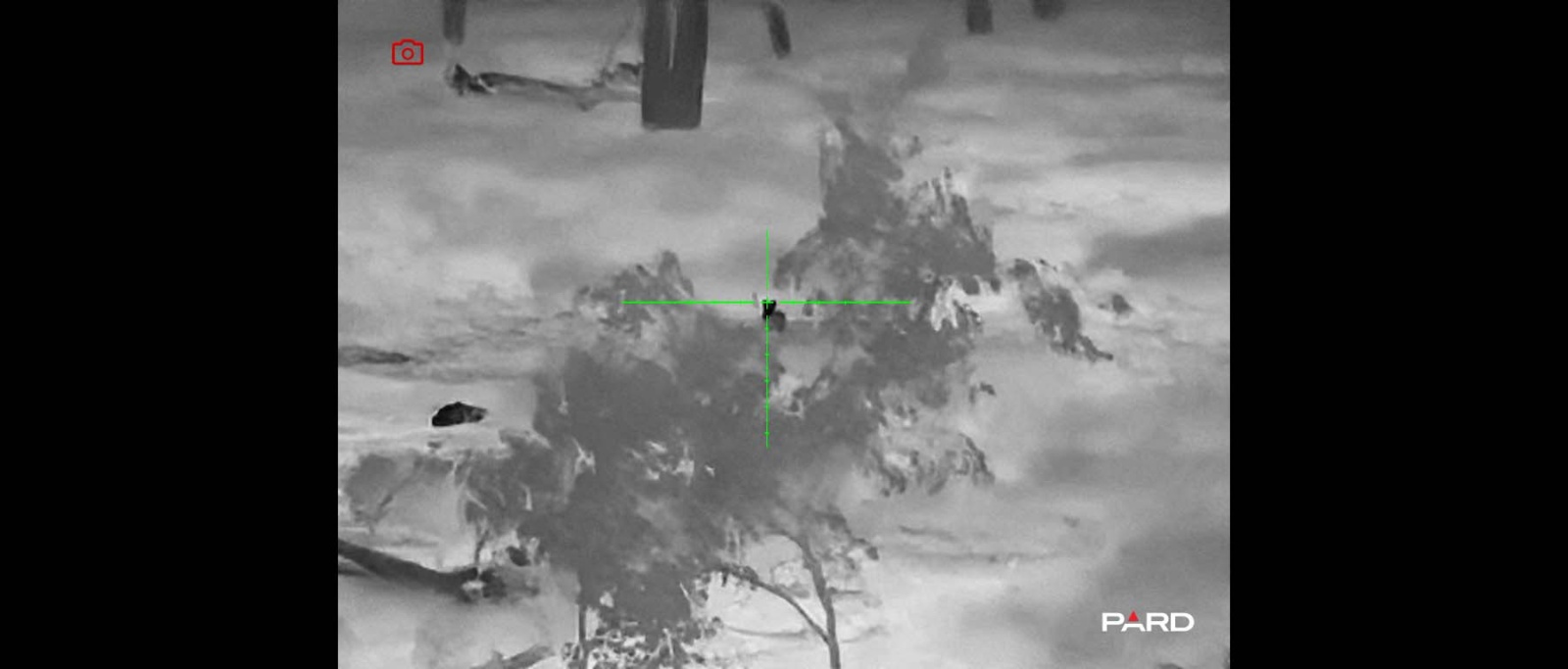
That’s where Pard deserves credit because the 256 Q has better image quality than I expected in a thermal scope of this scale and price. The designers and engineers have got good results out of the downscaled device.
I’ve used thermals that cost about this much or more that didn’t match what Pard has here. You can definitely find better, but you’ll be hard pressed doing it at this price and in such a small device.
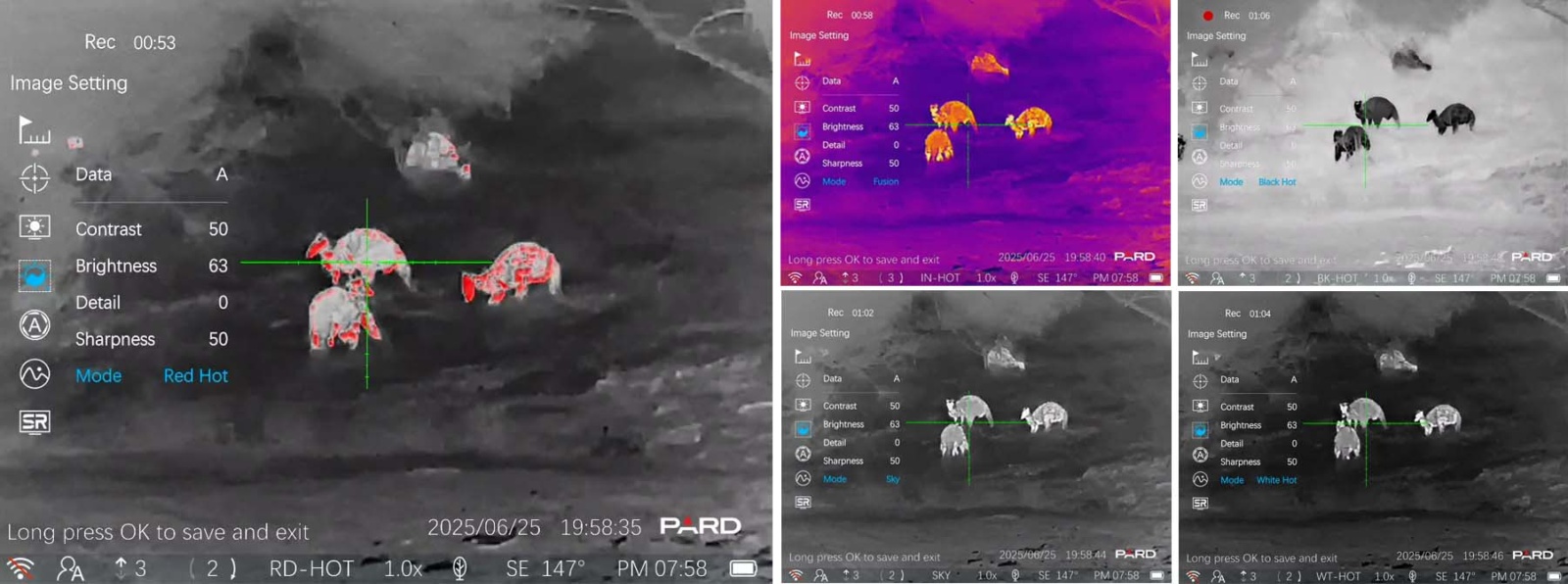
In a practical sense, I had no difficulty finding roo-sized targets a good 500m away, and that’s a conservative measure based on being able to identify them as roos (easy when they stand erect, of course).
I could tell a wombat from a pig at a good 200m, maybe more.
The claimed detection distance is 1200m, and with a big animal you’ll see an indistinct hot spot at that range, but the thing is I’m working on the assumption that most of the time you’ll be shooting within your rifle’s point blank range, that is, usually no more than about 200m for a good centrefire or 75m for a .22. After all, there’s no rangefinder or ballistic calculator built into this Pard and I don’t think Pard ever intended it for long shots, given the larger Panteras it also offers.
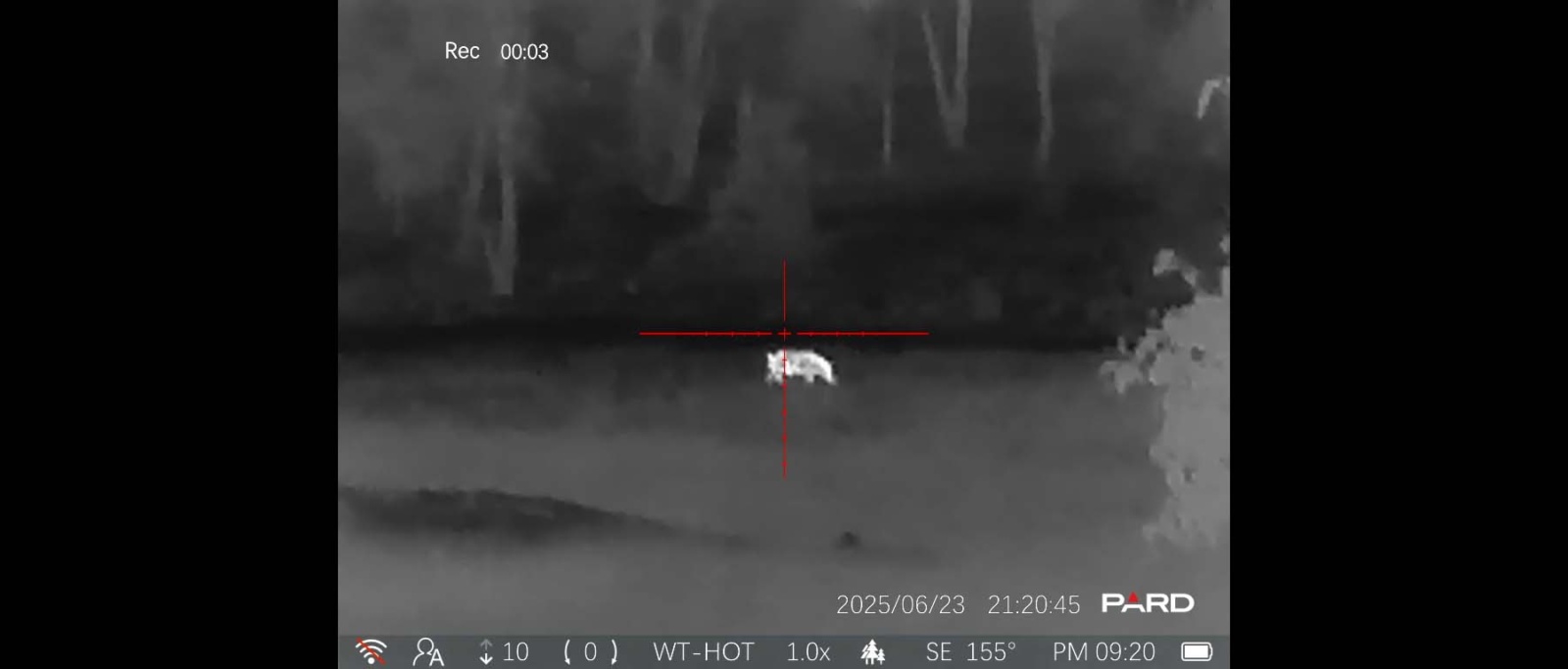
So anything within practical ranges is going to show up quite clearly, and the closer you get, the better the detail.
It has a fairly small sensor at 256×192 pixels, with a base magnification of 3.6x and the ability to increase it digitally by 2x, 4x, 6x and 8x. I did the majority of my shooting at the base 3.6x optical magnification, which was generally spot on, but sometimes increased it by 2x or 4x, which would show the target without excessive pixelisation.
There are times when the higher zoom ratios will be useful but by then the target becomes a bit of a blurry blob and I never had the need to go there in typical shooting on the hilly farmland I hunt.
You can zoom in by reaching up and turning the top turret. Turn one way to zoom in, back to zoom out. Quick and simple.
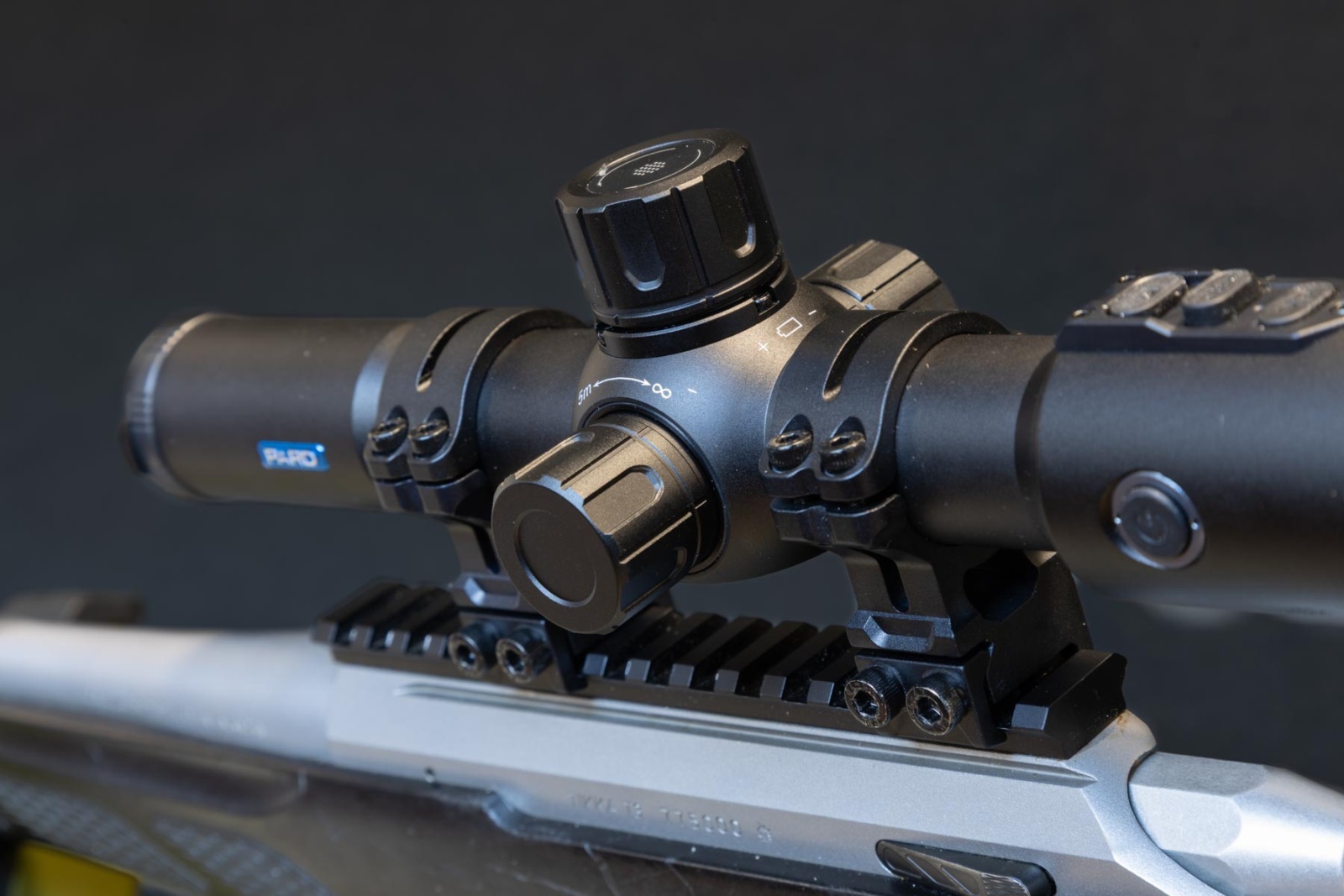
Rotating the left turret makes focusing similarly efficient. A fast-focus adjuster on the rear does the same to get the screen in sharp focus for your eye.
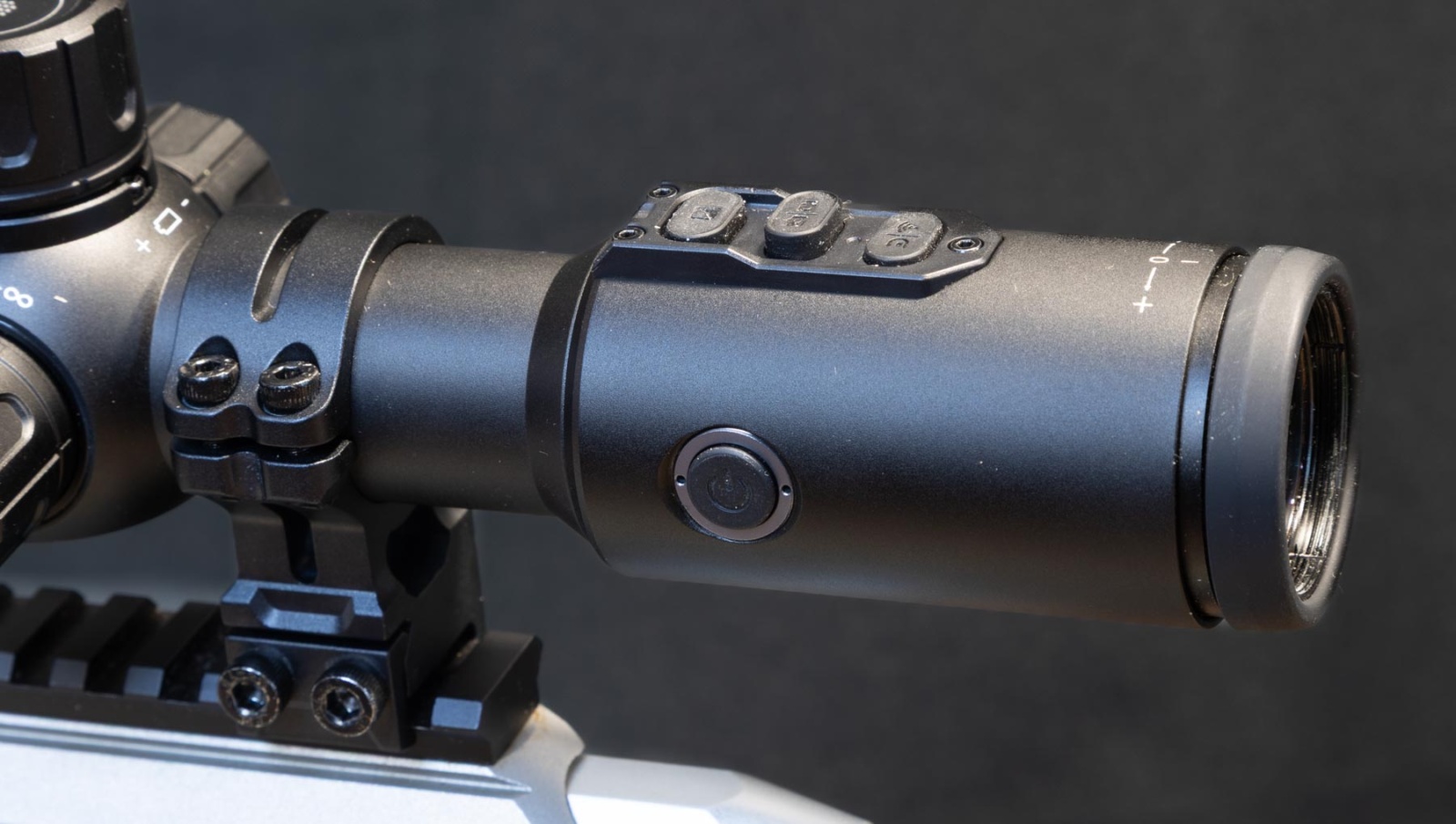
A function I use fairly often on thermals is the different colour palettes, which can help more easily identify or even find targets. You can switch them by pressing one of the control buttons on the diopter housing. The colours are white hot, black hot, red hot, fusion and sky.
Long-pressing that same button swaps between city, rain and forest modes to get the most suitable picture in different settings.
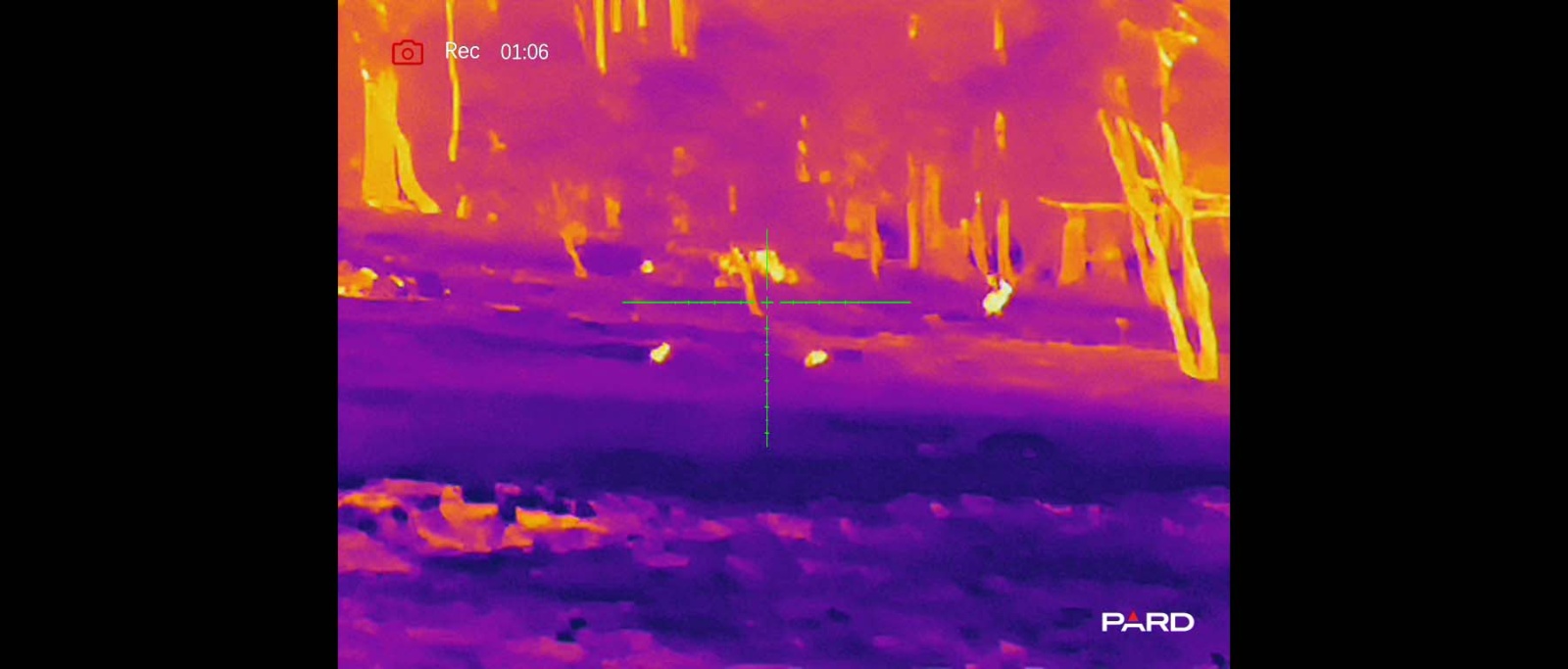
You can also switch on Super Resolution, which noticeably sharpens the image and reduces the need to ponder targets under different colours or modes. This, combined with the sensor’s small 12×12 micron pixel pitch and, importantly, the admirable ≤25mK temperature difference rating, produces very clear pictures.
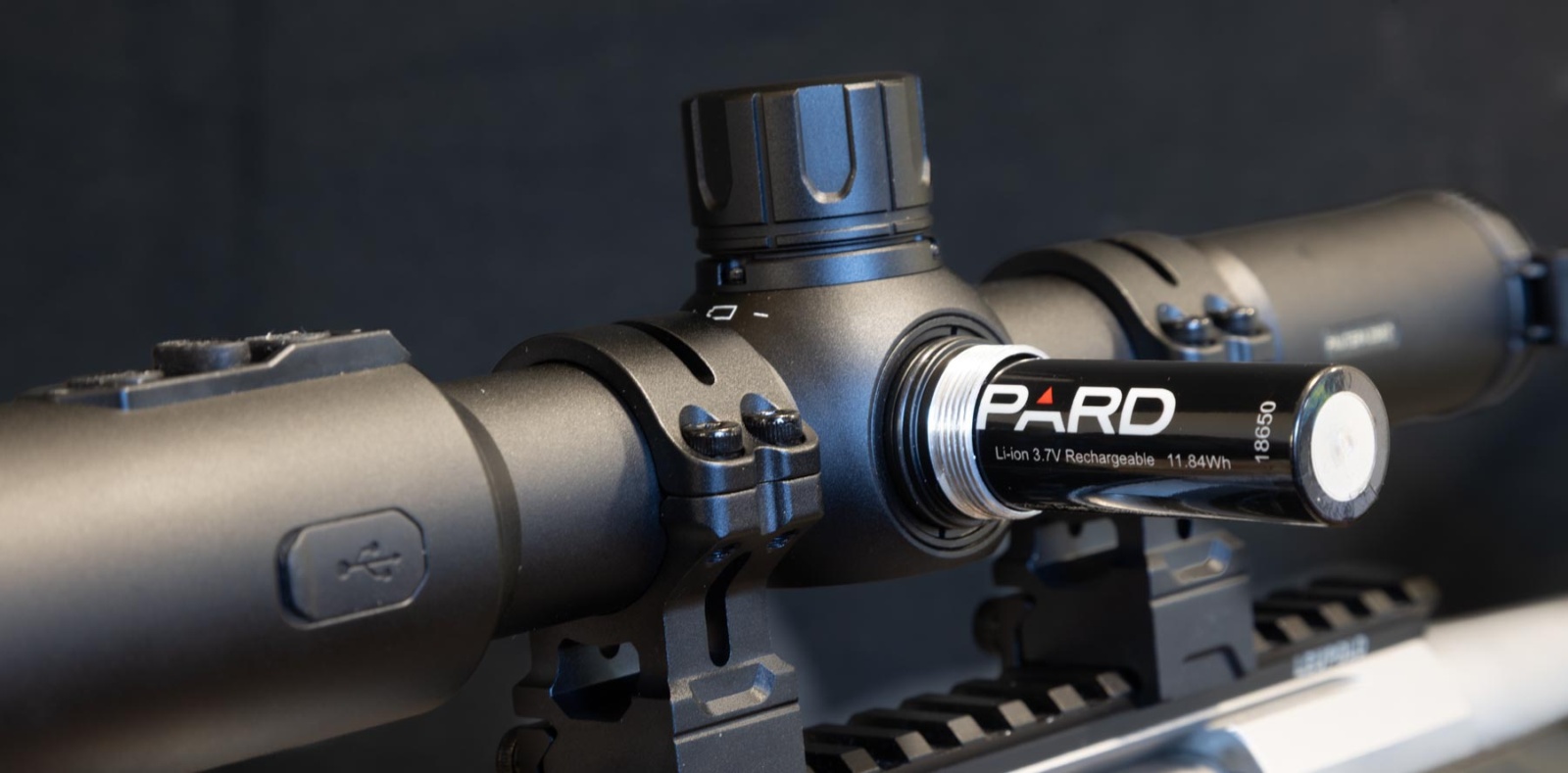
The Super Resolution function does drain the battery a bit quicker. The Pantera uses a single 3.7V, 3200mAh 18650 battery, supplied with the device. Pard claims up to six hours from it, and you’d probably get close to that in good conditions but the way I went, recording video and using Super Res a fair bit, I typically managed about four hours before changing to the spare battery I carried. Gotta love thermals with interchangeable batteries.
You can charge it in the Pantera or in a standalone charger. A USB cable is supplied but, of course, not the wall plug.
Photos and videos are stored in 32GB of built-in memory and you can download your images to a smart device using Pard’s Vision 2 app. The app also lets you control the sight’s operations and functions, as well as remotely viewing what’s going on through the lens.
Photos and videos are captured using another of the buttons on the diopter housing. A third button handles shutter corrections and turns the wi-fi on and off.
The buttons were sometimes unresponsive to my presses. They have a soft-touch design that makes them resistant to accidental activation but it can be a bit frustrating, too.
That’s the only real criticism I have of the design and finish, though, and the only thing I didn’t like was the short 50mm of eye relief, which is not enough for a heavy-recoiling rifle; even with a .223 I once felt a slight kiss from the rubber-coated diopter ring when I crawled too far up the stock.
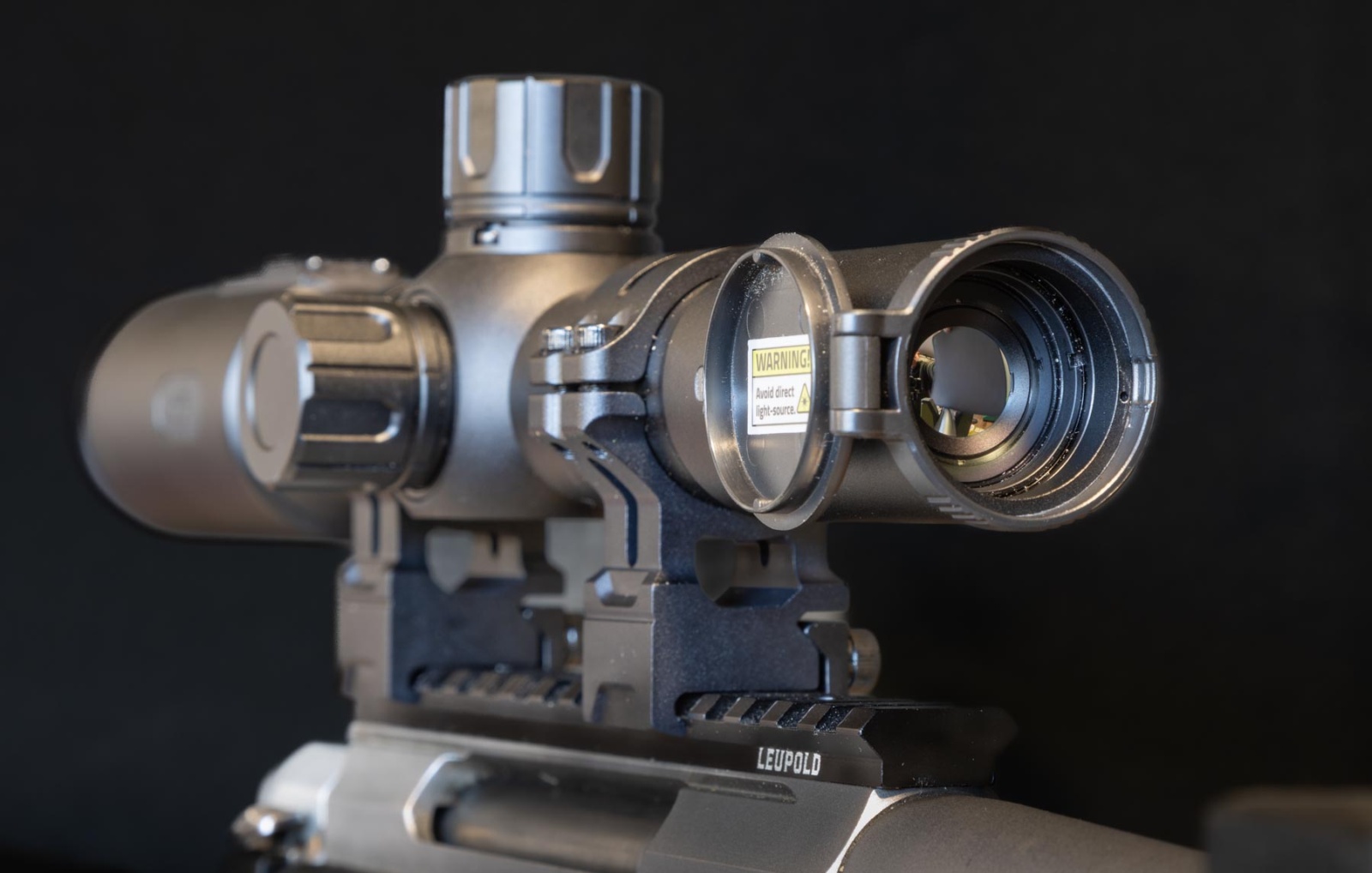
Otherwise, it’s all good. There’s a screw-on rubber eye cup to use if you wish. The little plastic lens cap hinged to the objective bell is great.
You get very tactile feedback from the turrets’ various movements. The on/off/sleep button is positive.
My crappy shooting eye likes the generous ±5 range of the diopter adjustment, which is all available in about 1¼ turns of the ring.
And the Pantera comes with a good set of aluminium rings to mount it to a pic rail.
These rings weigh just 56g each, and clamp the scope’s 30mm tube using four screws with grip tape to add a secure hold. There’s a recoil lug screwed into one of them that can be removed if you’re fitting it to a flat-topped surface instead of a typical toothed rail. The two-screw clamps are sprung for easier removal and attachment. They’re high mounts, which won’t suit every rifle, but they’re certainly good.
As you’d expect of any thermal scope today, you can set a number of sighting zeroes to suit different firearms or ammunition, with several reticle styles and colours to chose from. The zeroing function is straightforward.
The screen image you see can be tailored for brightness, contrast etc.
That’s a lot of admirable features and practical quality built into this small unit, and the fact it costs $1200 is pretty impressive, especially with such useful image quality.
For comparison, the next Pantera up the line, the 480 Q with a 35mm lens, costs more than 2½ times as much!
Clearly, if you’re looking for a good compact thermal scope, this is the go.
If you’re looking for a short-range thermal for a rimfire or air rifle, again, this is a ripper, but that’s not to say it’s not great for most centrefire use, too — that’s how most of this test was conducted.
And if, like many people, you’re put off by the thousands of dollars you have to spend to get a reasonable thermal scope, you may cheer about the price of this Pard, which is an outstanding entry-level option.
SPECIFICATIONS
- Sensor: 256×192 pixels, 12×12 micron pitch, ≤25mK NETD
- Display 1024x768p OLED
- Objective lens: 25mm
- Magnification: 3.6x optical base, 2/4/6/8x digital zoom
- Field of view: 7° horizontal, 5.3° vertical
- Focus range: 5m to infinity
- Detection distance: 1200m
- Eye relief: 50mm
- Photo & video resolution: 1024x768p
- Storage: 32GB built in
- Battery: 1 x 18650 3.7V
- Battery run time: Up to 6 hours (see text)
- Dimensions: 295x82x70mm (L/W/H)
- Weight: 492g with battery
- RRP: $1199
- Distributor: Australian Sporting Agencies


0 Comments